Picking solar kits for vans is about more than just wattage and what it costs. Your setup has to match how you actually live on the road, some trips mostly need a fridge and lights, while others run laptops, induction cooking, or even medical devices.
Here’s how to match a solar kit to your van-life routine, not just to the biggest number on the box. We’ll walk through real scenarios, from weekend campers to full-time digital nomads, and the practical tradeoffs between lithium vs. lead-acid batteries, MPPT vs. PWM controllers, and all-in-one kits vs. modular builds.
List of Solar Kits For Vans
This review evaluates solar kits through the lens of the buyer’s actual needs, not just specifications. It focuses on how each kit performs in real-world van life scenarios, whether you’re a minimalist traveler, a remote worker, or a family needing reliable power. The analysis covers power output, ease of installation, battery longevity, and system expandability, ensuring you choose a kit that matches your energy demands without unnecessary complexity or cost.
Product-by-product explanation
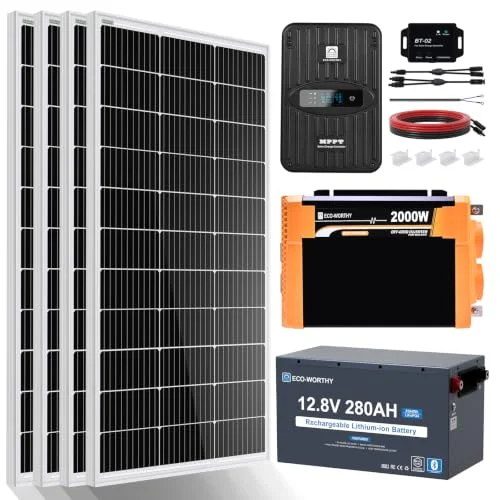
This ECO-WORTHY 400W kit is a turnkey option for van lifers who want everything in one package. It includes four 100W solar panels, a 12.8V 280Ah lithium battery, a 2000W inverter, and a 40A MPPT charge controller. The system is listed to generate up to 1600Wh daily and store 3.5KWh, which is designed for powering common van basics like a fridge, lights, and smaller appliances. Setup is meant to be quick since the components are bundled to work together, but “all-in-one” also means you have less flexibility to swap individual parts later.
Best for: Beginners or anyone who wants a hassle-free, all-in-one van solar setup without building it piece by piece.
Not ideal for: People who need a lighter or more modular setup, or those with very minimal power demands.
Decision cue: Shortlist this if you want a ready-to-run system and you’re not planning to expand or customize immediately.
Check Amazon
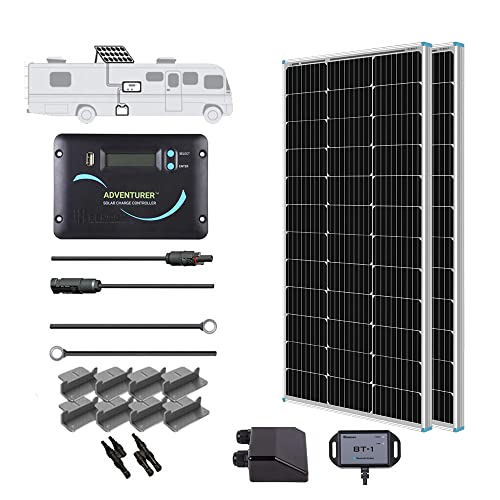
The Renogy 200W kit is a compact starting point for smaller vans or short trips. It includes two 100W monocrystalline panels and a 30A PWM charge controller, and it’s listed with up to 800Wh daily output (depending on sunlight). The panels emphasize durability, including a corrosion-resistant aluminum frame and multi-protection from the controller side. The catch: this kit doesn’t include a battery or inverter, so you’ll need to source those separately. PWM is simpler and can be fine for smaller systems, but it tends to be less efficient than MPPT in low-light or variable conditions.
Best for: Weekend campers who want to start small and build up over time.
Not ideal for: Anyone looking for a fully complete all-in-one kit, or those with higher power needs.
Decision cue: Shortlist it if you’re comfortable adding a battery and inverter separately and want an entry point.
Check Amazon
The Renogy 400W Premium kit is aimed at van lifers who care about efficiency and durability. It includes four 100W panels and a 40A MPPT charge controller (no battery or inverter included). The listing highlights Grade A+ solar cells at 22.5% efficiency and MPPT technology, with claims of strong tracking and conversion efficiency. It’s also described as sturdy and easier to install, with pre-drilled panel options and ready-to-use wiring and brackets. Since it’s not bundled with energy storage and an inverter, you’ll be buying those separately to make it a complete van-ready system.
Best for: Users who want high efficiency, expandable headroom, and MPPT performance.
Not ideal for: Buyers who need a complete all-in-one kit without extra purchases.
Decision cue: Shortlist it if long-term efficiency matters and you’re okay building the rest of the system.
Check Amazon
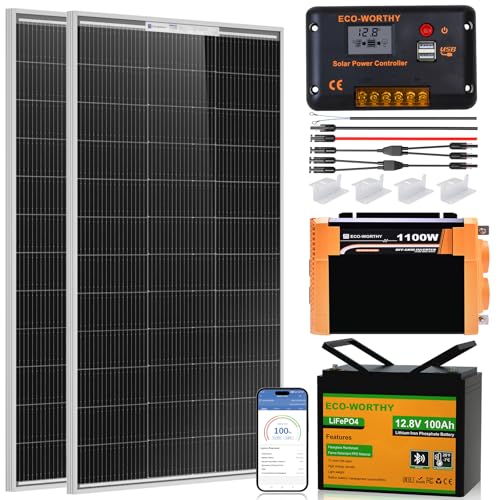
The ECO-WORTHY 200W kit is a mid-range all-in-one for van basics. It includes two 100W panels, a 12.8V 100Ah lithium battery, an 1100W inverter, and a 30A PWM charge controller. The kit is listed for about 800Wh daily output under good conditions, which is typically enough for a small fridge, lights, and phone charging. Installation is described as straightforward because the parts are pre-matched. The main tradeoff is PWM: it’s generally less efficient than MPPT in tougher conditions, especially when sunlight is variable.
Best for: Weekend trips and simpler power setups where ease matters most.
Not ideal for: People running higher-draw devices or anyone expecting advanced monitoring features.
Decision cue: Shortlist this if you want an all-in-one kit that’s beginner-friendly and not overbuilt for your needs.
Check Amazon
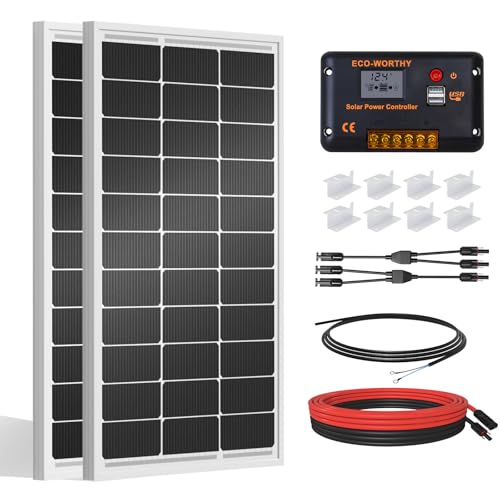
This ECO-WORTHY 200W kit is a budget-friendly, modular option, meaning you get panels and a controller, but you’ll still need a battery and inverter. It includes two 100W panels and a 30A PWM controller, and the listing emphasizes durability and weather resistance (including wind/snow load ratings). The upside is flexibility: you can expand the system later by adding batteries and additional panels as your needs grow. The downside is that PWM typically isn’t as efficient as MPPT, and you’re responsible for completing the system parts that aren’t included.
Best for: Budget-conscious buyers who want to start building and expand later.
Not ideal for: Anyone who wants a fully complete kit in one box.
Decision cue: Shortlist it if you’re comfortable buying the missing components separately and want flexibility.
Check Amazon
The Renogy 100W Starter Kit is the most affordable entry point for van solar. It includes one 100W monocrystalline panel and a 30A PWM charge controller, and it’s listed with average daily output around 500Wh (depending on sunlight). The panel is presented as durable and includes long warranty coverage for the panel and controller. Like most starter kits, it doesn’t include a battery or inverter, so you’ll add those if you want full van power. PWM is also the limiting factor versus MPPT for variable conditions, but for small systems it can be a straightforward, reliable approach.
Best for: Budget-conscious beginners or anyone with minimal power needs who wants to test solar first.
Not ideal for: Users who need a complete all-in-one system or who want to run high-draw loads.
Decision cue: Shortlist if you want the cheapest way to start with solar and plan to expand later.
Check Amazon
The Renogy Premium 400W kit is positioned for buyers who want higher efficiency and better long-term performance. It includes four 100W N-type panels and a 40A MPPT controller, with Bluetooth monitoring for real-time tracking. The listing frames daily output in a range and highlights strong efficiency and tracking claims. This is still a panels + controller package, so you’ll need to buy a battery and inverter for a complete van setup. If you’re building toward a more advanced system later, MPPT plus the monitoring features can be a meaningful upgrade.
Best for: Tech-savvy users who want top-end efficiency and monitoring, with room to expand.
Not ideal for: Beginners who want a fully bundled system, or anyone shopping tightly on budget.
Decision cue: Shortlist it if you want cutting-edge panel efficiency and you’re okay purchasing battery/inverter separately.
Check Amazon
The ExpertPower 1.3KWH kit is a higher-power, full-feature bundle for heavier van use. It includes four 100W panels, a 100Ah LiFePO4 battery, a 2000W inverter, and a 30A MPPT controller. The listing is designed for roughly 1.6kWh daily output and calls out suitability for higher-draw appliances like induction cooking and laptops. It also emphasizes long cycle life for the LiFePO4 battery and includes Bluetooth monitoring for remote tracking. The tradeoffs are weight and complexity, this kind of setup can be harder to install cleanly, and professional installation may be the safer route for optimal wiring and safety.
Best for: Full-time van lifers or anyone with real high-power demands who wants a long-term solution.
Not ideal for: Weekend campers who prioritize light, simple setups.
Decision cue: Shortlist if you need serious power and you’re prepared for the added installation and weight.
Check Amazon
The ECO-WORTHY 400W kit is a mid-range option for van owners who want efficiency and expandability without paying for a full all-in-one storage bundle. It includes four 100W panels and a 40A MPPT controller, with Bluetooth monitoring listed for tracking. The listing focuses on durable build quality and strong weather resistance, including wind and snow load ratings. Because it doesn’t include a battery or inverter, it’s meant for buyers who already have storage and want to scale the panel side over time.
Best for: Users who want MPPT efficiency and remote monitoring, with the flexibility to pair their own battery/inverter.
Not ideal for: Beginners who need everything included or shoppers who want the simplest one-box solution.
Decision cue: Shortlist this if you want efficiency and flexibility but don’t want to pay for bundled components you might change later.
Check Amazon
The Renogy 400W kit is a modular panels + controller setup for van users who want to build gradually. It includes four 100W panels and a 30A PWM charge controller, but it does not include a battery or inverter. The panel build is described as durable with corrosion-resistant framing and weather resistance. Like other PWM-based kits, it’s generally less efficient than MPPT in variable or low-light conditions, and because not everything is included, you’ll need extra purchases to complete the system.
Best for: Buyers who want a flexible starting point and plan to add battery and inverter later.
Not ideal for: Anyone who needs a complete, all-in-one kit right away or those with very high power demands.
Decision cue: Shortlist if you’re comfortable finishing the system yourself and want a more budget-friendly entry into solar.
Check Amazon
Reader questions answered
Do I need a lithium battery, or is lead-acid sufficient for my van solar kit?
Lithium batteries typically last longer, weigh less, and recharge faster than lead-acid. They’re better for full-time van use or for systems that see frequent deep discharges, since they handle that pattern more gracefully. Lead-acid batteries usually cost less upfront and can work fine for weekend campers with lighter energy needs, but they’re heavier, need more upkeep, and have a shorter overall lifespan. If you’re planning to expand your system over time, lithium usually makes more sense long-term.
Should I choose an MPPT or PWM charge controller for my van solar kit?
MPPT controllers usually extract more usable power than PWM controllers, especially when light levels are lower or conditions are changing. That can mean up to around a 30% boost in harvest in some scenarios, which is why MPPT is common in larger or more demanding systems. PWM controllers are simpler and typically cheaper, making them a fit for smaller setups or budget builds. If you expect to expand later, MPPT is often the safer base choice. For minimal systems, PWM can still be a reliable starting point without adding cost.
How much solar power do I need for my van life setup?
Your power needs come down to what devices you run and how long you run them. A small fridge, lights, and phone charging might land around a few hundred watt-hours per day, while laptops, induction cooktops, or medical devices can push you toward 1000Wh+ depending on runtime. Full-time van setups commonly sit closer to 1000-2000Wh/day, while weekend trips may be much lower. The biggest mistake is guessing, overestimating adds cost and weight, while underestimating leaves you short when you need power most. Do the watt-hour math first.
Is an all-in-one solar kit better than a modular system for my van?
All-in-one kits are convenient because they bundle panels, battery, inverter, and controller, so you don’t have to worry as much about compatibility. They’re also a smoother path for beginners. The tradeoff is flexibility: when you want to upgrade one component later, you may have to replace more of the system than you planned. Modular systems let you start smaller and grow based on your needs, which is often better if your power usage changes over time or your budget is staged.
Can I install a van solar kit myself, or should I hire a professional?
Most van solar kits are intended for DIY installation, with pre-drilled holes, plug-and-play style cabling, and step-by-step guidance. Many people can handle the basics, but larger systems, especially those involving high-wattage inverters or lithium batteries, may be more complicated than they look in a manual. Safety is the big priority: incorrect wiring can damage your van’s electrical system or create fire risk. If you’re not comfortable with electrical work, it’s smarter to hire a professional. For simpler setups, DIY can save money and help you understand your own system.
What the comparison teaches
Lithium batteries cost more upfront but save money long-term
Lithium batteries cost more upfront than lead-acid, but they’re usually built for far more cycles. They’re lighter, recharge faster, and handle deeper discharges with less long-term damage. For full-time van living, lithium is often the better investment. If you’re weekend-only or budget-limited, lead-acid can get you started and you can upgrade later.
MPPT controllers are more efficient but add complexity and cost
MPPT controllers are designed to maximize power harvest when conditions aren’t ideal, like cloudy days or changing sun angles. They cost more than PWM controllers, but can increase efficiency by up to around 30% in some scenarios. If you’re staying small or building on a budget, PWM can still be a dependable choice.
All-in-one kits simplify setup but limit future upgrades
All-in-one kits include everything you need in one box, which helps beginners avoid compatibility mistakes. The downside is upgrade flexibility: you may replace more later than you want to. Modular systems let you start with what you need now and expand as your energy use grows, which is useful for longer-term planning.
Higher wattage isn’t always better, match your power needs
Overestimating your power needs usually means extra weight, extra cost, and extra complexity you don’t actually use. A 400W kit may be overkill for many weekend trips, and a 100W setup won’t cover full-time demands. Calculate your daily watt-hours first so you’re sized correctly from the start.
Before you buy
- Check that the kit’s daily watt-hour output matches how much energy you actually use.
- Verify the battery type (lithium vs. lead-acid) and check its stated cycle life.
- Confirm the charge controller type (MPPT vs. PWM) and look for efficiency/tracking claims that fit your conditions.
- Ensure the kit includes the cables, brackets, and connectors you need, especially for the way you plan to mount panels and wire in the battery.
- If an inverter is included, confirm its wattage rating; if not, plan for a compatible inverter purchase.
- Scan recent customer reviews for both installation ease and real-world output or charging behavior.
- Review the warranty length and what’s covered (panels vs. batteries vs. controllers).
Final takeaway
The best solar kit for your van depends on how much power you need, what you can spend, and how comfortable you are with the technical side. If you’re running higher-draw devices, prioritizing lithium batteries and MPPT controllers, like in the ExpertPower 1.3KWH kit, tends to be a smarter long-term path. If you’re mostly camping on weekends with light usage, smaller kits, like the Renogy 100W Starter Kit, can keep costs down. Beginners often benefit from all-in-one bundles like the ECO-WORTHY 400W kit, while tech-forward builders may prefer modular options with monitoring. Whatever you choose, match the kit’s output to your daily watt-hour usage and verify compatibility with your van’s electrical system before buying.
FAQ
Can I expand my solar kit later if my power needs grow?
Most kits can be expanded, but compatibility depends on the charge controller and the battery type. MPPT controllers and lithium batteries are generally easier foundations for expansion. Check the kit’s specs for maximum input wattage and battery compatibility before adding panels or storage.
How do I calculate my daily power needs for a van solar kit?
List every device you plan to run, include its wattage and how many hours per day it runs. Multiply wattage by runtime to get watt-hours per device, then add them up for your daily total. Add a 20% buffer for inefficiencies. Example: a 50W fridge running 24 hours uses about 1200Wh per day.
Are solar kits weatherproof, or do I need additional protection?
Most solar panels are weatherproof, commonly rated IP65 or higher for rain/snow exposure. Batteries and controllers may require additional protection from extreme temperatures or moisture. Mount panels securely for wind and use weather-appropriate waterproof connectors for outdoor wiring.
Do I need a pure sine wave inverter for my van solar kit?
A pure sine wave inverter is usually the safest choice for sensitive electronics like laptops, medical devices, and induction cooktops. Modified sine wave inverters are often cheaper but may cause issues with certain electronics or create interference. If you’re running electronics, choose pure sine wave.
How long do solar kits last, and what maintenance is required?
Solar panels commonly last 25-30 years, with reduced efficiency later in life (often described around 80% after ~25 years). Lithium batteries typically last 10-15 years, while lead-acid is more like 3-5 years. Maintenance includes cleaning panels, checking connections, and monitoring battery health. MPPT controllers and lithium batteries generally require less day-to-day maintenance than PWM controllers and lead-acid batteries.