Electric driveway heating systems tackle one clear winter problem: ice and snow that turn your driveway into a slip-and-shovel zone. Sure, “more heat” sounds simple, but what you actually need comes down to how much surface you cover, how the system is embedded, and whether it can sense the wet, freezing conditions that trigger ice.
Use this to choose based on the job, not the sales pitch. Your coverage area, voltage, and install approach determine whether mats or heating cables make sense. You’ll also want the right control setup, thermostats and snow/ice controllers help avoid running longer than necessary and improve consistency when temperatures swing.
List of Electric Driveway Heating System
This review uses a reader-first lens focused on fit: what each system actually covers, what it expects during installation, and what limitations show up after a few winter events. Instead of ranking, each decision section links a real buyer goal to the closest matching product, then points to one verification step that prevents common mistakes. The comparisons also separate exterior snow-melting hardware from indoor tile-floor heating, since those are easy to confuse. The goal: shortlist the right product family, confirm key compatibility details, and avoid buying a system that cannot be installed or controlled the way a driveway needs.
Product-by-product explanation
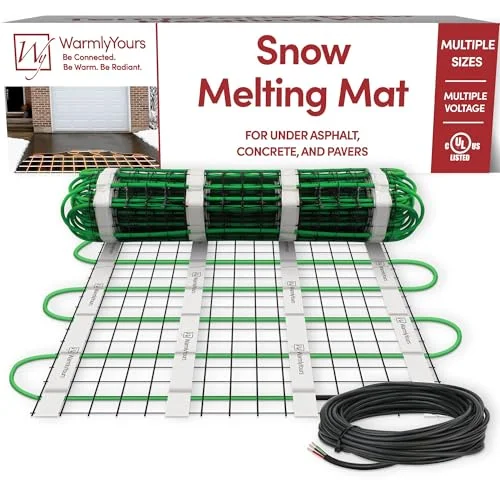
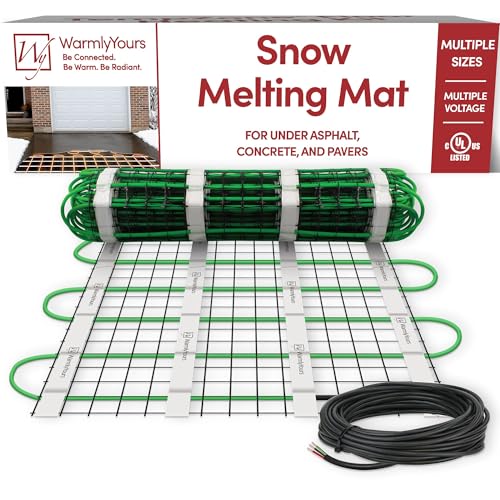
This WarmlyYours 3×20 ft PowerMat is an embedded snow-melting mat built to sit under concrete, asphalt, or pavers and clear about 60 sq ft. A twin-conductor heating cable runs inside the mat so the surface warms as snow and ice accumulate. You can use it for full-zone coverage or add another mat for targeted tire-track deicing when your driveway shape demands it. Automation typically requires a compatible snow/ice control kit, so the system isn’t heating when conditions don’t warrant it. It also includes a 10-year limited warranty and lifeti
Best for: Homeowners clearing a 60 sq ft rectangular section, like a driveway lane, sidewalk path, or the approach to a patio.
Not ideal for: Driveways that need custom shapes, stairs, or tricky edges where flexible cable routing would cover more evenly than a fixed mat.
Decision cue: Shortlist it when your layout fits a single rectangular zone and you’ll pair it with an outdoor control kit that matches the product design.
Check Amazon
WarmlyYours 2×50 ft embedded 240V PowerMat gives you a larger, easier-to-plan rectangle, around 100 sq ft per mat. It warms the surface under common exterior substrates, helping reduce shoveling and lowering slip risk during freeze-ups. Since it’s a mat, the install layout is typically simpler than custom cable routing, which is helpful for straight driveway lanes. Like other mats, it generally expects installation at a 3-4 in depth and works best when paired with a snow/ice control kit that senses conditions. The pro
Best for: Buyers with long, straight driveway lanes that need consistent deicing across about 100 sq ft.
Not ideal for: Irregular borders, step transitions, or winding routes where a custom cable layout would cover gaps better than a fixed rectangle.
Decision cue: Pick it when your driveway can be measured as one clean rectangle and your electrical setup supports the 240V mat.
Check Amazon
WarmlyYours 2×10 ft 120V embedded PowerMat targets a smaller, manageable area, about 20 sq ft. It installs under concrete, asphalt, or pavers and uses a twin-conductor heating cable for dependable heat distribution within its footprint. This can be a practical choice for slippery spots that ice up first, like entry walks, short ramps, or porch approaches. Automation depends on a compatible snow/ice control kit, which lets it target real freeze conditions rather than heating on a fixed schedule all day. The mat can be helpful where you only need to clear a hot spot.
Best for: Owners who want to deice a small, high-risk entry area, like a ramp landing, short walkway segment, or porch threshold.
Not ideal for: Full driveway melt where 20 sq ft leaves untreated edges and forces shoveling elsewhere.
Decision cue: Choose it when your measured hot-spot area fits the mat footprint and you can cover adjacent slip-prone areas with another solution if needed.
Check Amazon
LuxHeat 40 sq ft is an indoor radiant floor heating kit intended for comfort under tile. It bundles a heating cable with an uncoupling membrane, a programmable touchscreen thermostat with integrated GFCI protection, and an included floor sensor. The uncoupling membrane supports crack prevention and provides waterproofing and load support under tile assemblies. It runs on 120V and expects the heater wires to be covered with thinset or self-leveler, which places it firmly in an interior floor-build context. While the controls are modern and the kit includes a touchscreen thermostat, the build assumptions are not the same as exterior driveway snow-melting installs. The listing also includes a note that you should not cut or shorten the heater wire.
Best for: Homeowners installing heated tile floors indoors, especially bathrooms, kitchens, basements, or other rooms where scheduling and floor-sensing control matter.
Not ideal for: Exterior driveway snow melting, because driveway-specific outdoor-ratings, install layers, and control strategies are different.
Decision cue: Select for indoor tile comfort, but avoid using it for driveway melt unless the listing explicitly states exterior snow-melting support.
Check Amazon
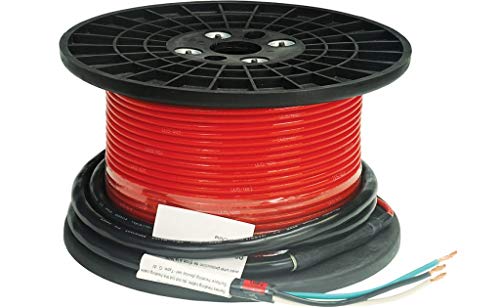
WarmlyYours 188 ft snow-melting cable is designed for outdoor deicing where mats can’t follow the driveway’s shape. The cable installs under concrete, asphalt, or pavers and covers about 62 sq ft with specified heating power, using spacing that can be customized. Because you’re routing a cable, it suits stairs, ramps, and irregular transitions better than a fixed mat footprint. The goal is hands-free operation when paired with compatible controllers that detect temperature and moisture, so heating aligns with actual snow/ice conditions instead of running continuously.
Best for: Owners who need snow melting in irregular shapes, stairs, ramps, or routed driveway transitions where a mat would leave gaps.
Not ideal for: Straight, rectangle-only coverage where mats would simplify installation and reduce layout risk.
Decision cue: Shortlist it when your geometry (edges, obstacles, non-rectangular areas) requires a custom cable pattern.
Check Amazon
Warming Systems 30 sq ft radiant floor heating mat is an indoor under-tile heating kit built to warm floors efficiently and safely in wet areas like bathrooms. The package includes a pre-measured mat, a programmable thermostat with a floor temperature sensor, and an installation warning monitor that alerts if the heating wire is damaged during installation. It runs on 120V and is designed to sit under tile without dramatically changing floor height. The focus is comfort scheduling and precise temperature control, not melting snow from a driveway.
Best for: Buyers installing a heated tile floor in a single room, especially where bathroom floor comfort matters.
Not ideal for: Outdoor driveway or walk deicing, since the design targets indoor tile heating and the controls assume interior conditions.
Decision cue: Use it only for indoor tile heating projects; skip it for driveway snow melt unless the listing explicitly supports exterior snow-melting use.
Check Amazon
This 32-60 sq ft 120V in-floor heating cable kit targets indoor radiant floor builds across multiple sizes, using spacing options that affect coverage and watt density. It includes a programmable thermostat with a weekly schedule and a built-in damage alarm/monitor intended to reduce costly installation mistakes. The cable system is meant to embed into cement-based compounds as part of an approved floor assembly, and it’s aimed at heated tile floors and similar interior installs. The listing also notes protective electrical requirements such as GFCI protection, keeping the kit in the indoor safety-and-control lane rather than driveway deicing.
Best for: Homeowners building heated tile floors across 32-60 sq ft who want scheduling and protective installation monitoring.
Not ideal for: Exterior driveway deicing where outdoor-rated assembly details, embedment depth, and snow/ice control behavior must match winter conditions.
Decision cue: Shortlist for indoor floor heating only if you can follow spacing guidance and keep the cable uncut.
Check Amazon
King Electric SC2412-185 is an exterior snow-melt heating cable intended for concrete, asphalt, and under-paver installations. It uses a 240V twin-conductor design and is positioned for deicing layouts that match driveways, sidewalks, stairs, ramps, and similar exterior paths. Instead of a fixed mat boundary, the cable approach supports planned spacing at about 3 in or 4 in, which helps tailor heat intensity to your site needs. A 20 ft cold lead helps with routing during installation to the power connection point. It’s designed to work best when paired with compatible snow-melt controls.
Best for: Buyers designing exterior deicing for drives and walkways, especially where a cable pattern fits your site geometry.
Not ideal for: If you want a pre-bounded rectangle with no routing complexity, mats usually simplify that kind of install.
Decision cue: Pick it when you can plan a cable-spaced exterior layout under your chosen substrate and you’ll match it with the right control system.
Check Amazon
WarmlyYours 3×10 ft 120V embedded mat focuses on a narrower, 30 sq ft area designed for reliable deicing under typical exterior surfaces. Its twin-conductor heating cable warms where snow and ice tend to accumulate first, which can help prevent early slippery entry conditions. This setup can be used for driveways, walkways, patios, and porch ramps, and it can pair with additional mats if you need wider coverage. Installation assumes an embedded depth of about 3-4 in, while automation relies on a compatible outdoor control kit so the system activates based on conditions.
Best for: Owners clearing a compact entry path or short driveway strip where 30 sq ft of coverage is enough for the risk zone.
Not ideal for: Large driveways where you’ll still have untreated areas that require shoveling or separate heated zones.
Decision cue: Shortlist when your measured hot-spot area fits the 3×10 ft footprint and you have a compatible outdoor control kit ready.
Check Amazon
WarmlyYours 377 ft snow-melting cable is built for larger 240V exterior deicing projects where long coverage paths matter. The cable installs under concrete, asphalt, or pavers and can support coverage up to about 125 sq ft depending on spacing choices. That makes it a fit for clearing driveways, walkways, stairs, and ramps on longer approaches or multi-segment layouts that would be hard to cover with a single mat. It’s designed for hands-free operation when paired with controllers that sense temperature so heating aligns with actual conditions instead of guessing.
Best for: Buyers with larger exterior clear zones and custom run requirements who still want to stay within a cable-based design.
Not ideal for: Tight sites that are strictly rectangular, where a pre-sized mat would reduce layout risk and installation time.
Decision cue: Choose this when your coverage size and site geometry justify a longer 240V cable layout plus compatible outdoor controls.
Check Amazon
Reader questions answered
Should an electric driveway system use mats or a heating cable?
Mats tend to work best when the driveway area forms a straightforward rectangle and you want simpler layout with predictable coverage. They’re also a good fit if you plan to clear a defined lane or approach where width and length measurements line up cleanly. Heating cables make more sense when your driveway has irregular edges, stairs, ramps, or curved boundaries, places where pre-sized mats leave gaps. Cables are also a better match for multi-zone projects. Either approach can melt snow effectively; matching your site geometry to the right product family is what reduces installation mistakes and uneven clearance.
What voltage and controller setup should a driveway need for reliable melting?
Driveway heating depends on both electrical voltage and an outdoor activation strategy that responds to real weather. Many exterior mat systems come in 120V or 240V versions, and electrical capacity can affect whether the system delivers enough heat for your conditions. Many mat systems also need a compatible snow/ice control kit to automate activation based on temperature and moisture, which helps reduce wasted runtime. Cables also typically rely on controllers for smart activation so the system avoids continuous heating. Before buying, confirm the voltage at the install location, then check controller compatibility with the product family and power level.
How do these products differ from indoor radiant floor heating systems?
Indoor radiant floor systems are built for comfort under tile, and they rely on interior floor assembly assumptions like thinset coverage, membrane compatibility, and safe operation indoors. Some kits include programmable thermostats and GFCI protection, but the overall purpose is maintaining floor warmth. Exterior driveway snow-melting needs outdoor-rated embedded build details and a snow/ice control approach that triggers during precipitation and freezing conditions. Because the environment and activation goals differ, indoor kits shouldn’t be treated as driveway replacements unless the listing explicitly supports exterior snow-melting.
What coverage size should be targeted so snow melts where people actually slip?
The practical question isn’t just “what is the total driveway.” It’s “where does ice first form, and where do people walk or drive.” Many systems clear a defined zone effectively, but you may need additional sections for edges, turnarounds, or transitions. Mats are great when you can plan full coverage for a rectangle, such as straight driveway lanes and predictable foot-traffic paths. Cables are better for irregular slip-prone areas and connected runs where fixed mat coverage would miss critical spots. The best coverage choice balances installation complexity with how urgent the risk areas are. Confirm your measurements and decide whether you’re clearing tire tracks only or melting the entire surface.
What the comparison teaches
Mats simplify layout, but cables handle reality.
Choose embedded mats when your driveway can be measured as a clean rectangle. Choose heating cables when your driveway has stairs, curves, or difficult borders that pre-sized mats would leave untreated.
Voltage affects fit, not just power.
A 240V system often delivers better overall heating capacity for larger areas. A 120V system can still work well for smaller hot spots, but it demands careful circuit planning and realistic expectations.
Controls decide whether the system runs efficiently.
Exterior snow-melting systems should activate based on temperature and moisture conditions. Without the right controller pairing, heating can be too weak, or it can waste energy by running when conditions don’t call for it.
Don’t confuse indoor comfort kits with outdoor deicing systems.
Indoor radiant products manage comfort under tile and assume interior floor assemblies. Driveway snow melt requires outdoor-rated build expectations and a snow/ice control strategy tuned to freezing precipitation.
Before you buy
- Measure the exact deicing target area, then compare it to mat coverage dimensions or your cable coverage plan (including how you’ll route it).
- Confirm required embedment depth and whether the system expects to sit under concrete, asphalt, or pavers in your specific build.
- Verify your available electrical voltage and circuit capacity match the system’s load requirements before you order.
- Confirm controller-kit compatibility for automated activation, and make sure the sensing style matches the system design.
- Read warranty terms closely, especially anything that impacts outdoor installations and embedded components.
- Scan recent customer feedback for installation support quality, parts reliability, and how responsive troubleshooting is.
- Check whether design support or installation planning help is available for your region and setup.
Final takeaway
A good electric driveway heating system starts with matching layout and control, not chasing the biggest wattage. Embedded mats make sense for clean rectangles and deliver predictable coverage for defined lanes and walkway sections (like the 60-100 sq ft setups in the WarmlyYours PowerMat line). Flexible heating cables fit irregular driveways, stairs, ramps, and multi-segment paths where a fixed footprint would miss slip-prone zones. Indoor radiant floor kits can create heated tile comfort, but they usually aren’t a true substitute for exterior snow-melting systems. Pick the product family that matches your geometry, then verify voltage, installation depth, and controller compatibility before committing.
FAQ
Do electric driveway heating systems eliminate shoveling completely?
Often they cut down or eliminate shoveling when coverage matches the real slip paths and the controls activate at the right time. If you leave untreated edges or transitions, you may still need some manual clearing.
Can mats or cables melt snow and ice on asphalt, concrete, and pavers?
Many exterior systems in this list say they install under concrete, asphalt, or pavers. Still, I would confirm the required embedment depth and installation method for your driveway construction.
What happens if the system runs when there is no snow or ice?
Energy waste goes up and so do operating costs. That’s why snow/ice control kits with temperature and moisture sensing matter for exterior systems.
Are indoor radiant floor heating kits safe to use outdoors for driveways?
Indoor kits focus on comfort under tile assemblies and assume interior conditions. Exterior driveway use requires explicitly outdoor-rated snow-melting compatibility and the right control approach.
How long does installation planning take for a cable system?
It usually starts with measuring the deicing zone, choosing spacing, and mapping cable routing to the power connection point. Many cable products offer design support, which can reduce planning uncertainty.