Buying a ham radio linear amplifier usually starts with a simple goal: get more usable signal without turning your audio into distortion, splatter, or a reliability headache. A lot of listings lead with output watts, but what really decides whether it works in your station is linearity, protection behavior, and how well the amp matches your transceiver’s setup and control signals.
This article is about matching a linear amplifier to how you’ll actually operate, frequency range, modes, and everyday workflow, rather than just repeating the loudest marketing number. I would focus on whether you need HF-only reach, multi-mode output, and smooth band switching with minimal fuss when you change bands or modes.
List of Ham Radio Linear Amplifiers
This reader-first review focuses on fit: what the amplifier does in a practical station and which operator workflows it supports. Instead of treating every unit as equally comparable, the review separates transceiver-focused linear amps from wideband LNA preamps and other RF gain modules that serve different roles. The goal is to prevent mismatches that waste money or create performance problems. Each product explanation calls out the intended operating context, a likely buyer, and a limitation to verify. Buyer needs map to specific purchase cues like band control methods, power requirements, connectors, and safety features.
Product-by-product explanation
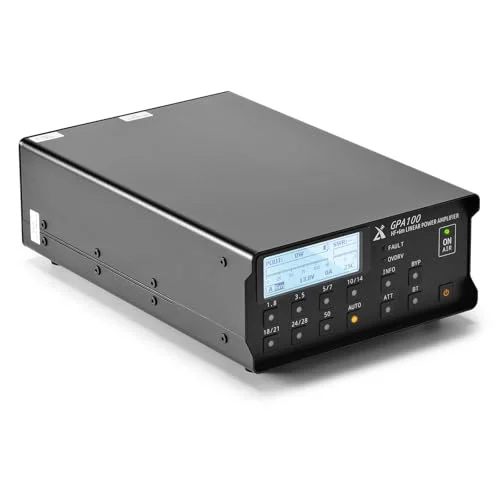
The Xiegu GPA100 is built to be a clean, station-ready companion to a lower-power HF transceiver, providing linear output for SSB, CW, AM, FM, and digital modes. What stands out is how it handles band management: you get manual band selection plus Bluetooth-based band control designed around certain Xiegu radio workflows. That reduces the usual friction of band changes and keeps the amp aligned with the transceiver. Protection and cooling are meant to keep the amplifier stable through longer transmissions by monitoring things like
Best for: Operators using an HF Xiegu transceiver who want clean linear amplification and smoother band changes with Bluetooth control.
Not ideal for: Users who want a receive-only LNA or anyone running a transceiver model outside the stated compatibility without the needed interface support.
Decision cue: Shortlist it when you’re driving a supported Xiegu HF radio and you want less cabling and safer band synchronization, plus strong monitoring features.
Check Amazon
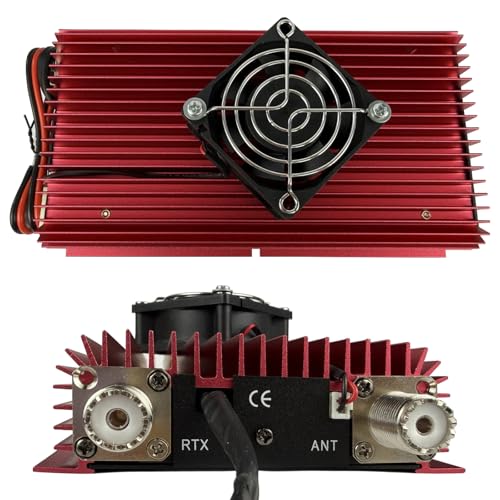
The BJ-300 Plus is a 12-14V amplifier designed for straightforward integration into many ham or CB-style setups, with AM, FM, SSB, and CW support. It leans into practical usability, typical connectors, simple front-panel controls, and thermal management that’s built around extended use. Safety features like polarity reversal protection and dual fuses also target common install mistakes that can damage equipment. Because output claims vary by mode, it’s aimed at real on-air needs such as louder FM and strong SSB, while staying within the constraints that keep heat and distortion controlled, at least as described.
Best for: Shoppers who want a simple 12-14V linear-style transmit amp for multi-mode HF or CB-style operation with basic controls and protection.
Not ideal for: Operators who require tight, radio-specific auto band tracking or who need behavior that depends on a more integrated brand ecosystem.
Decision cue: Skip it if your setup depends on brand-specific band synchronization, or if you can’t confidently match its expected drive level to your transceiver.
Check Amazon
The BJ-300 Plus in a two-pack format keeps the same overall idea: a 12-14V multi-mode amplifier with cooling and protection for easy, repeatable use. It covers AM, FM, SSB, and CW with a simple interface that many hobbyists can install without redesigning their whole station. The two-pack makes sense if you want a spare on hand to reduce downtime, or if you’re powering a second radio or a second location. The tradeoff is you’ll want to double-check the delivered package details so both units match what you expect.
Best for: Shacks that want a backup linear-style amp or need consistent amplification for two radios/locations.
Not ideal for: Operators who rely on Bluetooth band control or deep integration with a specific transceiver’s ALC workflow.
Decision cue: Choose it when the convenience of having a second unit matters, and the transceiver you plan to drive matches the stated input power needs.
Check Amazon
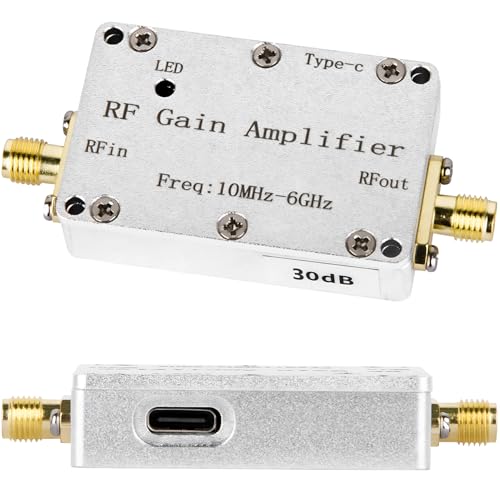
The RF Gain Amplifier 10M‑6GHZ is a receive-focused wideband amplifier, not the typical transmit linear amplifier you use to boost an HF signal going to an antenna. It’s positioned for broadband gain with a low-noise-oriented concept, powered by 5V and using 50-ohm SMA connectors for quick integration into SDR or test setups. That makes it useful when you’re trying to improve reception sensitivity across a wide frequency window, like monitoring, experimentation, or front-end evaluation. If your goal is transmitting on HF SSB/CW with more output power, this isn’t the right category.
Best for: Experimenters and SDR users who want a wideband, low-noise receive amplifier across 10MHz to 6GHz.
Not ideal for: Amateurs trying to increase transmitter output power on HF during SSB/CW operations.
Decision cue: Shortlist it only if you’re focused on receive gain and you’re using SMA 50-ohm front ends, not transmitter amplification.
Check Amazon
The Retevis Ailunce HS4 is a 10-meter mobile transceiver with built-in PA capabilities and multiple modes, including SSB, CW, AM, and FM. This listing isn’t an external linear amplifier you insert between a separate HF transceiver and your antenna. Instead, it’s the radio and transmission capability in one unit, useful for getting on-air quickly with a compact, 10m-focused setup. If your real goal is to upgrade an existing HF station, this is likely to feel misaligned.
Best for: Buyers who want a single high-power 10-meter mobile radio for off-road or mobile communication rather than adding an external amplifier.
Not ideal for: Owners who already have an HF transceiver and want linear amplification of their current setup with proper transmit-side PA separation.
Decision cue: Skip it if the intent is to amplify a separate HF rig; consider it only when you specifically need a 10m mobile radio.
Check Amazon
The CYTGOUPER Low Noise Amplifier is presented as an LNA-style wideband receive amplifier, designed to improve weak signals across 10MHz to 6GHz with up to 20 dB of gain. The construction emphasizes aluminum alloy durability and includes 50-ohm SMA interfaces, making it suitable for portable and fixed receive front ends like FM receiver setups, GPS-related reception chains, or SDR experiments. The goal here is receiving stability and accuracy in the front end, not delivering transmit power. So the key is whether your project needs receive-side amplification only.
Best for: Hobbyists building a receive-only front end for wideband monitoring or weak-signal reception.
Not ideal for: Operators who need a transmit-side linear amplifier for HF SSB/CW output to an antenna.
Decision cue: Shortlist it only for receive-side amplification, and keep wiring strictly in its receiving role.
Check Amazon
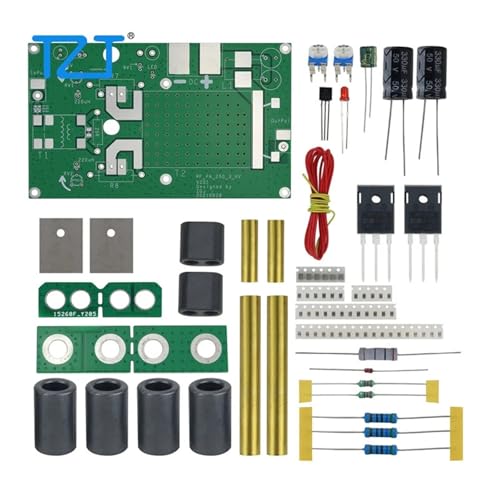
The 180W linear power amplifier kit is a DIY route to higher transmit output, framed as a kit rather than a finished, plug-in station amplifier. That can appeal to builders who like assembling hardware and controlling the final result. The upside is potential access to higher-power goals, but kits usually shift the work to you: alignment, safe installation, and correct tuning are typically required before it makes sense to transmit. The listing provides limited operational detail, so you’ll want to confirm the important integration and protection specifics before counting it as a ready-to-air solution.
Best for: Experimenters and experienced builders seeking higher-power transmit amplification through kit assembly.
Not ideal for: Newcomers who want plug-and-play integration, or anyone who doesn’t want to handle tuning, safety checks, or troubleshooting.
Decision cue: Consider it only if the kit documentation clearly states band coverage, tuning steps, and the required drive plus protection provisions.
Check Amazon
The RF2126-based linear CB amplifier appears to target a narrower RF power-amplification category in the roughly 400-2700MHz neighborhood, with gain-focused behavior rather than a full HF ham linear amplifier role across amateur bands. It emphasizes materials, cooling for longer operation, and broad usability across ham electronics and even audio-adjacent applications. Since it uses a 50-ohm PCB and lists a gain figure at 2450MHz, it reads more like a broadband RF gain module geared toward higher-frequency experiments. For typical HF ham use, you’ll need to confirm it fits your exact operating frequency and system impedance expectations, otherwise it won’t match the station goal.
Best for: Users working in roughly 400-2700MHz contexts who need an RF gain module while paying attention to heat and impedance.
Not ideal for: Operators expecting a traditional HF linear amplifier that cleanly supports SSB/CW/AM across amateur HF bands.
Decision cue: Shortlist only if your operating frequency sits in the 400-2700MHz range and the module’s input/output match your intended system.
Check Amazon
The FORIOT wideband low-noise RF amplifier is aimed at receive improvement from 0.1MHz to 2000MHz using a 50-ohm interface and a low-noise-oriented approach. It runs on 9-12V and draws little current, which makes it well-suited for portable receiving setups, remote receivers, or SDR experiments where you want a boost to weak signals without adding major extra noise. It also lists a low maximum output level, which strongly suggests its job is the receive front end, not transmit power amplification. The real question is whether your receiver chain can use its output level safely and effectively.
Best for: Buyers who want a battery-friendly receive preamp for monitoring from HF through VHF-ish ranges up to 2GHz.
Not ideal for: Operators needing an HF transmit linear amplifier with SWR-protected 100W output for SSB or CW.
Decision cue: Choose it when the goal is receive gain up to 2GHz and your receiver chain can handle its output level.
Check Amazon
The ciciglow HF power amplifier module is framed as a broadband RF power stage with higher gain and an output power level in the ~15W class, covering 0.5-800MHz. It fits projects where you need extra RF power in a module form, like short-wave or FM broadcasting experiments, remote receiving setups that need amplification, or other RF power distribution tasks. Unlike transceiver-centric linear amplifiers, a module like this typically requires careful integration: correct power supply, correct RF drive level, proper RF matching, and appropriate handling for linearity and protection in the mode you’re using.
Best for: Experimenters integrating an amplified RF power stage into a custom transmitter or broadcasting-type setup.
Not ideal for: Hams who want a plug-in linear amplifier that automatically tracks bands with their specific HF transceiver’s ALC workflow.
Decision cue: Shortlist only if your project is module-based RF amplification within 0.5-800MHz and you can verify linearity/protection for your intended mode.
Check Amazon
Reader questions answered
Should a “linear amplifier” be boosting transmit power or just improving receive signals?
The phrase “linear amplifier” gets used pretty loosely in online listings, and a lot of products here fall into two different roles. Transmit linear amplifiers increase output power while preserving modulation quality, usually with protections like SWR handling, cooling, and support for your transceiver’s drive and control signals. Receive amps like LNAs strengthen weak signals before your receiver, improving sensitivity, but they can’t legally or safely replace transmit power amplification. If you’re trying to transmit on HF with SSB or CW, receive-only LNA-style products won’t meet that goal and can even create damage risk if used wrong.
Which amplifier choices make band changes less annoying in real operation?
Band switching is usually the daily friction point, especially when you move between SSB, CW, and digital modes. Some transmit amps rely on manual band selection and consistent matching, while others add band control that helps keep the amplifier in sync with the radio. Bluetooth or ALC-aware workflows can cut down on cabling and reduce the chance you operate the amp on the wrong band state. Before you buy, I would verify in the listing details whether auto mode truly works with the specific transceiver model, and whether unsupported bands are handled as described. Also double-check you still have an antenna that matches the band, you can’t substitute proper RF matching with an amp.
How do power claims differ by mode, and what should be checked before buying?
Many linear amplifiers list different maximum output levels depending on modulation mode, which makes “watts shopping” confusing. SSB can behave differently than FM due to duty cycle and drive requirements, and AM output may be limited to reduce distortion and heat. Listings can also mix continuous and peak-style claims, so it matters what the stated maximum actually means for your intended use. The most practical checks are confirming the required transceiver drive range, whether the amp expects ALC support for safe power control, and whether cooling/protection aligns with how you transmit. Without those checks, it’s easy to buy a unit that looks good on paper but runs hot or limits output under real operation.
Which options fit a 12-14V portable or shack power setup?
Power availability affects which amplifier can run without constant wiring changes or frustrating limitations. Many transmit amps target 12-14V operation and include protections like polarity reversal and fusing, which helps for mobile/vehicle setups and battery-backed systems. Receive LNAs can also fit portable needs due to low current draw, but they only improve reception. Before choosing, confirm expected current draw, fuse requirements, and whether your power source holds voltage steady during key-up/transmit peaks. And verify connector types and cabling quality too, voltage drops and grounding issues can cause performance problems and trigger protection unexpectedly.
What the comparison teaches
Automated band control matters more than extra buttons.
Bluetooth or radio-linked band switching reduces operator errors when you change modes frequently. Manual amps can still work well, but those extra steps can become annoying during actual operating time.
Treat transmit linear amps and receive LNAs as different products.
A receive preamp can make weak signals easier to hear, but it won’t give you more transmit reach. Using an LNA in a transmit chain, intentionally or accidentally, can also lead to damage risk and poor results.
Mode power ratings require confirmation against real drive and duty cycle.
Output power commonly varies by modulation type, so a “100W” claim for one mode doesn’t guarantee the same capability for another. Cooling and protection help, but drive level and antenna match are still major stability factors.
Module and kit amplifiers trade convenience for customization.
Kits and RF modules can reach impressive performance goals, yet they typically require real integration effort and compatibility validation. If you buy one, plan time for tuning, safety checks, and confirming your exact system match.
Before you buy
- Confirm your transceiver model appears in the amplifier’s compatibility list, including whether ALC or band-sync works as described.
- Verify the amplifier’s required input drive power range versus your radio’s output at each mode you plan to use.
- Check connector types and control interfaces (Bluetooth, ALC wiring, PL-259, SMA 50-ohm) to ensure you can physically connect without guessing at adapters.
- Inspect protection claims: SWR behavior, overcurrent, temperature thresholds, and whether the unit shuts down or reduces power.
- Validate power and thermal expectations for your typical duty cycle by reviewing recent user feedback or community reports.
- Confirm the power supply situation: correct voltage for 12-14V amps and enough current headroom for transmit peaks.
- For bundles or kits, confirm included components, documentation quality, and warranty/return eligibility if the unit arrives non-working.
Final takeaway
A “linear amplifier” purchase comes out right when the amplifier’s actual role matches your station goal: transmit power on HF versus receive sensitivity improvement, plus the integration style that fits your specific radio. If you want radio-linked HF amplification with cleaner operation and easier band changes, the Xiegu GPA100 is the one I’d look at first for supported transceivers and Bluetooth-based band control. For straightforward 12-14V multi-mode transmit amplification with basic protections, the BJ-300 Plus options are built for common shack installs, and the two-pack adds backup flexibility. Just remember: receive-only LNAs and wideband gain modules can improve listening, but they aren’t substitutes for a transmit linear amp.
FAQ
Do ham radio linear amplifiers work with any transceiver?
Not always. Many linear amplifiers depend on specific drive levels, control signals, or band-switching behavior that only works with certain radio models. Checking the stated compatibility list and confirming ALC/band sync support is the safest way to avoid mismatches.
What is the safest way to avoid damaging an amplifier when tuning?
Use correct RF cabling and a proper antenna match. Start with the recommended low power and confirm SWR behavior during transmit. If the listing doesn’t clearly explain SWR/overcurrent shutdown behavior, validate it before relying on long transmissions.
Are low-noise amplifiers (LNAs) the same thing as transmit linear amplifiers?
No. LNAs are meant for receiving and the receiver front end. Transmit linear amplifiers are built for power handling and modulation linearity during key-up, typically with protection features suited to transmitting.
Why do output ratings change by mode (FM vs SSB vs AM)?
Different modulation types stress the amplifier differently, and manufacturers often apply different limits to control distortion and heat. A maximum for FM may not translate to the same capability on SSB, so confirm your intended mode and drive level compatibility.
What should be verified for a 12-14V ham amplifier installation?
Confirm voltage compatibility, verify current draw headroom during key-up, and ensure fuses and polarity protections align with your installation plan. Also check grounding quality and connector integrity, voltage drops and bad RF connections can cause performance issues and intermittent protection trips.