A van solar panel kit has to cover what you’ll actually run each day, not just the marketing watt number. A lot of buyers get tripped up by mismatched voltages (12V vs 24V), controllers that don’t fit their battery setup, or “complete kit” bundles that quietly leave out essentials like the right cables, fuses, or mounting hardware.
Use this to narrow down a van solar panel kit based on your use case, the tradeoffs between controller types, and whether you’re buying just panels versus a true “complete system” with a battery and inverter. I’ll also flag when PWM is enough, when MPPT matters, and what to double-check so your install doesn’t become a compatibility project.
List of Van Solar Panel Kit
Solar kits marketed for RVs, campers, boats, and off-grid setups often overlap, but van use has distinct constraints: limited roof space, frequent sun angle changes while parked, and tighter packaging for wiring and mounting. This review uses a reader-first lens. Each section targets a specific buyer need, such as a small auxiliary setup, an upgrade from PWM to MPPT, or a battery-and-inverter bundle for boondocking. The product fits focus on system completeness, charging controller type, and how the included components reduce installation surprises. “Watch out” items highlight what to confirm on the listing or your van electrical plan.
Product-by-product explanation
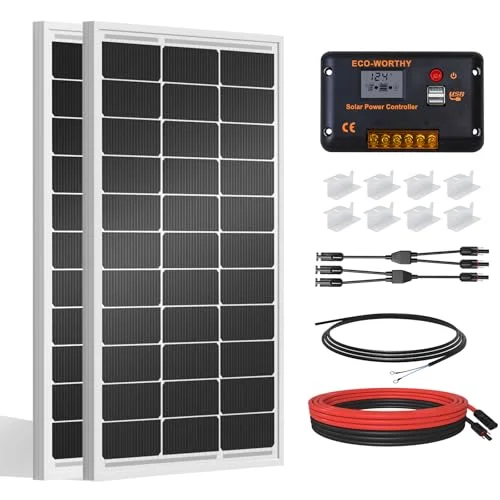
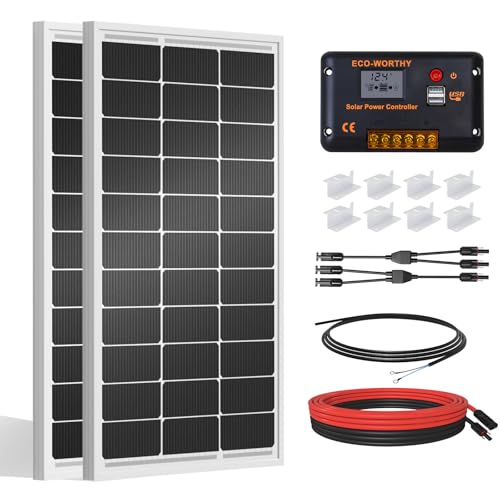
This ECO-WORTHY kit focuses on a practical 200W van rooftop build using two monocrystalline 100W panels plus a 30A PWM charge controller. The appeal is in the “ready to install” packaging: it’s positioned as a simpler setup with Z brackets, pre-drilled panels, and enough solar cables to connect without improvising. PWM is also generally simpler than MPPT, so it can still work well for straightforward 12V battery charging when sun exposure stays reasonably consistent. Durability is part of the pitch too, with an aluminum frame and a weather-rated junction box.
Best for: Van owners charging a 12V or 24V battery for lights, fans, and small DC loads who want a simpler PWM charging setup
Not ideal for: Buyers who need maximum harvest during partial shading, frequent low-angle sun, or highly variable conditions and want MPPT-style tracking
Decision cue: Shortlist it if your daily off-grid plan fits a ~200W solar footprint and you prefer PWM simplicity for charging.
Check Amazon
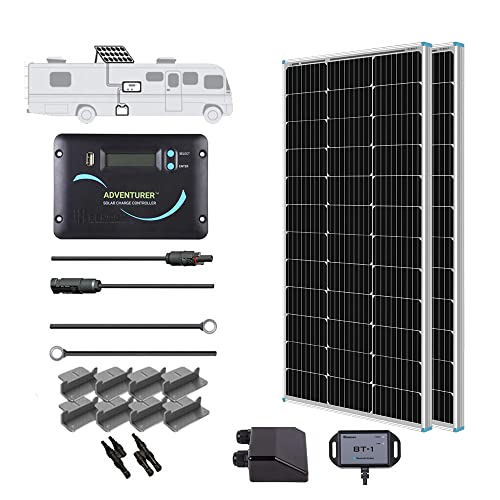
Renogy’s 200W kit pairs monocrystalline panels with the Adventurer 30A PWM controller, aimed at a cleaner RV-style installation. For vans, the practical win is installation ergonomics: pre-drilled panel holes, plug-in style cabling, and controller protections like reverse polarity and short-circuit protection. It also emphasizes a longer warranty window than many smaller starter kits, which is a useful confidence signal when you’re wiring something onto a vehicle and plan to leave it outdoors.
Best for: Van owners who want a clean install and a 200W PWM solar setup with broad battery-compatibility messaging and strong controller protections
Not ideal for: Shoppers who expect variable shading and want MPPT efficiency gains to maximize daily energy capture
Decision cue: I’d skip it if you know your van parking locations will create frequent partial shading and you want MPPT-first tracking.
Check Amazon
This Renogy 400W kit is built for buyers who want MPPT charging instead of PWM. With four 100W panels, it targets higher daily energy production, which is typically where MPPT starts to matter more on real van schedules, especially when the sun changes through the day or you can’t keep the panels at an ideal angle. The included monitoring module is a plus because it helps you see what the system is doing instead of guessing.
Best for: Van owners expanding beyond 200W who want MPPT charging and phone monitoring for confidence
Not ideal for: People who only need a small starter system or who aren’t ready to size wiring and battery capacity properly for a 400W build
Decision cue: Shortlist it if your van’s daily energy need is bigger and you can match MPPT, battery, and wiring for a safe 12V system.
Check Amazon
Renogy’s 100W starter kit is a budget-friendly on-ramp for van solar, aimed at modest daily use like charging a battery for basic electronics. It includes the essentials, 100W monocrystalline panel(s), the 30A PWM controller, and mounting/cabling, so you’re not hunting around for compatibility pieces right away. The listing also emphasizes testing and certification, which matters for small systems that are often installed quickly and left out through real weather.
Best for: Van owners starting with a single-panel approach using PWM to support basic DC charging (phones, small electronics, low-draw loads)
Not ideal for: Buyers who need reliable daytime charging for heavy inverter-based AC usage for long stretches
Decision cue: Shortlist it as a first step if you mainly need basic charging now and plan to scale later.
Check Amazon
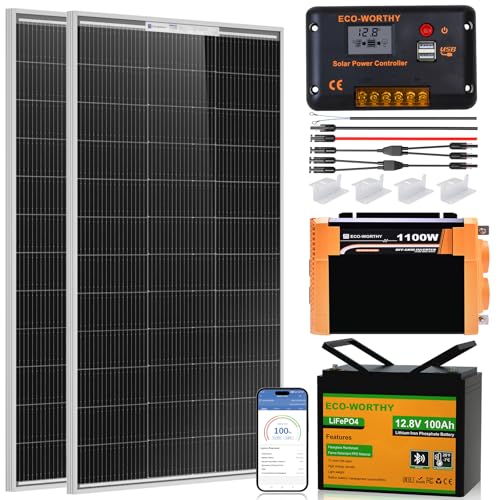
This ECO-WORTHY complete system bundles more than panels by adding a lithium battery and a 1100W inverter, which shifts it from “solar charging” to actually running devices with fewer separate purchases. For van builds, the benefit is predictable compatibility between controller, battery, and inverter, plus a step-by-step install flow geared toward first-timers. The tradeoff is flexibility: because it’s a bundled system, you inherit the included inverter power and battery capacity rather than tailoring them from scratch.
Best for: First-time van off-grid buyers who want a lithium battery plus inverter in one package for small AC use
Not ideal for: Shoppers who want to customize battery capacity, charge strategy, or inverter size later
Decision cue: Choose it if the matched 200W-plus-battery-plus-inverter setup fits your device needs and you’re okay with the bundled capacity limits.
Check Amazon
This ECO-Worthy 1.6KWH kit targets bigger off-grid days by bundling four 100W panels, a 40A MPPT controller, two 12V 100Ah lithium batteries, and an upgraded 2000W pure sine wave inverter. For van buyers, the main value is system readiness: fewer missing-part problems when you jump to higher output and higher daily energy needs. The kit also emphasizes deeper-cycle battery behavior and built-in battery management features, which matters when you’re planning longer runtimes and more frequent charging.
Best for: Vans or campers that need stronger daily energy and plan intermittent AC device use
Not ideal for: Owners with limited budget or limited roof space who only need minimal DC charging
Decision cue: Shortlist it if you want one higher-output system for meaningful AC use and you can support the electrical capacity it includes.
Check Amazon
This Renogy 200W starter kit combines two 100W panels with a 30A PWM Wanderer Li controller. It’s positioned around straightforward installation and a battery-friendly charging approach, highlighting staged charging behavior and multi-step compatibility details. The safety angle is also front-and-center with protections like reverse polarity and short-circuit protection, helpful when wiring gets routed through tight van spaces. It’s a “get it working” kit rather than a maximize-every-ray MPPT design.
Best for: Van owners who want a reliable 200W PWM system with multi-stage charging and easier expansion toward 400W
Not ideal for: Buyers prioritizing MPPT-style efficiency gains under variable/shaded conditions
Decision cue: Shortlist it if you expect fairly consistent sun and want PWM simplicity with strong safety features.
Check Amazon
This ECO-WORTHY 400W kit is aimed at higher daily energy production with MPPT control and Bluetooth monitoring. It includes four 100W panels, a 40A MPPT controller, Z brackets, and cabling meant to speed up setup, so it’s built for a cleaner rooftop build rather than a piecemeal scramble. The listing also leans into the idea of reduced shading losses (including bypass diode-related features) and uses low-iron glass styling to help preserve output. MPPT is the bigger win when sun angle changes through the day or roof features cast partial shadows.
Best for: Van owners scaling up to ~400W who want MPPT efficiency plus Bluetooth monitoring for confidence
Not ideal for: Owners who can’t store the extra energy in their battery capacity or who plan a small battery bank that will get overwhelmed
Decision cue: Pick it when your van’s electrical plan supports a 400W charging setup and you want MPPT with phone visibility.
Check Amazon
This Rvpozwer kit emphasizes N-type solar panels and higher claimed efficiency, pairing a single 200W panel with a 30A controller plus included cabling and mounting hardware. For van roofs, the practical appeal is the efficiency angle when you can’t add many panels due to space limits. The listing also includes safety guidance about current limits and cautions tied to parallel wiring expectations, which suggests the design assumes you’ll follow the electrical rules rather than wing it.
Best for: Van owners with limited roof area who want a more compact 200W N-type panel approach and can follow the kit’s stated connection limits
Not ideal for: Buyers who want a plug-and-forget wiring experience without paying attention to current limits and parallel/series wiring rules
Decision cue: Shortlist it if roof space limits your panel count and your wiring plan fits the kit’s connection guidance.
Check Amazon
This ECO-WORTHY complete 12V 400W system bundles four 100W panels with a 12.8V 280Ah lithium battery and a 2000W inverter, targeting more complete off-grid travel power. For van buyers, the benefit is reduced compatibility work: controller, battery, and inverter arrive as one package, and the install is framed as one cohesive setup instead of piecing together separate components. The kit is aimed at stronger daily energy production and inverter capability than small starter systems, which fits extended boondocking where you actually want to run more than just light DC loads.
Best for: Van owners planning higher-energy off-grid days with meaningful inverter-based AC use and large battery storage
Not ideal for: Owners who only need light DC charging or who want a low-cost, low-wiring-complexity setup
Decision cue: Choose it if the budget and electrical complexity match your need for 400W solar plus large lithium storage.
Check Amazon
Reader questions answered
Should a van solar kit use PWM or MPPT charging, and how much difference shows up day to day?
PWM controllers can be perfectly fine for simple 12V charging when your sun exposure is fairly steady. MPPT usually improves real-world harvest when panel output changes due to temperature, sun angle, or partial shading because it tracks the panel’s power point more effectively. In a van, parking location varies, and roof shadows from vents or awnings are common, so MPPT often captures more usable energy over time. That said, the biggest deciding factors still come down to whether the kit’s controller matches your battery voltage/chemistry and whether your wiring run and battery size can absorb the charge safely.
Do you need a starter kit, or is a complete kit with battery and inverter the smarter choice for a van?
A starter kit usually means panels plus a controller and mounting, with the battery and inverter coming separately. That approach works when you already own a battery and know your inverter needs, or when you want to customize battery capacity and load priorities. Complete kits reduce compatibility risk because controller voltage, battery chemistry, and inverter output are bundled to work together, and it also lowers the chance you accidentally miss a core component during checkout. The tradeoff is less flexibility: you inherit the bundled battery capacity and inverter power rating, so you still need to map your daily device list to your runtime needs.
How much solar power is enough for typical van loads like fridge, lights, and occasional AC?
“Enough” depends less on panel wattage alone and more on your load profile plus the number of useful sun hours where you park. A 100W kit can cover lighter DC loads and basic battery charging, but it struggles to support long inverter-based AC runs without a larger battery bank. Around 200W helps many weekend setups keep batteries topped up for phones, fans, and some fridge usage depending on the fridge type and duty cycle. Moving to 400W (or complete kits with larger lithium capacity) supports higher daily energy needs and more frequent inverter use. For AC specifically, inverter size and surge draw often matter as much as solar production because batteries buffer short-term demand.
What installation and wiring details most often cause problems in a van solar build?
Most problems come from mismatch: controller type versus battery chemistry, wiring gauge versus current, and missing protection (like fuses) for the battery string. Another common issue is mount and cable routing. Van roofs experience vibration and heat cycling, so buyers need weather-rated connectors and secure strain relief so cable stress doesn’t damage plugs over time. Shade management also matters because vent covers and roof fixtures can cast partial shadows. Finally, check that the kit includes the cable lengths and connectors you need for the actual distance from roof to battery. A well-packaged kit reduces surprises, but long cable runs can still require voltage-drop planning.
Which kit fits best for a specific battery setup already in the van?
Battery compatibility drives controller choice. PWM kits often advertise support for multiple chemistries, but the exact supported list and the charging algorithm details still matter, especially between lithium versus AGM or flooded lead-acid. Complete kits reduce guessing by bundling a specific lithium battery, which usually simplifies charging behavior and reduces returns. If your van already has a lithium battery pack, choosing a controller that explicitly supports lithium chemistry can prevent undercharging or improper protections from triggering. If your van uses lead-acid batteries, selecting a kit that clearly supports AGM, gel, or flooded lead-acid helps avoid charging stress. Before purchasing, always confirm battery voltage, your overall system voltage plan, and connector compatibility.
What the comparison teaches
Controller type affects real-world harvest, not just advertised efficiency.
PWM can work well in steady sun, but MPPT often captures more energy when sun angle changes or partial shading shows up, van roofs rarely stay uniform, so MPPT tends to help as your system grows.
Starter kits reduce cost, but complete kits reduce compatibility risk.
Buying panels and a controller alone lets you customize battery capacity and inverter size. Complete kits bundle battery and inverter, which simplifies shopping and reduces mismatched-spec problems during installation.
Bigger wattage only helps if the battery can accept and store it.
A 400W kit can be wasted if your battery capacity and electrical design can’t safely absorb the charge. Matching battery chemistry, voltage, and wiring protects performance and reduces overheating risk.
AC runtime depends on battery buffering, not just solar panel output.
Inverter loads draw current immediately, while solar refills gradually. Frequent inverter use usually requires a larger battery bank and realistic sun hours, even with high panel wattage.
Before you buy
- Confirm the controller matches your battery chemistry and system voltage plan (12V vs 24V) before checkout.
- Check kit contents for essentials like fuses (or fuse-less design), cable lengths, connector types, and mounting hardware.
- Verify cable gauge and your planned cable run length to reduce voltage drop and overheating risk.
- Review the return policy and warranty terms carefully, including how long the controller versus the panels are covered.
- Scan recent customer reviews for real install issues such as connector fit, bracket alignment, or controller behavior in heat.
- If you plan to use an inverter, confirm continuous and surge ratings for your appliances’ startup draw.
- Check junction box and connector IP ratings and make sure your roof sealing plan matches your van roof material.
Final takeaway
A van solar panel kit should match both your energy goal and your install reality. Smaller PWM starter kits like 100W or 200W fit basic DC charging and simpler budgets, especially when sun exposure stays relatively consistent. When daily conditions vary or roof shading is unavoidable, MPPT-based 400W kits often convert more usable energy, but you have to size the battery and wiring carefully. If you want to avoid hunting for separate parts, complete kits bundle a battery and inverter, but you’ll still need to plan around the included capacity and appliance surge draw. Pick the kit that aligns controller type, battery compatibility, and your actual daily sun window.
FAQ
Can a 200W van solar kit run an AC unit?
It depends on the AC unit’s draw and surge plus your battery capacity and sun hours. Most AC runs require a larger battery bank and properly sized inverter, not panels alone.
What’s the practical difference between PWM and MPPT for a van?
MPPT usually performs better when sun angle shifts, temperature changes, or partial shading reduces panel output. PWM can still work well for simpler, steadier charging situations.
Do complete kits eliminate wiring and compatibility problems?
They reduce the biggest risks because controller, battery, and inverter ship together. Even so, installation still requires safe fusing, correct battery connections, and surge matching for your appliances.
How many solar panels can a van roof support safely?
Safe support depends on roof structure, mounting hardware, cable management, and electrical limits. Also confirm the kit’s guidance on parallel/series wiring so you don’t overload connections.
How should a van buyer estimate daily solar output?
Start with your location’s average usable sun hours where you park, then account for shading and panel orientation. Treat advertised output as ideal conditions and plan for lower daily generation.