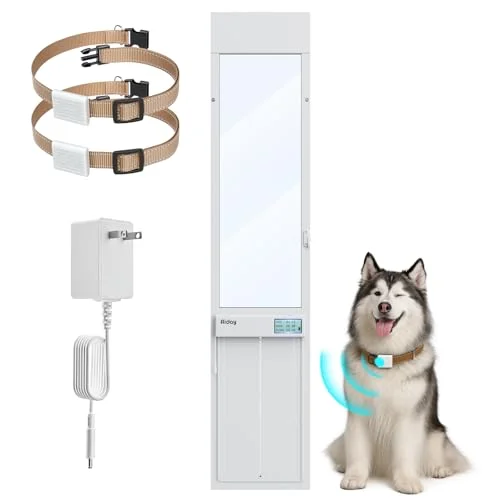
An automatic sliding glass door sounds straightforward until you compare listings, because they’re really trying to solve different problems. Some focus on hands-free pet access, others on locking and behavior control after hours, and some are more about closing or adding a security barrier than opening anything at all.
Use this to pick based on what you need first: predictable, hands-free pet passage; secure after-hours behavior (like collar-only activation and timed lock behavior); or a sliding door that actually closes reliably after use. Then double-check installation fit, since slider height ranges, glass opening dimensions, and mounting compatibility are what decide whether the product works in your setup.
List of Automatic Sliding Glass Door
This reader-first review treats “automatic sliding glass door” as an umbrella category with multiple jobs. Pet-entry units promise controlled access and convenience, while slideback closers focus on preventing left-open doors. Security add-ons aim to reduce break-in risk for patio doors and glass windows, not to automate movement. Each product explanation ties back to who benefits, where the installation can fail, and what to verify before ordering. The goal is practical fit and predictable daily behavior, so readers can avoid buying hardware that technically works yet fails under real conditions like track alignment, pet lingers, or after-hours control.
Product-by-product explanation
This is an electric pet door that slides open automatically when your dog approaches, using two collar sensors so only your collared pet triggers the movement. The door locks again about eight seconds after entry, which supports day-to-day control and helps limit unwanted access. It also includes scheduling so you can set access windows, plus a manual override when you need to adjust on the fly. For safety, it includes anti-pinch reversing behavior if the pet lingers mid-passage. It’s designed to work with a nearby outlet and fit within the stated slider height range.
Best for: Homes with an aluminum sliding glass door where the track height fits the listed range (76″ to 80-11/16″) and a collared dog (up to 220 lbs) needs scheduled, hands-free access.
Not ideal for: Households that can’t or won’t use sensor collars, or installations where the track-to-track height falls outside the stated range.
Decision cue: I’d shortlist this if your track height matches the range and your routine fits collar-only access with the scheduled lock behavior.
Check Amazon
This is a collar-sensor automatic pet door meant for sliding glass doors. The basic flow matches the other Aiday models: your dog approaches, the door glides open, and it locks again after a short delay. It includes custom scheduling plus manual override so caregivers can restrict access to set hours and still make temporary exceptions. Anti-pinch protection is included to help reduce risk if a pet pauses mid-pass. It also lets you adjust sensing range with a single button so detection can better match where your dog approaches from.
Best for: Owners with a slider height that falls within 76″ to 80-11/16″ and dogs up to 100 lbs who want scheduled, collar-only access.
Not ideal for: Very large dogs, or setups where your track height requires the taller frame range used by other models.
Decision cue: Skip if your pet’s size or your slider height doesn’t match the labeled capacity and adjustment range.
Check Amazon
This product doesn’t provide a pet entry opening, it’s designed to help keep a sliding glass door from staying ajar by automatically closing it after use. After someone uses the door, the slideback closer brings it shut, which can improve comfort and reduce energy loss from leaving the door open. It includes dual mounting options to match more sliding door structures, and it offers a fast/slow closing valve so you can balance convenience with quieter, gentler closing.
Best for: Households that want patio or balcony sliding doors to reliably close after use, especially where drafts or temperature loss are a concern.
Not ideal for: Homes that need an actual pet-entry opening, or doors where the length/mounting surfaces don’t align with the included kits.
Decision cue: I’d shortlist this when the biggest problem is doors left open and your sliding door length is within the 5-8 FT compatibility band.
Check Amazon
This automatic pet door targets a taller sliding glass door opening and uses collar sensors for pet-only triggering. As your dog approaches, the door opens automatically, then locks tight after an eight-second delay to support controlled movement. Scheduling can restrict when collars are active, and manual control lets caregivers override quickly for situations like unexpected weather or vet visits. Anti-pinch protection helps reduce risk if a pet lingers mid-passage. It also includes an adjustable sensing range so detection can be tuned based on typical approach behavior.
Best for: Owners with a tall sliding glass door track height that falls within 90-9/16″ to 95-1/4″ and dogs up to 100 lbs who need scheduled, collar-only access.
Not ideal for: Homes with shorter track heights, or situations where collar setup won’t be practical.
Decision cue: Shortlist if your track height matches the taller range and the anti-pinch behavior aligns with how your pet typically passes through.
Check Amazon
This XL-Tall automatic pet door combines collar-only triggering, scheduling, and anti-pinch protection for larger dogs. When a collared dog approaches, the sliding glass door opens automatically without pushing, then locks tight after roughly eight seconds to help control access. Owners can set access hours directly on the unit so entry doesn’t happen outside the designated schedule. There’s also manual override for quick exceptions, and the sensing-distance switch helps fine-tune detection so the door responds reliably to typical approach distance.
Best for: Homes with an XL-Tall sliding glass door opening matching 90-9/16″ to 95-1/4″ and a collared dog up to 220 lbs.
Not ideal for: Families who don’t want to rely on sensor collars, or installations where the measured opening width can’t accommodate the unit’s stated glass opening.
Decision cue: I’d shortlist this if you need the XL-Tall sizing and want collar-only, scheduled access for a large dog.
Check Amazon
This is a security-focused add-on, not a door automation device. Burglabar adds two adhesive hinge-style security bars designed to improve resistance on sliding patio doors and sliding glass windows. Installation is designed around a specific clearance between the sliding door frame and the back fixed glass pane, and the bar adjusts to fit different door sizes. Because it uses strong adhesive intended to bond firmly when applied correctly (without drilling into the frame), it aims to increase security while keeping modifications minimal. It’s best when the clearance requirement can be met and the mounting surfaces can be prepped properly.
Best for: Renters or homeowners who want extra security for sliding glass doors and sash windows without changing the door itself.
Not ideal for: Situations where your clearance measurement doesn’t work out, or where you can’t reliably clean and prep the adhesive mounting surfaces.
Decision cue: Shortlist if your clearance is within the stated guidance and adhesive installation feels acceptable for your home.
Check Amazon
Reader questions answered
Which automatic sliding glass door option matches a dog’s needs and provides the right access control?
Start by clarifying the kind of access control you actually want. Collar-sensor automatic pet doors open when your dog approaches and ignore non-collared animals, which fits households that want predictable entry. Scheduling tightens control by restricting when the collar can trigger the door. Anti-pinch reversing matters if your pet sometimes pauses mid-pass. Above all, choose the model whose slider height range matches your track measurement, since installation fit affects how reliably the door operates. If your priority is security, note that security bars or closers can’t replace a properly controlled pet door, they address different risks.
What should be checked to ensure the door automation actually fits the existing sliding door track?
Fit usually comes down to measurements and mounting compatibility. For collar-sensor pet doors, verify both the slider height range and the track-to-track geometry using the brand’s suggested measurement from top track to inner bottom track. For the slideback closer, confirm your sliding door length sits in the 5-8 FT band and that the included mounting kits match your door structure. For adhesive security bars, measure clearance between the moving frame and the fixed glass pane, too little or too much clearance can affect alignment and how well the bar holds. Doing these checks before ordering helps avoid expensive returns.
How do scheduling and manual override change day-to-day behavior compared with simple automation?
Scheduling is about behavior management, not just convenience. With collar-sensor pet doors, scheduling can disable collar-triggered entry outside approved hours, which helps avoid unwanted late-night access. Manual override exists for exceptions, so caregivers can expand access temporarily without changing the entire plan. Auto-closing products handle a different behavior: they reduce the chance doors get left open after use. Adhesive security bars handle a third behavior: resisting forced entry. Once you know which behavior you’re trying to change, the “right” type of product gets much clearer.
Which option improves safety during use, especially if a pet might linger or pause in the doorway?
Safety features matter most for pet-access doors, because a pet can pause inside the opening while you’re adjusting leashes or waiting for cues. Anti-pinch reversing aims to protect paws and tails by stopping and reversing if the pet lingers mid-passage. For auto-closing and security bars, safety is more about predictable hardware behavior and a clean, correctly executed install. If a closer includes adjustable closing speed, that can also reduce abrupt movement and noise. For adhesive bars, stability depends heavily on clearance and proper bonding.
If home security is the main concern, what should be prioritized: automation, locking behavior, or reinforcement?
Security needs come in layers. A collar-sensor pet door may reduce unauthorized animal access during set hours, but it doesn’t replace real burglary reinforcement. A slideback closer can indirectly support security by lowering the chance doors stay ajar, which reduces opportunities for easy access. A dedicated security bar targets a sliding door’s weak point by adding a barrier at the frame-to-pane interface. For adhesive bars, correct clearance and installation quality are what decide whether the barrier actually holds. For pet doors, scheduling and lock timing decide whether the door becomes a viable entry point at the wrong time. Choose the layer that best matches your threat model.
What the comparison teaches
Automation type determines the job it can solve.
Pet doors control animal access and timing, closers control open/closed behavior, and security bars address forced entry. Buying one to replace the others often leaves a key risk unhandled.
Track height fit affects everyday usability more than any feature list.
For pet doors, the correct slider height and the track-to-track measurement determine whether the unit mounts smoothly and seals properly. Even small mismatches can lead to misalignment and frustrating pet behavior.
Safety features should match real behavior, not assumed behavior.
Anti-pinch reversing helps when a pet pauses mid-pass. Adjustable closing speed helps when people rush after using the door. Pick the safety mechanism that matches what typically happens in your home.
Scheduling reduces unwanted access, but installation and setup still control reliability.
Collar-only activation and lock timing can reduce stray triggers, but reliability also depends on sensing distance and how your pet approaches. Scheduling works best when household routines stay consistent.
Before you buy
- Measure your slider height from the top track to the inner bottom track, then confirm it lands inside the product’s stated adjustment range.
- Verify the opening width and the unit’s stated glass opening size match your sliding door clearance before you commit to installation.
- For collar-sensor pet doors, check that your dog’s weight is within the listed capacity and plan how collar usage will work (and how you’ll handle replacement if needed).
- For slideback closers, confirm your door length fits the 5-8 FT band, and check that the included mounting kits match your door/frame structure.
- For Burglabar security bars, measure the clearance between the sliding door frame and the fixed glass pane, and ensure it matches the 3/8″ (9mm) guidance.
- Confirm outlet placement and cable reach for plug-in pet doors; consider whether using an extension cord is acceptable in your installation location.
- Scan recent buyer feedback for installation-related issues like alignment, bonding strength/adhesion behavior, and whether scheduled locking behaves as expected.
Final takeaway
An automatic sliding glass door purchase should start with the problem you’re trying to solve: controlled pet access, reliable auto-closing, or added physical security. Collar-sensor pet doors fit households that want scheduled, collar-only entry with anti-pinch protection, but only if your track height and setup match what the unit is built for. Slideback closers fit homes where sliding doors are often left unsecured by accident and where adjustable closing speed improves comfort. Adhesive security bars work for people who want reinforcement without drilling, as long as clearance and surface prep are achievable. The “right” pick feels simple once fit, capacity, and your specific risk match up.
FAQ
Do collar-sensor automatic pet doors work only for your dog?
Yes, these models use exclusive sensor collars, and the door opens only when a collared pet triggers it. This design is intended to reduce entry attempts from non-collared animals, and scheduling can further limit access hours.
How do you choose the correct pet door size for a sliding glass door?
Measure your slider height from the top track to the inner bottom track, then confirm it falls within the model’s adjustable range. Also verify the opening width against the stated glass opening requirements to avoid installation misalignment.
Will a sliding door closer replace a pet door?
No. A slideback closer only helps the door shut after use, it doesn’t provide pet passage or controlled access. It’s for better door management, not animal entry.
Can adhesive security bars be used on every sliding glass door?
Not automatically. Adhesive bars require the correct clearance between the sliding door frame and the fixed glass pane and depend on proper surface cleaning and installation. If clearance measurement doesn’t work out, the lock may not engage correctly.
What safety feature matters most for pet door use?
Anti-pinch reversing matters when a pet might linger or pause mid-passage. It’s designed to reduce pinch risk by stopping and reversing motion during a problematic moment.