A server rack battery backup protects the moment power goes sideways, when outages start, workloads get cut off mid-task, and servers end up in ugly stop-and-go shutdown cycles. The catch: “UPS wattage” (and even “UPS VA”) doesn’t automatically tell you what will actually happen during brownouts, surges, and longer runtime scenarios.
Use this article to narrow the field by real setup needs, not by brand names or headline numbers. Each recommendation lines up with a common rack reality, small workgroup servers, shallow rack depths, active-PFC power supplies, or the bigger 1500VA-class units that can handle denser gear.
List of Server Rack Battery Backup
A useful server rack UPS decision balances runtime, power compatibility, physical fit, and manageability. Battery backup units differ in sine wave type, AVR behavior, outlet layout, depth, and monitoring options like Ethernet cards. Some models support user-replaceable batteries and connected equipment protection, which reduces downtime risk beyond the runtime minutes. Others cap runtime without external battery expansion. This review focuses on buyer outcomes: which UPS protects your specific workloads, how it handles common power problems, and what to verify before purchase so the rack install works and the UPS can actually carry your load.
Product-by-product explanation
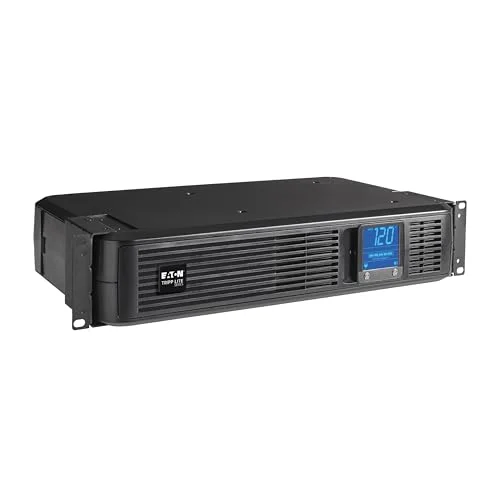
This Tripp Lite SMART1500LCD is a 2U rack-mount UPS built for small server racks that need reliable surge protection, AVR stabilization, and straightforward battery backup. It offers 1500VA/900W headroom and eight outlets, so you can cover a server plus networking gear without constantly re-plugging. When the incoming line stays within AVR correction limits, it keeps running on wall power, which can reduce unnecessary battery cycling. In battery mode it outputs modified sine wave (PWM), so compatibility depends on your power supplies. It also includes
Best for: Small-to-mid workgroup servers plus network gear in a standard 2U rack who want AVR correction, an LCD display, and maintenance-friendly operation.
Not ideal for: Active PFC systems that require pure sine wave output, or setups where you need very strict runtime behavior and haven’t planned the load.
Decision cue: Shortlist it when your rack has room for 2U and your equipment can handle modified sine wave during battery time.
Check Amazon
CyberPower’s CP1500PFCRM2U is aimed at Active PFC compatibility using a PFC sinewave UPS design, which fits many modern server and workstation power supplies. It’s designed to be rack-friendly (around 10.5 inches deep) for where standard 2U units can be awkward. Eight outlets let you support multiple devices, and AVR helps correct minor voltage swings without immediately draining the battery. A color LCD panel shows battery and power conditions at a glance, which makes it easier to spot issues before they become downtime. It also includes management software via download, though
Best for: Teams running active PFC gear and wanting a 1500VA-class UPS that fits better in short-depth racks.
Not ideal for: Users who want Ethernet-based remote management built in without adding cards or setting up software.
Decision cue: Shortlist when depth is the constraint and you need sine wave output behavior for better PSU compatibility.
Check Amazon
CyberPower OR500LCDRM1U is a compact 1U UPS intended for smaller protection loads like a department server, switches, routers, and telecom endpoints. At 500VA/300W, it’s more about manageable protection and enough shutdown time, not long-duration backup. It uses simulated sine wave output and includes an LCD panel that shows runtime and power conditions, along with alerts for potential problems. AVR corrects small fluctuations without immediately switching to battery, which typically helps battery health. Outlet
Best for: Smaller closets or shallow racks that need a 1U UPS for network devices and a single server.
Not ideal for: Active PFC power supplies that demand pure sine wave, or environments where you need long backup windows.
Decision cue: Choose it when your budget and rack space favor 1U capacity, and your load stays within about 300W.
Check Amazon
CyberPower CP2000PFCRM2U steps up the capacity for heavier server and storage loads while staying aligned with active PFC needs. With 2000VA/1200W, it offers more watt headroom than many common 1500VA models, which can matter when systems draw closer to rated capacity or when you plan to add more gear later. It includes eight NEMA 5-20R outlets, a color LCD display for battery and power status, and AVR to correct small swings without burning battery time. Like many rack UPS designs, it’s built for short-depth rack installs, which matters for serv
Best for: Racks with active PFC equipment that need more watt coverage for additional servers or denser networking setups.
Not ideal for: Racks where you can’t realistically guarantee the stated depth (plus cable bend space) for a clean, door-closed installation.
Decision cue: Shortlist when your total real-world draw approaches or exceeds a 900W-class unit’s comfort zone and you want sine wave output for compatibility.
Check Amazon
APC’s SMC1500-2UC is a 2U UPS centered on pure sine wave output, which tends to improve compatibility with active electronics and many modern server power supplies. It delivers 900W and has six battery-backed outlets, making it a good fit when your priority is protecting the most critical devices and ensuring stable shutdown. AVR helps preserve battery life by correcting certain voltage issues before switching to battery. SmartConnect adds remote monitoring through a secure portal, which helps teams catch events earlier and keep firmware management more organized over time.
Best for: Buyers who prioritize pure sine wave compatibility and remote visibility for a smaller set of critical devices.
Not ideal for: Deployments that need eight battery-backed outlets or that require long-term, frictionless SmartConnect access without considering trial limits.
Decision cue: Shortlist when pure sine wave behavior and remote portal notifications matter more than total outlet count.
Check Amazon
CyberPower OR700LCDRM1U focuses on workgroup uptime in a 1U rack footprint. With 700VA/400W and six outlets, it’s positioned for a department server plus networking and telecom equipment without taking over too much rack space. It uses simulated sine wave output, helpful for many typical UPS-compatible setups, but not universal for every active-PFC configuration. AVR manages minor power fluctuations without moving to battery, and the LCD screen shows runtime and battery status so you can time orderly shutdowns.
Best for: Rack users who want more than the 500VA class but still need to stay within 1U height limits.
Not ideal for: Buyers who need remote management immediately in the box with Ethernet, or who rely on pure sine wave behavior for PSU compatibility.
Decision cue: Choose it when you need about a 400W-class backup and can confirm your equipment tolerates simulated sine wave.
Check Amazon
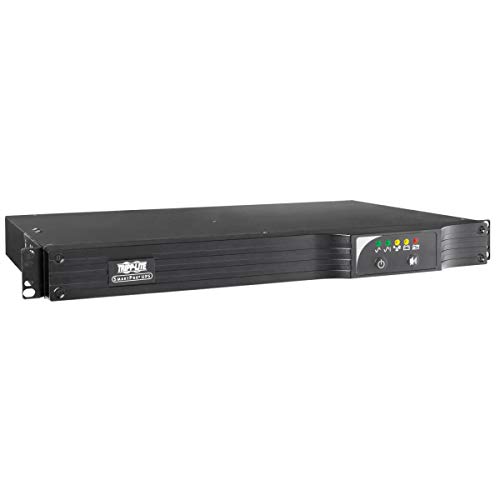
Tripp Lite SMART500RT1U is a compact 1U, line-interactive UPS built for smaller deployments where rack depth and power control both matter. With a 500VA/300W class capacity and an installed depth around 11.8 inches, it’s intended for tighter racks or shallow equipment areas. It includes network-aware power management software and multiple control interfaces like USB and RS232, plus an EPO for emergency power-off. Outlet control supports one individually controlled port for load shedding, which can extend runtime by turning off lower-priority devices.
Best for: Small office server racks that want controllable outlets, shallow 1U depth, and network-aware power management.
Not ideal for: Racks that require pure sine wave output, or buyers who want built-in Ethernet remote features without optional cards.
Decision cue: Shortlist when rack depth is tight and load shedding plus remote management add-ons are part of your plan.
Check Amazon
Tripp Lite SMART1500LCDXL builds a more expansion-friendly 1500VA backup by adding support for expandable runtime. It starts at 1500VA/900W and eight outlets, targeting small server racks that want AVR stabilization and a readable LCD for monitoring. When voltage drifts outside safe limits, it switches to battery mode. Battery mode uses modified sine wave (PWM), so compatibility still depends on your power supplies. The standout is the option for an external battery pack that can significantly extend runtime at half load, which helps if outage length isn’t predictable over time.
Best for: Racks where outage duration varies and you may need longer runtime later.
Not ideal for: Deployments that can’t support the extra space and cost of an external battery pack in the future.
Decision cue: Shortlist when you want expansion headroom, and you’re comfortable with modified sine wave during battery time.
Check Amazon
Tripp Lite SMART1500RM2U emphasizes pure sine wave output and datacenter-style remote power control. With 1500VA and a higher watt capacity than many similarly labeled units, it can better handle higher real-world loads. It provides eight outlets plus EMI/RFI noise filtering, which can support cleaner power for sensitive equipment. The 2U design also includes extra depth for cable management, and it keeps batteries user-replaceable with a specified battery pack. For remote monitoring, it supports an optional web card slot, enabling secure SNMP and SSH/T
Best for: Buyers with higher wattage needs, sensitive electronics, and a plan to use network cards for remote monitoring.
Not ideal for: Teams that want everything, especially remote management, built in without optional cards.
Decision cue: Choose it when pure sine wave and higher watt headroom matter most and you’re planning for the optional web card.
Check Amazon
CyberPower OR500LCDRM1U is another small 1U UPS that aims to balance straightforward protection with a clear LCD interface. With 500VA/300W and six outlets split between battery-backed and surge-only ports, it fits typical rack scenarios like a small server plus switches and a few peripherals. AVR handles minor power fluctuation without draining the battery, which can help battery longevity. The LCD shows runtime and power conditions so you can make faster decisions during an outage. Remote management requires the optional RM
Best for: Budget-conscious rack buyers who want 1U UPS protection with clear LCD status for a modest load.
Not ideal for: Setups that require pure sine wave output or that must have remote management enabled immediately.
Decision cue: Shortlist when your load is modest and you’ve confirmed your equipment is compatible with simulated sine wave output.
Check Amazon
Reader questions answered
How much UPS capacity is enough for server and networking loads?
UPS “VA” ratings can mislead because what matters is watt draw and power factor, not just the label. Start by totaling the actual watts from server nameplates and, if possible, measuring sustained draw. Then leave headroom for growth, since runtime drops quickly when load increases. Look for models whose watt rating fits your load (for example, units in the ~900W or ~1200W class). For lighter loads under roughly 300-400W, a smaller 1U UPS can still be enough if you only need time for a controlled shutdown.
Do servers with active power supplies need pure sine wave or will simulated work?
Many modern power supplies use active PFC, and the UPS output waveform affects compatibility. Pure sine wave output is typically the smoothest and most broadly compatible. Some UPS models advertise sine wave behavior for active PFC, while others use simulated or modified sine wave (PWM). When the UPS output matches what your equipment expects, you get more reliable shutdown behavior during battery mode. When it doesn’t, the UPS may switch modes more often or fail to keep stable power. I would confirm by checking your server PSU guidance or the listing’s compatibility notes.
What rack depth and mounting size constraints determine the right UPS?
Physical fit is often the dealbreaker for rack UPS purchases. First, measure installed depth in your rack, then compare it to the UPS depth, including the space you’ll need for power cables and network cabling. Short-depth 2U models are a strong option when a regular 2U UPS would collide with a rear door or cable tray. If the space is extremely tight, a 1U UPS can avoid some depth conflicts, but it usually limits total wattage and outlet count. Also confirm whether the UPS supports the mounting orientation you’re planning.
Do you need remote management built in, or can you add cards and use local software?
Remote management needs vary a lot. Some buyers just need local LCD visibility and orderly shutdown time. Others want network alerts, firmware support, and remote control/reboot. UPS models with built-in or subscription-style portal monitoring can be simpler, while models that rely on optional management cards may lower upfront cost but add planning steps. I would also check how remote alerts integrate with your environment, such as SNMP, web access, SSH/Telnet, or software downloads, so you don’t end up with a UPS that only provides local status.
How long should the UPS keep running, and can runtime expand for larger outages?
Runtime comes down to your load, battery capacity, and whether the UPS supports battery expansion. Short outages usually just need enough time to shut down cleanly, while longer events may require running certain workloads. Many rack UPS units provide fixed battery runtime, which shrinks quickly as load rises. If your downtime tolerance spans many tens of minutes, consider models with explicit external battery pack support. I would also check connected equipment guarantees and warranty coverage, because longer outages raise the probability of equipment risk beyond the UPS itself.
What the comparison teaches
Wattage compatibility affects real-world UPS behavior more than VA alone.
Use watt ratings to match what your server and storage actually draw, not just the VA label. If a UPS runs close to capacity, battery runtime drops and your shutdown sequence may start later or not be long enough.
Output waveform decides compatibility for modern power supplies.
Pure sine wave models usually maximize compatibility, while simulated or modified sine wave designs can be more picky. Active PFC systems often need sine wave behavior for the best results.
Rack depth determines what you can install, even if capacity looks great on paper.
Short-depth 2U units help when rear clearance is tight. Still, measure installed depth plus cable bend radius so you don’t get surprised during installation.
Outlet count and outlet type change which devices stay alive during battery time.
Some UPS units provide more battery-backed outlets, while others split outlets into battery and surge-only. Put servers and network gear on the battery-backed ports.
Expansion support can beat bigger UPS capacity for long outage risk.
An expandable battery design can buy you longer runtime without replacing the whole UPS. If outage length is uncertain, plan for the extra space and cost of the external pack.
Before you buy
- Confirm your total continuous load in watts and compare it to the UPS watt rating, not just VA.
- Verify output waveform needs by checking whether your PSUs require pure sine wave, or whether a simulated/modified sine wave design will work.
- Measure rack installed depth and make sure the UPS depth plus power and network cable clearance fits with the rack door closed.
- Count which outlets are battery-backed versus surge-only, and map them to your server and networking priorities.
- Check whether remote management is built in or requires an optional card, then confirm it supports how you want alerts (for example SNMP or portal access).
- Confirm the battery replacement policy, warranty term, and whether batteries are covered, and scan recent failure-related notes in customer reviews.
- If you’re choosing expandable runtime, verify the exact compatible external battery pack model and what runtime it claims at your load.
Final takeaway
Server rack battery backup works best when the UPS matches your load, your power-supply type, and the physical constraints of your rack. For smaller deployments, 1U models like the CyberPower OR series can protect a workgroup server and networking gear with enough time for a controlled shutdown. If your equipment uses active PFC, prioritize sine wave (or pure sine wave) designs to avoid compatibility surprises. If rack depth limits your options, short-depth 2U units help, but you still need to validate runtime against your real watt draw. When outage durations are uncertain, an expansion-ready UPS can be a cheaper path to longer runtime later. Choose based on fit and behavior during battery mode, not only VA numbers.
FAQ
What runtime should a rack UPS provide?
Runtime should match your shutdown, or workload, tolerance. Many buyers plan enough time for an orderly shutdown (often under 15 minutes), while others need longer to keep critical services running.
Do I need pure sine wave for servers?
Not always, but pure sine wave is usually the broadest compatibility bet, especially with active PFC power supplies. If equipment guidance isn’t clear, pure sine wave reduces risk.
Can a UPS protect both servers and networking gear?
Yes, but confirm which outlets are battery-backed versus surge-only. Plug your core servers and switches into the battery-backed outlets so they stay online during outages.
What does AVR change for battery life?
AVR corrects certain brownouts and overvoltages using wall power, delaying when the battery needs to discharge. This typically extends battery lifespan by reducing unnecessary cycling.
Is a higher VA rating always better?
No. Estimate runtime and compatibility using watt capacity and your real load draw. Extra VA without enough watt headroom often doesn’t translate into meaningfully longer battery backup.