A generator extension cord needs more than just being “outdoor” and “long.” It’s easy to grab the wrong plug style or wire gauge, which can lead to overheating or a weak connection under heavy load. You also have to account for power demands, starting surges from tools and compressors can easily stress a cord that looks fine on paper.
This article helps buyers choose by need, tradeoff, and real-world fit. It explains when a 4-prong twist-lock generator cord belongs, when a standard 3-prong extension cord can work, and how length changes safe current delivery. It also covers practical details that matter during outages: lighted ends for visibility, storage and coiling, and weather ratings for outdoor routing. Instead of decoding every spec line, the review focuses on the handful of checks that prevent mismatches and keep setups safe and reliable.
List of Extension Cords For Generator
Choosing extension cords for generators works best as a compatibility problem. The right cord depends on your generator’s outlet type, the device you will power, and how far you must place the generator from people and damp areas. Some products aim at transfer-switch and 30-amp generator hookups with 4-prong twist-lock connectors. Others focus on 125V 3-prong jobs for tools, lights, and smaller loads. This review uses that lens to map common buyer scenarios to the most fitting cord, then highlights what to verify on the listing before purchase and during initial use.
Product-by-product explanation
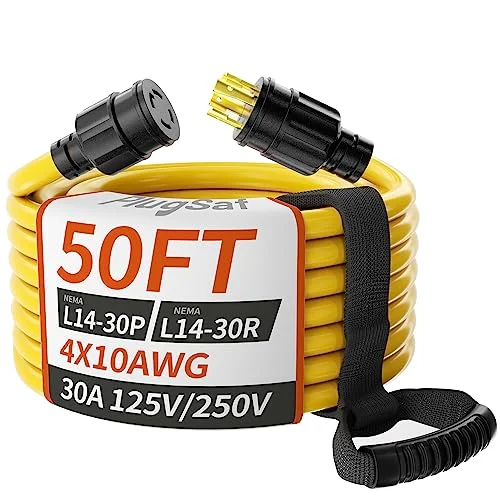
This PlugSaf cord acts like a purpose-built “generator-to-transfer-switch” bridge. It uses a 4-prong L14-30 twist-lock connection, so the plug stays seated during vibration and uneven outdoor conditions. Heavy-duty STW construction and a 10-gauge copper conductor design aim to reduce overheating risk on long runs. The IP65 waterproof and flame-retardant jacket targets rain, sun, and cold exposure, which matters when outages keep cords connected longer than planned. A bright yellow jacket and an included organizer h
Best for: Owners connecting a 30-amp, 4-prong generator output to a manual transfer switch or RV-style 30A inlet.
Not ideal for: Household 15A-only use where a standard 3-prong extension cord is sufficient and less expensive.
Decision cue: Shortlist this when your generator and inlet are L14-30 and you need a long, weatherproof twist-lock 30A run.
Check Amazon
This POWGRN 12/3 outdoor cord focuses on everyday 125V generator powering for heavier accessory loads. It uses a 15A SJTW 12-gauge design with an IP65 waterproof jacket, plus a lighted indicator end so it is clear when power flows. The advertised cold flexibility helps prevent stiff, hard-to-route cords in winter outages. Hook and strain-relief styling makes plugging and hanging easier, which helps when you need to move fast during setup. Storage straps come in the box, which reduces clutter and tangling when the c
Best for: Shoppers powering 125V devices up to a 15A class load outdoors, like jobsite tools, heaters, and outdoor lighting.
Not ideal for: Anyone needing a 4-prong L14-30 connection or trying to exceed 15A total load.
Decision cue: Choose this when your generator output matches a 5-15 style connection and you want visibility plus weatherproofing.
Check Amazon
This PlugSaf 10-gauge, 3-prong cord offers a longer run plus a built-in three-outlet splitter. It targets scenarios where one generator placement must serve multiple small devices without using multiple shorter cords. The SJTW jacket and IP65 waterproofing aim to handle outdoor conditions, while the bright yellow sheath and lighted end improve visibility in dark setups. The multiple-outlet design can simplify power distribution for landscaping equipment, garage work, or holiday lighting. Because it stays as one ext
Best for: Buyers who want one long, outdoor-rated extension with multiple outlet access for several 125V, 15A devices.
Not ideal for: Transfer switch or 30A 4-prong generator inlet setups.
Decision cue: Shortlist it when you need one cord feeding several 125V loads and total current stays within the cord’s intended limits.
Check Amazon
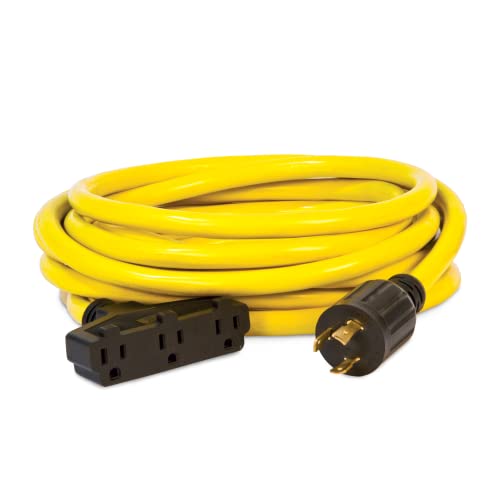
Champion’s fan-style cord converts a 30-amp locking generator outlet into three 15-amp household outlets. It is designed for a specific job: letting a 30A generator power common 125V devices without running multiple separate adapters. The 25-foot length supports placing the generator farther away for safety and comfort. Weather-resistant insulation and dust covers protect the outlets when not in use. Cold and heat resistant wire helps maintain flexibility in varied climates, and a 1-year limited warranty plus lifet
Best for: People with a 30A generator outlet who want straightforward access to multiple 125V circuits for lights, appliances, and tools.
Not ideal for: Users who need 4-prong L14-30-to-transfer-switch wiring or who need 125/250V power.
Decision cue: Pick this when a 30A generator feeds multiple 15A devices and you want a compact multi-outlet adapter.
Check Amazon
This POWGRN 100-foot 12/3 cord is built for longer outdoor generator runs while staying in a 15A, 125V extension-cord category. It includes a lighted end, so visibility improves during setup at night and in shaded areas. The IP65 waterproof and temperature-flexible jacket supports outdoor use where cords may face rain, sun, and cold snaps. Strain relief and hook storage design aim to prevent end damage and reduce hassles from frequent plugging and unplugging. The listing also emphasizes fully uncoiling during use,
Best for: Buyers who must place the generator far away and still power typical 125V, 15A loads outdoors.
Not ideal for: Anyone seeking a 30A twist-lock L14-30 connection or higher-than-15A generator device power.
Decision cue: Shortlist when you genuinely need 100 feet and will stay within the cord’s 15A class load expectations.
Check Amazon
Vockjour provides a 30A, 4-prong twist-lock generator cord designed for sturdier long-term outdoor connections. Its thickened pure copper core and STW-rated construction target stable power delivery and reduced overheating risk. The twist-lock system helps prevent accidental disconnects caused by pulling forces and vibration. An IP65 waterproof jacket and stated wide temperature tolerance support harsh climates. A portable cable organizer helps keep the cord coiled and ready, which matters when outages interrupt ro
Best for: Owners using a 30A generator output for higher-capacity 125/250V setups who need a weatherproof twist-lock cord.
Not ideal for: Households that only power small 15A devices where a simpler 12-gauge 3-prong extension cord fits better.
Decision cue: Choose it when you have an L14-30 outlet and want a long, durable 30A twist-lock solution.
Check Amazon
This 25-foot 12-gauge outdoor extension cord combines a lighted end with a three-outlet design, making it convenient for spreading multiple 125V accessories from one spot. It uses a waterproof flexible jacket with IP65 protection for rain and sun exposure, and it includes storage hook-and-loop straps to keep coiling manageable. The translucent connector design helps show power presence, which reduces guesswork and tripping risk when setup happens in poor lighting. It is positioned as an all-purpose garage, garden,
Best for: Shoppers powering several outdoor accessories or garage tools on 125V, 15A-style generator output.
Not ideal for: Customers who need 4-prong 30A transfer-switch style connections or heavy start-surges.
Decision cue: Shortlist when you want one cord with multiple plugs and power-visibility for moderate 125V outdoor loads.
Check Amazon
RVGUARD’s generator cord targets 30A 4-prong powering for RV and home backup use. It pairs an L14-30P to L14-30R connection with a twist-lock plug to prevent accidental disengagement. The jacket stays flexible across extreme temperatures and is designed to resist cracking and deformation, which helps when cords sit outside or get exposed during storms. Heavy-duty 10-gauge construction supports higher current demand and helps reduce overheating on longer runs. Included storage accessories, including a bag and organi
Best for: RV owners and backup-power users who want a 30A twist-lock generator extension with strong cold weather performance.
Not ideal for: Builders or homeowners who only need 15A 3-prong power to small loads.
Decision cue: Choose this when your generator and inlet are both 30A 4-prong and you want weatherproof, twist-lock reliability.
Check Amazon
This LifeSupplyUSA cord is a heavy-duty 10/3, 3-prong 125V extension designed for outdoor and indoor use. It emphasizes rugged jacket performance against moisture, oil, and abrasion, which helps when cords run through real work areas rather than controlled yards. A lighted end improves visibility so users can confirm power and reduce tripping. The bright yellow sheath supports easy identification and may help avoid accidental mismatches with other cords. The cable’s design aims for 15A, 1875W class loads, so it sui
Best for: Buyers needing a sturdy 50-foot 125V extension for heavier 15A work like tools, lawn equipment, and outdoor lighting.
Not ideal for: Users seeking a 30A L14-30 twist-lock generator connection or 250V capability.
Decision cue: Shortlist when you need a long, tough 10-gauge 3-prong extension and your generator outputs 125V 5-15.
Check Amazon
This PlugSaf 25-foot 30A generator cord gives a shorter, still heavy-duty twist-lock 4-prong run for generator backup and transfer-switch style setups. It uses STW 125/250V construction with 10-gauge copper conductors and a twist-lock L14-30P/L14-30R connection to reduce loosening during outdoor vibration. The IP65 waterproof, flame-retardant, and weather-resistant jacket targets exposure to sun and rain, plus the cold-weather flexibility that matters when outages arrive in winter. An included cord organizer helps
Best for: Households that want a 30A twist-lock generator cord with a moderate 25-foot run.
Not ideal for: Anyone who must route power 50 to 100 feet away for placement or exhaust distancing.
Decision cue: Choose it when 25 feet covers the distance and your setup uses L14-30 30A outlets.
Check Amazon
Reader questions answered
Which cord type fits a generator hookup: 4-prong twist-lock or a standard 3-prong extension?
Start with the generator outlet you have. A 4-prong L14-30 setup typically belongs with 30A twist-lock generator cords, especially when powering a transfer switch or higher-capacity devices. For 125V generator outputs using 5-15 style outlets, a 3-prong 12-gauge or 10-gauge outdoor extension cord can make sense for 15A-class loads like lights and tools. Also match the cord to your goal: multi-outlet splitters help with several small devices, but they do not change total load limits. Finally, verify voltage rating and the cord’s intended use category before routing outdoors.
How much length can safely work during outages without overheating?
Length affects heat and voltage drop, so choose cord gauge and total load carefully. Many 15A 3-prong cords use 12-gauge wire, which can work for moderate loads, but long runs like 100 feet demand strict load discipline. For heavier 30A generator cords, 10-gauge construction helps reduce overheating risk on longer distances. Also follow usage guidance like fully uncoiling the cord and avoiding bundling, which traps heat. If you often run power-hungry tools, oversize the wire gauge and keep the generator placement plan tight to reduce how much length the load must traverse.
Do lighted ends and weatherproof ratings actually matter for generator use?
Visibility and protection matter because generator setups often happen quickly in low light, rain, or cold. Lighted ends help confirm power flow and reduce guesswork when plugging devices at night. IP65 waterproof construction matters because outdoor cords can sit in wet grass, puddles, or snowmelt near the generator. Weatherproof jackets also prevent cracking and jacket stiffening in cold weather, which helps avoid damaged connections and awkward routing. Weather-resistant connectors with strain relief reduce looseness and cable stress at the plug ends, which improves safety when cords experience movement from foot traffic.
Should a buyer choose a cord with multiple outlets, or use separate extension cords?
Multiple-outlet cords simplify plug-in access and can reduce the number of connections near the generator. They help when powering several small 125V devices from one long run, so setup stays cleaner. However, multi-outlet designs do not increase total circuit capacity. Total load across all outlets still matters, and thicker wire and correct gauge remain critical. Separate cords can allow more control by placing loads differently, but they increase connection points and can lead to more accidental unplugging. For outages, fewer connections often improves reliability, as long as total draw stays within the extension cord’s intended current rating.
What the comparison teaches
Match cord plug style to the generator outlet before considering length.
A 4-prong L14-30 cord fits 30A generator setups, while 3-prong 5-15 cords fit typical 125V household outlets. When the plugs do not match, safe connection becomes impossible regardless of wire gauge.
Longer runs require both correct gauge and conservative load habits.
A 100-foot 12-gauge cord can work, but it demands staying within the 15A extension-cord class. Always fully uncoil and avoid bundling to reduce trapped heat.
Multi-outlet cords simplify setup, but total wattage still governs safety.
Three outlets do not mean three circuits with independent capacity. Total current across all devices must stay within what the cord and generator can safely support.
Twist-lock connectors help with vibration, while standard plugs may loosen faster.
Outdoor generator operation causes movement from weather and foot traffic. Twist-lock generator cords reduce accidental disconnect risk, which matters more during long outages.
Before you buy
- Confirm generator outlet type matches the cord plug: L14-30 (4-prong) vs 5-15 (3-prong).
- Verify wire gauge and amp rating for your expected total load, not just a single device’s rating.
- Check length for your placement plan and ensure guidance such as fully uncoiling applies to long cords.
- Inspect the jacket and end hardware for integrity upon arrival, including strain relief and plug fit.
- Confirm the cord’s weatherproof claim (e.g., IP65) matches how you will route it in rain or snowmelt.
- Review warranty terms and whether the listing includes responsive customer support or technical help.
- Scan recent customer feedback for overheating, plug looseness, or durability issues in real outdoor conditions.
Final takeaway
Extension cords for generators succeed when they solve the right compatibility problem. For 30A generator hookups, prioritize 4-prong L14-30 twist-lock cords with heavy conductors and weatherproof jackets, since the goal often involves stable transfer-switch style connections. For typical 125V, 15A device powering, choose an outdoor-rated 3-prong extension with an appropriate gauge and visibility features like a lighted end. Length always changes the safety equation, so match wire gauge to distance and keep total load conservative. Use the checklists to confirm plug type, load limits, weather routing, and cord handling practices before committing.
FAQ
Can a standard 3-prong extension cord power a generator?
Yes for 125V 5-15-style generator outputs and loads that fit within the cord’s 15A class rating. A heavy-duty, outdoor-rated cord with an appropriate gauge reduces overheating risk, especially on longer runs.
What happens if the extension cord is the wrong gauge for generator load?
Undersized wire can overheat under sustained current draw, increasing risk of insulation damage and poor performance. Correct gauge plus conservative load usage matters more than plug type alone.
Do lighted ends improve safety for generator extension cords?
Lighted ends mainly improve confirmation and visibility during setup, which helps prevent accidental unplugging or trips in low light. They do not replace proper matching of voltage, amps, and weatherproofing.
Are twist-lock generator cords worth it?
Twist-lock designs help resist accidental disengagement caused by vibration and outdoor movement. For generator setups that run for hours, this connector security often reduces real-world safety issues.
Should a long outdoor extension cord be uncoiled when running a generator?
Always follow the listing guidance, but in general fully uncoil long cords because coils trap heat. Bundling increases heat buildup and can worsen voltage drop.