Picking a rooftop RV air conditioner is really about fit and real-world power, BTUs alone won’t tell the whole story. If you’re boondocking, energy efficiency and steady operation matter more than peak output. If you’re full-time on the road, noise and long-lasting components tend to be the deciding factors. The wrong unit can drain batteries fast, struggle to hold temperature, or feel unbearably loud once you’re trying to sleep.
Use this review to match a rooftop RV air conditioner to your setup, not just the spec sheet. We walk through what to look for in power draw, cooling speed, noise expectations, and installation details. Then we connect those points to common travel scenarios, weekend stops, family trips, off-grid nights, so you can spot the models that fit your day-to-day routine without drowning in technical jargon.
List of Rooftop Rv Air Conditioner
The review evaluates rooftop RV air conditioners through the lens of practical travel scenarios. It explains how each unit performs in off-grid setups, noisy campgrounds, or extreme temperatures. Instead of ranking products, it matches them to buyer needs, highlighting tradeoffs like power draw versus cooling speed or weight versus durability. The goal is to help readers shortlist options that align with their priorities.
Product-by-product explanation
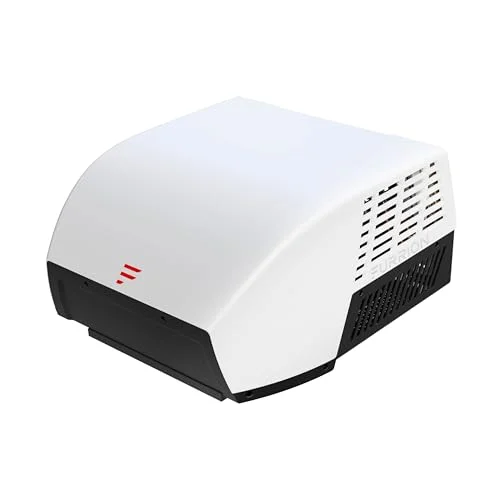
The Furrion Chill Cube 18k BTU is a high-efficiency rooftop AC aimed at RVs that need strong, steady cooling. Its variable-speed compressor adjusts output to maintain temperature without constant loud starts, which can help with comfort and energy spikes. The design is built for RV mounting, and installation is described as straightforward, just note that the air distribution box/ADB may be sold separately depending on the bundle.
Best for: Full-time RVers or anyone who cares about quieter, more efficient cooling in larger RVs.
Not ideal for: Off-grid campers with limited battery capacity or buyers who want an all-in-one installation bundle.
Decision cue: I would shortlist this when noise and efficiency matter more than upfront cost or off-grid power constraints.
Check Amazon
The VEVOR 15000 BTU unit targets faster cooling for mid-sized RVs and includes an air distribution box and installation hardware, which can simplify setup. It offers three modes (auto, cooling, and fan), and its ductless design is meant to work with standard rooftop vents, though it can be louder at higher operation levels.
Best for: Budget-conscious buyers with standard RV setups who prioritize cooling power over quiet performance.
Not ideal for: Light sleepers or RVers who want very quiet operation for long nights.
Decision cue: Choose it if you want strong cooling and simpler installation, and you’re okay with some noise.
Check Amazon
This ducted Furrion Chill Cube 18k BTU version is built to route airflow through existing ductwork, while keeping the variable-speed approach that supports steadier temperature control. If your RV already has ductwork, this can be a cleaner path than retrofitting. The tradeoff: depending on the package, you may still need an air distribution box or other parts to complete the setup.
Best for: RVers with ducted systems who want quiet, efficient cooling without adding ductwork.
Not ideal for: Buyers who want a complete installation kit in one box.
Decision cue: Opt for this if your RV already has ductwork and consistent airflow is your priority.
Check Amazon
The Gidrox 10000 BTU 12V DC unit is designed for off-grid use, running directly on RV batteries without an inverter. It’s built around low power draw, and the ultra-quiet operation and Sleep/ECO/Turbo modes are meant to help you keep comfort without constant battery stress. Cooling capacity is lower than many higher-BTU rooftop ACs, so heat management matters.
Best for: Off-grid campers who need quiet operation and low power consumption.
Not ideal for: RVers in extreme heat or anyone expecting rapid cool-down across a large space.
Decision cue: Pick it when battery life is the priority and you can accept more gradual cooling.
Check Amazon
The Dometic FreshJet 3 Series focuses on balancing power and install practicality. It’s designed to deliver high airflow while also being lighter than older Dometic models, which can help with easier handling and roof load considerations. The tradeoff is that it may not provide variable-speed efficiency like some competitors, which can affect energy use when you’re running longer off-grid.
Best for: RVers upgrading an older Dometic rooftop AC or prioritizing lighter weight and strong airflow.
Not ideal for: Off-grid users who want the most energy-efficient option available.
Decision cue: I’d shortlist this if lightweight build and airflow are your top priorities.
Check Amazon
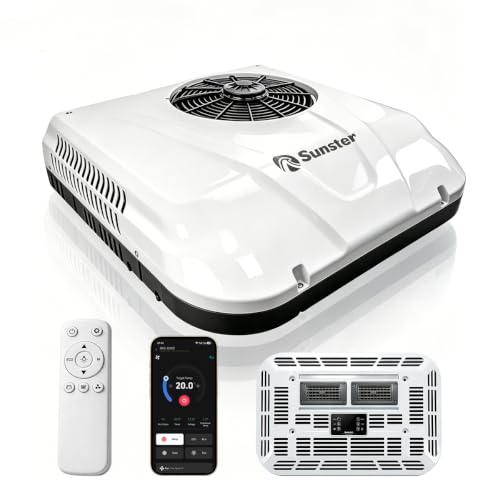
The Sunster 12V 12000 BTU unit is a low-power, battery-friendly rooftop AC for off-grid setups. It runs on 12V DC and is positioned for reduced draw during long sessions, with a slim profile intended to fit standard rooftop vents. Noise may increase compared to the quietest variable-speed options, so it’s best for campers who can tolerate that trade.
Best for: Off-grid campers needing a lighter, low-power AC with faster cool-down.
Not ideal for: Buyers who are very noise-sensitive or need heating functionality.
Decision cue: Shortlist it if you prioritize low power draw and cooling speed and can live with higher noise.
Check Amazon
This Gidrox 10000 BTU 12V DC model adds supplemental heating for off-grid comfort in mild conditions. Like the cooling-only version, it’s built for direct battery use with low power consumption and quiet operation. It’s a good “shoulder season” option, but heating capacity won’t replace primary furnace heat in freezing weather.
Best for: Off-grid campers who want cooling plus light supplemental warmth in milder climates.
Not ideal for: RVers camping in true winter conditions or needing primary heating.
Decision cue: I would pick this if you want off-grid cooling and some extra warmth, but not for deep winter.
Check Amazon
The TOSOT 16000 BTU unit is a year-round setup that pairs cooling with heat pump functionality. It’s also designed for quiet operation and includes app-based control for convenience. The key limitation is heat-pump efficiency in colder temperatures, so it’s not the go-to for everyone who camps in freezing weather.
Best for: Full-time RVers or seasonal travelers who want quiet, app-controlled comfort in mild-to-cool conditions.
Not ideal for: Winter-focused trips where outdoor temps regularly drop very low.
Decision cue: Choose it if quiet comfort and app control matter, and your typical temps stay within the heat pump’s effective range.
Check Amazon
This 12V 10000 BTU rooftop AC adds a PTC heater for supplemental warmth in mild weather. It’s built for off-grid use with low power consumption and is designed to cool and help take the chill off without relying on a separate heating system for most short stretches. Noise may be higher than the quietest units, and heating is not intended for extreme cold or large spaces.
Best for: Off-grid campers needing cooling plus light heating in small to mid-sized RVs.
Not ideal for: Buyers who need primary heating or ultra-quiet operation.
Decision cue: Shortlist it if you want off-grid cooling with supplemental warmth, not full winter heat.
Check Amazon
This non-ducted Furrion Chill Cube 18k BTU version is aimed at RVs that don’t have ductwork, while keeping the variable-speed approach associated with steadier temperature control and quieter operation. The main thing to watch is the installation package: the air distribution box can be separate depending on the listing, which affects your total install cost and effort.
Best for: RVers with non-ducted systems who want quiet, efficient cooling without retrofitting ductwork.
Not ideal for: Buyers who need a fully packed installation kit included in the base purchase.
Decision cue: I’d choose it if your RV is non-ducted and you prioritize consistent, quiet cooling.
Check Amazon
Reader questions answered
Which rooftop RV air conditioner is the quietest?
Noise levels vary widely among rooftop RV air conditioners, and that can make a big difference in campground comfort, or during sleep. Quiet operation is especially important for light sleepers or families sharing the same space. Variable-speed compressors and sound-insulated designs can reduce noise by avoiding abrupt start/stop cycles and limiting vibration. If a listing provides a decibel value, it’s still worth checking the conditions and comparing to other models with similar mode settings.
Which unit is best for off-grid camping with limited battery capacity?
Off-grid camping puts air conditioning under stricter power limits, so low energy draw matters. Units built for 12V DC operation run directly from RV batteries, often avoiding inverter complexity. Lower watts can stretch runtime for longer nights of comfort, especially for boondocking or dry camping where you’re not on shore power.
Which rooftop RV air conditioner cools the fastest?
Rapid cooling helps when you arrive after a long drive or you’re stepping into a hot cabin. Higher BTU ratings and inverter-style systems often cool more quickly, though the real question is how they behave after the first few minutes. Turbo modes and variable-speed compressors can boost early cool-down, but they may also increase power use, so it’s important to balance speed with your generator or battery capacity.
Which units include heating functionality?
Heating options expand rooftop RV air conditioner use beyond summer. Heat pumps and PTC heaters can reduce the need to rely solely on propane furnaces for shoulder-season comfort. Heat pumps tend to work best in milder weather, while PTC heaters deliver faster warmth but can still struggle as temperatures drop. If you camp year-round, confirm how well the heat feature matches your typical temps.
Which rooftop RV air conditioner is the lightest?
Weight affects roof load capacity, handling, and how much stress the RV puts on its mount. Lighter units can help with aerodynamics and ease of installation. Some rooftop AC designs also reduce wind resistance, which can support better overall travel efficiency. Lighter units are often easier to work with, but you’ll still want to check durability and cooling capacity relative to your typical climate.
What the comparison teaches
Power efficiency vs. cooling speed
Off-grid models like the 10000 BTU 12V DC options usually consume less power, but they may cool slower than traditional ACs. Higher-BTU units can cool quickly, yet battery drain can become a real factor, so it’s important to match the AC to your power setup and climate.
Noise levels vs. upfront cost
Quieter units, often those with variable-speed compressors or added sound insulation, tend to cost more. Budget models can be louder because they rely on simpler control and less insulation, so light sleepers should weigh comfort versus savings carefully.
Weight vs. durability
Lighter rooftop ACs can help with fuel efficiency and easier handling, but they may use materials that don’t feel as heavy-duty. Heavier units can stand up better to harsh conditions, but they add roof load and may require more planning for installation.
Heating functionality vs. efficiency
Heat pumps can be efficient in mild climates, while PTC heaters deliver instant warmth but can consume more power. If you travel in cold weather, choose based on your actual seasonal temperatures rather than assuming one mode covers everything.
Before you buy
- Check if the unit is ducted or non-ducted to match your RV’s existing setup.
- Verify the power requirements (12V DC or 110V AC) align with your battery or generator capacity.
- Confirm the unit’s BTU rating suits your RV size and typical climate conditions.
- Review recent user reviews for real-world noise levels, cooling speed, and durability.
- Ensure the unit includes all necessary installation hardware or note additional purchases required.
- Check the warranty length and coverage, especially for compressors and electrical components.
- Compare the unit’s weight to your RV’s roof load capacity to avoid overloading.
Final takeaway
The best rooftop RV air conditioner depends on how you travel, what power you have available, and the temperatures you actually camp in. If you boondock, prioritize low-power 12V DC options for steadier battery use. If you run full-time or care most about comfort, look for quieter, more efficient designs like variable-speed models. Budget buyers can often find strong cooling power, but they may need to accept higher noise or different efficiency. If you want year-round comfort, confirm the heating approach matches your typical conditions, and always verify that the unit’s BTU rating and installation requirements fit your RV before you commit.
FAQ
Can I run a rooftop RV air conditioner on solar power?
Yes, but it depends on your solar setup and the AC’s power draw. 12V DC units (like the Gidrox 10000 BTU) are often designed for direct battery use and low consumption (350W in the listing description), while traditional 110V AC rooftop units typically require an inverter and can draw significantly more power. Check both battery capacity and solar output so you’re not running short.
How do I know if my RV roof can support a rooftop air conditioner?
Check your RV’s roof load capacity in the owner’s manual or consult the manufacturer. Rooftop AC units commonly fall in the50-100 lb range, but your RV’s roof construction and reinforcement matter. Also confirm the unit dimensions match your rooftop vent opening.
Do rooftop RV air conditioners work in extreme heat?
Performance varies by unit and whether it’s inverter-driven. Higher-BTU models like the TOSOT 16000 BTU can cool effectively in hot weather, but extreme heat can still strain any system. Off-grid models with lower BTU ratings may cool more gradually, especially under high ambient temperatures. I would also check the ambient temperature range the listing supports.
Can I install a rooftop RV air conditioner myself?
Many rooftop AC units are marketed as DIY-installable, especially ductless models that use standard rooftop vents and included parts. Ducted units or models that require electrical modifications may be better suited to professional help. In either case, verify the manufacturer’s installation instructions and ensure your RV electrical system can handle the unit’s power draw.
How long do rooftop RV air conditioners last?
Lifespan depends on usage, maintenance, and climate. Many units can last around 5-10 years with routine care like keeping filters clean, inspecting seals, and monitoring electrical connections. If you use the AC heavily or in harsher conditions, plan on more frequent maintenance and possible earlier replacement.