
Describing a house effectively requires a rich vocabulary and a strong understanding of how adjectives and descriptive language function. Being able to paint a vivid picture of a home with words is crucial in various contexts, from real estate listings to creative writing.
This article provides a comprehensive guide to the words and phrases you can use to describe a house, covering everything from architectural styles to interior features, condition, and overall ambiance. Whether you are a student, a writer, or simply someone looking to improve your English vocabulary, this guide will equip you with the tools you need to describe any house with precision and flair.
This guide is designed to help you master the art of describing houses. It covers essential vocabulary, structural elements, usage rules, and common mistakes.
By the end of this article, you’ll have a solid understanding of how to use adjectives and descriptive language to create compelling descriptions of homes. Practice exercises and frequently asked questions are included to reinforce your learning and address any lingering questions.
Table of Contents
- Definition: Descriptive Language for Houses
- Structural Breakdown: Key Elements
- Types and Categories of Descriptive Words
- Examples of Descriptive Language
- Usage Rules: Describing a House Effectively
- Common Mistakes to Avoid
- Practice Exercises
- Advanced Topics: Nuances and Subtleties
- Frequently Asked Questions (FAQ)
- Conclusion
Definition: Descriptive Language for Houses
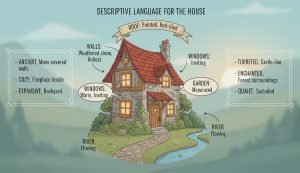
Descriptive language for houses involves using adjectives, adverbs, and other descriptive words to create a detailed and vivid image of a home. This type of language goes beyond simply stating facts; it aims to evoke emotions and provide the reader or listener with a clear sense of what the house is like.
When approaching any property description, it helps to first compile a list of adjectives to describe a house that match its unique characteristics. From cozy and inviting to grand and luxurious, the right house adjectives examples can make your writing vivid and compelling. By exploring different ways to describe a house, writers can ensure that each feature—interior or exterior—receives the attention it deserves, creating a balanced and engaging portrayal for readers or potential buyers.
It encompasses various aspects, including the house’s architectural style, size, condition, features, location, and overall atmosphere.
The function of descriptive language in this context is multifaceted. It can be used to inform potential buyers about a property, to create a specific mood in a literary work, or simply to share personal experiences and impressions of a home.
Understanding the nuances of descriptive language allows for more precise and evocative communication.
Descriptive language is used in various contexts, including real estate listings, architectural reviews, travel writing, personal narratives, and even casual conversations. The specific words and phrases used will vary depending on the context and the intended audience.
For example, a real estate listing might focus on practical features and benefits, while a novel might emphasize the emotional resonance of a particular house.
Structural Breakdown: Key Elements
The structure of descriptive language for houses typically involves a combination of nouns (the house and its features) and adjectives (words that describe the nouns). Adverbs can also be used to modify verbs and adjectives, adding another layer of detail.
Prepositional phrases often provide information about location and relationships between different parts of the house.
A typical descriptive sentence might follow this pattern: [Adjective] [Noun] [Verb] [Adverb] [Prepositional Phrase]. For example: “The charming cottage sits peacefully among the rolling hills.” In this sentence, “charming” is an adjective describing the noun “cottage,” “sits” is the verb, “peacefully” is an adverb, and “among the rolling hills” is a prepositional phrase providing information about the location.
Effective descriptive language often uses a variety of sentence structures to maintain interest and avoid monotony. Short, simple sentences can be used to highlight key features, while longer, more complex sentences can provide more detailed descriptions.
The key is to balance clarity and detail to create a compelling and informative description.
Types and Categories of Descriptive Words
Descriptive words for houses can be categorized based on the aspect of the house they describe. Here are some key categories:
Architectural Style
Words describing architectural style refer to the design and construction of the house. This includes terms like Victorian, Colonial, Modern, Ranch, Tudor, Craftsman, Mediterranean, Contemporary, Art Deco, and Georgian.
These terms provide a broad overview of the house’s aesthetic and historical influences.
Size and Dimensions
These words describe the physical size and layout of the house. Examples include spacious, compact, expansive, sprawling, cozy, petite, large, small, multi-story, single-story, and open-concept.
These terms help to convey the scale and arrangement of the interior and exterior spaces.
Condition and Age
Words in this category describe the house’s state of repair and its age. Examples include renovated, dilapidated, well-maintained, historic, modern, new, old, updated, restored, and vintage.
These terms provide information about the house’s upkeep and its place in time.
Exterior Features
These words describe the outside of the house and its surroundings. Examples include landscaped, gated, fenced, brick, stone, wooden, stucco, balcony, porch, deck, patio, garden, and swimming pool.
These terms paint a picture of the house’s external appearance and amenities.
Interior Features
Words describing interior features refer to the inside of the house. Examples include hardwood floors, granite countertops, stainless steel appliances, fireplace, vaulted ceilings, skylights, walk-in closet, finished basement, and gourmet kitchen.
These terms provide details about the house’s interior design and amenities.
Location and Setting
These words describe the house’s location and its surroundings. Examples include suburban, rural, urban, waterfront, mountainside, secluded, beachfront, downtown, residential, and quiet neighborhood.
These terms provide context about the house’s environment and accessibility.
Ambiance and Atmosphere
Words in this category describe the overall feeling or mood of the house. Examples include cozy, inviting, elegant, modern, rustic, charming, luxurious, comfortable, serene, and welcoming.
These terms evoke emotions and create a sense of the house’s character.
Examples of Descriptive Language
The following tables provide examples of descriptive words and phrases organized by category. Each table includes a variety of options to help you expand your vocabulary and improve your descriptive writing skills.
Architectural Style Examples
This table provides examples of how to describe a house’s architectural style. Each example includes the specific architectural style and a descriptive sentence.
| Architectural Style | Example Sentence |
|---|---|
| Victorian | The Victorian house boasts intricate detailing and a wrap-around porch. |
| Colonial | The Colonial home features symmetrical windows and a classic facade. |
| Modern | The Modern house showcases clean lines and minimalist design. |
| Ranch | The Ranch-style house offers a single-story layout and a sprawling footprint. |
| Tudor | The Tudor residence is characterized by its steeply pitched roof and decorative half-timbering. |
| Craftsman | The Craftsman bungalow features hand-crafted details and a welcoming front porch. |
| Mediterranean | The Mediterranean villa exudes warmth with its stucco walls and terracotta roof tiles. |
| Contemporary | The Contemporary home incorporates innovative design elements and sustainable materials. |
| Art Deco | The Art Deco building features geometric patterns and luxurious finishes. |
| Georgian | The Georgian mansion is known for its symmetrical design and stately appearance. |
| Federal | The Federal-style house exhibits refined elegance and intricate moldings. |
| Gothic Revival | The Gothic Revival cottage displays pointed arches and ornate details. |
| Italianate | The Italianate villa features a low-pitched roof and decorative brackets. |
| Queen Anne | The Queen Anne house is known for its asymmetrical facade and vibrant colors. |
| Cape Cod | The Cape Cod home offers a simple, functional design with a central chimney. |
| Prairie | The Prairie-style house features horizontal lines and open floor plans. |
| Spanish Colonial | The Spanish Colonial hacienda boasts thick adobe walls and a courtyard. |
| Mid-Century Modern | The Mid-Century Modern home emphasizes simplicity and integration with nature. |
| Farmhouse | The Farmhouse is charming with its rustic details and wraparound porch. |
| Log Cabin | The Log Cabin offers a cozy retreat with its rustic charm and natural materials. |
| A-Frame | The A-Frame house has a unique design with its steeply sloping roof. |
| Split-Level | The Split-Level home offers multiple levels connected by short flights of stairs. |
| Bungalow | The Bungalow is a compact and charming house with a low-pitched roof. |
Size and Dimension Examples
This table provides examples of how to describe the size and dimensions of a house. Each example includes the size descriptor and a descriptive sentence.
| Size and Dimension | Example Sentence |
|---|---|
| Spacious | The spacious living room is perfect for entertaining guests. |
| Compact | The compact kitchen is efficiently designed with everything within reach. |
| Expansive | The expansive backyard offers plenty of room for outdoor activities. |
| Sprawling | The sprawling estate includes multiple buildings and acres of land. |
| Cozy | The cozy bedroom is a perfect retreat for relaxation. |
| Petite | The petite cottage is charming and full of character. |
| Large | The large dining room can easily accommodate a dozen guests. |
| Small | The small study is perfect for a home office. |
| Multi-story | The multi-story townhouse offers ample living space on several levels. |
| Single-story | The single-story ranch is ideal for those seeking easy accessibility. |
| Open-concept | The open-concept living area creates a seamless flow between the kitchen and living room. |
| Lofty | The lofty ceilings add to the sense of grandeur in the living room. |
| Wide | The wide hallway makes it easy to move furniture around. |
| Narrow | The narrow staircase adds a touch of old-world charm to the house. |
| Double-height | The double-height windows flood the living room with natural light. |
| Generous | The generous closet space is a major selling point for this home. |
| Voluminous | The voluminous attic offers ample storage space. |
| Grand | The grand foyer makes a striking first impression. |
| Substantial | The substantial basement is perfect for a home theater or recreation room. |
| Roomy | The roomy bedrooms provide ample space for relaxation and privacy. |
| Palatial | The palatial estate offers breathtaking views and luxurious amenities. |
| Expansive | The expansive deck is perfect for outdoor entertaining. |
| Compact | The compact laundry room is efficiently designed. |
Condition and Age Examples
This table provides examples of how to describe the condition and age of a house. Each example includes the condition descriptor and a descriptive sentence.
| Condition and Age | Example Sentence |
|---|---|
| Renovated | The renovated kitchen features modern appliances and stylish finishes. |
| Dilapidated | The dilapidated house requires extensive repairs and restoration. |
| Well-maintained | The well-maintained garden is a testament to the owner’s care. |
| Historic | The historic building is a landmark in the community. |
| Modern | The modern design incorporates the latest technology and energy-efficient features. |
| New | The new construction offers the latest in building materials and design. |
| Old | The old house has a rich history and unique character. |
| Updated | The updated bathrooms feature new fixtures and modern design. |
| Restored | The restored facade brings back the original beauty of the building. |
| Vintage | The vintage details add a touch of nostalgia to the interior. |
| Brand-new | The brand-new appliances are energy-efficient and top-of-the-line. |
| Aged | The aged wood floors add character and warmth to the living space. |
| Refurbished | The refurbished basement provides additional living space. |
| Original | The original hardwood floors have been meticulously maintained. |
| Contemporary | The contemporary kitchen features stainless steel appliances and sleek cabinetry. |
| Antique | The antique fireplace adds a touch of elegance to the living room. |
| Timeless | The timeless design ensures the house will remain stylish for years to come. |
| Period | The period details have been carefully preserved throughout the house. |
| Classic | The classic architecture is elegant and refined. |
| Traditional | The traditional style is cozy and inviting. |
| Pre-war | The pre-war apartment boasts high ceilings and spacious rooms. |
| Turnkey | This turnkey property is ready for you to move in immediately. |
| Move-in ready | The move-in ready home needs no renovations or repairs. |
| Needs TLC | This property needs TLC but has great potential. |
Exterior Feature Examples
This table provides examples of how to describe the exterior features of a house. Each example includes the exterior feature and a descriptive sentence.
| Exterior Feature | Example Sentence |
|---|---|
| Landscaped | The landscaped garden features colorful flowers and lush greenery. |
| Gated | The gated community provides added security and privacy. |
| Fenced | The fenced backyard is perfect for children and pets to play safely. |
| Brick | The brick facade adds a touch of traditional elegance to the house. |
| Stone | The stone walls provide durability and a rustic aesthetic. |
| Wooden | The wooden siding gives the house a warm and inviting appearance. |
| Stucco | The stucco exterior is low-maintenance and weather-resistant. |
| Balcony | The balcony offers stunning views of the surrounding landscape. |
| Porch | The porch is a perfect spot to relax and enjoy the outdoors. |
| Deck | The deck is ideal for outdoor dining and entertaining. |
| Patio | The patio provides a comfortable space for lounging and grilling. |
| Garden | The garden is filled with a variety of plants and flowers. |
| Swimming pool | The swimming pool offers a refreshing escape on hot summer days. |
| Driveway | The driveway offers ample parking space. |
| Garage | The garage provides secure parking and storage space. |
| Awning | The awning provides shade and protection from the elements. |
| Shutters | The shutters add a charming detail to the windows. |
| Gutters | The gutters are well-maintained and functional. |
| Roof | The roof is newly installed and in excellent condition. |
| Siding | The siding is durable and aesthetically pleasing. |
| Windows | The windows are energy-efficient and provide ample natural light. |
| Front door | The front door is solid and secure. |
| Back yard | The back yard is spacious and perfect for outdoor activities. |
| Sprinkler System | The sprinkler system helps maintain a lush lawn. |
Interior Feature Examples
This table provides examples of how to describe the interior features of a house. Each example includes the interior feature and a descriptive sentence.
| Interior Feature | Example Sentence |
|---|---|
| Hardwood floors | The hardwood floors add warmth and elegance to the living space. |
| Granite countertops | The granite countertops are durable and stylish. |
| Stainless steel appliances | The stainless steel appliances are modern and energy-efficient. |
| Fireplace | The fireplace creates a cozy ambiance in the living room. |
| Vaulted ceilings | The vaulted ceilings add a sense of spaciousness to the room. |
| Skylights | The skylights bring natural light into the interior. |
| Walk-in closet | The walk-in closet provides ample storage space. |
| Finished basement | The finished basement offers additional living space. |
| Gourmet kitchen | The gourmet kitchen is equipped with high-end appliances and custom cabinetry. |
| Central air conditioning | The central air conditioning keeps the house comfortable year-round. |
| Smart home technology | The house features smart home technology for convenient control. |
| Jacuzzi tub | The Jacuzzi tub provides a luxurious bathing experience. |
| Home theater | The home theater is perfect for movie nights. |
| Wine cellar | The wine cellar is ideal for storing and aging wine. |
| Study | The study is a quiet space for reading and working. |
| Library | The library is filled with books and comfortable seating. |
| Sunroom | The sunroom is a bright and airy space for relaxation. |
| Pantry | The pantry provides ample storage for food and kitchen supplies. |
| Mudroom | The mudroom helps keep the house clean and organized. |
| Attic | The attic can be used for storage or converted into living space. |
| Fire alarm | The fire alarm enhances the safety of the home. |
| Security system | The security system provides peace of mind. |
| High ceilings | The high ceilings make the rooms feel more spacious. |
| Crown molding | The crown molding adds a touch of elegance to the walls. |
Location and Setting Examples
This table provides examples of how to describe the location and setting of a house. Each example includes the location descriptor and a descriptive sentence.
| Location and Setting | Example Sentence |
|---|---|
| Suburban | The suburban neighborhood is quiet and family-friendly. |
| Rural | The rural setting offers peace and tranquility. |
| Urban | The urban location provides easy access to amenities and entertainment. |
| Waterfront | The waterfront property offers stunning views of the lake. |
| Mountainside | The mountainside home offers breathtaking views of the surrounding peaks. |
| Secluded | The secluded estate provides privacy and tranquility. |
| Beachfront | The beachfront house offers direct access to the sandy shore. |
| Downtown | The downtown location is close to shops, restaurants, and cultural attractions. |
| Residential | The residential area is known for its well-maintained homes and tree-lined streets. |
| Quiet neighborhood | The quiet neighborhood is perfect for families and retirees. |
| Close to schools | The house is close to schools, making it ideal for families with children. |
| Near public transportation | The location is near public transportation, providing easy access to the city. |
| Gated community | The gated community offers added security and privacy. |
| Cul-de-sac | The house is located on a cul-de-sac, providing a safe and quiet environment. |
| Panoramic views | The property offers panoramic views of the surrounding landscape. |
| Park-like setting | The house is situated in a park-like setting with lush greenery and mature trees. |
| Historic district | The property is located in a historic district with well-preserved architecture. |
| Upscale neighborhood | The upscale neighborhood is known for its luxury homes and manicured lawns. |
| Desirable location | The house is in a desirable location with high property values. |
| Conveniently located | The property is conveniently located near shopping and dining. |
| Overlooking the city | The house is overlooking the city, offering stunning views. |
| Nestled in the woods | The cabin is nestled in the woods, providing a peaceful retreat. |
| Steps from the beach | The condo is steps from the beach, offering easy access to the ocean. |
| On a quiet street | The house is located on a quiet street with minimal traffic. |
Ambiance and Atmosphere Examples
This table provides examples of how to describe the ambiance and atmosphere of a house. Each example includes the ambiance descriptor and a descriptive sentence.
| Ambiance and Atmosphere | Example Sentence |
|---|---|
| Cozy | The cozy living room is perfect for relaxing by the fire. |
| Inviting | The inviting entrance welcomes guests with warmth and charm. |
| Elegant | The elegant dining room is perfect for formal gatherings. |
| Modern | The modern design creates a sleek and sophisticated atmosphere. |
| Rustic | The rustic decor evokes a sense of warmth and comfort. |
| Charming | The charming cottage is full of character and appeal. |
| Luxurious | The luxurious amenities provide a comfortable and indulgent lifestyle. |
| Comfortable | The comfortable bedrooms are perfect for restful sleep. |
| Serene | The serene setting offers a peaceful retreat from the hustle and bustle of city life. |
| Welcoming | The welcoming atmosphere makes everyone feel at home. |
| Airy | The airy rooms are filled with natural light and fresh breezes. |
| Bright | The bright interior is cheerful and uplifting. |
| Peaceful | The peaceful surroundings create a tranquil environment. |
| Warm | The warm colors and textures add a sense of coziness. |
| Stylish | The stylish decor reflects modern trends and personal taste. |
| Homely | The homely atmosphere makes you feel instantly comfortable. |
| Relaxing | The relaxing ambiance is perfect for unwinding after a long day. |
| Sophisticated | The sophisticated design is both elegant and functional. |
| Invigorating | The invigorating natural light and fresh air create a stimulating environment. |
| Tranquil | The tranquil garden is a perfect escape from the stress of everyday life. |
| Grand | The grand entrance makes a lasting impression. |
| Inviting | The inviting color palette creates a warm and welcoming atmosphere. |
| Chic | The chic decor gives the house a modern and stylish feel. |
| Sun-drenched | The sun-drenched rooms are filled with natural light. |
Usage Rules: Describing a House Effectively
When describing a house, it’s important to use language that is both accurate and evocative. Here are some key usage rules to keep in mind:
- Be specific: Avoid vague terms like “nice” or “good.” Instead, use more descriptive adjectives like “charming,” “spacious,” or “well-maintained.”
- Use a variety of adjectives: Don’t rely on the same few adjectives repeatedly. Expand your vocabulary and use a range of descriptive words to create a more vivid picture.
- Consider your audience: Tailor your language to your intended audience. A real estate listing will use different language than a personal narrative.
- Show, don’t tell: Instead of simply stating that a house is “cozy,” describe the features that make it cozy, such as a fireplace, soft lighting, and comfortable furniture.
- Use sensory details: Engage the reader’s senses by describing the sights, sounds, smells, and textures of the house.
- Maintain a consistent tone: Whether you’re aiming for a formal or informal tone, be consistent throughout your description.
- Avoid hyperbole: Exaggerated language can undermine your credibility. Stick to accurate and realistic descriptions.
- Use strong verbs: Choose verbs that add detail and action to your descriptions. For example, instead of saying “The house is located near the park,” say “The house sits nestled beside the park.”
How to Describe a House in Writing?
Writing a compelling house description involves more than listing features; it requires creating a vivid narrative that engages the reader’s imagination. Start by observing the property carefully, noting architectural style, room dimensions, materials, and special features. Then, organize your description logically—begin with the exterior, move through key interior spaces, and conclude with the ambiance or overall atmosphere.
Incorporate sensory details to make the setting tangible: describe the scent of fresh paint, the warmth of sunlight streaming through windows, or the texture of a wooden staircase. Use varied adjectives and strong verbs to bring each element to life, and avoid vague terms like “nice” or “big.” By practicing these techniques, you can write a house description that is informative, evocative, and perfectly suited for creative writing, real estate listings, or personal narratives.
Common Mistakes to Avoid
When describing a house, there are several common mistakes that can detract from the effectiveness of your writing. Here are some to avoid:
- Overusing clichés: Phrases like “move-in ready” and “cozy as can be” are overused and lack originality.
- Using vague adjectives: Terms like “nice,” “good,” and “big” don’t provide enough detail.
- Describing irrelevant details: Focus on the most important and appealing aspects of the house.
- Failing to proofread: Grammatical errors and typos can undermine your credibility.
- Using overly technical language: Avoid jargon that your audience may not understand.
- Being too subjective: While it’s important to convey your personal impressions, avoid overly biased or emotional language.
Here are some examples of common mistakes and how to correct them:
| Incorrect | Correct | Explanation |
|---|---|---|
| The house is nice. | The house is charming with its Victorian architecture. | “Nice” is too vague; “charming” and “Victorian” provide more detail. |
| The kitchen is big. | The kitchen is spacious and features granite countertops. | “Big” is too general; “spacious” and “granite countertops” are more specific. |
| It’s move-in ready! | This renovated home is ready for immediate occupancy. | “Move-in ready
” is a cliché; “renovated” and “ready for immediate occupancy” are more descriptive. |
Practice Exercises
To improve your ability to describe houses, try these practice exercises:
Exercise 1: Describe Your Dream House
Imagine your dream house and write a paragraph describing it. Focus on architectural style, size, exterior features, and interior design.
Use specific adjectives and sensory details to create a vivid picture.
Exercise 2: Compare and Contrast
Choose two houses with different architectural styles (e.g., a Victorian house and a modern house). Write a paragraph comparing and contrasting their features, focusing on the unique characteristics of each style.
Exercise 3: Real Estate Listing
Write a short real estate listing for a fictional house. Include details about the size, condition, features, location, and ambiance.
Use persuasive language to attract potential buyers.
Exercise 4: Descriptive Paragraph
Select a picture of a house and write a descriptive paragraph using at least 10 different adjectives. Focus on creating a strong sense of the house’s character and atmosphere.
Advanced Topics: Nuances and Subtleties
Describing houses effectively involves understanding the nuances and subtleties of language. Here are some advanced topics to consider:
- Figurative Language: Use metaphors, similes, and other figures of speech to create more vivid and imaginative descriptions. For example, instead of saying “The house is warm,” you could say “The house is like a warm embrace.”
- Connotation: Be aware of the connotations of different words. Some words may have positive or negative associations that can influence the reader’s perception of the house.
- Imagery: Use sensory details to create strong imagery. Describe the sights, sounds, smells, tastes, and textures associated with the house.
- Rhythm and Flow: Pay attention to the rhythm and flow of your writing. Vary the length and structure of your sentences to maintain interest and create a pleasing effect.
- Point of View: Consider the point of view from which you are describing the house. A first-person narrative will have a different tone and focus than a third-person description.
Frequently Asked Questions (FAQ)
What are some good adjectives to describe a house?
Some good adjectives to describe a house include charming, spacious, modern, rustic, elegant, cozy, luxurious, comfortable, serene, and welcoming. The best adjectives to use will depend on the specific characteristics of the house and the context in which you are describing it.
How can I avoid using clichés when describing a house?
To avoid using clichés, focus on providing specific and unique details about the house. Instead of saying “move-in ready,” describe the renovations that have been done and the features that make it ready for immediate occupancy.
Use a thesaurus to find alternative words and phrases, and try to describe the house in a fresh and original way.
What is the best way to describe the ambiance of a house?
The best way to describe the ambiance of a house is to use sensory details and evocative language. Focus on the feeling or mood that the house evokes, and use adjectives and adverbs that convey that feeling.
Describe the sights, sounds, smells, and textures that contribute to the ambiance, and use figurative language to create a more vivid and imaginative description.
How important is it to use accurate architectural terms?
Using accurate architectural terms can add credibility and specificity to your descriptions, especially in contexts like real estate or architectural reviews. However, it’s also important to ensure that your audience understands the terms you are using.
If you’re writing for a general audience, you may need to provide brief explanations of technical terms or use more accessible language.
Conclusion
Describing a house effectively is an art that combines vocabulary, observation, and creativity. By mastering the types of descriptive words, understanding usage rules, and avoiding common mistakes, you can paint a vivid and compelling picture of any home.
Whether you are writing a real estate listing, crafting a novel, or simply sharing your personal experiences, the ability to describe houses with precision and flair will enhance your communication and captivate your audience. Keep practicing, expanding your vocabulary, and refining your descriptive skills to become a true master of language.