
Understanding misogyny and its impact is crucial in today’s society. However, equally important is understanding its antonyms and related concepts, such as philogyny, feminism, and egalitarianism.
This article delves into the meanings of these terms, their practical applications, and how they contribute to a more balanced and respectful world. This comprehensive guide is designed for English language learners, students of gender studies, and anyone interested in promoting equality and understanding the nuances of human relationships.
By exploring these concepts, we can develop a richer understanding of the spectrum of attitudes and behaviors toward women and contribute to fostering a more equitable and inclusive society. This article provides clear definitions, examples, and practical exercises to help you master these important terms and their implications.
Table of Contents
- Introduction
- Defining the Opposite of Misogyny
- Structural Breakdown of Related Concepts
- Types and Categories of Pro-Women Attitudes
- Examples of Philogyny, Feminism, and Egalitarianism
- Usage Rules and Considerations
- Common Mistakes and Misconceptions
- Practice Exercises
- Advanced Topics
- Frequently Asked Questions
- Conclusion
Defining the Opposite of Misogyny
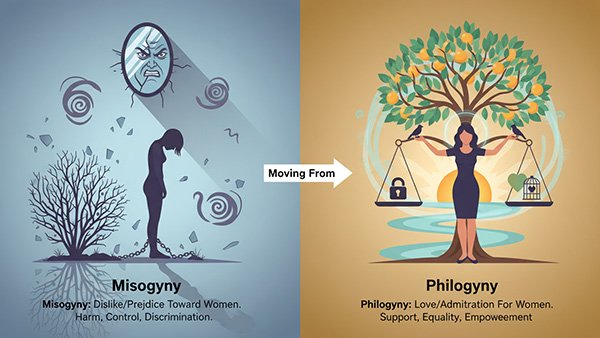
Misogyny, the hatred or prejudice against women, has several opposites and related concepts.
In defining these concepts, it is helpful to note that philogyny, feminism, and egalitarianism are all recognized as the direct opposites of misogyny. For clarity, the misogyny antonym “philogyny” specifically denotes a genuine respect and admiration for women.
Similarly, understanding what is the opposite of misogyny helps differentiate between simple tolerance and active promotion of equality and inclusion. Recognizing the various forms of misogyny opposite behaviors also helps guide practical applications in personal, educational, and professional settings.
These include philogyny, the love and admiration of women; feminism, the advocacy of women’s rights on the grounds of political, social, and economic equality to men; and egalitarianism, the belief that all people are equal and deserve equal rights and opportunities.
At the individual level, identifying the opposite of a misogynist can clarify actionable behaviors. A non-misogynist demonstrates philogyny by actively valuing women’s perspectives, promoting feminist ideals, and embracing egalitarian practices. Highlighting these behaviors helps readers understand not only the conceptual opposites of misogyny but also how to embody them in real-life situations.
Philogyny: Love and Admiration of Women
Philogyny is the direct antonym of misogyny. It represents a genuine appreciation, respect, and affection for women. Philogyny goes beyond mere tolerance and involves actively valuing women’s contributions, perspectives, and inherent worth. It manifests in recognizing and celebrating the strengths, capabilities, and individuality of women.
Philogyny can be expressed in various ways, from admiring a woman’s intelligence and creativity to supporting her goals and aspirations. It involves treating women with kindness, empathy, and consideration, and actively challenging gender stereotypes and biases.
A philogynist sees women as equal partners and valuable contributors to society.
Feminism: Advocacy for Women’s Rights
Feminism is a range of social movements, political movements, and ideologies that share a common goal: to define, establish, and achieve the political, economic, personal, and social equality of the sexes. Feminism addresses systemic inequalities and aims to create a society where women have the same opportunities and rights as men. It challenges patriarchal structures and promotes gender equality through various avenues, including activism, advocacy, and education.
Feminist perspectives vary, encompassing a wide range of ideologies, such as liberal feminism, socialist feminism, radical feminism, and intersectional feminism. Despite their differences, all feminist movements share a commitment to empowering women and challenging gender-based discrimination.
Feminism is not about female superiority but about achieving equality and justice for all.
Egalitarianism: Belief in Equality
Egalitarianism is a philosophical perspective that emphasizes equality among all people. It asserts that everyone is inherently equal and should be treated with the same respect and consideration, regardless of their gender, race, ethnicity, religion, or social status. Egalitarianism supports equal rights, opportunities, and access to resources for all individuals.
In the context of gender, egalitarianism advocates for equal opportunities and treatment for women and men. It challenges gender stereotypes and promotes the idea that both genders are equally capable and deserving of respect.
Egalitarianism is a broader concept than feminism, encompassing equality in all aspects of life, including social, political, and economic spheres.
Benevolent Sexism: A Nuanced Perspective
It’s important to distinguish philogyny from benevolent sexism. While benevolent sexism might appear positive on the surface, it reinforces traditional gender roles and stereotypes. It often involves praising women for qualities that align with conventional expectations, such as being nurturing, caring, or beautiful, while simultaneously limiting their opportunities and potential.
Benevolent sexism can manifest as overprotective behavior, where men feel the need to constantly “help” or “protect” women, implying that they are inherently weaker or less capable. While the intentions may seem positive, benevolent sexism perpetuates inequality by reinforcing traditional gender roles and limiting women’s autonomy.
Structural Breakdown of Related Concepts
Understanding the structural elements of philogyny, feminism, and egalitarianism helps to differentiate them and appreciate their nuances. Philogyny focuses on individual attitudes and affections, while feminism is rooted in social and political movements.
Egalitarianism provides a broad philosophical framework for equality.
Philogyny often manifests as personal admiration and support for women, expressed through words and actions. Feminism involves organized efforts to challenge systemic inequalities and advocate for policy changes.
Egalitarianism provides the underlying ethical principle that guides both philogyny and feminism, advocating for equal rights and opportunities for all.
Types and Categories of Pro-Women Attitudes
Each of these concepts—philogyny, feminism, and egalitarianism—can be expressed in various ways, ranging from overt and active to subtle and passive. Understanding these variations helps to appreciate the complexity of pro-women attitudes.
Overt Philogyny
Overt philogyny is expressed openly and explicitly. It involves publicly admiring and praising women, celebrating their achievements, and advocating for their rights. It is characterized by a clear and unambiguous appreciation for women.
Covert Philogyny
Covert philogyny is more subtle and implicit. It involves showing respect and appreciation for women through actions and behaviors, without necessarily expressing it verbally. It might involve actively listening to women’s perspectives, valuing their contributions, and treating them with kindness and empathy.
Active Feminism
Active feminism involves actively participating in feminist movements and advocacy. It includes protesting, lobbying, organizing, and speaking out against gender inequality. Active feminists are often involved in campaigns for women’s rights and strive to create systemic change.
Passive Feminism
Passive feminism involves supporting feminist ideals and principles without necessarily engaging in active activism. It might involve voting for feminist candidates, supporting feminist organizations, and challenging gender stereotypes in everyday life.
Principled Egalitarianism
Principled egalitarianism is rooted in a deep-seated belief in equality as a fundamental moral principle. It involves advocating for equal rights and opportunities for all people, regardless of their gender, race, or social status, due to a firm conviction in the inherent worth and dignity of every individual.
Pragmatic Egalitarianism
Pragmatic egalitarianism supports equality based on practical considerations and the belief that it leads to a more prosperous and harmonious society. It argues that when all people have equal opportunities, society as a whole benefits from their contributions and talents.
Examples of Philogyny, Feminism, and Egalitarianism
To further illustrate these concepts, let’s examine specific examples of philogyny, feminism, and egalitarianism in different contexts.
Examples of Philogyny
Philogyny can be demonstrated in various ways, from personal interactions to public endorsements. The following table provides diverse examples of philogynistic behavior and attitudes.
| Scenario | Example of Philogyny |
|---|---|
| Workplace | A male colleague consistently acknowledges and values the contributions of his female colleagues, ensuring their voices are heard in meetings. |
| Education | A teacher highlights the achievements of female scientists and historical figures, challenging gender stereotypes in STEM fields. |
| Personal Relationships | A man expresses genuine admiration for his partner’s intelligence, strength, and resilience. |
| Public Discourse | A public figure uses their platform to advocate for women’s rights and celebrate the accomplishments of women in various fields. |
| Mentorship | An experienced professional actively mentors young women, providing guidance and support to help them advance in their careers. |
| Parenting | A parent encourages their daughter to pursue her passions and interests, regardless of societal expectations or gender norms. |
| Media Representation | A film portrays strong, independent female characters who defy traditional gender roles and stereotypes. |
| Literature | A novel celebrates the resilience, creativity, and intelligence of women, portraying them as complex and multifaceted characters. |
| Social Interactions | A man actively listens to and respects the opinions and perspectives of women in social settings. |
| Advocacy | An individual actively supports organizations and initiatives that promote women’s rights and empowerment. |
| Workplace | A manager ensures equal opportunities for promotion and career advancement for both male and female employees. |
| Education | A university establishes scholarships specifically for female students in traditionally male-dominated fields. |
| Personal Relationships | A man consistently expresses gratitude and appreciation for his mother’s sacrifices and contributions to the family. |
| Public Discourse | A politician actively champions policies that address gender inequality and promote women’s empowerment. |
| Mentorship | A successful businesswoman dedicates her time to mentoring young women, helping them navigate the challenges of the business world. |
| Parenting | A parent teaches their son to respect women and challenge gender stereotypes. |
| Media Representation | A television show features female characters in leadership roles, portraying them as competent and capable leaders. |
| Literature | A biography celebrates the life and achievements of a pioneering woman who broke barriers and defied societal expectations. |
| Social Interactions | A man actively challenges sexist jokes and comments in social settings. |
| Advocacy | An individual donates to organizations that provide support and resources for women in need. |
These examples demonstrate that philogyny is not just about romantic love but also about respect, admiration, and support for women in all aspects of life.
Examples of Feminism
Feminism manifests in various forms of activism, advocacy, and policy changes aimed at achieving gender equality. The following table provides examples across different domains.
| Area | Example of Feminism |
|---|---|
| Political Activism | Organizing marches and protests to advocate for equal pay and reproductive rights. |
| Legal Reform | Lobbying for legislation that protects women from discrimination and violence. |
| Education | Developing curricula that promote gender equality and challenge gender stereotypes. |
| Workplace Advocacy | Fighting for equal opportunities and fair treatment for women in the workplace. |
| Media Representation | Promoting positive and diverse portrayals of women in media and entertainment. |
| Grassroots Movements | Creating community initiatives that empower women and provide support for survivors of abuse. |
| Academic Research | Conducting research on gender inequality and its impact on society. |
| Public Awareness Campaigns | Launching campaigns to raise awareness about issues such as sexual harassment and domestic violence. |
| Economic Empowerment | Providing women with access to education, training, and resources to start their own businesses. |
| Cultural Activism | Challenging patriarchal norms and values through art, music, and literature. |
| Political Activism | Campaigning for female candidates and supporting women in leadership positions. |
| Legal Reform | Advocating for stricter laws against sexual assault and harassment. |
| Education | Implementing programs to encourage girls to pursue careers in STEM fields. |
| Workplace Advocacy | Negotiating for better parental leave policies and childcare support for working mothers. |
| Media Representation | Critiquing sexist and objectifying portrayals of women in advertising and entertainment. |
| Grassroots Movements | Establishing shelters and support services for women experiencing homelessness or domestic violence. |
| Academic Research | Analyzing the gender pay gap and identifying strategies to close it. |
| Public Awareness Campaigns | Creating social media campaigns to challenge victim-blaming and promote consent. |
| Economic Empowerment | Providing microloans and financial literacy training to women in developing countries. |
| Cultural Activism | Using art and performance to challenge traditional gender roles and promote feminist perspectives. |
These examples highlight the diverse and multifaceted nature of feminism, encompassing a wide range of activities and approaches aimed at achieving gender equality.
Examples of Egalitarianism
Egalitarianism is reflected in policies, practices, and attitudes that promote equality for all individuals, regardless of their gender. The following table illustrates how egalitarian principles can be applied in various contexts.
| Context | Example of Egalitarianism |
|---|---|
| Workplace | Implementing equal pay policies that ensure women and men receive the same compensation for equal work. |
| Education | Providing equal access to education and resources for all students, regardless of their gender or background. |
| Healthcare | Ensuring that women and men have equal access to quality healthcare services. |
| Political Representation | Promoting equal representation of women in government and decision-making bodies. |
| Legal System | Ensuring that women and men are treated equally under the law. |
| Social Norms | Challenging gender stereotypes and promoting respect for all individuals, regardless of their gender. |
| Family Life | Sharing household responsibilities and childcare duties equally between partners. |
| Community Development | Creating inclusive communities that value the contributions of all members, regardless of their gender. |
| Economic Opportunities | Providing equal access to economic opportunities and resources for all individuals. |
| Cultural Expression | Promoting diverse and inclusive cultural expressions that reflect the experiences of all members of society. |
| Workplace | Offering flexible work arrangements and parental leave policies that support both men and women in balancing work and family responsibilities. |
| Education | Implementing anti-bias training for teachers and staff to address gender stereotypes and promote inclusive teaching practices. |
| Healthcare | Ensuring that women have access to comprehensive reproductive healthcare services. |
| Political Representation | Implementing quotas or targets to increase the representation of women in elected office. |
| Legal System | Providing legal aid and support to women who have experienced discrimination or violence. |
| Social Norms | Challenging harmful cultural practices that perpetuate gender inequality, such as female genital mutilation. |
| Family Life | Encouraging fathers to take an active role in childcare and parenting. |
| Community Development | Creating safe and inclusive spaces for women and girls in public areas. |
| Economic Opportunities | Providing training and mentorship programs to help women start and grow their own businesses. |
| Cultural Expression | Supporting artists and cultural organizations that promote gender equality and challenge traditional gender roles. |
These examples demonstrate how egalitarian principles can be applied in various contexts to create a more just and equitable society for all.
Usage Rules and Considerations
When using the terms philogyny, feminism, and egalitarianism, it’s essential to be mindful of their nuances and avoid misinterpretations. Use these terms accurately and respectfully, considering the context and the perspectives of others.
It’s important to remember that philogyny is about genuine admiration and respect for women, not about objectifying or romanticizing them. Feminism is about achieving gender equality, not about female superiority or misandry (hatred of men).
Egalitarianism is about equality for all, not about ignoring or dismissing differences between individuals or groups.
Common Mistakes and Misconceptions
Several common mistakes and misconceptions surround the concepts of philogyny, feminism, and egalitarianism. It is important to address these to foster a better understanding.
| Mistake/Misconception | Correct Understanding |
|---|---|
| Equating philogyny with benevolent sexism | Philogyny involves genuine respect and admiration for women, while benevolent sexism reinforces traditional gender roles and stereotypes. |
| Believing feminism is about female superiority | Feminism is about achieving gender equality, not about elevating women above men. |
| Assuming egalitarianism means ignoring differences | Egalitarianism recognizes and values diversity, while advocating for equal rights and opportunities for all. |
| Thinking feminism is only for women | Feminism is a movement for gender equality that benefits all genders and requires the participation of both men and women. |
| Confusing egalitarianism with sameness | Egalitarianism promotes equality of opportunity and treatment, not necessarily identical outcomes. |
Avoiding these mistakes will ensure a more accurate and nuanced understanding of these important concepts.
Practice Exercises
Test your understanding of philogyny, feminism, and egalitarianism with the following exercises. Identify whether each statement reflects philogyny, feminism, egalitarianism, or none of the above.
| Question | Answer |
|---|---|
| 1. A company implements a policy of equal pay for equal work, regardless of gender. | Egalitarianism |
| 2. An individual consistently compliments women on their appearance, emphasizing their beauty and charm. | None of the above (potentially benevolent sexism) |
| 3. A group organizes a protest to advocate for women’s reproductive rights. | Feminism |
| 4. A man expresses genuine admiration for his female colleague’s intelligence and leadership skills. | Philogyny |
| 5. A school implements a curriculum that promotes gender equality and challenges gender stereotypes. | Egalitarianism |
| 6. A politician introduces legislation to increase the representation of women in government. | Feminism |
| 7. A father encourages his daughter to pursue a career in engineering, despite societal expectations. | Philogyny |
| 8. A community establishes a shelter for women experiencing domestic violence. | Feminism |
| 9. A manager provides equal opportunities for promotion to both male and female employees. | Egalitarianism |
| 10. An individual actively challenges sexist jokes and comments in social settings. | Feminism |
Further Practice: Write a short paragraph explaining how you can personally promote philogyny, feminism, and egalitarianism in your daily life.
Advanced Topics
For advanced learners, it is important to delve into more complex aspects of these concepts, such as intersectionality and the role of men in promoting equality.
Intersectionality and Its Relevance
Intersectionality is a framework that recognizes how various social and political identities (e.g., gender, race, class, sexual orientation) combine to create unique experiences of discrimination and privilege. Understanding intersectionality is crucial for addressing the complexities of gender inequality and promoting inclusive solutions that consider the diverse experiences of all women.
An intersectional approach acknowledges that women’s experiences vary based on their race, ethnicity, class, sexual orientation, and other identities. It challenges the notion of a universal “woman” and recognizes the importance of addressing the specific needs and challenges of marginalized groups of women.
The Role of Men in Promoting Equality
Men have a crucial role to play in promoting gender equality and challenging misogyny. By actively supporting feminist ideals, challenging sexist attitudes and behaviors, and advocating for equal rights and opportunities for women, men can contribute to creating a more just and equitable society.
Men can also serve as allies and advocates for women in various settings, including the workplace, community, and family. By using their privilege and influence to amplify women’s voices and challenge systemic inequalities, men can help to create a more inclusive and equitable world for all.
Frequently Asked Questions
What is the difference between philogyny and benevolent sexism?
Philogyny is genuine admiration and respect for women, recognizing their strengths and capabilities without reinforcing traditional gender roles. Benevolent sexism, on the other hand, involves praising women for qualities that align with conventional expectations, such as being nurturing or beautiful, while simultaneously limiting their opportunities and potential. Benevolent sexism often reinforces traditional gender roles and can be subtly disempowering, while philogyny seeks to uplift and empower women.
Is feminism just for women?
No, feminism is not just for women. It is a movement for gender equality that benefits all genders. Men can and should be feminists, as they also experience the negative effects of rigid gender roles and expectations. Feminism aims to create a more just and equitable society for everyone, regardless of their gender.
Does egalitarianism mean ignoring differences between people?
No, egalitarianism does not mean ignoring differences between people. It recognizes and values diversity while advocating for equal rights and opportunities for all individuals. Egalitarianism acknowledges that people have different needs and experiences but believes that everyone should be treated with the same respect and consideration.
How can I promote philogyny in my daily life?
You can promote philogyny by actively listening to and valuing the opinions and perspectives of women, challenging gender stereotypes and biases, celebrating the achievements of women, and advocating for their rights and empowerment. Show genuine respect and admiration for the women in your life, recognizing their strengths, capabilities, and individuality.
What are some common misconceptions about feminism?
Some common misconceptions about feminism include the belief that it is about female superiority, that it is only for women, and that it is anti-men. Feminism is about achieving gender equality, not about elevating women above men. It is a movement that benefits all genders and requires the participation of both men and women. It is not about hating men but about challenging patriarchal structures and norms that harm both men and women.
How does intersectionality relate to feminism?
Intersectionality is a framework that recognizes how various social and political identities intersect to create unique experiences of discrimination and privilege. It is crucial for feminism because it acknowledges that women’s experiences vary based on their race, ethnicity, class, sexual orientation, and other identities. An intersectional feminist approach seeks to address the specific needs and challenges of marginalized groups of women, rather than promoting a one-size-fits-all approach to gender equality.
What role can men play in promoting gender equality?
Men can play a crucial role in promoting gender equality by actively supporting feminist ideals, challenging sexist attitudes and behaviors, and advocating for equal rights and opportunities for women. They can serve as allies and advocates for women in various settings, using their privilege and influence to amplify women’s voices and challenge systemic inequalities. Men can also model positive and respectful behavior in their personal and professional lives, demonstrating that gender equality is beneficial for everyone.
What are the benefits of an egalitarian society?
An egalitarian society offers numerous benefits, including increased social cohesion, reduced inequality, improved economic outcomes, and greater overall well-being for all members of society. When everyone has equal opportunities and access to resources, society as a whole benefits from their contributions and talents. An egalitarian society is more just, equitable, and prosperous for all.
Conclusion
Understanding the opposite of misogyny—philogyny, feminism, and egalitarianism—is essential for promoting a more equitable and respectful world. By appreciating the nuances of these concepts, we can challenge gender stereotypes, advocate for women’s rights, and create a society where everyone has equal opportunities to thrive.
Remember that promoting these values requires ongoing effort and a commitment to challenging inequality in all its forms. By actively supporting philogyny, feminism, and egalitarianism, we can contribute to building a more just and inclusive society for all.