
Knowing how to say “cheers” in English is more than just a matter of etiquette; it’s about understanding cultural nuances, context, and the appropriate level of formality. From casual gatherings to formal toasts, the expressions you use can significantly impact how you connect with others.
This article will delve into the diverse ways to say “cheers” in English, exploring their meanings, usage, and the situations where they’re most appropriate. Whether you are an English language learner or a native speaker looking to expand your vocabulary, this guide will provide you with a comprehensive understanding of this essential aspect of social interaction.
This comprehensive guide is designed for English language learners, travelers, and anyone interested in expanding their understanding of English idioms and social customs. By the end of this article, you’ll be equipped with a range of expressions to confidently and appropriately raise a toast in any setting.
Table of Contents
- Definition of “Cheers” and Its Purpose
- Structural Breakdown of Toasting Phrases
- Types and Categories of “Cheers” Expressions
- Examples of “Cheers” in Different Contexts
- Usage Rules and Etiquette
- Common Mistakes to Avoid
- Practice Exercises
- Advanced Topics in Toasting
- Frequently Asked Questions
- Conclusion
Definition of “Cheers” and Its Purpose
Recommended Products


The word “cheers,” in the context of toasting, is an expression used to offer good wishes, express goodwill, or celebrate an occasion. It serves as a verbal signal for a group to collectively acknowledge a shared sentiment, marking a moment of unity and camaraderie.
The act of saying “cheers” is often accompanied by raising glasses and sometimes clinking them together, a gesture symbolizing a shared moment of celebration.
When participating in social gatherings, knowing **when to say cheers** is just as important as the words themselves. Typically, you **say cheers** at the start of a toast, after everyone has raised their glasses, or when acknowledging a shared celebration. The phrase **we say cheers** not only signals goodwill but also reinforces a sense of camaraderie. Using **cheers** as a **greeting** in casual settings is common in English-speaking cultures, creating an informal and friendly atmosphere.
The primary function of saying “cheers” is to create a positive and convivial atmosphere. It’s a way to acknowledge the reason for the gathering, whether it’s a birthday, a wedding, a successful project, or simply the pleasure of being together.
The expression can also convey a sense of gratitude or appreciation, especially when used in a more formal toast.
The context in which “cheers” is used can vary widely. It can be a casual exclamation among friends at a bar, or a more elaborate and heartfelt speech at a wedding reception.
The specific words and gestures used will depend on the formality of the occasion, the relationship between the speakers, and the cultural norms of the group.
Structural Breakdown of Toasting Phrases
Toasting phrases in English can range from simple one-word exclamations to elaborate sentences. Understanding the basic structural elements can help you craft appropriate and effective toasts for any occasion.
Basic Structure: The simplest form of a toasting phrase is the single word “Cheers!” This acts as a standalone expression of goodwill and is widely understood in English-speaking cultures.
Slightly More Complex: You can add a prepositional phrase to the basic structure, such as “Cheers to [name/event/achievement]!” This allows you to direct your good wishes towards a specific person or thing.
Complete Sentences: More formal toasts often involve complete sentences that express gratitude, admiration, or hope. These can include statements like “May your future be filled with happiness” or “To the success of our new venture.” These usually involve a brief introduction, the toast itself, and then the “Cheers!”
Common Elements: Regardless of the complexity, most toasting phrases share common elements: a positive sentiment, a clear subject (the person or thing being toasted), and a concluding expression of goodwill.
Types and Categories of “Cheers” Expressions
The ways to say “cheers” in English can be categorized based on formality, region, and intention. Understanding these categories will help you choose the most appropriate expression for any situation.
Formal Toasts
Formal toasts are typically used in settings such as weddings, corporate events, or official dinners. They often involve more elaborate language and a sense of decorum.
Examples of formal toasts include:
- “To the bride and groom, may their love grow stronger with each passing year.”
- “To the success of this new endeavor, may it bring prosperity and growth to all involved.”
- “To our esteemed guests, we are honored by your presence and grateful for your support.”
- “May we all be blessed with health, happiness, and prosperity.”
Informal Toasts
Informal toasts are appropriate for casual gatherings with friends and family. They tend to be shorter, more relaxed, and often humorous.
In more relaxed settings, there are several informal ways to say cheers that can make a toast feel lighthearted and personal. Phrases like “here’s to you,” “to us,” or even addressing someone directly with cheers to you sir can convey friendliness while keeping the mood casual. These expressions are particularly effective among friends, family, or in social gatherings where formality is not required.
Examples of informal toasts include:
- “Cheers!”
- “To good times!”
- “To us!”
- “Here’s to you!”
- “Bottoms up!”
Alternative Expressions for “Cheers”
Beyond the simple “cheers,” English offers several other expressions to convey good wishes during a toast. If you are wondering **can you say cheers to someone**, the answer is yes—it is perfectly appropriate to direct a toast towards an individual, a group, or even an achievement. For those looking for **another word for cheers in a toast**, options include “here’s to you,” “to your health,” or “to your success.” These phrases can be tailored depending on the occasion, whether casual or formal.
Similarly, there are multiple **words for cheers toast** that allow you to personalize your message, such as “to friendship,” “to new beginnings,” or simply repeating the celebratory “to us!” Using these alternatives keeps your toasts fresh, culturally aware, and expressive.
Regional Variations
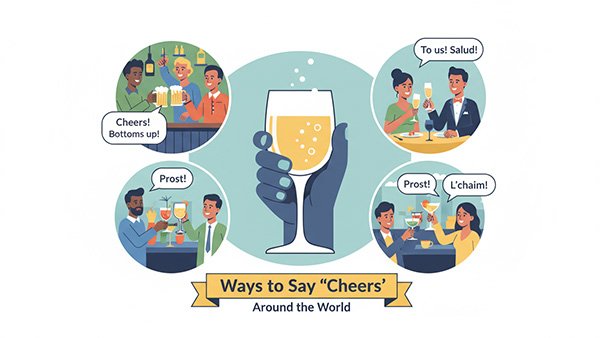
The specific expressions used to say “cheers” can vary depending on the region. For example, in some parts of the UK, “Chin chin!” is a common expression.
Examples of regional variations include:
- “Chin chin!” (UK)
- “Here’s mud in your eye!” (UK, sometimes humorous)
- “Sláinte!” (Irish, meaning “health”)
Humorous Toasts
Humorous toasts are used to inject levity and laughter into a gathering. They often involve puns, jokes, or self-deprecating remarks.
Examples of humorous toasts include:
- “May we all be as happy as we are drunk.”
- “Here’s to being single, drinking doubles, and seeing triple!”
- “To absent friends, and those who can’t be here tonight – may they all be women!” (Note: This example is gendered and may not be appropriate in all contexts.)
- “May your life be like toilet paper: long and useful!”
International Influences on Toasts
English toasting traditions have been influenced by various cultures around the world. Borrowed phrases and customs add richness to the language.
Examples of international influences include:
- “Salud!” (Spanish, meaning “health”)
- “Prost!” (German, meaning “cheers” or “to your health”)
- “Santé!” (French, meaning “health”)
Examples of “Cheers” in Different Contexts
The following tables provide extensive examples of how to say “cheers” in different contexts, categorized by formality and intention. Each table contains 20-30 examples.
Table 1: Formal Toast Examples
This table showcases formal toasts suitable for weddings, corporate events, and other official gatherings. These toasts are characterized by their eloquent language and respectful tone.
| Formal Toast | Context |
|---|---|
| “To the happy couple, may your journey together be filled with joy, love, and endless adventures.” | Wedding Reception |
| “To the success of our company, may we continue to innovate and lead in our industry.” | Corporate Gala |
| “To our esteemed guests, we are deeply honored by your presence and support.” | Formal Dinner |
| “To the graduating class, may your future endeavors be met with success and fulfillment.” | Graduation Ceremony |
| “To the memory of those who have served, we are eternally grateful for your sacrifice.” | Memorial Service |
| “To the advancement of science, may our discoveries lead to a better future for all.” | Scientific Conference |
| “To the power of education, may it empower generations to come.” | Educational Fundraiser |
| “To the arts, may they continue to inspire and enrich our lives.” | Art Gallery Opening |
| “To the spirit of collaboration, may we work together to achieve great things.” | International Summit |
| “To the pursuit of peace, may we strive for a world free from conflict and violence.” | Peace Conference |
| “To a long and prosperous partnership, may our collaboration yield mutual success.” | Business Dinner |
| “To the foundation of our friendship, may it remain steadfast through the seasons of life.” | Anniversary Celebration |
| “To innovation and ingenuity, may we always seek new ways to improve and excel.” | Tech Industry Event |
| “To health and happiness, may we all enjoy long and fulfilling lives.” | Retirement Party |
| “To the future leaders of tomorrow, may they guide us with wisdom and integrity.” | Leadership Conference |
| “To the spirit of volunteerism, may we all give back to our communities.” | Charity Event |
| “To the preservation of our planet, may we protect it for future generations.” | Environmental Summit |
| “To the celebration of diversity, may we embrace and respect all cultures.” | Cultural Festival |
| “To the enduring power of love, may it conquer all.” | Valentine’s Day Gala |
| “To the dedication and hard work of our team, may they be continually recognized and rewarded.” | Company Achievement Celebration |
| “To the unwavering commitment to excellence, may it always guide our decisions and actions.” | Awards Ceremony |
| “To the spirit of adventure, may we always seek new horizons and experiences.” | Travel Conference |
| “To the bonds of family, may they strengthen and endure through all times.” | Family Reunion |
| “To the pursuit of knowledge, may we never stop learning and growing.” | Academic Conference |
Table 2: Informal Toast Examples
This table provides examples of informal toasts suitable for casual gatherings with friends and family. These toasts are typically short, simple, and lighthearted.
| Informal Toast | Context |
|---|---|
| “Cheers!” | General Use |
| “To good times!” | Party with Friends |
| “To us!” | Celebrating Friendship |
| “Here’s to you!” | Honoring a Friend |
| “Bottoms up!” | Starting to Drink |
| “To tonight!” | Enjoying the Evening |
| “Good health!” | Wishing Well |
| “To happiness!” | Expressing Goodwill |
| “To our success!” | Celebrating Achievement |
| “To the weekend!” | Welcoming the Weekend |
| “To new beginnings!” | Starting a New Chapter |
| “To old friends!” | Remembering the Past |
| “To the good life!” | Appreciating Life |
| “To adventure!” | Embarking on a Trip |
| “To laughter!” | Hoping for Fun |
| “To memories!” | Creating New Memories |
| “To the future!” | Looking Forward |
| “To having fun!” | Planning a Good Time |
| “To being together!” | Enjoying Company |
| “To making it!” | Celebrating Completion |
| “To another round!” | Ordering More Drinks |
| “To pizza and beer!” | Casual gathering |
| “To surviving Monday!” | Celebrating the end of a difficult day |
| “To Netflix and chill!” | Relaxed evening at home |
| “To conquering the world, one step at a time!” | Motivating friends |
| “To awkward silences and unforgettable moments!” | Reflecting on shared experiences |
Table 3: Humorous Toast Examples
This table provides examples of humorous toasts designed to elicit laughter and create a lighthearted atmosphere. Use these toasts with caution and consider your audience.
| Humorous Toast | Context |
|---|---|
| “May we all be as happy as we are drunk.” | Party Setting |
| “Here’s to being single, drinking doubles, and seeing triple!” | Singles Night |
| “To absent friends, and those who can’t be here tonight – may they all be women!” (Note: This example is gendered and may not be appropriate in all contexts.) | Bachelor Party |
| “May your life be like toilet paper: long and useful!” | Birthday Party |
| “Here’s to alcohol, the cause of, and solution to, all of life’s problems.” | Casual Gathering |
| “May we never be as full of ourselves as we are of this beer.” | Brewery Visit |
| “To the liver, may it live longer than we do.” | Drinking Session |
| “Here’s to those who wish us well, and those who don’t can go to hell!” | Retaliatory Toast |
| “May your troubles last as long as your New Year’s resolutions.” | New Year’s Eve |
| “To the nights we won’t remember with the friends we’ll never forget.” | Reunion |
| “May your coffee be strong and your Monday be short.” | Office Party |
| “Here’s to staying positive and testing negative!” | During a pandemic |
| “May we all get what we want, may we all get what we need, but may we never get what we deserve.” | Philosophical Gathering |
| “To a good job, well done – now let’s get drunk!” | Work Celebration |
| “To being old, fat, and happy!” | Retirement Party |
| “Here’s to health, may you live to be a hundred, and I live to be the one who has to bury you.” | Dark Humor |
| “May your clothes be tight and your drinks be cheap.” | Bachelorette Party |
| “To our wives and girlfriends: may they never meet!” (Note: This example is sexist and may not be appropriate in all contexts.) | Guys’ Night Out |
| “May you always have love in your heart and cash in your pocket.” | General Celebration |
| “To the foolish things we do, and the people we do them with.” | Friendship Toast |
| “Here’s to the holidays – may you survive your family.” | Holiday Gathering |
| “May our bank accounts one day be as large as our egos.” | Ambitious Friends |
| “To being this fabulous – it’s exhausting!” | Self-Deprecating Humor |
| “May your Facebook wall never contain a political debate.” | Tech-Savvy Friends |
| “Here’s to the crazy ones, may they never change.” | Celebrating Eccentricity |
Table 4: Regional and International Toast Examples
This table provides regional variations and international phrases used to express “cheers,” adding a touch of cultural diversity to your toasting repertoire.
| Toast | Language/Region | Meaning |
|---|---|---|
| “Chin chin!” | UK | Cheers |
| “Sláinte!” | Irish | Health |
| “Here’s mud in your eye!” | UK | Cheers (often humorous) |
| “Salud!” | Spanish | Health |
| “Prost!” | German | Cheers |
| “Santé!” | French | Health |
| “Salute!” | Italian | Health |
| “Kanpai!” | Japanese | Empty the glass |
| “Na zdrowie!” | Polish | To health |
| “Skål!” | Scandinavian | Cheers |
| “Yamas!” | Greek | To our health |
| “Noroc!” | Romanian | Cheers |
| “A votre santé!” | French (formal) | To your health |
| “Zum Wohl!” | German (formal) | To your well-being |
| “Gān bēi!” | Mandarin Chinese | Dry glass (bottoms up) |
| “Saúde!” | Portuguese | Health |
| “Kippis!” | Finnish | Cheers |
| “Egészségedre!” | Hungarian | To your health |
| “L’chaim!” | Hebrew | To life |
| “Viva!” | Spanish/Italian | Live! / Hooray! |
| “Şerefe!” | Turkish | To honor |
| “Terviseks!” | Estonian | To health |
| “Į sveikatą!” | Lithuanian | To health |
| “Uz Veselību!” | Latvian | To health |
Usage Rules and Etiquette
Using “cheers” appropriately involves understanding certain rules and etiquette. These guidelines ensure that your toasts are well-received and contribute positively to the atmosphere.
Formality: Choose your expression based on the formality of the occasion. Formal events require more elaborate and respectful language, while casual gatherings allow for simpler and more humorous expressions.
Eye Contact: When toasting, make eye contact with the person or people you are toasting. This shows sincerity and respect.
Raising Glasses: Raise your glass as you say “cheers,” but avoid clinking glasses if it feels forced or unnatural. In some cultures, clinking glasses is not customary.
Taking a Sip: After the toast, take a sip of your drink. This acknowledges the toast and shows participation.
Cultural Sensitivity: Be aware of cultural differences in toasting customs. Some cultures have specific rituals or expressions that should be respected.
Avoid Overdoing It: Keep your toasts brief and to the point. Long, rambling speeches can lose the audience’s attention and detract from the occasion.
Consider the Audience: Tailor your toast to the audience. Avoid jokes or references that may be offensive or inappropriate.
Common Mistakes to Avoid
Even experienced English speakers can make mistakes when saying “cheers.” Here are some common errors to avoid:
Incorrect Formality: Using overly formal language in a casual setting, or vice versa.
Offensive Humor: Making jokes that are sexist, racist, or otherwise offensive.
Rambling Toasts: Speaking for too long and losing the audience’s attention.
Ignoring Cultural Norms: Disregarding cultural customs related to toasting.
Forgetting Eye Contact: Failing to make eye contact with the person being toasted.
Mixing Up Expressions: Using regional or international expressions incorrectly.
Incorrect Example: “To the success of our company, may it bring prosperity and growth to all involved. Cheers, dudes!” (Inappropriate informality)
Correct Example: “To the success of our company, may it bring prosperity and growth to all involved. Cheers!”
Incorrect Example: “Here’s to all the ladies, hope you look good tonight!” (Potentially sexist)
Correct Example: “To everyone here, may we all have a wonderful evening!”
Practice Exercises
Test your understanding of how to say “cheers” with these practice exercises.
Exercise 1: Choose the Appropriate Toast
Select the most appropriate toast for each scenario.
| Scenario | Options | Answer |
|---|---|---|
| A casual gathering with friends | a) “To the enduring legacy of our ancestors.” b) “Cheers!” c) “May your future be filled with untold riches.” | b) “Cheers!” |
| A wedding reception | a) “Bottoms up!” b) “To the happy couple, may their love grow stronger with each passing year.” c) “Here’s to another round!” | b) “To the happy couple, may their love grow stronger with each passing year.” |
| A corporate gala | a) “To good times!” b) “To the success of our company, may we continue to innovate and lead in our industry.” c) “Here’s to those who wish us well, and those who don’t can go to hell!” | b) “To the success of our company, may we continue to innovate and lead in our industry.” |
| A retirement party | a) “May your troubles last as long as your New Year’s resolutions.” b) “To a life of leisure and relaxation, congratulations on your retirement.” c) “To us!” | b) “To a life of leisure and relaxation, congratulations on your retirement.” |
| A birthday party | a) “May your life be like toilet paper: long and useful!” b) “To your health and happiness, happy birthday!” c) “Chin chin!” | b) “To your health and happiness, happy birthday!” |
| Celebrating a project success with colleagues | a) “To our wives and girlfriends: may they never meet!” b) “To the successful completion of this project, well done team!” c) “Bottoms up!” | b) “To the successful completion of this project, well done team!” |
| A casual dinner with family | a) “To the bonds of family, may they strengthen and endure through all times.” b) “To pizza and beer!” c) “May we all be as happy as we are drunk.” | a) “To the bonds of family, may they strengthen and endure through all times.” |
| Welcoming the New Year | a) “May your troubles last as long as your New Year’s resolutions.” b) “To new beginnings and exciting adventures in the coming year!” c) “Here’s to being single, drinking doubles, and seeing triple!” | b) “To new beginnings and exciting adventures in the coming year!” |
| A farewell party for a colleague | a) “To the nights we won’t remember with the friends we’ll never forget.” b) “To your future endeavors, may you find success and happiness wherever you go!” c) “Good health!” | b) “To your future endeavors, may you find success and happiness wherever you go!” |
| Honoring a veteran at a memorial service | a) “To the memory of those who have served, we are eternally grateful for your sacrifice.” b) “To being old, fat, and happy!” c) “Here’s to alcohol, the cause of, and solution to, all of life’s problems.” | a) “To the memory of those who have served, we are eternally grateful for your sacrifice.” |
Exercise 2: Fill in the Blanks
Complete the following toasts with appropriate words or phrases.
| Toast | Answer |
|---|---|
| “__________ the bride and groom, may their love last forever.” | “To” |
| “__________ good times and great friends!” | “To” |
| “__________ us, for all the memories we’ve made and the ones yet to come!” | “To” |
| “__________ health and happiness, now and always.” | “To” |
| “__________ the weekend, let’s relax and have some fun!” | “To” |
| “__________ new beginnings, may they be filled with joy and success.” | “To” |
| “__________ absent friends, we miss you all.” | “To” |
| “__________ adventure, let’s explore the world together.” | “To” |
| “__________ laughter, may it fill our lives every day.” | “To” |
| “__________ making it through another tough week!” | “To” |
Exercise 3: Correct the Mistakes
Identify and correct the mistakes in the following toasts.
| Incorrect Toast | Corrected Toast |
|---|---|
| “To the happy couple, bottoms up!” | “To the happy couple, may their life together be filled with joy!” |
| “To our boss, he’s a real jerk!” | “To our boss, may we continue to learn and grow under his leadership.” |
| “Cheers, I’m gonna get so drunk tonight!” | “Cheers, let’s enjoy the evening!” |
| “To my ex, I’m glad you’re gone!” | “To new beginnings and brighter futures!” |
| “To the company, hope we make lots of money!” | “To the company, may we continue to achieve great success!” |
| “To being single, it’s the worst!” | “To being single, may we embrace our independence and freedom!” |
| “To getting old and wrinkly!” | “To growing wiser and more experienced with age!” |
| “To failing, but who cares!” | “To learning from our mistakes and striving for improvement!” |
| “To being awkward, it’s so embarrassing!” | “To embracing our quirks and celebrating our individuality!” |
| “To Mondays, they suck!” | “To a productive week ahead, let’s make the most of it!” |
Advanced Topics in Toasting
For advanced learners, delving into the history and cultural significance of toasting can add depth to your understanding.
History of Toasting: Toasting has ancient roots, with evidence of similar customs found in various cultures throughout history. The practice of raising glasses and offering words of goodwill dates back to ancient Greece and Rome.
Cultural Significance: Toasting rituals vary widely across cultures. In some cultures, specific types of drinks are used for toasting, while in others, certain gestures or phrases are considered essential.
Psychological Aspects: The act of toasting has psychological benefits, such as fostering social bonding, promoting positive emotions, and reinforcing shared values.
Evolution of Toasting: Toasting customs have evolved over time, influenced by social trends, technological advancements, and globalization.
Frequently Asked Questions
Here are some frequently asked questions about how to say “cheers” in English.
Q1: Is it always necessary to clink glasses when saying “cheers”?
A1: No, clinking glasses is not always necessary. It depends on the context and cultural norms.
In some settings, it’s perfectly acceptable to simply raise your glass and say “cheers” without clinking.
Q2: What should I do if I don’t drink alcohol but still want to participate in a toast?
A2: You can participate in a toast with any beverage, alcoholic or non-alcoholic. Simply raise your glass with the others and take a sip after the toast.
Q3: Is it rude to decline a toast?
A3: It can be considered impolite to decline a toast, especially in formal settings. If you have a valid reason for declining (such as a medical condition or personal belief), it’s best to politely explain your situation to the host or speaker.
Q4: How long should a toast be?
A4: A toast should be brief and to the point, typically lasting no more than a minute or two. Long, rambling speeches can lose the audience’s attention.
Q5: What should I do if I accidentally spill my drink during a toast?
A5: If you accidentally spill your drink during a toast, simply apologize and clean up the spill as quickly as possible. Don’t make a big deal out of it.
Q6: Can I propose a toast at any time during a gathering?
A6: While you can propose a toast at various points, it’s generally best to do so at a suitable moment, such as after a meal or during a designated toasting session. Avoid interrupting important conversations or activities.
Q7: How do I handle giving a toast when I’m nervous?
A7: Prepare your toast in advance, practice it beforehand, and take a deep breath before speaking. Focus on delivering your message clearly and sincerely, and don’t worry too much about being perfect.
Q8: Are there any specific toasting customs to be aware of in different cultures?
A8: Yes, toasting customs vary widely across cultures. For example, in some cultures, it’s customary to make eye contact while toasting, while in others, it’s considered rude to do so.
Researching the specific customs of the culture you’re in can help you avoid unintentional offense.
Conclusion
Mastering the art of saying “cheers” in English involves understanding the nuances of formality, context, and cultural sensitivity. By exploring the different types of expressions, usage rules, and common mistakes to avoid, you can confidently raise a toast in any setting.
Remember to tailor your expressions to the occasion, be mindful of your audience, and always offer your good wishes with sincerity and respect. With these tips in mind,
you’ll be well-equipped to make a positive and lasting impression whenever you raise your glass and say “Cheers!”