
Sunsets captivate us with their breathtaking beauty, and the ability to describe them vividly is a valuable skill. This article explores the rich vocabulary and grammatical structures available to paint a picture of the setting sun.
Understanding these descriptive techniques enhances your writing and speaking abilities, allowing you to convey the emotions and sensory experiences associated with this natural phenomenon. Whether you’re a student, writer, or simply someone who appreciates the beauty of language, this guide will equip you with the tools to articulate the magic of sunsets.
This article delves into nouns, adjectives, verbs, and figurative language, offering examples and practice exercises to solidify your understanding. By mastering these elements, you can transform your descriptions from ordinary to extraordinary, capturing the essence of a sunset in all its glory.
Table of Contents
- Definition: Describing Sunsets
- Structural Breakdown
- Types of Words to Describe Sunsets
- Examples of Sunset Descriptions
- Usage Rules
- Common Mistakes
- Practice Exercises
- Advanced Topics
- FAQ
- Conclusion
Definition: Describing Sunsets
Describing a sunset involves using language to convey the visual, emotional, and sensory experience of watching the sun descend below the horizon. It requires employing a variety of grammatical tools, including nouns, adjectives, verbs, adverbs, and figurative language, to create a vivid and evocative picture in the reader’s or listener’s mind.
This goes beyond simply stating the colors present; it aims to capture the atmosphere, the changing light, and the feelings evoked by the scene.
The act of describing a sunset is not merely about listing observations; it’s about crafting a narrative that engages the senses and emotions. A well-crafted sunset description should transport the audience to the scene, allowing them to experience the beauty and tranquility of the moment.
Structural Breakdown
Describing a sunset effectively relies on a combination of grammatical elements working together. Here’s a breakdown of the key structural components:
- Subject-Verb Agreement: Ensuring the subject and verb agree in number is crucial for clarity. For example, “The sun is setting,” not “The sun are setting.”
- Sentence Structure: Varying sentence structure (simple, compound, complex) keeps the description engaging. A mix of short, impactful sentences and longer, descriptive sentences can create a dynamic effect.
- Use of Modifiers: Adjectives and adverbs add detail and nuance to the description. “The fiery sun slowly descended,” uses adjectives to enhance the image.
- Figurative Language: Similes, metaphors, and personification can elevate the description, making it more imaginative and relatable. “The sky was like a canvas painted with fire” (simile).
- Sensory Details: Incorporating details that appeal to the senses (sight, sound, smell, touch) creates a more immersive experience. Mentioning the cool evening breeze or the distant sound of waves can enhance the description.
The interplay of these elements creates a descriptive passage that is both grammatically sound and artistically compelling. By mastering these structural components, writers can craft sunset descriptions that resonate with their audience.
Types of Words to Describe Sunsets
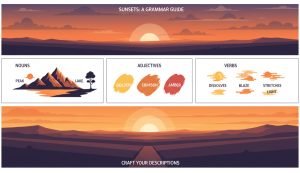
When learning how to describe sunset, it is helpful to explore different categories of words that can bring your descriptions to life. Words to describe the sunset include vivid nouns like horizon, embers, and rays; dynamic verbs such as sinking, glowing, or dancing; and descriptive adjectives like fiery, radiant, and tranquil.
There are countless ways to describe a sunset, whether emphasizing its colors, the movement of light, or the emotions it evokes in those who watch it. Mixing literal and figurative language ensures your sunset descriptions remain fresh, immersive, and evocative.
The vocabulary used to describe sunsets is diverse and expressive. Different types of words contribute unique aspects to the overall description.
Here’s a breakdown of the main categories:
Nouns
Nouns are the building blocks of any description, naming the elements present in the scene. They provide the concrete details that ground the description and make it tangible for the reader.
Examples of nouns used to describe sunsets include: sun, sky, clouds, horizon, sea, ocean, mountains, trees, silhouettes, colors, hues, shades, tints, rays, glow, dusk, twilight, afterglow, embers, fire, canvas, painting, spectacle, vista.
Adjectives
Adjectives add color and detail to the nouns, making the description more vivid and specific. They help to paint a picture in the reader’s mind by providing sensory information and emotional associations.
Examples of adjectives used to describe sunsets include: fiery, golden, crimson, scarlet, orange, amber, vibrant, brilliant, radiant, luminous, breathtaking, stunning, picturesque, dramatic, serene, peaceful, tranquil, majestic, glorious, pastel, soft, warm, cool, fading, dying, ethereal.
Verbs
Verbs describe the actions and states of being, bringing the scene to life. They indicate how the elements of the sunset are changing and interacting with each other.
Examples of verbs used to describe sunsets include: setting, sinking, descending, fading, glowing, burning, painting, illuminating, reflecting, casting, spreading, streaking, coloring, transforming, melting, dissolving, disappearing, emerging, rising, shimmering, dancing.
Adverbs
Adverbs modify verbs, adjectives, or other adverbs, adding further detail and nuance to the description. They indicate how, when, where, or to what extent an action is performed or a quality is exhibited.
Examples of adverbs used to describe sunsets include: slowly, gradually, gently, softly, brilliantly, radiantly, dramatically, beautifully, peacefully, serenely, majestically, gloriously, ethereally, quietly, silently, completely, partially, faintly, dimly, intensely, vividly.
Figurative Language
Figurative language uses creative comparisons and imaginative expressions to enhance the description and evoke emotions. It goes beyond the literal meaning of words to create a more powerful and memorable impact.
- Similes: Comparing two unlike things using “like” or “as.” Example: “The sky was like a canvas painted with fire.”
- Metaphors: Stating that one thing is another, implying a similarity. Example: “The sun was a molten coin sinking into the horizon.”
- Personification: Giving human qualities to inanimate objects or natural phenomena. Example: “The clouds wept tears of gold as the sun bid farewell.”
Examples of Sunset Descriptions
Below are several examples of sunset descriptions, categorized by the dominant type of word used. These examples demonstrate how different vocabulary choices can create distinct effects.
The following table provides examples focusing on the use of nouns to describe a sunset. Notice how the choice of nouns creates a specific image and feeling.
| Description | Emphasis |
|---|---|
| The horizon blazed with a final burst of glory as the sun dipped below the mountains. | Focuses on the key elements of the landscape. |
| A kaleidoscope of colors filled the sky, a breathtaking spectacle for all to behold. | Highlights the visual beauty and grandeur. |
| The twilight deepened, casting long shadows across the sea. | Emphasizes the transition from day to night. |
| Embers glowed in the west, a final reminder of the day’s fire. | Uses metaphorical nouns to evoke a sense of warmth and energy. |
| The vista from the hilltop offered a panoramic view of the setting sun, a masterpiece of natural art. | Highlights a specific location and the overall artistic quality of the scene. |
| The gentle lapping of waves provided a soothing soundtrack to the day’s grand finale. The beach was still. | Brings in the element of sound and tranquility to the overall sunset experience. |
| She watched as the sun’s rays danced across the rippled surface of the water. | Focuses on the movement and interaction of light and water. |
| The sky was a canvas, and the clouds were brushstrokes of fiery colour. | Uses the metaphor of art to describe the scene. |
| The last sliver of the sun disappeared, leaving behind a faint glow on the horizon. | Highlights the last moments of the sunset and the lingering light. |
| The children pointed excitedly at the vibrant hues spread across the evening sky. | Focuses on the colours and the reaction of the children. |
| The distant silhouettes of the trees added depth and mystery to the sunset scene. | Emphasizes the shapes and shadows created by the setting sun. |
| The air was filled with the sweet scent of blossoms, a fragrant accompaniment to the visual feast of the sunset. | Brings in the sense of smell as a complement to the visual description. |
| The sun’s descent painted the clouds with vibrant strokes of orange, pink, and purple. | Focuses on the colors painted on the clouds. |
| The evening breeze whispered through the trees, carrying with it the scent of salt and earth. | Emphasizes the sounds and smells that accompany the sunset. |
| The sky was ablaze with colour, a dramatic display of nature’s artistry. | Highlights the drama and artistic quality of the sunset. |
| The last rays of sunlight touched the mountain peaks, creating a breathtaking spectacle. | Focuses on the final moments of sunlight on the mountains. |
| The sunset cast a warm glow over the landscape, bathing everything in a golden light. | Emphasizes the warmth and golden light of the sunset. |
| The sea reflected the colors of the sky, creating a mirror image of breathtaking beauty. | Highlights the reflection of the sunset in the sea. |
| The sunset was a symphony of colors, a masterpiece of natural art. | Uses the metaphor of music and art to describe the sunset. |
| The clouds were like brushstrokes of fire, painted across the vast canvas of the sky. | Uses the metaphor of painting to describe the clouds. |
To practice your skills, consider selecting specific words to describe the sunset and experimenting with different ways to describe a sunset in your writing. You might focus on the fiery colors, the gentle fading of light, or the reflective mood of the evening sky. By consciously choosing vocabulary and testing various descriptive approaches, you can make your sunset scenes more vivid, memorable, and emotionally engaging.
The following table provides examples focusing on the use of adjectives to describe a sunset. Notice how the adjectives enhance the descriptive power of the sentences.
| Description | Emphasis |
|---|---|
| The fiery sun dipped below the golden horizon. | Emphasizes the colors and intensity of the sunset. |
| A breathtaking vista unfolded before us, a stunning display of natural beauty. | Highlights the overall beauty and grandeur of the scene. |
| The sky was painted with vibrant hues of crimson and scarlet. | Focuses on the intensity and variety of colors. |
| A peaceful and serene atmosphere settled over the landscape as the sun set. | Emphasizes the tranquility and calmness of the scene. |
| The majestic sun slowly descended, casting a glorious light across the land. | Highlights the grandeur and magnificence of the sunset. |
| The pastel shades of pink and orange created a soft and warm glow. | Focuses on the gentle and comforting colors of the sunset. |
| The fading light cast long, ethereal shadows across the landscape. | Emphasizes the fading light and the otherworldly quality of the scene. |
| The radiant sun painted the clouds with luminous colors. | Highlights the brightness and illuminating power of the sun. |
| The dramatic sunset was a feast for the eyes, a picturesque moment to remember. | Emphasizes the visual impact and memorability of the sunset. |
| The dying embers of the sun cast a cool and tranquil light. | Focuses on the last moments of the sunset and the calming effect. |
| The amber glow of the setting sun warmed the evening air. | Emphasizes the warm color and the feeling of warmth. |
| A brilliant display of colors streaked across the sky, a masterpiece of nature’s artistry. | Highlights the brightness and artistic quality of the sunset. |
| The crimson rays of the sun painted the clouds with fiery strokes. | Focuses on the intensity of the red color. |
| The golden light of the setting sun bathed the landscape in a warm glow. | Emphasizes the golden color and the feeling of warmth. |
| The orange hues of the sunset created a vibrant and energetic atmosphere. | Focuses on the orange color and the feeling of energy. |
| The scarlet sky was a dramatic backdrop to the silhouetted trees. | Highlights the red color and the contrast with the trees. |
| The vibrant colors of the sunset were a feast for the senses. | Emphasizes the intensity of the colors. |
| The brilliant light of the setting sun illuminated the landscape. | Highlights the brightness of the light. |
| The radiant colors of the sunset filled the sky with a warm glow. | Emphasizes the radiant quality of the colors. |
| The luminous clouds reflected the colors of the setting sun. | Highlights the luminous quality of the clouds. |
The following table provides examples focusing on the use of verbs to describe a sunset. Notice how the verbs animate the scene and bring it to life.
| Description | Emphasis |
|---|---|
| The sun is setting slowly behind the mountains. | Focuses on the gradual descent of the sun. |
| Colors are painting the sky with vibrant hues. | Highlights the active and artistic transformation of the sky. |
| The light is fading gently as dusk approaches. | Emphasizes the gentle decrease of light. |
| Shadows are lengthening across the landscape. | Focuses on the growing shadows. |
| The sun is sinking below the horizon, signaling the end of the day. | Highlights the finality of the sunset. |
| The sky is glowing with a warm and radiant light. | Emphasizes the radiant glow of the sky. |
| The clouds are burning with fiery colors. | Focuses on the intensity and vibrancy of the colors. |
| The sun is disappearing slowly from view. | Highlights the gradual disappearance of the sun. |
| The light is transforming the landscape into a magical scene. | Emphasizes the transformative power of the light. |
| The colors are melting together, creating a harmonious blend. | Focuses on the blending and merging of colors. |
| The sun descends gracefully, its fiery glow softening as it nears the horizon. | Highlights the graceful descent of the sun. |
| The sky reflects the sun’s brilliance, mirroring its vibrant colors across the water. | Emphasizes the reflection of the sun in the sky. |
| Golden rays streak across the clouds, creating a dramatic spectacle in the sky. | Focuses on the movement of the rays across the clouds. |
| The setting sun colors the world in warm hues, casting a gentle glow on everything it touches. | Highlights the coloring effect of the sunset on the world. |
| As the sun melts into the horizon, the sky dissolves into shades of purple and pink. | Emphasizes the blending and dissolving of colors. |
| The evening star emerges as the sun disappears, marking the transition from day to night. | Focuses on the transition from day to night. |
| The light shimmers on the water, creating a mesmerizing dance of reflections. | Highlights the shimmering and dancing effect of the light on the water. |
| The sun dances with the clouds, as the sky erupts with bright colours. | Uses personification to describe the sun and clouds. |
| The sun spreads its light across the sky, as the clouds turn to a variety of colours. | Emphasizes the movement of the sun across the sky. |
| The sunset illuminates the sky, with a variety of colours. | Highlights the illumination of the sky. |
Usage Rules
Using words to describe sunsets effectively involves following certain grammatical and stylistic rules:
- Use vivid and specific language: Avoid generic terms like “pretty” or “nice.” Instead, opt for descriptive words that evoke specific colors, textures, and emotions.
- Vary your sentence structure: Use a mix of short, impactful sentences and longer, descriptive sentences to create a dynamic and engaging narrative.
- Engage the senses: Incorporate details that appeal to sight, sound, smell, and touch to create a more immersive experience.
- Use figurative language sparingly: While similes, metaphors, and personification can enhance the description, overuse can make it sound contrived.
- Maintain consistency in tense: Choose a tense (past, present, future) and stick to it throughout the description.
Adhering to these rules will help you create sunset descriptions that are both grammatically sound and artistically compelling.
Common Mistakes
Here are some common mistakes to avoid when describing sunsets:
| Incorrect | Correct | Explanation |
|---|---|---|
| The sunset was very beautiful. | The sunset was breathtaking. | Using more specific and evocative adjectives. |
| The sun went down. | The sun descended slowly below the horizon. | Adding detail and imagery to a simple statement. |
| The sky had colors. | The sky was ablaze with crimson, orange, and gold. | Being more specific about the colors and their intensity. |
| The clouds looked like things. | The clouds resembled brushstrokes of fire across the sky. | Using stronger similes and metaphors. |
| The sunset was nice. | The sunset was a serene and tranquil masterpiece. | Avoiding generic adjectives and opting for more descriptive ones. |
| The sun is setting quick. | The sun is setting quickly. | Using the correct adverb form. |
| The sky was color. | The sky was full of color. | Using the correct preposition. |
| The sun, it was red. | The sun was red. | Avoiding unnecessary words. |
Practice Exercises
Test your knowledge with these practice exercises:
- Exercise 1: Fill in the Blanks (Adjectives)Fill in the blanks with appropriate adjectives to describe the sunset:
Sentence Answer The ______ sun cast a ______ glow over the landscape. Golden, warm The sky was painted with ______ hues of orange and pink. Vibrant A ______ silence fell as the sun disappeared below the horizon. Peaceful The ______ colors of the sunset were a feast for the eyes. Radiant The ______ clouds reflected the light of the setting sun. Luminous The ______ sky was a dramatic backdrop to the silhouetted trees. Scarlet A ______ breeze rustled through the leaves as the sun set. Gentle The ______ beauty of the sunset was breathtaking. Ethereal The ______ light cast long shadows across the landscape. Fading The ______ colours of the sunset were stunning. Pastel - Exercise 2: Sentence Transformation (Figurative Language)Transform the following sentences using similes or metaphors:
Original Sentence Transformed Sentence The sky was red. The sky was like a canvas painted with fire. The clouds were bright. The clouds were like jewels scattered across the sky. The sun was setting. The sun was a molten coin sinking into the horizon. The light was soft. The light was a gentle caress on the landscape. The sunset was beautiful. The sunset was a symphony of colors. The sky was dark. The sky was a velvet curtain descending over the world. The clouds moved slowly. The clouds drifted like ships on a celestial sea. The sun disappeared. The sun vanished like a dream. The colors blended together. The colors melted into each other like watercolors. The sky was a painting. The sky was a masterpiece. - Exercise 3: Choose the Correct Word (Adverbs)Choose the correct adverb to complete each sentence:
Sentence Answer The sun set ______ behind the mountains. (slow, slowly) slowly The sky glowed ______ with vibrant colors. (radiant, radiantly) radiantly The light faded ______ as dusk approached. (gentle, gently) gently Shadows lengthened ______ across the landscape. (gradual, gradually) gradually The sun disappeared ______ from view. (complete, completely) completely The clouds moved ______ across the sky. (quiet, quietly) quietly The sun painted the sky ______. (beautiful, beautifully) beautifully The sunset appeared ______. (majestic, majestically) majestically The colours of the sunset changed ______. (dramatic, dramatically) dramatically The sun set ______. (peaceful, peacefully) peacefully - Exercise 4: Error CorrectionIdentify and correct the errors in the following sentences:
Incorrect Sentence Corrected Sentence The sun, it was red and orange. The sun was red and orange. The sky have many colors. The sky has many colors. The sunset was very nice. The sunset was breathtaking. The sun is setting quick. The sun is setting quickly. The clouds look like things. The clouds resemble brushstrokes of fire. The colour, it was amazing. The colour was amazing. The sun do set behind the mountains. The sun sets behind the mountains. The sky were full of clouds. The sky was full of clouds. The sunset are beautiful. The sunset is beautiful. The sun, he is setting. The sun is setting.
Advanced Topics
For advanced learners, consider exploring these topics:
- Symbolism of sunsets: Sunsets often symbolize endings, transitions, and the passage of time. Explore how different cultures and writers interpret these symbols.
- Cultural variations in sunset descriptions: Different languages and cultures have unique ways of describing sunsets. Research how these descriptions vary and what they reveal about cultural values and perspectives.
- Use of literary devices: Explore the use of more complex literary devices, such as alliteration, assonance, and consonance, to enhance the description.
FAQ
What are some good adjectives to describe a sunset?
Excellent adjectives include: fiery, golden, crimson, scarlet, orange, amber, vibrant, brilliant, radiant, luminous, breathtaking, stunning, picturesque, dramatic, serene, peaceful, tranquil, majestic, glorious, pastel, soft, warm, cool, fading, dying, and ethereal. The best choice depends on the specific characteristics of the sunset you are describing.
How can I make my sunset descriptions more vivid?
To make your descriptions more vivid, use specific and evocative language, engage the senses, vary your sentence structure, and incorporate figurative language sparingly. Focus on capturing the unique details of the scene and the emotions it evokes.
What is the difference between a simile and a metaphor?
A simile compares two unlike things using “like” or “as,” while a metaphor states that one thing is another, implying a similarity. For example, “The sky was like a canvas painted with fire” (simile) versus “The sky was a canvas painted with fire” (metaphor).
How important is it to use correct grammar when describing a sunset?
Correct grammar is essential for clarity and credibility. While artistic license is important, grammatical errors can distract the reader and detract from the overall impact of the description. Ensure that your sentences are grammatically sound and that your word choices are appropriate.
Can I use personification when describing a sunset?
Yes, personification can be a powerful tool for enhancing your descriptions. Giving human qualities to inanimate objects or natural phenomena can make the scene more relatable and evocative. For example, “The clouds wept tears of gold as the sun bid farewell.”
How can I avoid clichés when describing sunsets?
To avoid clichés, focus on capturing the unique details of the specific sunset you are describing. Avoid overused phrases and opt for fresh and original language. Pay attention to sensory details and emotional associations to create a more authentic and personal description.
What tense should I use when describing a sunset?
You can use either the past or present tense, but it is important to be consistent, depending on the intended effect. Present tense creates a sense of immediacy (“The sun sets behind the mountains”), while past tense narrates what happened (“The sun set behind the mountains”).
Is it okay to use hyperbole in a sunset description?
Yes, as long as it’s used sparingly and effectively. Hyperbole (exaggeration) can add emphasis and drama, but overuse can make the description sound unrealistic. For example, “The sunset was the most beautiful thing I had ever seen” can be effective if it aligns with the overall tone of the description.
Conclusion
Describing a sunset effectively is a skill that combines grammatical knowledge with artistic expression. By understanding the different types of words available, adhering to usage rules, and avoiding common mistakes, you can craft vivid and evocative descriptions that capture the beauty and emotion of this natural phenomenon.
Remember to practice regularly, paying attention to the details of the sunsets you observe and experimenting with different vocabulary and grammatical structures. With time and effort, you can develop your ability to articulate the magic of sunsets and share your experiences with others in a compelling and meaningful way.