
Understanding the concept of “belonging” and its antonyms is crucial for nuanced communication in English. When discussing social and emotional concepts, it’s important to know the most accurate belonging antonym to convey feelings of exclusion or detachment. Understanding what is the opposite of belonging can help writers, speakers, and learners select words that precisely describe disconnection or alienation. Using belonging antonyms effectively allows for richer expression in both narrative and analytical contexts.
This article delves into the various words and phrases that represent the opposite of belonging, offering a comprehensive exploration of terms like exclusion, alienation, detachment, and more.
By examining these antonyms, learners can enhance their vocabulary, improve their comprehension of social dynamics, and express themselves with greater precision. This guide is designed for English language learners, writers, and anyone seeking a deeper understanding of belonging and its multifaceted opposites.
Whether you’re crafting compelling narratives, analyzing social issues, or simply aiming to enrich your everyday conversations, mastering the antonyms of belonging is an invaluable asset. This article provides definitions, examples, usage rules, common mistakes, and practice exercises to help you confidently navigate this complex area of English grammar and vocabulary.
Table of Contents
- Introduction
- Definition of Unbelonging
- Structural Breakdown
- Types and Categories of Antonyms of Belonging
- Examples
- Usage Rules
- Common Mistakes
- Practice Exercises
- Advanced Topics
- FAQ
- Conclusion
Definition of Unbelonging
Recommended Products

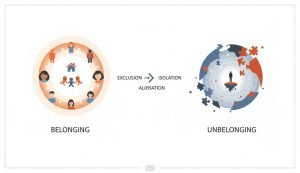
Unbelonging, in its broadest sense, refers to the state of not belonging, not being part of, or not feeling a sense of connection or inclusion within a group, place, or society. It encompasses a range of feelings and experiences, from mild discomfort to profound isolation. It’s the antithesis of belonging, which signifies acceptance, integration, and a sense of being at home.
Understanding the term “unbelonging” is essential when exploring antonyms of belonging. While not commonly found in standard dictionaries, unbelonging is recognized in linguistic and literary contexts as the state of not belonging or feeling disconnected from a group, place, or community. Its usage highlights a subjective experience, emphasizing emotional or social detachment rather than a formal exclusion.
Writers often use unbelonging to capture nuanced states of alienation, estrangement, or isolation, particularly in literature, psychology, and sociology. For instance, a character may experience unbelonging in a new school environment despite being physically present, illustrating the difference between mere absence and emotional disconnection. Recognizing the meaning and applications of unbelonging enriches one’s vocabulary and allows for more precise and empathetic communication about social and personal experiences.
Unbelonging can manifest in various forms, including social exclusion (being actively kept out of a group), alienation (feeling disconnected despite physical presence), detachment (a conscious choice to withdraw), and isolation (being physically or emotionally separated). The term can be used to describe both objective circumstances (e.g., being denied membership in a club) and subjective feelings (e.g., feeling like an outsider even when nominally included).
The concept of unbelonging is often explored in literature, sociology, and psychology. Authors use it to depict characters grappling with identity crises, social injustice, or the challenges of adapting to new environments.
Sociologists study unbelonging to understand the causes and consequences of social inequality and marginalization. Psychologists examine the emotional and psychological impacts of feeling excluded or disconnected.
Structural Breakdown
The antonyms of belonging can be analyzed based on their grammatical structure and function within a sentence. They can be nouns, adjectives, verbs, or adverbs, each contributing a unique nuance to the expression of unbelonging.
- Nouns: These words represent the state or condition of not belonging. Examples include exclusion, alienation, isolation, rejection, estrangement, detachment, outsider.
- Adjectives: These words describe someone or something that does not belong or is excluded. Examples include excluded, alienated, isolated, rejected, estranged, detached, foreign, outcast.
- Verbs: These words express the action of causing someone to not belong or the act of disassociating oneself. Examples include exclude, alienate, isolate, reject, estrange, detach, banish, ostracize.
- Adverbs: These words modify verbs, adjectives, or other adverbs to indicate the degree or manner of unbelonging. Examples include exclusively, remotely, distantly, separately.
Understanding the grammatical flexibility of these terms allows for more precise and expressive communication. For instance, one might say “He felt alienated (adjective) from his family,” or “His family alienated (verb) him due to his beliefs,” or “He experienced alienation (noun) after moving to a new country.”
Types and Categories of Antonyms of Belonging
The concept of “unbelonging” is multifaceted, encompassing various nuances. Here’s a breakdown of different types and categories of antonyms of belonging:
Exclusion
Exclusion refers to the act of being deliberately kept out of a group, activity, or place. It implies an active process of preventing someone from participating or being included.
It’s often associated with discrimination and social injustice.
Examples of exclusion can range from formal policies that bar certain groups from membership to subtle social cues that make someone feel unwelcome. Exclusion can be based on various factors, including race, gender, religion, socioeconomic status, or personal characteristics.
Alienation
Alienation describes a feeling of disconnection or estrangement from oneself, others, or society. It’s a more subjective experience than exclusion, as it can occur even when someone is physically present within a group.
Alienation often involves a sense of powerlessness, meaninglessness, and social isolation.
Alienation can stem from various sources, such as oppressive social structures, repetitive or dehumanizing work, or a lack of meaningful social connections. It’s a common theme in existential literature and social commentary.
Detachment
Detachment involves a conscious decision to emotionally or physically withdraw from a situation, relationship, or group. It can be a coping mechanism for dealing with stress or trauma, or a philosophical stance aimed at achieving objectivity and inner peace.
Detachment differs from exclusion and alienation in that it’s often a voluntary choice. While it can sometimes lead to negative consequences, such as social isolation, it can also be a positive strategy for self-preservation and emotional regulation.
Rejection
Rejection signifies the act of being turned down or refused, whether in a personal relationship, job application, or social setting. It often involves a direct and explicit denial of acceptance or inclusion.
Rejection can be a painful experience, as it challenges one’s sense of self-worth and belonging.
The impact of rejection can vary depending on the context and the individual’s resilience. While some people may bounce back quickly, others may experience lasting feelings of sadness, anger, or insecurity.
Estrangement
Estrangement refers to a state of emotional distance or alienation, often within a family or close relationship. It implies a breakdown of communication and affection, leading to a sense of separation and disconnection.
Estrangement can be caused by conflict, betrayal, or differing values.
Estrangement can be a complex and painful experience for all parties involved. It often requires significant effort and willingness to reconcile, if reconciliation is even possible.
Isolation
Isolation describes the state of being alone or separated from others, either physically or emotionally. It can be a result of exclusion, alienation, detachment, or other factors.
Isolation can have negative consequences for mental and physical health, as humans are social beings who thrive on connection and interaction.
While some degree of solitude can be beneficial for self-reflection and creativity, prolonged isolation can lead to feelings of loneliness, depression, and anxiety.
Outsider Status
“Outsider” describes someone who does not belong to a particular group or society. This status can be self-imposed or the result of external factors.
Outsiders often have a unique perspective on the group they are separate from, and this perspective can be valuable.
The experience of being an outsider can be challenging, but it can also foster independence, resilience, and a critical awareness of social norms.
Examples
To illustrate the diverse ways in which unbelonging manifests, here are several examples categorized by the specific antonym of belonging they represent. These examples are designed to provide a more concrete understanding of how these terms are used in context.
The following table provides examples of Exclusion in different contexts.
| Sentence | Explanation |
|---|---|
| The club’s bylaws explicitly exclude women from membership. | This is a clear example of formal exclusion based on gender. |
| He felt excluded from the conversation because he didn’t understand the technical jargon. | This illustrates exclusion based on a lack of knowledge or expertise. |
| The new student was excluded from the group’s activities because they didn’t know him. | This is an example of social exclusion due to unfamiliarity. |
| The company’s hiring practices exclude candidates over the age of 50. | This demonstrates age-based discrimination and exclusion. |
| She was excluded from the team because of her injury. | Physical limitations led to her exclusion from the team. |
| The refugee family felt excluded from the community due to language barriers. | Language barriers contribute to the feeling of not belonging. |
| The policy excludes certain types of businesses from receiving funding. | Specific criteria result in exclusion from financial assistance. |
| He felt excluded when his colleagues went out for drinks without inviting him. | A simple act of omission led to feelings of social exclusion. |
| The law excludes citizens who have been convicted of felonies from voting. | Legal restrictions can lead to exclusion from civic participation. |
| The child was excluded from the game because he didn’t follow the rules. | Non-compliance with rules resulted in exclusion from the activity. |
| The artist felt excluded from the mainstream art world. | Lack of recognition led to a feeling of being an outsider. |
| The small business was excluded from the bidding process due to its size. | Size limitations resulted in exclusion from economic opportunities. |
| She felt excluded from her family’s traditions because she had moved away. | Geographical distance contributed to a feeling of separation. |
| The marginalized community felt excluded from political representation. | Lack of representation led to feelings of disenfranchisement. |
| He was excluded from the prestigious award due to a technicality. | Formal requirements resulted in exclusion from recognition. |
| The software excludes older operating systems from being compatible. | Technological limitations lead to exclusion for some users. |
| She felt excluded from the conversation because she didn’t share their interests. | Differing interests resulted in feelings of social exclusion. |
| The club excludes new members without a formal application process. | Procedural barriers led to exclusion for potential members. |
| The policy excludes coverage for pre-existing medical conditions. | Specific health issues resulted in exclusion from insurance benefits. |
| He felt excluded from the group because of his different cultural background. | Cultural differences contributed to feelings of not belonging. |
| The website excludes users who don’t enable cookies. | Technical requirements result in exclusion for some visitors. |
| She was excluded from the promotion because of her lack of seniority. | Hierarchical structures resulted in exclusion from career advancement. |
| The community felt excluded from the decision-making process. | Lack of input led to feelings of disenfranchisement. |
| He was excluded from the will due to a family dispute. | Personal conflicts resulted in exclusion from inheritance. |
The following table provides examples of Alienation in different contexts.
| Sentence | Explanation |
|---|---|
| He felt a growing sense of alienation from his work as he performed the same task repetitively. | This illustrates alienation stemming from a lack of meaningful engagement. |
| The rapid pace of technological change led to alienation among older generations. | This shows alienation arising from feeling left behind by progress. |
| She experienced alienation from her friends after adopting a different political ideology. | This is an example of alienation due to differing beliefs. |
| The economic inequality in the city caused widespread alienation among the poor. | This demonstrates alienation stemming from social and economic disparities. |
| He felt alienation from his family after moving to a different country. | Geographical distance and cultural differences led to alienation. |
| The constant pressure to conform led to alienation from her true self. | Loss of authenticity resulted in a feeling of disconnection. |
| The impersonal nature of modern society can lead to a sense of alienation. | Lack of meaningful connections contributes to feelings of isolation. |
| He felt alienation from his community after being wrongly accused of a crime. | Social stigma led to a feeling of being an outsider. |
| The repetitive factory work caused a deep sense of alienation in the workers. | Monotonous tasks resulted in a feeling of dehumanization. |
| She felt alienation from her body after a serious illness. | Physical changes led to a feeling of disconnection from her physical self. |
| The constant political polarization led to alienation from the government. | Distrust and division resulted in feelings of disenfranchisement. |
| He experienced alienation from his peers due to his intellectual interests. | Differing interests led to a feeling of being an outsider. |
| The overwhelming nature of social media can lead to alienation from real-life interactions. | Virtual connections replaced genuine human relationships. |
| She felt alienation from her cultural heritage after assimilating into a new society. | Loss of cultural identity resulted in a feeling of disconnection. |
| The lack of affordable housing caused widespread alienation among young adults. | Economic barriers led to feelings of hopelessness and frustration. |
| He experienced alienation from his faith after questioning its core tenets. | Doubt and skepticism resulted in a feeling of spiritual disconnection. |
| The bureaucracy of the organization created a sense of alienation among its employees. | Lack of transparency and empowerment led to feelings of powerlessness. |
| She felt alienation from her family after making a life-altering decision they disapproved of. | Disagreement and disapproval resulted in a feeling of separation. |
| The rapid gentrification of the neighborhood led to alienation among long-time residents. | Displacement and change resulted in feelings of loss and disconnection. |
| He felt alienation from his own emotions after years of suppressing them. | Emotional repression led to a feeling of disconnection from his inner self. |
| The constant exposure to negative news can lead to alienation from society. | Pessimism and despair resulted in a feeling of hopelessness. |
| She experienced alienation from her professional field after facing gender discrimination. | Bias and prejudice resulted in a feeling of being undervalued. |
| The lack of community spaces created a sense of alienation among residents. | Lack of social interaction led to feelings of isolation. |
| He felt alienation from his body after undergoing a major surgery. | Physical trauma resulted in a feeling of disconnection from his physical self. |
| The political corruption led to widespread alienation from the electoral process. | Distrust and cynicism resulted in a feeling of disenfranchisement. |
The following table provides examples of Detachment in different contexts.
| Sentence | Explanation |
|---|---|
| She practiced detachment from her emotions to cope with the stressful situation. | This illustrates detachment as a coping mechanism. |
| The monk lived in detachment from worldly possessions, seeking enlightenment. | This shows detachment as a philosophical choice. |
| He maintained a professional detachment while reporting on the sensitive story. | This is an example of detachment for objectivity. |
| She felt a sense of detachment from her previous life after moving to a new city. | This demonstrates detachment due to a major life change. |
| He cultivated detachment from the outcome of the project to avoid disappointment. | This illustrates detachment as a way to manage expectations. |
| She found detachment to be a useful tool for dealing with difficult people. | Detachment helps to remain calm and composed in challenging interactions. |
| The scientist approached the experiment with complete detachment. | Objectivity is essential for scientific research. |
| He felt a sense of detachment from his family after years of living abroad. | Distance can create a feeling of emotional separation. |
| She practiced detachment from her ego to improve her self-awareness. | Self-reflection requires a degree of objectivity. |
| He maintained a detachment from the drama surrounding him. | Avoiding involvement helps to remain neutral. |
| She felt a sense of detachment from her past mistakes. | Letting go of the past can lead to personal growth. |
| He cultivated detachment from material possessions to simplify his life. | Minimalism involves a focus on experiences rather than things. |
| She found detachment to be a powerful tool for managing anxiety. | Stepping back from overwhelming emotions can provide clarity. |
| He maintained a professional detachment from his personal life. | Separating work and personal matters can improve focus. |
| She felt a sense of detachment from the superficiality of social media. | Choosing authentic connections over virtual ones can be liberating. |
| He cultivated detachment from his desire for external validation. | Seeking inner approval is more sustainable than seeking external praise. |
| She found detachment to be a useful tool for resolving conflicts. | Remaining neutral can help to find common ground. |
| He maintained a detachment from the emotional turmoil of the situation. | Staying calm can help to make rational decisions. |
| She felt a sense of detachment from the competitive atmosphere of her workplace. | Focusing on personal goals can reduce stress. |
| He cultivated detachment from his fear of failure. | Accepting the possibility of failure can encourage risk-taking. |
| She found detachment to be a powerful tool for improving her mental well-being. | Emotional distance can provide perspective and clarity. |
| He maintained a detachment from the opinions of others. | Self-confidence reduces the need for external approval. |
| She felt a sense of detachment from the consumerist culture. | Rejecting materialism can lead to greater contentment. |
| He cultivated detachment from his need for control. | Accepting uncertainty can reduce stress. |
| She found detachment to be a useful tool for managing grief. | Emotional distance can provide time for healing. |
Usage Rules
When using antonyms of belonging, it’s important to consider the specific context and the nuances of each word. Here are some general usage rules to keep in mind:
- Choose the word that best reflects the intended meaning. For example, “exclusion” implies an active process of keeping someone out, while “isolation” simply means being alone.
- Pay attention to the grammatical function of the word. Use nouns to represent the state of unbelonging, adjectives to describe someone who does not belong, and verbs to express the act of causing someone to not belong.
- Consider the connotations of the word. Some words, like “outcast,” carry stronger negative connotations than others, like “outsider.”
- Be aware of the potential for offense. Terms like “alien” or “foreigner” can be considered derogatory in certain contexts, so use them with caution.
Understanding these rules can help you use antonyms of belonging accurately and sensitively.
Common Mistakes
One common mistake is using “isolation” and “exclusion” interchangeably. Isolation simply means being alone, while exclusion implies being actively kept out. Similarly, alienation is often confused with detachment. Alienation is a feeling of disconnection, while detachment is a conscious choice to withdraw.
Another frequent error is using the wrong grammatical form of the word. For example, saying “He felt exclude” instead of “He felt excluded.” Pay attention to the correct verb tense and adjective endings.
Here are some examples of common mistakes and their corrections:
| Incorrect | Correct | Explanation |
|---|---|---|
| He felt isolate from the group. | He felt isolated from the group. | “Isolate” is a verb; the adjective “isolated” is needed. |
| The exclusion person felt sad. | The excluded person felt sad. | “Exclusion” is a noun; the adjective “excluded” is needed. |
| She practiced detach from her emotions. | She practiced detachment from her emotions. | “Detach” is a verb; the noun “detachment” is needed. |
| They are alienate from their family. | They are alienated from their family. | “Alienate” is a verb; the adjective “alienated” is needed. |
| He experienced reject by his peers. | He experienced rejection by his peers. | “Reject” is a verb; the noun “rejection” is needed. |
Practice Exercises
Test your understanding of antonyms of belonging with these practice exercises. Choose the best word from the options provided to complete each sentence.
Exercise 1: Fill in the Blanks
| Question | Options | Answer |
|---|---|---|
| The club’s rules ______________ new members without a formal application. | a) include, b) exclude, c) detach, d) belong | b) exclude |
| She felt a sense of ______________ from her body after the accident. | a) belonging, b) alienation, c) connection, d) attachment | b) alienation |
| He practiced ______________ from his emotions to remain calm during the crisis. | a) attachment, b) inclusion, c) detachment, d) engagement | c) detachment |
| The artist felt ______________ by the mainstream art world. | a) embraced, b) rejected, c) included, d) welcomed | b) rejected |
| After years of conflict, they experienced ______________ from their family. | a) closeness, b) estrangement, c) connection, d) unity | b) estrangement |
| The pandemic led to increased ______________ for many people. | a) socialization, b) isolation, c) community, d) integration | b) isolation |
| As an ______________, he saw the group’s dynamics with fresh eyes. | a) insider, b) member, c) outsider, d) participant | c) outsider |
| The policy aimed to ______________ certain groups from accessing resources. | a) empower, b) include, c) exclude, d) support | c) exclude |
| He felt a growing sense of ______________ from his work as it became more automated. | a) engagement, b) alienation, c) connection, d) involvement | b) alienation |
| She maintained a professional ______________ while reporting on the conflict. | a) involvement, b) attachment, c) detachment, d) engagement | c) detachment |
Exercise 2: True or False
| Statement | Answer |
|---|---|
| Exclusion and isolation are the same thing. | False |
| Alienation is always a conscious choice. | False |
| Detachment can be a useful coping mechanism. | True |
| Rejection always leads to long-term emotional damage. | False |
| Estrangement only occurs within families. | False |
| Isolation can have negative consequences for mental health. | True |
| Outsiders never have valuable perspectives. | False |
| Belonging and unbelonging are mutually exclusive concepts. | True |
| Exclusion is always intentional. | False |
| Alienation can stem from economic inequality. | True |
Advanced Topics
For advanced learners, exploring the philosophical and sociological dimensions of unbelonging can be enriching. Consider researching the works of philosophers like Jean-Paul Sartre, who explored the concept of existential alienation, or sociologists like Émile Durkheim, who examined the causes and consequences of social anomie (a state of normlessness and disconnection).
Another advanced topic is the intersection of unbelonging with identity politics. How do experiences of exclusion and alienation shape individual and group identities?
How do social movements address issues of unbelonging and strive for greater inclusion and belonging?
Finally, consider the role of language in creating and perpetuating unbelonging. How do certain words and phrases contribute to feelings of exclusion or alienation?
How can we use language to promote greater understanding and empathy?
FAQ
Here are some frequently asked questions about antonyms of belonging:
What is the difference between exclusion and isolation?
Exclusion is the act of being deliberately kept out of a group or activity, while isolation is the state of being alone or separated from others. Exclusion implies an active process, while isolation can be a result of various factors, including choice, circumstance, or exclusion.
Is alienation always a negative experience?
While alienation is often associated with negative feelings like loneliness and powerlessness, it can also lead to self-discovery and a critical awareness of social structures. Some individuals may find value in questioning societal norms and forging their own path, even if it means feeling somewhat disconnected.
How can I cope with feelings of rejection?
Coping with rejection involves recognizing that it’s a normal part of life and not necessarily a reflection of your worth. Focus on your strengths, learn from the experience, and seek support from friends, family, or a therapist. Remember that rejection can sometimes be a redirection towards a better opportunity.
What are the long-term effects of estrangement?
Estrangement can have significant long-term effects on mental and emotional well-being, including feelings of sadness, anger, guilt, and anxiety. It can also impact relationships with other family members and friends. Seeking therapy or support groups can be helpful in processing these emotions and developing healthy coping strategies.
Can detachment be beneficial?
Yes, detachment can be a beneficial coping mechanism for dealing with stress, trauma, or difficult situations. It allows you to maintain objectivity, manage your emotions, and avoid being overwhelmed. However, it’s important to balance detachment with genuine connection and empathy to avoid becoming emotionally isolated.
How does outsider status affect individuals?
Outsider status can lead to feelings of marginalization, exclusion, and loneliness. However, it can also foster independence, resilience, and a unique perspective on the group or society from which the individual is separate. Outsiders often have a critical awareness of social norms and power dynamics.
How can language contribute to feelings of unbelonging?
Language can contribute to feelings of unbelonging through the use of discriminatory or exclusionary language, stereotypes, and microaggressions. When individuals are constantly subjected to language that devalues or marginalizes them, they may internalize these messages and feel like they don’t belong.
What are some ways to promote greater belonging in society?
Promoting greater belonging involves creating inclusive environments where everyone feels valued, respected, and supported. This can be achieved through policies that promote equality, education that fosters empathy and understanding, and individual actions that challenge prejudice and discrimination.
Conclusion
Understanding the antonyms of belonging is essential for effective communication and a deeper understanding of human experience. Words like exclusion, alienation, detachment, rejection, estrangement, and isolation each represent unique facets of unbelonging, offering nuanced ways to express feelings of disconnection and separation.
By mastering these terms, learners can enhance their vocabulary, improve their comprehension of social dynamics, and express themselves with greater precision.
Remember to consider the context, grammatical function, and connotations of each word when choosing the most appropriate antonym of belonging. Practice using these terms in your writing and speaking, and be mindful of the potential for offense.
By doing so, you can communicate more effectively and contribute to a more inclusive and understanding world.
Continue to explore the philosophical and sociological dimensions of unbelonging to deepen your understanding of this complex topic. By engaging with diverse perspectives and challenging your own assumptions, you can develop a more nuanced and empathetic worldview.
The journey to mastering English is ongoing, and understanding the nuances of belonging and unbelonging is a significant step forward.