
Mastering diverse ways to express “coming soon” enhances your English communication, making it more engaging and professional. This article explores various phrases and grammatical structures that convey anticipation and expectation.
Understanding these nuances allows you to tailor your language to different contexts, whether you’re announcing a product launch, an event, or personal news. This guide benefits students, professionals, and anyone looking to refine their English vocabulary and grammar skills, providing practical examples and exercises for effective learning.
By the end of this article, you’ll be equipped with a rich toolkit of expressions to replace the simple “coming soon,” adding depth and sophistication to your communication.
Table of Contents
- Introduction
- Definition of “Coming Soon” Alternatives
- Structural Breakdown
- Types and Categories of “Coming Soon” Phrases
- Examples of “Coming Soon” Alternatives
- Usage Rules
- Common Mistakes
- Practice Exercises
- Advanced Topics
- FAQ
- Conclusion
Definition of “Coming Soon” Alternatives
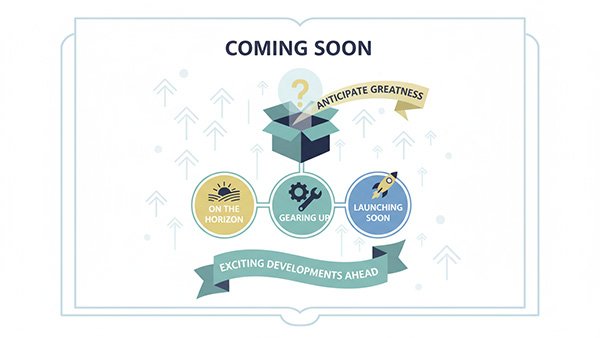
The phrase “coming soon” is a simple and direct way to announce that something will be available or happening in the near future.
When learners ask about the coming soon meaning, they are often looking for both a definition and guidance on usage. In its simplest form, “coming soon” signals that an event, product, or action has not happened yet but is expected in the near future. Grammatically, it commonly appears in the present continuous form, as in “The update is coming soon,” which emphasizes imminence rather than a distant plan. This structure helps convey anticipation while remaining intentionally flexible about timing.
However, English offers a wealth of alternative expressions that can add nuance, excitement, and precision to your communication.
These alternatives encompass various grammatical structures, including future tense variations, modal verbs, adjectival phrases, prepositional phrases, and idiomatic expressions.
Classification: The alternatives can be classified by their grammatical structure (e.g., verb phrases, adjective phrases) or by the level of formality and context in which they are typically used. For instance, some phrases are suitable for professional announcements, while others are more appropriate for casual conversations.
Function: The primary function of these alternatives is to create anticipation and inform an audience about an upcoming event, product, or announcement. They often aim to generate excitement and interest, encouraging people to stay tuned for more information.
Contexts: These phrases are used in a wide range of contexts, including marketing campaigns, event announcements, personal updates, and project timelines. The choice of phrase depends on the target audience, the tone you want to convey, and the specific details you want to emphasize.
Structural Breakdown
Understanding the structure of “coming soon” alternatives involves recognizing the different grammatical components and how they combine to create meaning. This section breaks down the common structural elements found in these phrases.
Verb Phrases: Many alternatives utilize verb phrases, often involving auxiliary verbs like will, be going to, or modal verbs such as should, could, or might. These verbs are followed by a main verb that indicates the action or state of being that is “coming soon.” For example, “The product will launch next month.”
Adjectival Phrases: Adjectives and adjectival phrases can be used to describe the upcoming event or product, adding detail and creating anticipation. These phrases often precede the noun they modify. For example, “The highly anticipated update is on its way.”
Prepositional Phrases: Prepositional phrases indicate the time or proximity of the upcoming event. Common prepositions include in, on, within, and around. For example, “The announcement will be made in the coming weeks.”
Subject-Verb Agreement: As with all English sentences, subject-verb agreement is crucial. Ensure that the verb form matches the subject in number (singular or plural). For example, “The team is working hard” (singular) versus “The updates are being finalized” (plural).
Tense Consistency: Maintain consistency in tense throughout your announcement. If you start with a future tense, continue using future tense forms to avoid confusion. For example, “We will release the update soon, and it will include several new features.”
Types and Categories of “Coming Soon” Phrases
Exploring the different types and categories of “coming soon” phrases allows for a more nuanced understanding and versatile application. Here’s a breakdown of the main categories:
Future Tense Variations
Future tense variations are the most straightforward way to express that something will happen in the future. These variations include the simple future (will + base verb), the future continuous (will be + verb-ing), and the future perfect (will have + past participle).
Simple Future: Used for predictions, promises, and spontaneous decisions. Example: “We will announce the winner next week.”
Future Continuous: Used to describe an action that will be in progress at a specific time in the future. Example: “We will be launching the new website in July.”
Future Perfect: Used to describe an action that will be completed by a specific time in the future. Example: “By next month, we will have finished the project.”
Writers often search for another way to say coming soon when they want to avoid repetition or create a more engaging announcement. Phrases like “something new is coming soon” work well for marketing or teaser-style messaging, while “coming to you soon” adds a conversational tone often used in media or customer-facing updates. Choosing the right alternative depends on whether you want to sound formal, promotional, or personal.
Modal Verb Constructions
Modal verbs (can, could, may, might, must, should, will, would) add nuance to the expression of future events, indicating possibility, obligation, or intention.
Will/Would: Used for expressing a definite future action or a polite request. Example: “The store will open soon.”
May/Might: Used for expressing possibility. Example: “The update may be released next week.”
Should/Could: Used for expressing expectation or possibility. Example: “The results should be available shortly.”
Adjectival Phrases
Adjectival phrases modify nouns, providing more information about the upcoming event or product. They often create anticipation and highlight desirable qualities.
Descriptive Adjectives: Used to describe the qualities of the upcoming event. Example: “The exciting new feature is coming soon.”
Participial Adjectives: Used to describe something that is currently happening or has happened. Example: “The highly anticipated release is just around the corner.”
Prepositional Phrases
Prepositional phrases indicate the time or proximity of the upcoming event, providing a sense of when it will occur.
Time-Related Prepositions: Used to specify when the event will happen. Example: “The event is scheduled for next month.”
Proximity-Related Prepositions: Used to indicate how close the event is to happening. Example: “The launch is just around the corner.”
Idiomatic Expressions
Idiomatic expressions are phrases whose meaning is not deducible from the literal meanings of the individual words. They add color and personality to your communication.
A coming soon simile uses comparison to create a vivid mental image of something approaching or about to happen. Instead of stating timing directly, similes rely on familiar experiences to suggest nearness, such as “like dawn before sunrise” or “like a train pulling into the station.” These comparisons make announcements more memorable and emotionally engaging, particularly in creative writing, advertising, and storytelling.
Unlike standard idioms, similes usually include explicit comparison words such as “like” or “as.” For example, saying “The launch is like a storm gathering strength” implies inevitability and momentum rather than a fixed date. When used carefully, similes can enhance anticipation without sounding exaggerated. However, clarity should remain the priority; a simile should support understanding, not obscure it. For learners, practicing similes alongside idiomatic expressions helps develop stylistic range while maintaining grammatical accuracy.
Common Idioms: Phrases like “on the horizon,” “in the pipeline,” and “down the road” are frequently used to indicate that something is coming soon. Example: “New features are on the horizon.”
Figurative Language: Using metaphors and similes can create a vivid image of the upcoming event. Example: “The project is gaining momentum.”
Examples of “Coming Soon” Alternatives
This section provides extensive examples of “coming soon” alternatives, categorized by their grammatical structure. Each table contains a variety of phrases to illustrate the different ways you can express anticipation and expectation.
Future Tense Examples
The following table showcases various future tense constructions used to convey “coming soon” in different contexts. Notice how each variation subtly alters the tone and emphasis.
| Future Tense Variation | Example Sentence | Context |
|---|---|---|
| Simple Future (will + base verb) | We will launch our new product next quarter. | Formal announcement |
| Simple Future (will + base verb) | The store will open its doors to the public on Monday. | Business opening |
| Simple Future (will + base verb) | The concert will start at 8 PM sharp. | Event schedule |
| Simple Future (will + base verb) | I will announce the winner tomorrow morning. | Contest results |
| Simple Future (will + base verb) | The new episode will air next Sunday. | TV show announcement |
| Future Continuous (will be + verb-ing) | We will be releasing updates throughout the week. | Software updates |
| Future Continuous (will be + verb-ing) | The band will be performing live at the festival. | Music event |
| Future Continuous (will be + verb-ing) | They will be showcasing their latest designs at the exhibition. | Art and design |
| Future Continuous (will be + verb-ing) | The chef will be preparing a special menu for the evening. | Culinary event |
| Future Continuous (will be + verb-ing) | The company will be hosting a webinar on data analytics. | Business training |
| Future Perfect (will have + past participle) | By the end of the year, we will have completed the project. | Project timeline |
| Future Perfect (will have + past participle) | By next week, we will have finished renovating the office. | Office renovation |
| Future Perfect (will have + past participle) | By the time you arrive, I will have prepared dinner. | Personal invitation |
| Future Perfect (will have + past participle) | By the deadline, she will have submitted her application. | Application process |
| Future Perfect (will have + past participle) | By the time you read this, we will have already launched the new site. | Website launch |
| Be going to | We are going to announce our new CEO tomorrow. | Corporate news |
| Be going to | The team is going to present their findings next week. | Research presentation |
| Be going to | The developers are going to release a patch to fix the issue. | Software update |
| Be going to | The author is going to publish her new book in the fall. | Book release |
| Be going to | The city is going to host the international film festival. | Cultural event |
| About to | The show is about to begin, please take your seats. | Event start |
| On the verge of | The company is on the verge of a breakthrough. | Business innovation |
| Due to | The report is due to be released next Friday. | Official report |
| Scheduled to | The meeting is scheduled to start at 10 AM. | Meeting announcement |
| Set to | The company is set to unveil its new product line. | Product launch |
Modal Verb Examples
Modal verbs add a layer of possibility, necessity, or intention to the expression of future events. This table illustrates how different modal verbs can be used to convey “coming soon” with varying degrees of certainty.
| Modal Verb Construction | Example Sentence | Context |
|---|---|---|
| Will | The package will arrive tomorrow. | Delivery confirmation |
| Would | The team would like to announce the new partnership soon. | Business announcement |
| Can | Support for the new system can be expected shortly. | Technical support |
| Could | The results could be available by the end of the day. | Research results |
| May | The update may be delayed due to unforeseen circumstances. | Update status |
| Might | The company might announce layoffs next week. | Corporate news |
| Must | All payments must be received by Friday. | Payment deadline |
| Should | The problem should be fixed in the next update. | Technical issue |
| Is to | The Prime Minister is to visit the country next week. | Government visit |
| Ought to | The team ought to finish the project by the end of the month. | Project deadline |
| Will be able to | Customers will be able to access the new features soon. | Feature availability |
| May have to | The company may have to postpone the event. | Event postponement |
| Might not | The funding might not be approved until next quarter. | Funding status |
| Should not | The product should not be released without proper testing. | Product quality |
| Could not | A decision could not be made until further review. | Decision-making |
| Will not | The promotion will not last for long. | Limited-time offer |
| Would not | The company would not disclose the details until the launch. | Confidential information |
| Cannot | The feature cannot be accessed until the update. | Feature restriction |
| Must not | Users must not attempt to bypass the security measures. | Security warning |
| Ought not to | He ought not to delay his decision any longer. | Decision urgency |
| Can be | The offer can be withdrawn at any time. | Offer terms |
| Could be | The situation could be improved with better management. | Situation analysis |
| May be | There may be delays due to the weather conditions. | Weather impact |
| Might be | There might be some changes to the schedule. | Schedule changes |
| Should be | The issue should be resolved by the end of the day. | Problem resolution |
Adjectival Phrase Examples
Adjectival phrases add descriptive details to the upcoming event or product, enhancing anticipation and highlighting key features. This table showcases how different adjectival phrases can be used to create excitement and interest.
| Adjectival Phrase | Example Sentence | Context |
|---|---|---|
| Exciting new | The exciting new features are coming soon. | Software update |
| Highly anticipated | The highly anticipated product launch is scheduled for next month. | Product announcement |
| Innovative | Our innovative solutions will be available soon. | Business solutions |
| Groundbreaking | The groundbreaking technology is just around the corner. | Technology announcement |
| State-of-the-art | Our state-of-the-art facility will open shortly. | Facility opening |
| Much-awaited | The much-awaited sequel is on its way. | Movie release |
| Brand-new | The brand-new collection will be released next week. | Fashion release |
| Cutting-edge | Our cutting-edge research will be published soon. | Research publication |
| Advanced | Our advanced system will be deployed shortly. | System update |
| Improved | The improved version is coming soon. | Software version |
| Revamped | The revamped website is launching next month. | Website launch |
| Upgraded | The upgraded service is coming soon to all users. | Service update |
| Enhanced | The enhanced security features will be implemented shortly. | Security update |
| Newly developed | The newly developed software is ready for testing. | Software development |
| Recently launched | The recently launched campaign is gaining traction. | Campaign updates |
| Soon-to-be-released | The soon-to-be-released album is generating buzz. | Music album |
| Coming-soon | Our coming-soon project is in its final stages. | Project status |
| Forthcoming | The forthcoming event promises to be spectacular. | Event preview |
| Upcoming | The upcoming conference is a must-attend event. | Conference announcement |
| On-the-horizon | Our on-the-horizon innovations will change the industry. | Innovation preview |
| In-the-pipeline | Our in-the-pipeline projects are progressing well. | Project updates |
| Down-the-road | Our down-the-road plans include global expansion. | Company plans |
| Almost-here | The almost-here breakthrough will revolutionize the field. | Breakthrough anticipation |
| Nearly-ready | The nearly-ready version is undergoing final tests. | Version testing |
| Close-at-hand | The close-at-hand solution will resolve the issue. | Problem solution |
Prepositional Phrase Examples
Prepositional phrases provide a sense of timing and proximity to the upcoming event, setting expectations and creating anticipation. This table demonstrates how different prepositional phrases can be used to convey “coming soon” with varying degrees of specificity.
| Prepositional Phrase | Example Sentence | Context |
|---|---|---|
| In the near future | We will be launching our new website in the near future. | Website launch |
| In the coming weeks | The announcement will be made in the coming weeks. | Official announcement |
| In the next few days | The update will be available in the next few days. | Software update |
| On the horizon | New opportunities are on the horizon. | Business outlook |
| Just around the corner | The holidays are just around the corner. | Holiday season |
| Around the corner | Success is around the corner with hard work. | Motivational message |
| In the pipeline | Several new projects are in the pipeline. | Project status |
| Down the road | We have big plans down the road. | Future plans |
| On its way | Your order is on its way. | Delivery status |
| Drawing near | The deadline is drawing near. | Deadline reminder |
| Approaching quickly | Summer is approaching quickly. | Seasonal reminder |
| On the verge of | The company is on the verge of a breakthrough. | Business breakthrough |
| At hand | Help is at hand for those in need. | Support message |
| Within reach | Success is within reach for those who persevere. | Motivational message |
| In sight | The finish line is in sight for the runners. | Race encouragement |
| In the offing | New developments are in the offing. | Future developments |
| In due course | More details will be announced in due course. | Announcement timing |
| In the fullness of time | Everything will be revealed in the fullness of time. | Patience message |
| Before long | We will be together again before long. | Reunion promise |
| Shortly | The meeting will begin shortly. | Meeting start |
| Presently | Dinner will be served presently. | Meal timing |
| Directly | We will contact you directly after the interview. | Follow-up timing |
| Forthwith | The order will be shipped forthwith. | Order processing |
| Immediately | Help will be dispatched immediately. | Emergency response |
| Instantly | The results will be available instantly. | Immediate results |
Idiomatic Expression Examples
Idiomatic expressions add color and personality to your communication, making your announcements more engaging and memorable. This table showcases how different idiomatic expressions can be used to convey “coming soon” in creative and imaginative ways.
| Idiomatic Expression | Example Sentence | Context |
|---|---|---|
| On the horizon | Exciting new developments are on the horizon for our company. | Company update |
| In the pipeline | We have several innovative projects in the pipeline. | Project announcement |
| Just around the corner | The summer vacation is just around the corner! | Vacation anticipation |
| Down the road | We plan to expand our services down the road. | Future plans |
| Around the bend | Success is just around the bend if you keep working hard. | Motivational advice |
| In the works | We have a new surprise in the works for our loyal customers. | Customer appreciation |
| Coming down the pike | New challenges are coming down the pike, so be prepared. | Preparation message |
| On its way | Your package is on its way and should arrive soon. | Shipping update |
| Drawing near | The end of the semester is drawing near. | Academic reminder |
| Gaining momentum | The project is gaining momentum and nearing completion. | Project progress |
| Gathering steam | The campaign is gathering steam and attracting attention. | Campaign success |
| Taking shape | Our plans are taking shape and becoming more concrete. | Plan development |
| In the making | History is in the making with this groundbreaking discovery. | Historic event |
| In gestation | The new product is in gestation and will be ready soon. | Product development |
| On the anvil | Important changes are on the anvil for the organization. | Organizational changes |
| In embryo | The idea is still in embryo but shows great potential. | Idea development |
| Gestating | A new era is gestating in the world of technology. | Technological advancement |
| In bud | Spring is in bud, and new beginnings are on the horizon. | Seasonal metaphor |
| About to hatch | Our plans are about to hatch and come to fruition. | Plan execution |
| Ready to break cover | The secret project is ready to break cover and be revealed. | Secret reveal |
| Peeking over the horizon | New possibilities are peeking over the horizon. | Future possibilities |
| Just a stone’s throw away | The solution is just a stone’s throw away if you look carefully. | Solution proximity |
| Looming on the horizon | Challenges are looming on the horizon, but we are prepared. | Challenge anticipation |
| Waiting in the wings | Our next big innovation is waiting in the wings. | Future innovation |
| On the cusp of | We are on the cusp of a new era of progress. | Future progress |
Usage Rules
Using “coming soon” alternatives effectively requires understanding the specific rules that govern their proper use. These rules ensure clarity, accuracy, and appropriateness in your communication.
Tense Agreement: Ensure that the tense of your verb phrase aligns with the intended timeframe. Use future tenses (will, be going to) for events that will happen in the future. Use present tenses (is coming) for events that are imminent.
Subject-Verb Agreement: Maintain subject-verb agreement to ensure grammatical correctness. Singular subjects require singular verbs, and plural subjects require plural verbs. For example, “The product is coming soon” (singular) versus “The products are coming soon” (plural).
Contextual Appropriateness: Choose phrases that are appropriate for the context and audience. Formal announcements may require more professional language, while casual updates can use more informal expressions.
Clarity and Specificity: Provide enough information to give your audience a clear sense of when the event will occur. Avoid vague phrases like “soon” without providing a more specific timeframe.
In informal contexts, speakers may replace “coming soon” with expressions like “happening soon,” especially in spoken English or casual writing. While both phrases communicate near-future timing, “happening soon” often feels more spontaneous and event-focused, whereas “coming soon” is frequently used for planned releases or announcements. Understanding this subtle difference helps learners choose expressions that better fit the situation.
Avoiding Overuse: While it’s good to vary your language, avoid overuse of any single phrase. Mix and match different alternatives to keep your communication fresh and engaging.
Use of Articles: Pay attention to the correct use of articles (a, an, the) with nouns in your phrases. For example, “a new product” versus “the upcoming event.”
Preposition Choice: Select the correct preposition to indicate the timing or proximity of the event. Common prepositions include in, on, at, for, and around.
Idiomatic Expression Accuracy: Use idiomatic expressions correctly and in the appropriate context. Ensure that you understand the meaning and connotations of the idiom before using it.
Common Mistakes
Even experienced English speakers sometimes make mistakes when using “coming soon” alternatives. Recognizing these common errors can help you avoid them in your own writing and speaking.
Incorrect Tense Usage:
- Incorrect: “The product came soon.” (Past tense instead of future)
- Correct: “The product is coming soon.” (Present continuous)
Subject-Verb Agreement Errors:
- Incorrect: “The updates is coming soon.” (Singular verb with plural subject)
- Correct: “The updates are coming soon.” (Plural verb with plural subject)
Misusing Idiomatic Expressions:
- Incorrect: “The project is in the water.” (Incorrect use of idiom)
- Correct: “The project is in the pipeline.” (Correct use of idiom)
Vague Timeframes:
- Incorrect: “The announcement will be made sometime.” (Too vague)
- Correct: “The announcement will be made next week.” (More specific)
Inappropriate Tone:
- Incorrect: “The launch is gonna happen real soon!” (Too informal for a professional announcement)
- Correct: “The launch is scheduled for next month.” (More professional)
Incorrect Article Usage:
- Incorrect: “We are launching new product soon.” (Missing article)
- Correct: “We are launching a new product soon.” (Correct article usage)
Incorrect Preposition Choice:
- Incorrect: “The event is on next month.” (Incorrect preposition)
- Correct: “The event is in next month.” (Correct preposition)
Practice Exercises
Test your understanding of “coming soon” alternatives with these practice exercises. Choose the best alternative to replace “coming soon” in each sentence.
Exercise
1: Replace “coming soon” with a future tense variation:
The new website is coming soon.
- A. The new website launched yesterday.
- B. The new website will launch next week.
- C. The new website is already live.
Answer: B. The new website will launch next week.
Exercise 2: Replace “coming soon” with a modal verb construction:
The results are coming soon.
- A. The results were announced yesterday.
- B. The results should be available by tomorrow.
- C. The results are not available.
Answer: B. The results should be available by tomorrow.
Exercise 3: Replace “coming soon” with an adjectival phrase:
The update is coming soon.
- A. The update was released last month.
- B. The highly anticipated update is on its way.
- C. There is no update.
Answer: B. The highly anticipated update is on its way.
Exercise 4: Replace “coming soon” with a prepositional phrase:
The event is coming soon.
- A. The event happened last week.
- B. The event is just around the corner.
- C. The event is cancelled.
Answer: B. The event is just around the corner.
Exercise 5: Replace “coming soon” with an idiomatic expression:
New features are coming soon.
- A. The new features were removed.
- B. New features are on the horizon.
- C. No new features are planned.
Answer: B. New features are on the horizon.
Advanced Topics
For those looking to delve deeper into the nuances of “coming soon” alternatives, this section covers advanced topics such as:
Register Variation: The level of formality in your language. Consider whether your audience is expecting a formal, professional tone or a more casual, conversational style. For instance, using slang or very informal language in a business announcement would be inappropriate.
Cultural Sensitivity: Be mindful of cultural differences in language use. Some phrases may have different connotations or be more common in certain regions or cultures. For example, idioms that are common in American English might not be well understood in British English, and vice versa.
Impact of Technology: The rapid pace of technological change has led to the emergence of new expressions related to “coming soon.” Phrases like “launching soon,” “releasing shortly,” and “going live” are frequently used in the context of software, websites, and digital products.
Legal Considerations: In some contexts, such as advertising and marketing, there may be legal requirements regarding the accuracy and clarity of your announcements. Avoid making promises that you cannot keep and ensure that your language is not misleading or deceptive.
Psychological Impact: The way you phrase your announcements can have a significant impact on your audience’s perception and expectations. Use language that creates anticipation and excitement while also being realistic and transparent.
FAQ
When is it appropriate to use “coming soon” alternatives instead of “coming soon”?
Use “coming soon” alternatives when you want to add nuance, excitement, or specificity to your announcement. Alternatives are particularly useful in marketing, advertising, and professional communications.
How can I avoid sounding repetitive when using “coming soon” alternatives?
Mix and match different phrases and grammatical structures. Use a variety of future tense variations, modal verbs, adjectival phrases, prepositional phrases, and idiomatic expressions to keep your language fresh and engaging.
What are some common pitfalls to avoid when using “coming soon” alternatives?
Avoid incorrect tense usage, subject-verb agreement errors, misusing idiomatic expressions, vague timeframes, inappropriate tone, incorrect article usage, and incorrect preposition choice.
How can I ensure that my “coming soon” announcements are clear and accurate?
Provide enough information to give your audience a clear sense of when the event will occur. Be specific about dates, times, and locations, and avoid making promises that you cannot keep.
Are there any cultural considerations to keep in mind when using “coming soon” alternatives?
Be mindful of cultural differences in language use. Some phrases may have different connotations or be more common in certain regions or cultures.
Use language that is appropriate for your target audience.
Conclusion
Mastering the art of using “coming soon” alternatives is a valuable skill that can enhance your communication in a variety of contexts. By understanding the different types of phrases, their structural components, and the rules that govern their proper use, you can add depth, nuance, and excitement to your announcements.
Remember to choose phrases that are appropriate for your audience, maintain grammatical accuracy, and avoid common mistakes. With practice and attention to detail, you can effectively convey anticipation and expectation, leaving a lasting impression on your audience.