Choosing a motorcycle truck bed ramp is usually more confusing than it should be. Most listings focus on “fits” and a capacity number in pounds, but the real difference maker is whether the approach angle is gentle enough, the deck has the right kind of grip for your tires, and the ramp stays put while you load.
This article helps buyers choose by need, tradeoff, and real-world fit. Instead of treating every ramp as interchangeable, it breaks down which designs work for single-track motorcycles versus wider two-track equipment. It also explains how length affects the angle, how traction patterns change control, and how tie-down straps influence stability in a pickup bed. Readers can match ramp width and tire track spacing before ordering, then confirm carrying, storage, and warranty support. The goal: fewer returns and safer loading.
List of Motorcycle Truck Bed Ramp
A motorcycle truck bed ramp is a safety tool, not a convenience accessory. This review focuses on what each product truly offers for the loading job it targets. Each explanation connects design choices such as length, traction surface, tailgate grip style, and strap strategy to the buyer’s specific equipment and truck setup. Watch-outs highlight where claims can still fail in practice, like using one ramp on four-wheel tracks or exceeding tire width. The decision map and reader questions guide selection by scenarios, not by spec tables. Verification steps then help confirm compatibility and sturdiness before trusting the ramp.
Product-by-product explanation
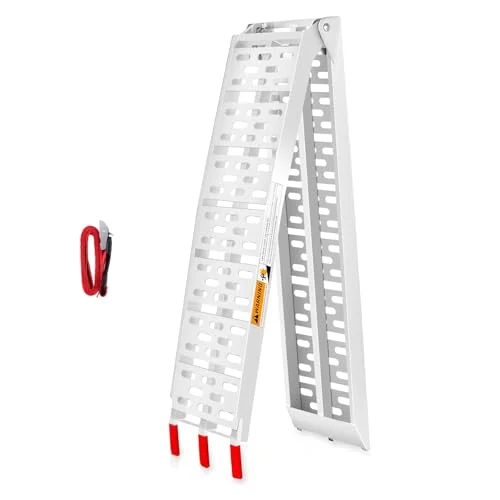
This VENDAV single ramp is made for loading one two-wheel bike at a time. Aluminum helps keep it portable, and the 7.5-foot length is intended to create a gentler loading angle compared with shorter ramps. The punched-plate deck is designed to grip better for single-track tires, while rubber-tipped contact points help the ramp settle at the tailgate without easy creeping. A strap is included to secure the ramp during loading, and the folding design keeps storage manageable in a truck bed, garage, or trailer. This is a practical pick for the right kind of vehicle.
Best for: Single motorcycle or dirt bike loading into a pickup bed, especially when you want a smoother approach angle.
Not ideal for: Four-wheel ATVs/UTVs or anything that really needs a ramp pair matched to wheel spacing.
Decision cue: Shortlist it if your tire width fits the usable area (around the ~11-inch range called out for one setup) and you only need one ramp for 2-wheel loading.
Check Amazon
This VENDAV single ramp is also aimed at two-wheel loading, with traction features that focus on the “bite” phase as the tires start climbing. Instead of relying only on a flat deck, the crossbar rungs are meant to improve traction during the uphill part of loading, which can help when the tailgate-to-bed step feels steeper. Rubber-tipped contact points and an angled lip are intended to improve tailgate contact, reducing the tendency to creep when you center the wheel and load slowly. The included strap helps keep the ramp stable, especially on dry or slightly slick surfaces. It folds down for storage without taking over your truck bed space.
Best for: Motorcycle and dirt bike loading when you expect a steeper approach and want better tire control.
Not ideal for: Four-wheel vehicles, because one ramp can’t match the track spacing needed for ATV/UTV setups.
Decision cue: Choose it when you want rung-style traction and you’re staying within the intended 2-wheel single-ramp setup.
Check Amazon
These aluminum ramps come as a 2-pack and are built for pickup-friendly loading of ATVs, UTVs, and other two-track equipment. Each ramp includes crossbar rungs for tire bite plus rubber-tipped fingers at the tailgate contact area to help reduce shifting while you climb. Load straps help keep the pair positioned so the wheels track smoothly as you drive up. Capacity is framed around proper use, especially even load distribution and secure placement. Because it’s a pair, it’s usually easier to set up for two-track vehicles than trying to improvise with a single narrow ramp. This set is also designed to fold down for compact truck-bed storage.
Best for: ATV/UTV loading where wheel spacing alignment matters and a matched ramp pair simplifies setup.
Not ideal for: Solo motorcycle loading if you only want one narrow ramp and want the simplest, most compact option.
Decision cue: Shortlist when your vehicle rides on two tracks and you can measure and match wheel center-to-center spacing.
Check Amazon
This alloy steel folding ramp is geared toward buyers who want a sturdier-feeling ramp and multi-use versatility. It folds for storage and uses a hollowed-out deck approach intended to reduce water pooling and help maintain friction. That hollowed surface can help control traction in damp conditions, assuming your tires can grip the available surface. The tradeoff: the published max capacity is lower than many aluminum options in this same category, and the listing includes height/safety guidance. The folding design is convenient, but it’s best suited when you’ll stay within the stated capacity and follow the setup instructions carefully.
Best for: Loaders who prefer steel alloy and can stay within the listed 550 lb capacity limit and height guidance.
Not ideal for: Heavy, frequent hauling or buyers needing a higher-capacity ramp for larger ATVs/UTVs.
Decision cue: Consider it when steel strength and a wet-resistant deck design matter more than maximum capacity.
Check Amazon
This 2-piece MAXIVAMN aluminum set focuses on higher total capacity and everyday versatility. Built for pickup trucks or trailers, it’s meant to handle a range of vehicles like ATVs, UTVs, motorcycles, lawn mowers, and small tractors. Aluminum helps keep the ramps more manageable, while the 89-inch length is intended to create a smoother loading path compared with shorter ramps. Rubber-tipped edges plus load straps help stabilize placement during the moment you apply throttle and start climbing. Since it’s sold as a pair, it’s designed for setups where two-track equipment benefits from matched ramp spacing. If you want one ramp system for mixed vehicles, the two-ramp format is usually the right direction.
Best for: Buyers who want a pair for mixed equipment and regularly load two-track vehicles into pickup beds.
Not ideal for: Buyers who only need a single narrow ramp and want the most compact single-piece setup.
Decision cue: Shortlist when you want a higher 1500 lb-rated pair and you need versatility for ATVs, UTVs, or similar equipment.
Check Amazon
This FACHNUO 10-foot aluminum ramp is all about adding extra length for a gentler, safer approach, while staying foldable enough to store. It’s rated up to 1500 lb capacity per ramp and includes straps to reduce slipping or collapse during loading. The design highlights a multi-beam structure meant to support durability across repeated use. The big advantage here is the 10-foot approach itself: extra length typically means less aggressive angle at the tailgate, which can reduce stress on tires and improve control when loading into taller pickup beds or trailers. Just keep storage in mind, unfolded, a 10-foot ramp takes more room than shorter options.
Best for: Frequent loaders who want a gentler 10-foot approach and higher rated capacity.
Not ideal for: Buyers with tight storage space who can’t accommodate a longer unfolded ramp footprint.
Decision cue: Choose it when you value maximum approach comfort and can store/transport the longer ramp length.
Check Amazon
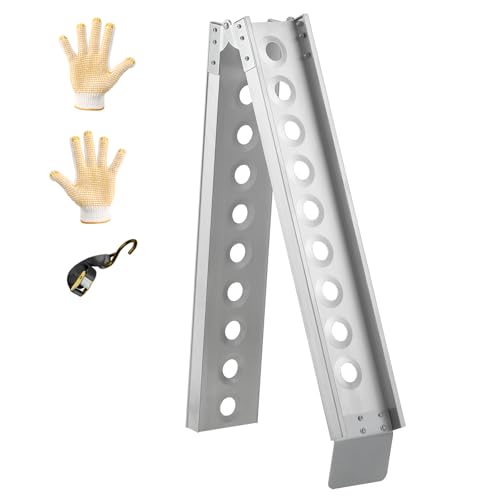
This gardhom aluminum ramp is positioned more toward lighter motorcycle loading and portability. It’s designed to fold for easier daily carry, with an indicated per-ramp capacity meant for smaller bikes rather than heavier equipment. The deck uses non-slip hole patterns and raised edges to guide tires, and the surface design aims to reduce water pooling to support traction in wet weather. The listing also includes a safety note about weld sharpness, recommending caution around exposed edges. If your bike’s weight and tire fit are within the stated limit, this can be a simple, compact ramp for the job.
Best for: Lightweight, compact motorcycle or off-road bike ramp needs within a 440 lb limit.
Not ideal for: Heavier equipment loading or buyers who need more capacity for frequent large loads.
Decision cue: Shortlist only if your bike stays within the 440 lb limit and your tires match the stated inner-width guidance.
Check Amazon
This aluminum tri-fold ramp is built around traction-first loading: it provides a larger tread/traction surface area and uses traction cutouts to help tires maintain grip while climbing. The foldable design supports portability, and the aluminum construction is meant to support all-weather durability. The ramp also targets a higher total capacity at 1500 lb, aiming to give more strength without moving up to extra-long ramps. The tradeoff is that a tri-fold design can be less about maximizing approach angle than about maximizing grip and stability via the deck pattern.
Best for: Buyers who want a foldable ramp with wider traction and all-weather durability for light-to-mid equipment.
Not ideal for: Buyers whose top priority is maximizing approach angle with very long ramps for taller truck bed heights.
Decision cue: Choose it when you want traction surface area and you can confirm your equipment lines up safely within the ramp dimensions.
Check Amazon
This Evcitn set uses stainless steel folding ramps for two-track loading, aiming for durability and better corrosion resistance than aluminum in harsh conditions. It includes 2 tie-down straps plus marking tape to support more repeatable placement when you load at home. A connected support plate is designed to rest against the tailgate or trailer edge, helping keep the ramps correctly positioned so they don’t drift as you start the climb. The traction surface includes non-slip features, and the hinge design is intended to help the ramps unfold more smoothly. This format is especially practical when you want a matched pair for motorcycles, dirt bikes, and smaller ATVs/UTVs.
Best for: Buyers who want a matched pair for motorcycles, dirt bikes, and small ATVs and care about stainless corrosion resistance.
Not ideal for: Buyers needing very high capacity or those dealing with extremely steep angles where longer ramps may be safer.
Decision cue: Shortlist when you want corrosion-resistant ramps and you’re planning to load with proper paired, tiedown setup.
Check Amazon
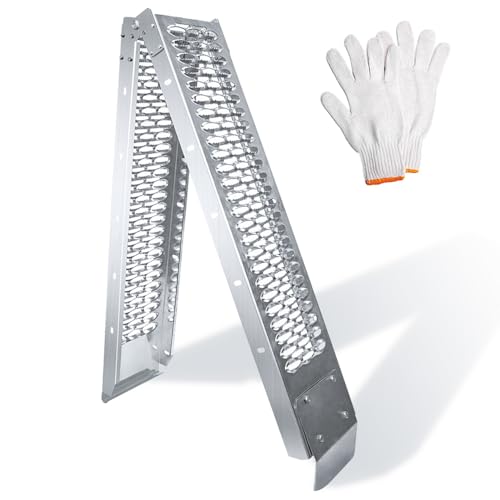
This VENDAV single ramp focuses on lightweight portability and easier loading for smaller vehicles. It uses an 84.56-inch profile to reduce harsh tailgate approach angle compared with compact ramps, which can help maintain control and reduce slip when you’re rolling the tires onto the deck. The punched anti-slip surface is designed to grip while draining water so traction stays more consistent in wet or dirty conditions. A rubber pad at the ramp head adds friction and helps protect the tailgate or step area from scratches. Dual carry handles also make it easier to deploy when folded, which can improve day-to-day usability.
Best for: Owners loading motorcycles, dirt bikes, e-bikes, or bicycles who want a lighter single ramp with good traction.
Not ideal for: Large ATVs or wider tires that exceed the stated 440 lb and inner-width limits.
Decision cue: Skip it if your vehicle is heavier than 440 lb or your tires can’t fit within the ~6.46-inch inner width guidance.
Check Amazon
Reader questions answered
Do you need a single ramp or a pair for safe loading?
Single ramps work best when your motorcycle is set up for single-track loading, one wheel follows one ramp. Ramp pairs work for ATV/UTV two-track setups where the left and right wheels ride on separate ramps, and you match the spacing to the vehicle’s wheel center-to-center distance. Some listings explicitly warn that one ramp isn’t intended for 4-wheel vehicles. Even if a motorcycle could technically fit, two-ramp systems require careful alignment but can provide more stable tracking for two-track equipment. Before buying, measure tire width and track spacing, then decide whether one ramp can control the load, or whether two ramps will keep the wheels supported correctly.
How much ramp length matters for approach angle and control?
Ramp length strongly affects the approach angle, which changes tire grip demands and how quickly the vehicle transfers weight onto the ramp. Longer ramps typically feel easier because the climb starts more gradually, which reduces slip risk at the tailgate. Several products here offer similar 7.5-foot lengths, while others go longer, such as the 10-foot ramp, which can help with tall pickup beds. Shorter or lower-capacity options still can work, but they require slower, steadier loading and strict wheel centering. When possible, compare your truck bed height and estimate how much vertical rise each length creates for your setup.
Which traction style better matches wet or muddy loading?
Ramp length changes the approach angle, which changes traction demands and how quickly weight transfers onto the ramp. Longer ramps typically feel smoother because the climb starts more gradually, which can reduce slip risk near the tailgate. Several options here use a similar 7.5-foot length, while others go longer, like the 10-foot ramp, which can help for taller pickup beds. Shorter or lower-capacity options can still work, but they usually require slower, steadier loading and strict wheel centering. When possible, compare ramp length to your truck bed height so you’re not guessing on angle alone.
What load capacity claims should be treated cautiously?
Capacity listings often assume correct ramp placement, even weight distribution, and secured positioning with straps. A ramp rated “per ramp” can mean your vehicle’s weight must be balanced so the tires land squarely within the supported zone. Some products clearly state that capacity depends on proper use, and many pair sets list total capacity as the combination. Capacity matters most when using single ramps that place more load on fewer contact points. Another caution involves steel options where published max weight may be lower than aluminum rivals in the same market. Always compare the vehicle’s curb weight and any gear added, then test with the most conservative interpretation of the rating before full-speed riding up.
How should storage and portability affect ramp choice?
Traction isn’t just “grippy material”, it’s about the deck pattern and what happens when water/mud hits. Punched decks are meant to grip while draining, which helps in rain and snow. Crossbar rungs can increase bite by giving the tire edges something to engage sooner, which matters when the approach feels steep or when tires want to slide under power. Stainless and aluminum matter less than deck geometry, but surface details still affect whether tires shed mud. Before buying, look for anti-slip language that mentions drainage or non-slip cutouts. Then verify that your tire shape can contact enough of the deck surface to generate friction.
What the comparison teaches
Longer ramps buy control, not just comfort.
A gentler approach angle usually means less tire slip and more predictable loading. If your truck bed sits high, prioritize ramp length or plan for slower, steadier throttle inputs during the climb.
Traction design changes how tires engage at the start.
Punched decks tend to focus on grip and drainage, while crossbar rungs emphasize bite and tracking. Pick based on surface conditions and how steep the tailgate-to-bed step feels.
Ramp count must match vehicle wheel geometry.
One ramp suits single-track motorcycles, while ATVs and UTVs generally need a pair that matches wheel spacing. Forcing the wrong setup increases shifting risk and reduces control.
Capacity ratings assume correct placement and tie-down use.
Many ramp ratings depend on correct placement, even load distribution, and secure strapping. Treat the capacity number as “with correct setup,” not as permission to rush or skip the strap.
Before you buy
- Measure your tire width against the ramp’s usable inside width or recommended tread width.
- For ATVs/UTVs, measure wheel center-to-center spacing and confirm the ramp pair can match your wheel track.
- Confirm ramp length against your truck bed height so you get a safer approach angle, not just “it reaches the tailgate.”
- Check that straps/tie-down points line up with your truck bed and tailgate material.
- Verify folded dimensions against your storage spot, including clearance beside a toolbox or near garage walls.
- Confirm capacity wording: per ramp versus per pair, and whether it assumes even load distribution and proper strapping.
- Look at warranty length and return policy, then scan recent feedback specifically for slipping, strap hardware quality, and hinge/fold durability.
Final takeaway
A motorcycle truck bed ramp should be chosen around your equipment profile and loading behavior, not only capacity. For single motorcycles and dirt bikes, a 7.5-foot style ramp with a grippy deck and strap setup fits many pickup-bed workflows, and rung-style traction helps when traction feels marginal. For ATVs and UTVs, a paired ramp that matches wheel spacing usually delivers more stability than trying to improvise. Longer ramps can make steeper tailgate approaches easier, but they demand more storage space. Before ordering, confirm tire width, wheel spacing (if using a pair), strap compatibility, and how the listing frames capacity and support for safe use.
FAQ
Can a single motorcycle ramp load a four-wheel ATV safely?
Usually no. Four-wheel vehicles need two ramps spaced to match wheel center-to-center distance so the tires track evenly. Single-ramp listings often explicitly warn against 4-wheel use.
How do you make loading safer on the first use?
Set the ramp on firm, level ground, center the tire on the deck, and secure the ramp with the included strap. Load slowly at first, and consider a spotter if you’re still dialing in control with your specific tires and truck bed height.
What matters more: ramp capacity or ramp traction?
Both matter, but traction often determines whether the rated capacity is usable in real conditions. If the deck doesn’t grip, the vehicle can shift during ascent. Choose the traction pattern that matches your tires and whether you often load on wet, dusty, or muddy surfaces.
Do straps really affect safety?
Yes. Straps help prevent ramp creep or rotation as weight transfers onto the deck. Many capacity claims also assume the ramp is secured properly, so skipping that step can undermine both stability and the confidence behind the rating.
What should be checked before buying online?
Verify tire width against usable inside width, confirm wheel spacing for ATV/UTV pair ramps, and compare ramp length to your truck bed height. Also check folded dimensions for storage, review included hardware like straps and plates, and confirm warranty/return terms for fit issues.