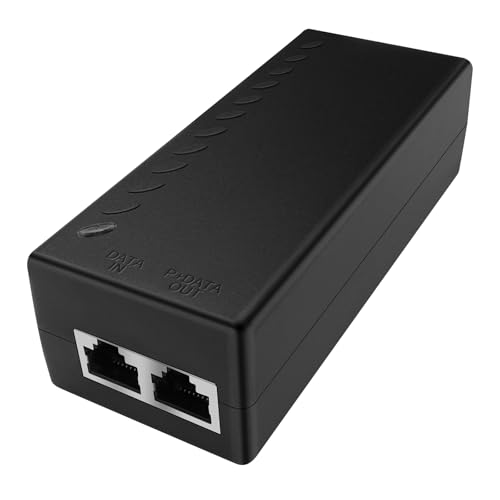
A single-port PoE injector fixes a common wiring snag: you’ve got an existing non-PoE switch, router, or wall drop, but your camera, IP phone, or access point still needs both data and power delivered over one Ethernet cable.
Use this to match the injector to your setup with three practical checks: the PoE standard your device expects, whether the cable run length/cabling type is realistic for gigabit, and the injector’s power delivery approach. Instead of repeating specs, each section explains what the injector is doing in day-to-day terms, and where the tradeoffs usually show up.
List of Poe Injector Single Port
A reader-first PoE injector review needs more than wattage and port speed. The most important decision is which power method your device expects, because IEEE 802.3af/at/bt injectors behave differently than passive PoE adapters. The next priority is whether the injector’s form factor fits your location, such as wall mounting near an outlet or using an external power supply. Finally, installers care about practical protections and support, especially when powering valuable endpoints like access points and security cameras. This review explains fit by need, then highlights specific limitations to confirm on the listing.
Product-by-product explanation
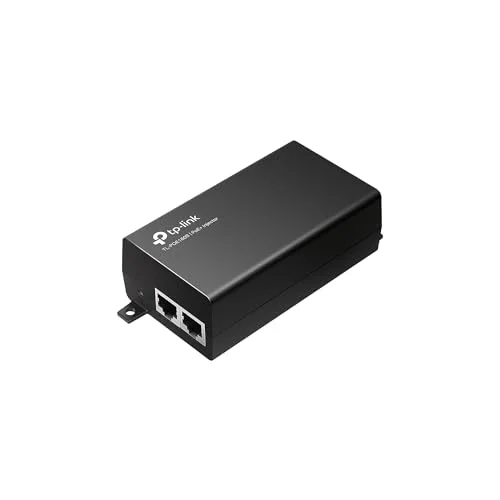
This TP-Link Omada PoE+ injector turns a non-PoE Ethernet connection into a compliant PoE+ output. It combines data and power on a single cable, so a PoE camera or access point can mount where outlets do not exist. The design targets gigabit networks and supports up to a PoE+ class power level that fits many common PoE+ endpoints. Wall-mountable hardware and plug-and-play operation reduce installer time, since no configuration software is required. It also calls out long-range transmission capability up to 100 meters, which
Best for: Installers powering 802.3af/802.3at PoE cameras and access points from a non-PoE switch on gigabit networks.
Not ideal for: Passive-voltage PoE devices that do not accept IEEE 802.3af/at, or setups that need PoE++ beyond the injector’s intended power class.
Decision cue: I would shortlist it when your endpoint is IEEE 802.3af/at and the job needs a wall-mountable, compliant gigabit PoE+ injector.
Check Amazon
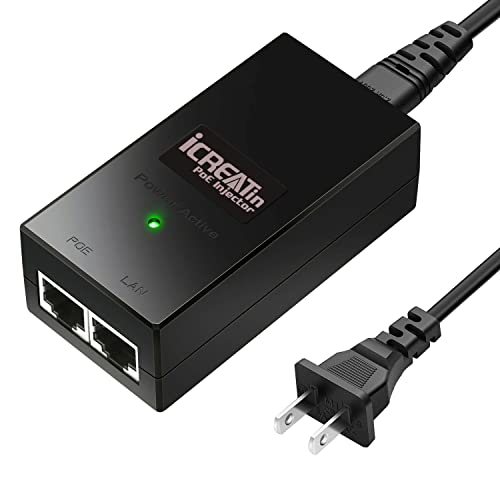
This iCreatin wall-plug injector provides PoE power using a dedicated 48V power supply and a single Ethernet link. It’s built for 802.3af-style endpoints where one cable carries both network and power. The unit lists protection features like short-circuit, over-current, and over-voltage protection, which helps lower risk during installs. It also references support for devices at up to around 100 meters, and it’s set up to be plug-and-play. Because it advertises a passive-style output figure along with a 48V power supply, you still need to confirm the endpoint actually matches what that power method expects.
Best for: Home and small office installs powering common 802.3af PoE devices from a non-PoE network port near a wall outlet.
Not ideal for: PoE+ (higher-watt) endpoints, or any device that requires strict IEEE behavior that doesn’t align with the injector’s listed power/output approach.
Decision cue: Shortlist only after confirming the endpoint is truly compatible with the injector’s stated output/power method and will operate correctly within its stated limits.
Check Amazon
TRENDnet’s TPE-115GI is a gigabit PoE+ injector with an integrated power supply. It takes a non-PoE gigabit input and outputs a PoE+ port that can power a device while preserving gigabit data. The differentiator here for many buyers is procurement and coverage: it’s described as NDAA and TAA compliant and backed by manufacturer protection for three years, plus technical support during business hours. In practice, that usually means fewer paperwork surprises and a clearer path if you run into an issue during deployment. It supplies up to PoE+ class power, s
Best for: Buyers who want compliant paperwork plus long coverage for gigabit PoE+ powering of cameras, phones, and APs.
Not ideal for: Passive-voltage PoE gear, or projects requiring PoE++ levels above the unit’s intended PoE+ power class.
Decision cue: Choose it when compliance documentation/support timeline matter and your endpoint expects PoE+ within its stated power range.
Check Amazon
PoE Texas offers a passive single-port injector that adds power and data to one Ethernet run. Instead of matching an IEEE PoE budget class, it expects you to supply the correct DC voltage using a separate adapter (sold separately). The injector passes through the input voltage, so 12V in delivers 12V on the Ethernet pair, up to 56V. That flexibility can work well for passive devices that are labeled for a specific PoE voltage rather than 802.3af/at negotiation. Setup is straightforward, and the gig
Best for: Passive PoE cameras, phones, or access points that specify a voltage like 12V, 24V, or 48V and accept passive PoE over Ethernet.
Not ideal for: 802.3af/at-only compliant devices or buyers who want to avoid the voltage-matching risk that comes with passive PoE.
Decision cue: I would shortlist it only when the endpoint explicitly supports passive PoE and you have (or can source) the exact matching DC voltage adapter.
Check Amazon
This gigabit PoE injector is designed to convert a non-PoE gigabit port into an IEEE 802.3af PoE output for a single device. It targets common endpoints like 802.3af IP cameras, IP phones, and wireless points that need PoE over one Ethernet cable. It claims long-distance capability up to 100 meters and emphasizes multiple protections such as over-current, over-load, and over-voltage. It also states gigabit full-duplex behavior to help keep network throughput aligned with modern switch ports. Since it focuses on 802.
Best for: Home, office, or small installations powering 802.3af PoE endpoints from a non-PoE gigabit switch.
Not ideal for: PoE+ devices that require 802.3at (30W) or passive-voltage devices that don’t use IEEE 802.3af negotiation.
Decision cue: Shortlist when the endpoint is explicitly 802.3af compliant and the run length fits the listing’s long-distance guidance with proper cabling.
Check Amazon
ThePoEstore gigabit PoE+ injector uses an integrated power supply to deliver PoE+ power over a single Ethernet cable. It’s aimed at enabling PoE without replacing a non-PoE switch, which can keep camera or AP rollouts simpler. It uses auto-sensing to deliver up to a PoE+ class power level to the connected device, with backwards compatibility for 802.3af PoE endpoints. That’s useful for mixed deployments where some devices need lower-class PoE while others expect PoE+. Installation is positioned as quick and setup-friendly, which helps when you’re deploying multiple devices and want fewer extra power bricks.
Best for: Deploying gigabit PoE/PoE+ cameras or wireless access points from a non-PoE switch while avoiding extra external power supplies.
Not ideal for: Passive-voltage PoE devices that require a specific DC voltage on Ethernet, or PoE++ needs beyond 30W class power.
Decision cue: I would shortlist it when the endpoint expects IEEE 802.3af or 802.3at and you want a compact integrated-power gigabit injector.
Check Amazon
This 30W gigabit PoE+ injector provides power injection up to 30W for one Ethernet-connected device, targeting PoE+ class requirements. It highlights a long run distance and includes an LED status indicator and surge protection, which can be helpful during deployment and troubleshooting. Since many 30W endpoints fall into 802.3at PoE+, it’s a fit for mid-range cameras and access points that need more than basic 802.3af. The main practical value is turning an unused non-PoE port into a powered PoE output without changing your switch.
Best for: Cost-conscious gigabit PoE+ deployments needing up to 30W class power per endpoint.
Not ideal for: PoE++ endpoints requiring 60W class power or buyers who need stronger compliance documentation like NDAA/TAA for procurement.
Decision cue: Choose it only after confirming the endpoint truly needs 802.3at/30W class power and that the listed surge protection matches your environment.
Check Amazon
This 90W gigabit PoE++ injector is intended for higher-power powered devices that need more than typical PoE+ allocations. It advertises support across IEEE 802.3af, 802.3at, and 802.3bt, with up to 90W output listed and long-run capability. It also includes auto-sensing and protection features to help with safety for the connected gear and non-power devices. For installers, the promise is one unit that upgrades a non-PoE gigabit link into a high-power PoE capable port. The limitation matters: the listing explicitly notes it does not support passive 24V PoE devices, so compatibility depends heavily on the endpoint’s PoE method and labeling.
Best for: Installing higher-power compliant PoE endpoints that require 802.3bt-class power from a non-PoE gigabit source.
Not ideal for: Passive 24V PoE devices or any setup expecting passive voltage rather than IEEE 802.3bt negotiation.
Decision cue: Shortlist when the endpoint is compliant with 802.3af/at/bt and needs higher power beyond typical 30W PoE+.
Check Amazon
ThePoEstore PoE++ gigabit injector focuses on high-power compliant PoE with an internal AC/DC converter, which can reduce reliance on external power bricks. It supports gigabit data and claims compatibility with 802.3af and 802.3at, with higher power delivery up to 802.3bt for PoE++ class devices. The unit also describes automatic detection and safer power behavior for non-PoE equipment. It additionally advertises backwards compatibility that may help in mixed deployments, depending on how the older devices are configured.
Best for: Projects that need gigabit plus higher-power PoE++ capability without extra external converters, including mixed af/at and bt-class deployments.
Not ideal for: Installations where the connected device’s passive PoE voltage requirements are unclear or not documented.
Decision cue: I would choose it when the endpoint is confirmed to be 802.3bt-capable (or when mixed af/at/bt powering is needed and passive compatibility can be verified).
Check Amazon
Reader questions answered
Does the injector need to match IEEE 802.3af/at/bt, or can it run passive PoE devices?
The difference matters because IEEE PoE uses standardized negotiation and class-based power delivery, while passive PoE uses a fixed voltage approach. If the endpoint documentation says 802.3af, 802.3at, or 802.3bt, select a compliant injector built for that standard. If the device instead lists “passive PoE” with a specific voltage like 12V/24V/48V, you’ll want a passive injector that passes that voltage and requires the matching adapter. When in doubt, check the endpoint label and power requirements before buying, because a mismatch can lead to no power or unreliable behavior.
How much power should the injector deliver for a camera or access point?
Start with the endpoint’s required power class, not the injector’s highest headline number. Many devices labeled as PoE+ are really in the 802.3at ~30W range, while PoE++ devices require bt-class power. Compliant injectors deliver within their own standard, so a PoE++ injector can usually handle lower af/at endpoints, but the opposite can fail. For passive injectors, you must match the DC voltage to what the endpoint expects. Confirm both the standard (af/at/bt) and the wattage need to avoid under-powering.
Will a 100m run work reliably, and what should be verified for distance?
PoE injectors often claim up to 100 meters, but real results depend on cabling category, how the run is terminated, and installation conditions. Gigabit data and power delivery both depend on cable quality, so “up to 100m” usually assumes proper Ethernet category wiring and clean RJ-45 terminations. Also verify that the endpoint supports that distance with its power method and that the run stays consistent, especially if you have splice points or patching along the way.
Which injector type fits the physical installation: wall mount, integrated power, or separate power brick?
Physical constraints can decide the right injector even when power standards match. Some models are wall-mountable and meant to live near an outlet or desk area, reducing clutter. Others include an integrated power supply, which simplifies wiring. Some designs require you to provide DC voltage externally, this can work well in flexible setups, but it’s another compatibility step: the power adapter must match the voltage the passive PoE device expects. Choose based on how many power bricks you’re willing to manage and how accessible the outlet/adapter location is.
What support, compliance, and protections should be expected for a production install?
For production or client work, you’ll want more than “it powers something.” Look for documented protections like over-current, over-voltage, and surge handling, since injectors sit between your infrastructure and valuable endpoints. If compliance is important, confirm NDAA/TAA language matches what procurement expects. Warranty length and replacement/return process matter, because a single injector failure can take down an endpoint. Finally, scan recent reviews/Q&A for recurring compatibility issues, especially passive vs compliant PoE behavior.
What the comparison teaches
PoE standard compatibility beats higher wattage.
A high-wattage compliant injector still won’t reliably power passive-voltage endpoints that expect fixed DC voltage. Likewise, a passive injector can’t be treated as a drop-in for IEEE-negotiated endpoints unless the endpoint explicitly supports that passive mode.
Power budget headlines hide the practical requirement.
Match the endpoint’s stated class and wattage, because some devices need PoE+ or PoE++ rather than basic PoE. Picking an injector that’s only “just enough” can still work, but it may cause brownouts or instability, so it’s worth confirming you have margin.
Distance claims depend on cabling and termination quality.
“Up to 100m” depends on compliant Ethernet cabling and clean installation practices. Long runs, poor terminations, or mixed cable types can reduce stability even if power seems to arrive.
Form factor affects deployment time and failure points.
Wall-mountable units and integrated power supplies reduce extra wiring and adapters. Passive injectors add flexibility, but they introduce an extra variable you can’t ignore: the external voltage adapter.
Before you buy
- Confirm the endpoint’s PoE requirement: IEEE 802.3af, 802.3at, 802.3bt, or explicitly “passive PoE” with a specified voltage.
- Verify the injector’s power approach matches the endpoint wattage needs, not just the highest number stated on the listing.
- Check distance guidance against the cable type and installation conditions you’ll actually use (and make sure terminations are solid).
- Confirm data speed: make sure “gigabit” on the injector aligns with the switch port and the endpoint NIC expectations.
- Review listed protections (over-current, over-voltage, surge handling) and whether they fit your environment.
- Check warranty length, return window, and how replacement is handled for that specific retailer listing.
- Confirm any compliance/certification needs such as UL, NDAA, or TAA when your project requires it.
Final takeaway
A single-port PoE injector is the right fit when the injector’s power method matches what the endpoint expects. For most cameras, phones, and access points, pick a compliant IEEE 802.3af/at injector when the device specifies those standards, and make sure the injector’s power class covers the endpoint’s need. For passive PoE devices, use a passive voltage injector paired with the matching DC adapter, but only after confirming the exact voltage the device expects. For higher-power jobs, shortlist a PoE++ injector built for bt-class endpoints, and avoid models that reject passive 24V devices.
FAQ
Can a PoE injector replace a PoE switch for one device?
Yes. A single-port injector adds PoE power to one Ethernet run while keeping your existing non-PoE switch. It’s meant for one camera, phone, or access point where a full PoE switch would be overkill.
What happens if the injector standard does not match the device?
It may not power on, may reboot under load, or may fail to negotiate correctly. Passive vs IEEE mismatches are a common reason for these symptoms, since passive voltage can differ from what compliant endpoints are designed to expect.
Is “100m” always guaranteed for PoE injector installs?
No. “Up to 100m” depends on cabling category, termination quality, and installation conditions. Poor cabling or long runs through patching can hurt performance even if power appears to work.
Do PoE++ injectors work with 802.3af devices?
Often yes. Many higher-power compliant injectors can power lower-class 802.3af endpoints because they detect and deliver the appropriate power class. Still confirm compatibility on the listing and the endpoint’s requirements.
Do passive PoE injectors need the correct power adapter voltage?
Often yes. Passive injectors typically require you to supply the exact DC voltage the endpoint expects, and the injector passes that voltage onto the Ethernet cable. Always match the endpoint label.