Understanding the correct usage of “has had,” “have had,” and “had had” can be challenging for English language learners. When learners search for the meaning of “has had” or “have had,” they are usually trying to understand what these forms communicate beyond basic tense labels. In simple terms, both expressions show that something began in the past and still matters now. The difference lies not in meaning, but in the subject: “has had” is used with singular subjects, while “have had” works with plural subjects and “I” or “you.”
These phrases, all variations of the verb “to have,” play crucial roles in forming perfect tenses, particularly the present perfect and past perfect.
Mastering these constructions is essential for expressing actions completed at unspecified times in the past or actions completed before other past actions. This article provides a comprehensive guide, breaking down the definitions, structures, usage rules, and common mistakes associated with these verb forms.
Whether you are a beginner aiming to build a solid foundation or an advanced learner seeking to refine your grammar, this guide will equip you with the knowledge and practice needed to use “has had,” “have had,” and “had had” with confidence and accuracy.
This article will benefit anyone who wants to improve their grasp of English grammar, especially those studying perfect tenses. It’s designed for ESL/EFL students, writers, editors, and anyone who wants to use English more precisely.
Table of Contents
- Definition of ‘Has Had,’ ‘Have Had,’ and ‘Had Had’
- Structural Breakdown
- Types and Categories
- Examples
- Usage Rules
- Common Mistakes
- Practice Exercises
- Advanced Topics
- FAQ
- Conclusion
Definition of ‘Has Had,’ ‘Have Had,’ and ‘Had Had’
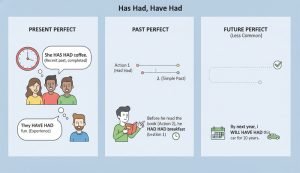
The phrases “has had,” “have had,” and “had had” are all forms of the verb “to have” used in perfect tenses. Understanding their function requires recognizing the role of “have” as both a main verb (denoting possession, experience, or obligation) and an auxiliary verb (used to form perfect tenses).
“Has had” is the present perfect tense form used with singular subjects (he, she, it). It indicates an action or state that started in the past and continues to the present, or an action completed at an unspecified time in the past that has relevance to the present.
“Have had” is the present perfect tense form used with plural subjects (I, you, we, they). Like “has had,” it indicates an action or state that began in the past and continues to the present or was completed at an unspecified time in the past but is relevant now.
“Had had” is the past perfect tense form used with all subjects (singular and plural). It indicates an action or state that was completed before another action or time in the past. It helps establish the sequence of events, showing which action occurred first.
Structural Breakdown
To understand how these phrases work, it’s crucial to break down their structure:
- “Has had”: auxiliary verb “has” (present tense, singular) + past participle “had” (main verb).
- “Have had”: auxiliary verb “have” (present tense, plural) + past participle “had” (main verb).
- “Had had”: auxiliary verb “had” (past tense) + past participle “had” (main verb).
In each case, the first “has,” “have,” or “had” is the auxiliary verb that helps form the perfect tense. The second “had” is the past participle form of the main verb “to have.” The main verb “to have” can express possession, experience, or obligation.
Types and Categories
Present Perfect: ‘Has Had’ and ‘Have Had’
The present perfect tense (“has had” and “have had”) connects the past with the present. It’s used for actions that started in the past and continue into the present, or actions completed at an unspecified time in the past that have a result or relevance in the present.
The relevance to the present is what distinguishes it from the simple past tense.
Past Perfect: ‘Had Had’
The past perfect tense (“had had”) describes an action completed before another action in the past. It’s used to clarify the sequence of events, indicating which action happened first.
This tense is particularly useful when narrating past events, as it establishes the order in which they occurred.
Has vs. Had: Key Differences Explained
The contrast between “has” and “had” often confuses learners because both forms relate to the verb “to have,” yet they serve different grammatical purposes. “Has” functions in the present tense and in the present perfect when combined with a past participle, as in “has had.” It links past actions to the present moment.
“Had,” on the other hand, belongs to the past tense and is also used as the auxiliary verb in the past perfect. When learners see “had had,” the repetition signals that one past action occurred before another past reference point. The key difference is perspective: “has” looks back from the present, while “had” looks back from a point already in the past.
Keeping this timeline distinction in mind helps prevent tense-mixing errors and improves narrative clarity.
Examples
Present Perfect for Ownership/Possession
This category focuses on using “has had” and “have had” to describe possession or ownership that has existed from a past time up to the present. This is a common usage, particularly when discussing things like houses, cars, or other belongings.
The following table provides 30 examples of using “has had” and “have had” in the present perfect tense to denote possession or ownership. Note the difference in subject-verb agreement depending on whether the subject is singular or plural.
| Subject | Sentence |
|---|---|
| I | I have had this car for five years. |
| You | You have had that book for a long time. |
| He | He has had a dog since he was a child. |
| She | She has had a bad cold all week. |
| It | It has had its ups and downs. |
| We | We have had some difficulties with the project. |
| They | They have had many opportunities to travel. |
| My brother | My brother has had a part-time job for the summer. |
| The students | The students have had several assignments due this week. |
| The company | The company has had a successful year. |
| The cat | The cat has had kittens. |
| The team | The team has had a winning streak. |
| Our family | Our family has had this house for generations. |
| John | John has had the flu recently. |
| Mary | Mary has had a lot of stress lately. |
| The dog | The dog has had its shots. |
| The children | The children have had their dinner. |
| The government | The government has had many challenges to face. |
| The economy | The economy has had its ups and downs. |
| Technology | Technology has had a huge impact on society. |
| Sarah | Sarah has had a promotion at work. |
| The band | The band has had a successful tour. |
| The restaurant | The restaurant has had many customers today. |
| The store | The store has had a sale this week. |
| The school | The school has had many improvements this year. |
| The city | The city has had a lot of development. |
| The country | The country has had many political changes. |
| The world | The world has had many challenges recently. |
| The project | The project has had several delays. |
| The meeting | The meeting has had a lot of discussion. |
Present Perfect for Experience
This section explores how “has had” and “have had” are used to describe experiences or events that have occurred in someone’s life up to the present moment. This is often used to talk about travels, performances, or other notable events.
The following table provides 25 examples of using “has had” and “have had” in the present perfect tense to denote experience. Notice how these sentences often imply a connection to the present, either through the result of the experience or its relevance to the speaker.
| Subject | Sentence |
|---|---|
| I | I have had the opportunity to travel to Europe. |
| You | You have had some interesting experiences, haven’t you? |
| He | He has had a chance to meet the president. |
| She | She has had a role in a major movie. |
| It | It has had its share of challenges and triumphs. |
| We | We have had a wonderful time on vacation. |
| They | They have had many adventures together. |
| My sister | My sister has had a difficult time adjusting to the new city. |
| The students | The students have had the privilege of attending a prestigious university. |
| The team | The team has had the honor of representing their country. |
| The actor | The actor has had rave reviews for his performance. |
| The author | The author has had her book published. |
| The chef | The chef has had his restaurant featured in a magazine. |
| The artist | The artist has had an exhibition of her work. |
| The musician | The musician has had a hit song on the radio. |
| The dancer | The dancer has had the chance to perform on Broadway. |
| The athlete | The athlete has had a successful career. |
| The scientist | The scientist has had a breakthrough discovery. |
| The engineer | The engineer has had a significant impact on the project. |
| The doctor | The doctor has had a long and rewarding career. |
| The teacher | The teacher has had a positive influence on many students. |
| The lawyer | The lawyer has had a successful case. |
| The journalist | The journalist has had an exclusive interview. |
| The programmer | The programmer has had a breakthrough in coding. |
| The designer | The designer has had his work featured in a magazine. |
Present Perfect for Illness
This section illustrates how “has had” and “have had” can be used to talk about illnesses or health conditions that someone has experienced. This usage often implies that the illness has either recently ended or is still ongoing.
The following table presents 20 examples of “has had” and “have had” used in the context of illnesses and health conditions. This usage emphasizes the duration or recent occurrence of the health issue.
| Subject | Sentence |
|---|---|
| I | I have had a terrible headache all day. |
| You | You have had a persistent cough for weeks. |
| He | He has had the flu and has been in bed all week. |
| She | She has had a bad cold, so she’s staying home. |
| My son | My son has had chickenpox. |
| We | We have had several cases of the stomach flu at school. |
| They | They have had a hard time recovering from their injuries. |
| The patient | The patient has had a successful surgery. |
| The dog | The dog has had a bad case of fleas. |
| The cat | The cat has had a check-up at the vet. |
| John | John has had an allergic reaction to peanuts. |
| Mary | Mary has had a migraine for three days. |
| The child | The child has had a high fever. |
| The elderly man | The elderly man has had a fall. |
| The woman | The woman has had a pregnancy scare. |
| The athlete | The athlete has had a sports injury. |
| The student | The student has had a panic attack. |
| The teacher | The teacher has had a sore throat. |
| The doctor | The doctor has had a busy day. |
| The nurse | The nurse has had a long shift. |
Past Perfect for Sequence of Events
This category focuses on the use of “had had” to establish the sequence of events in the past, showing which action occurred before another. This is particularly useful in narratives to avoid confusion about the order of events.
Here are 20 examples demonstrating the use of “had had” to clarify the order of events in the past. The past perfect tense emphasizes that one action was completed before another.
| Sentence |
|---|
| I went to bed after I had had a long day at work. |
| She felt much better after she had had a good night’s sleep. |
| He was tired because he had had a strenuous workout. |
| They were excited because they had had a successful presentation. |
| We were relieved after we had had a safe flight. |
| The children were happy because they had had a fun day at the park. |
| The team celebrated after they had had a victory. |
| The students felt prepared because they had had a thorough review. |
| The employees were satisfied because they had had a productive meeting. |
| The customers were pleased because they had had excellent service. |
| The garden bloomed because it had had enough water. |
| The cake tasted delicious because it had had the right ingredients. |
| The computer worked efficiently because it had had a system update. |
| The car ran smoothly because it had had a recent tune-up. |
| The project succeeded because it had had thorough planning. |
| The movie was a hit because it had had a compelling storyline. |
| The concert was amazing because it had had talented performers. |
| The restaurant was popular because it had had delicious food. |
| The hotel was luxurious because it had had excellent amenities. |
| The event was memorable because it had had meticulous organization. |
Past Perfect for Cause and Effect
In this category, “had had” is used to show the cause-and-effect relationship between two past events. The past perfect tense emphasizes the cause, which occurred before the effect.
The following table provides 20 examples using “had had” to illustrate cause-and-effect relationships in the past. The past perfect tense highlights the reason behind a subsequent event.
| Sentence |
|---|
| She failed the test because she had had a fever and couldn’t study. |
| He missed the bus because he had had a late night. |
| They were late to the airport because they had had car trouble. |
| We couldn’t go to the party because we had had a family emergency. |
| The concert was canceled because the artist had had a sore throat. |
| The game was postponed because it had had heavy rain. |
| The meeting was rescheduled because the manager had had a conflict. |
| The project was delayed because the team had had technical issues. |
| The event was poorly attended because it had had little publicity. |
| The product failed because it had had inadequate testing. |
| The business closed because it had had a lack of customers. |
| The city flooded because it had had poor drainage. |
| The forest fire spread because it had had dry conditions. |
| The epidemic occurred because it had had a lack of sanitation. |
| The accident happened because it had had reckless driving. |
| The war started because it had had political tensions. |
| The relationship ended because it had had communication problems. |
| The friendship faded because it had had unresolved conflicts. |
| The community declined because it had had economic hardship. |
| The society collapsed because it had had social injustice. |
Usage Rules
Grammar Rules and Usage of “Has,” “Have,” and “Had”
Understanding grammar rules for “has,” “have,” and “had” depends on recognizing both tense and subject agreement. In present perfect constructions, “has had” and “have had” follow strict subject-based rules: singular third-person subjects require “has,” while plural subjects and first- or second-person subjects require “have.” The past perfect form “had had,” however, remains unchanged regardless of the subject.
Usage also depends heavily on context. Present perfect forms (“has had” and “have had”) are preferred when the exact time of the action is not mentioned or when the result is still relevant. In contrast, “had had” is chosen when the speaker needs to show that one past event happened before another. Misuse often occurs when learners focus only on time words rather than the relationship between events.
By applying these grammar rules consistently, writers and speakers can avoid ambiguity and communicate timelines with precision, especially in academic or professional writing.
Subject-Verb Agreement
Subject-verb agreement is critical when using “has had” and “have had.” “Has had” is used with singular subjects (he, she, it), while “have had” is used with plural subjects (I, you, we, they). “Had had,” being in the past perfect, does not change based on the subject.
Correct: She has had a long day.
Incorrect: She have had a long day.
Correct: They have had many adventures.
Incorrect: They has had many adventures.
Correct: I had had my breakfast before I left.
Correct: He had had his breakfast before he left.
Time Expressions
Certain time expressions are commonly used with the present perfect and past perfect tenses. For the present perfect (“has had” and “have had”), common time expressions include “since,” “for,” “ever,” “never,” “already,” “yet,” “just,” “lately,” and “recently.” For the past perfect (“had had”), common time expressions include “before,” “after,” “by the time,” and “until.”
Present Perfect: I have had this car for five years.
Present Perfect: She has had the flu since Monday.
Past Perfect: By the time I arrived, he had had his dinner.
Past Perfect: I hadn’t had a vacation until last year.
Contractions
Contractions are common in spoken and informal written English. “Has had” can be contracted to “‘s had,” and “have had” can be contracted to “‘ve had.” “Had had” can be contracted to “‘d had.”
Full form: He has had a busy day.
Contracted form: He’s had a busy day.
Full form: They have had a great time.
Contracted form: They’ve had a great time.
Full form: I had had my lunch before you arrived.
Contracted form: I’d had my lunch before you arrived.
Common Mistakes
One common mistake is confusing the simple past with the present perfect. The simple past refers to a completed action at a specific time in the past, while the present perfect refers to an action that started in the past and continues to the present or has relevance to the present.
Incorrect: I had this car for five years. (Simple Past – implies you no longer have the car)
Correct: I have had this car for five years. (Present Perfect – you still have the car)
Another mistake is using the wrong auxiliary verb with the subject. Remember that “has” is for singular subjects, and “have” is for plural subjects.
Incorrect: She have had a good experience.
Correct: She has had a good experience.
Learners often encounter confusion when seeing combinations like “have has had” or “has have had,” which usually result from mixing auxiliary verbs incorrectly. In standard English grammar, only one auxiliary form (“has,” “have,” or “had”) is used at a time, followed by the past participle “had.” Any other combination signals a structural error rather than a valid tense.
Finally, using the wrong form of the verb “to have” is a common error.
Incorrect: I had have my dinner before you arrived.
Correct: I had had my dinner before you arrived.
Practice Exercises
Exercise 1: Fill in the Blanks
Fill in the blanks with the correct form of “have”: “has had,” “have had,” or “had had.”
| Question | Answer |
|---|---|
| 1. I _____ a busy week, so I’m looking forward to the weekend. | have had |
| 2. She _____ the same car for ten years. | has had |
| 3. They _____ many challenges to overcome. | have had |
| 4. He _____ a cold all week, so he’s staying home. | has had |
| 5. We _____ a great time on vacation. | have had |
| 6. By the time I arrived, he _____ already _____ dinner. | had, had |
| 7. I _____ never _____ such a difficult problem before. | had, had |
| 8. She _____ a lot of experience in this field. | has had |
| 9. They _____ a meeting this morning. | have had |
| 10. The company _____ a successful year. | has had |
Exercise 2: Error Correction
Identify and correct the errors in the following sentences. If the sentence is correct, write “Correct.”
| Question | Answer |
|---|---|
| 1. She have had a long day at work. | She has had a long day at work. |
| 2. They has had many opportunities to travel. | They have had many opportunities to travel. |
| 3. I had have my breakfast before I left. | I had had my breakfast before I left. |
| 4. He has had the flu since Monday. | Correct |
| 5. We has had a wonderful time on vacation. | We have had a wonderful time on vacation. |
| 6. She have a bad headache. | She has had a bad headache. |
| 7. I has had a great experience. | I have had a great experience. |
| 8. They had had a party last night. | Correct |
| 9. He have had dinner already. | He has had dinner already. |
| 10. We has had a good time. | We have had a good time. |
Exercise 3: Sentence Transformation
Rewrite the following sentences using “has had,” “have had,” or “had had” to convey the same meaning.
| Question | Answer |
|---|---|
| 1. I own this house for ten years. | I have had this house for ten years. |
| 2. She experienced many challenges in her life. | She has had many challenges in her life. |
| 3. They finished their work before the deadline. | They had had their work finished before the deadline. |
| 4. He was sick with the flu last week. | He has had the flu since last week. |
| 5. We enjoyed our vacation. | We have had a great time on vacation. |
| 6. They completed the project before the meeting. | They had had the project completed before the meeting. |
| 7. She owned the company for five years. | She has had the company for five years. |
| 8. He experienced a lot of success. | He has had a lot of success. |
| 9. The team finished the game before the storm. | The team had had the game finished before the storm. |
| 10. We enjoyed the concert last night. | We have had a great time at the concert. |
Advanced Topics
Nested Perfect Tenses
While rare, it’s possible to encounter nested perfect tenses where you have a perfect tense within another perfect tense. This usually involves the past perfect within another past perfect or present perfect construction.
These constructions are complex and require careful consideration of the sequence of events.
Example: By the time she realized she had had the wrong key all along, the meeting was already over. (The “had had” is nested within the context of the past perfect “By the time she realized…”)
Formal vs. Informal Usage
The use of contractions (e.g., “‘s had,” “‘ve had,” “‘d had”) is more common in informal speech and writing. In formal contexts, it’s generally preferred to use the full forms (e.g., “has had,” “have had,” “had had”).
Pay attention to the context and audience when deciding whether to use contractions.
FAQ
Q1: What is the difference between “has” and “have”?
A: “Has” is the third-person singular present tense form of the verb “to have,” used with subjects like “he,” “she,” “it,” or singular nouns. “Have” is the first-person singular (I), second-person singular and plural (you), and third-person plural (we, they) present tense form of the verb “to have,” used with plural nouns.
Q2: When should I use “has had” instead of “had”?
A: Use “has had” in the present perfect tense to indicate an action or state that started in the past and either continues to the present or was completed at an unspecified time in the past but is relevant now. Use “had” in the simple past tense to indicate a completed action at a specific time in the past.
Q3: How can I remember when to use “had had”?
A: Remember that “had had” is used in the past perfect tense to indicate an action completed before another action in the past. Think of it as the “past of the past.” Use it to establish the sequence of events when narrating past events.
Q4: Can you give an example of “had had” in a complex sentence?
A: Sure. “She was upset because she had had a fight with her best friend the day before.” In this sentence, “had had” indicates that the fight occurred before she was upset, establishing the cause-and-effect relationship in the past.
Q5: Is it correct to say “I have had had” in any situation?
A: While grammatically possible in very specific, complex sentence structures, “I have had had” is extremely rare and often sounds awkward. It would typically be used when describing a past perfect action within a present perfect context. A more natural phrasing is usually preferred. For example, instead of saying “I have had had the flu twice this year,” it’s better to say “I have had the flu twice this year.”
Q6: What are some common time expressions used with “has had” and “have had”?
A: Common time expressions include “since,” “for,” “ever,” “never,” “already,” “yet,” “just,” “lately,” and “recently.” These expressions help indicate the duration or recency of the action or state.
Q7: Are contractions acceptable in formal writing?
A: Generally, contractions are less acceptable in formal writing. In formal contexts, it’s preferred to use the full forms (e.g., “has had,” “have had,” “had had”) to maintain a more professional and polished tone.
Q8: What is the most important thing to remember about using these phrases correctly?
A: The most crucial thing is to understand the tense each phrase represents (present perfect vs. past perfect) and to ensure subject-verb agreement. Knowing when to use each tense based on the context and the sequence of events is key to using “has had,” “have had,” and “had had” correctly.
Conclusion
Mastering the use of “has had,” “have had,” and “had had” is crucial for constructing grammatically correct and sophisticated sentences in English. These phrases, though potentially confusing, are essential for expressing actions completed at unspecified times in the past or actions completed before other past actions.
By understanding their definitions, structural breakdowns, usage rules, and common pitfalls, you can significantly enhance your English language skills.
Remember to pay close attention to subject-verb agreement, time expressions, and the context in which you are using these phrases. Practice regularly with exercises and real-world examples to solidify your understanding.
With dedication and consistent effort, you can confidently and accurately use “has had,” “have had,” and “had had” in your writing and speech, elevating your overall proficiency in English.