

Choosing the right words to describe students is crucial for educators, parents, and anyone involved in education. These words not only reflect a student’s current standing but can also significantly influence their self-perception and future development.
This guide provides a detailed exploration of adjectives and other descriptive terms used to characterize students, covering their meanings, grammatical functions, and appropriate usage. Whether you’re a teacher writing report cards, a parent offering encouragement, or a student reflecting on your own learning journey, this article will equip you with the vocabulary and understanding necessary to describe students accurately and effectively.
This article is designed for English language learners, educators, parents, and anyone interested in enhancing their vocabulary and understanding of descriptive language within an educational context. By mastering the concepts presented here, you’ll be able to communicate more precisely and thoughtfully about students’ qualities, skills, and overall performance.
Table of Contents
- Definition: Describing Students
- Structural Breakdown
- Types and Categories of Descriptive Words
- Examples of Words to Describe Students
- Usage Rules
- Common Mistakes
- Practice Exercises
- Advanced Topics
- FAQ
- Conclusion
Definition: Describing Students
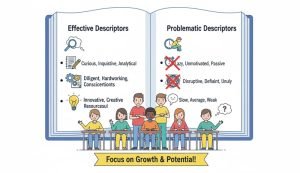
Describing students involves using adjectives, nouns, and adverbs to convey their qualities, characteristics, behaviors, and performance in an educational setting. These words provide insights into a student’s intellectual capabilities, personality, social interactions, and academic progress.
The goal is to offer a comprehensive and nuanced portrayal of the student, highlighting both strengths and areas for improvement. Effective descriptors are specific, objective, and constructive, avoiding vague or judgmental language.
These descriptive words function primarily as adjectives modifying nouns (e.g., “the diligent student”) or as nouns themselves (e.g., “a student with diligence“). Adverbs can also play a role by modifying verbs or adjectives to further refine the description (e.g., “consistently performs well” or “an exceptionally bright student”). The context in which these words are used significantly impacts their meaning and interpretation.
Structural Breakdown
The structure of sentences describing students typically follows a subject-verb-object pattern, with descriptive words often appearing as adjectives modifying the subject (the student) or as part of a predicate nominative that renames the subject. Adverbs can modify the verb to describe how the student performs.
Basic Sentence Structure:
Subject (Student) + Verb (is/seems/performs) + Descriptive Word(s)
For example:
- The student is attentive.
- The student seems motivated.
- The student performs consistently well.
Descriptive words can also be incorporated into more complex sentence structures, such as using relative clauses or participial phrases to provide additional information about the student. For instance:
- The student, who is always prepared, excels in class discussions.
- Motivated by a desire to learn, the student consistently completes all assignments.
Types and Categories of Descriptive Words
Descriptive words for students can be categorized into several key areas, providing a comprehensive understanding of their various qualities and characteristics.
When selecting adjectives to describe students, it is helpful to focus on both academic and personal qualities. Describing words for students should reflect their intellectual abilities, classroom behavior, and unique strengths, ensuring that each description is both constructive and specific.
Good words to describe students not only highlight their current achievements but also encourage ongoing development and active participation. For instance, terms like “attentive,” “curious,” and “proficient” emphasize academic skills, while “resilient,” “compassionate,” and “engaged” capture their personal qualities and learning approach.
Intellectual Qualities
These words describe a student’s cognitive abilities, learning style, and intellectual curiosity. They reflect how a student processes information, solves problems, and engages with academic material. Examples include intelligent, analytical, curious, creative, knowledgeable, perceptive, resourceful, and thoughtful.
Personality Traits
These words describe a student’s character, temperament, and interpersonal skills. They reflect how a student interacts with others, manages emotions, and responds to challenges. Examples include friendly, outgoing, shy, confident, responsible, compassionate, patient, determined, and resilient.
Behavioral Characteristics
These words describe a student’s conduct, habits, and classroom behavior. They reflect how a student follows rules, interacts with peers and teachers, and manages their time and attention. Examples include attentive, cooperative, respectful, disruptive, focused, organized, punctual, and diligent.
Performance-Related Terms
These words describe a student’s academic achievement, progress, and overall performance in school. They reflect a student’s grades, test scores, and ability to meet learning objectives. Examples include successful, proficient, improving, struggling, outstanding, average, below average, and consistent.
Skills and Abilities
These words describe a student’s specific skills and talents in various areas, such as communication, problem-solving, and creativity. They reflect a student’s strengths and areas of expertise. Examples include articulate, literate, numerate, artistic, musical, athletic, technical, and leadership.
Describing Students Who Learn Actively
Students who engage actively in their learning demonstrate curiosity, participation, and initiative. When describing a student learning actively, highlight their willingness to ask questions, contribute thoughtfully to discussions, and apply new knowledge creatively. Such learners often show traits like motivation, resourcefulness, and critical thinking, which can be emphasized with descriptive words such as “inquisitive,” “engaged,” and “persistent.”
Active learners also support their peers, share insights, and lead by example, showing strong collaboration and communication skills. By using precise, positive language, educators can reinforce active learning behaviors and encourage ongoing participation. These descriptors capture not only a student’s knowledge but also the strategies and mindset they bring to the learning process, offering a holistic view of their academic development.
Examples of Words to Describe Students
The following tables provide extensive examples of words used to describe students, categorized by the types discussed above. Each table includes a wide range of adjectives and nouns, along with example sentences to illustrate their usage.
Intellectual Qualities Examples
This table showcases adjectives and nouns that capture a student’s intellectual abilities and learning style. Observe how these words are used in context to provide a clear picture of a student’s cognitive strengths.
| Word | Part of Speech | Example Sentence |
|---|---|---|
| Intelligent | Adjective | The student is intelligent and grasps new concepts quickly. |
| Analytical | Adjective | She has an analytical mind and excels at problem-solving. |
| Curious | Adjective | A curious student, he always asks insightful questions. |
| Creative | Adjective | Her creative approach to projects always impresses the class. |
| Knowledgeable | Adjective | He is very knowledgeable about history and current events. |
| Perceptive | Adjective | She is a perceptive reader, understanding subtle nuances in literature. |
| Resourceful | Adjective | The student is resourceful and finds innovative solutions to problems. |
| Thoughtful | Adjective | He is a thoughtful student who considers different perspectives. |
| Brilliant | Adjective | She is a brilliant scholar with exceptional academic abilities. |
| Sharp | Adjective | He has a sharp intellect and learns new things effortlessly. |
| Astute | Adjective | She is an astute observer and quickly understands complex situations. |
| Inquisitive | Adjective | The inquisitive student is always eager to learn more. |
| Studious | Adjective | The studious student spends hours in the library. |
| Diligent | Adjective | A diligent student, she always completes her assignments on time. |
| Scholarly | Adjective | His scholarly approach to research is commendable. |
| Erudite | Adjective | The erudite student has a vast knowledge of various subjects. |
| Imaginative | Adjective | Her imaginative stories captivate her classmates. |
| Inventive | Adjective | The inventive student is always coming up with new ideas. |
| Insightful | Adjective | His insightful comments contribute significantly to class discussions. |
| Intellect | Noun | She possesses a remarkable intellect. |
| Understanding | Noun | He has a deep understanding of complex concepts. |
| Wisdom | Noun | Her wisdom is beyond her years. |
| Ingenuity | Noun | His ingenuity allows him to solve problems creatively. |
Personality Traits Examples
This table focuses on adjectives and nouns that describe a student’s personality and character. Understanding these terms helps in recognizing and appreciating the diverse personalities within a classroom.
| Word | Part of Speech | Example Sentence |
|---|---|---|
| Friendly | Adjective | The student is friendly and approachable to everyone. |
| Outgoing | Adjective | She is an outgoing student who enjoys participating in group activities. |
| Shy | Adjective | He is a bit shy but very kind once you get to know him. |
| Confident | Adjective | She is confident in her abilities and not afraid to take risks. |
| Responsible | Adjective | He is a responsible student who always completes his tasks. |
| Compassionate | Adjective | She is a compassionate student who cares about others’ feelings. |
| Patient | Adjective | He is very patient when helping his classmates. |
| Determined | Adjective | She is determined to succeed and works hard to achieve her goals. |
| Resilient | Adjective | He is resilient and bounces back quickly from setbacks. |
| Kind | Adjective | She is a kind and considerate student. |
| Generous | Adjective | He is generous with his time and resources, always willing to help. |
| Empathetic | Adjective | She is an empathetic listener and offers valuable support. |
| Sociable | Adjective | The sociable student enjoys interacting with peers. |
| Courageous | Adjective | The courageous student stood up for what was right. |
| Optimistic | Adjective | The optimistic student always sees the bright side. |
| Persistent | Adjective | The persistent student never gives up easily. |
| Adaptable | Adjective | The adaptable student adjusts well to new situations. |
| Considerate | Adjective | The considerate student is always mindful of others. |
| Loyal | Adjective | The loyal student is a true friend. |
| Friendliness | Noun | Her friendliness makes her a joy to be around. |
| Kindness | Noun | His kindness is appreciated by all. |
| Compassion | Noun | Her compassion for others is admirable. |
| Resilience | Noun | His resilience in the face of adversity is inspiring. |
Behavioral Characteristics Examples
This table provides adjectives and nouns that describe a student’s behavior and conduct in the classroom. These terms are essential for evaluating a student’s ability to follow rules, interact positively, and manage their learning environment.
| Word | Part of Speech | Example Sentence |
|---|---|---|
| Attentive | Adjective | The student is attentive in class and listens carefully. |
| Cooperative | Adjective | She is cooperative and works well in group projects. |
| Respectful | Adjective | He is respectful to both teachers and peers. |
| Disruptive | Adjective | The student can be disruptive at times, needing redirection. |
| Focused | Adjective | She is focused on her work and avoids distractions. |
| Organized | Adjective | He is organized and keeps his materials in order. |
| Punctual | Adjective | She is punctual and always arrives on time. |
| Diligent | Adjective | He is a diligent student who works hard on his assignments. |
| Responsible | Adjective | She is responsible and takes her duties seriously. |
| Well-behaved | Adjective | He is a well-behaved student who follows the rules. |
| Disciplined | Adjective | She is disciplined and manages her time effectively. |
| Obedient | Adjective | He is obedient and follows instructions carefully. |
| Engaged | Adjective | The engaged student actively participates in class. |
| Attentive | Adjective | The attentive student listens carefully to instructions. |
| Disciplined | Adjective | The disciplined student manages time effectively. |
| Respectful | Adjective | The respectful student treats everyone with courtesy. |
| Considerate | Adjective | The considerate student is thoughtful of others’ feelings. |
| Cooperative | Adjective | The cooperative student works well in groups. |
| Punctuality | Noun | Her punctuality is commendable. |
| Diligence | Noun | His diligence in completing assignments is evident. |
| Focus | Noun | Her focus allows her to excel academically. |
| Orderliness | Noun | His orderliness helps him stay organized. |
Performance-Related Terms Examples
This table provides adjectives and nouns to describe a student’s academic performance and progress. These terms are crucial for providing feedback and tracking a student’s development over time.
| Word | Part of Speech | Example Sentence |
|---|---|---|
| Successful | Adjective | The student is successful in all her endeavors. |
| Proficient | Adjective | She is proficient in math and science. |
| Improving | Adjective | He is improving steadily in reading comprehension. |
| Struggling | Adjective | The student is struggling with algebra and needs extra help. |
| Outstanding | Adjective | She gave an outstanding performance in the debate. |
| Average | Adjective | His performance is average and meets the basic requirements. |
| Below average | Adjective | Her performance is below average and requires intervention. |
| Consistent | Adjective | He is consistent in his efforts and maintains a good grade. |
| Advanced | Adjective | The advanced student is ready for more challenging material. |
| Competent | Adjective | The competent student demonstrates a solid understanding of the subject. |
| Capable | Adjective | The capable student can handle complex tasks. |
| Accomplished | Adjective | The accomplished student has achieved significant milestones. |
| Masterful | Adjective | The masterful student demonstrates exceptional skill. |
| Gifted | Adjective | The gifted student excels in many areas. |
| Talented | Adjective | The talented student shows great potential. |
| Progress | Noun | She is making excellent progress in her studies. |
| Achievement | Noun | His academic achievement is commendable. |
| Success | Noun | Her success is a result of hard work and dedication. |
| Excellence | Noun | He strives for excellence in everything he does. |
For an average student, concise and balanced descriptors work best. Three words that effectively capture the qualities of an average student include “consistent,” “proficient,” and “attentive.” These words acknowledge steady effort and engagement, offering constructive feedback without negative judgment. Incorporating such descriptors provides clarity on performance levels while also emphasizing potential for improvement and growth.
Skills and Abilities Examples
This table focuses on adjectives and nouns that describe a student’s specific skills and abilities. These terms are useful for identifying a student’s strengths and areas for development in various disciplines.
| Word | Part of Speech | Example Sentence |
|---|---|---|
| Articulate | Adjective | The student is articulate and expresses herself clearly. |
| Literate | Adjective | She is literate and reads extensively. |
| Numerate | Adjective | He is numerate and excels in mathematics. |
| Artistic | Adjective | She is artistic and creates beautiful paintings. |
| Musical | Adjective | He is musical and plays the piano skillfully. |
| Athletic | Adjective | She is athletic and enjoys playing sports. |
| Technical | Adjective | He is technical and enjoys working with computers. |
| Leadership | Noun | She demonstrates strong leadership skills. |
| Communication | Noun | His communication skills are excellent. |
| Problem-solving | Noun | Her problem-solving skills are highly developed. |
| Critical thinking | Noun | His critical thinking abilities are impressive. |
| Creative thinking | Noun | Her creative thinking leads to innovative solutions. |
| Teamwork | Noun | His teamwork skills make him a valuable group member. |
| Organizational | Adjective | She has strong organizational skills. |
| Analytical | Adjective | He has strong analytical abilities. |
| Eloquent | Adjective | The eloquent student speaks with grace and precision. |
| Skilled | Adjective | The skilled student excels in various tasks. |
| Proficient | Adjective | The proficient student demonstrates a high level of competence. |
Usage Rules
When describing students, it’s essential to adhere to certain usage rules to ensure accuracy, fairness, and respect. These rules encompass grammar, vocabulary, and ethical considerations.
- Use specific and objective language: Avoid vague or subjective terms that are open to interpretation. Instead, use concrete examples and observable behaviors to support your descriptions. For example, instead of saying “The student is lazy,” say “The student frequently misses deadlines and does not complete assigned tasks.”
- Focus on behaviors, not character: Describe what a student does rather than labeling their personality. This approach is more constructive and less judgmental. For example, instead of saying “The student is disruptive,” say “The student often talks out of turn during class.”
- Balance positive and negative feedback: When providing feedback, highlight both strengths and areas for improvement. This approach encourages growth and avoids discouraging the student.
- Use appropriate language for the audience: Tailor your language to the intended audience, whether it’s parents, teachers, or the students themselves. Avoid jargon or overly technical terms that may not be understood.
- Consider cultural sensitivity: Be aware of cultural differences that may influence a student’s behavior or communication style. Avoid making assumptions based on cultural stereotypes.
- Maintain confidentiality: Respect the privacy of students and avoid sharing sensitive information with unauthorized individuals.
- Be mindful of the impact of your words: Recognize that your words can have a significant impact on a student’s self-esteem and motivation. Choose your words carefully and strive to be encouraging and supportive.
Common Mistakes
Describing students can be challenging, and it’s easy to make common mistakes that can undermine the effectiveness of your communication. Here are some frequent errors to avoid:
| Incorrect | Correct | Explanation |
|---|---|---|
| The student is always bad. | The student has difficulty following classroom rules. | Avoid using absolute terms like “always” or “never,” which are rarely accurate and can be discouraging. |
| She is just not smart. | She is currently struggling with the material. | Avoid making generalizations about a student’s intelligence. Focus on specific areas where they need support. |
| He’s a troublemaker. | He requires frequent redirection to stay on task. | Avoid labeling a student with negative terms. Describe their behavior objectively. |
| She’s a typical girl. | She enjoys collaborative projects and creative activities. | Avoid making gender-based stereotypes. Focus on individual preferences and strengths. |
| He’s lazy. | He often misses deadlines and needs encouragement to complete tasks. | Avoid attributing laziness. Identify specific behaviors and offer support. |
| She’s gifted, so she doesn’t need help. | She excels in many areas but still benefits from enrichment activities. | Recognize that even gifted students can benefit from additional support and challenges. |
Practice Exercises
Test your understanding of descriptive words for students with these practice exercises. Each exercise focuses on different aspects of vocabulary and usage.
Exercise 1: Identifying Descriptive Words
Identify the descriptive words (adjectives or nouns) in the following sentences.
| Question | Answer |
|---|---|
| 1. The diligent student always completes her homework on time. | diligent |
| 2. He is a creative artist with a vivid imagination. | creative |
| 3. She is known for her kindness and compassion. | kindness |
| 4. The attentive listener provides thoughtful feedback. | attentive |
| 5. His analytical mind helps him solve complex problems. | analytical |
| 6. The responsible student always takes initiative. | responsible |
| 7. She is a talented musician with a beautiful voice. | talented |
| 8. His punctuality is greatly appreciated by the teacher. | punctuality |
| 9. The motivated learner is eager to explore new topics. | motivated |
| 10. She shows great resilience in the face of challenges. | resilience |
Exercise 2: Using Descriptive Words in Sentences
Complete the following sentences with appropriate descriptive words from the list below. (Words may be used more than once.)
List: attentive, curious, responsible, creative, friendly
| Question | Answer |
|---|---|
| 1. The ______ student always asks insightful questions. | curious |
| 2. She is a ______ member of the class, always willing to help others. | friendly |
| 3. He is a ______ student who takes his studies seriously. | responsible |
| 4. The ______ student listens carefully during lectures. | attentive |
| 5. She has a ______ approach to problem-solving, often finding innovative solutions. | creative |
| 6. The ______ student is always eager to learn new things. | curious |
| 7. He is ______ and approachable, making him a great classmate. | friendly |
| 8. As a ______ student, she always completes her assignments on time. | responsible |
| 9. The ______ student is engaged and focused during class discussions. | attentive |
| 10. She is a ______ writer with a unique style. | creative |
Exercise 3: Correcting Misused Descriptive Words
Identify and correct the misused descriptive words in the following sentences.
| Question | Answer (Corrected Sentence) |
|---|---|
| 1. The student is always bad. | The student sometimes struggles to follow classroom rules. |
| 2. She is just not smart. | She is currently having difficulty with this particular subject. |
| 3. He’s a troublemaker. | He occasionally disrupts the class and needs reminders to stay on task. |
| 4. She’s a typical girl. | She enjoys collaborative projects and creative activities. |
| 5. He’s lazy. | He would benefit from more structured assignments and positive reinforcement. |
| 6. She’s gifted, so she doesn’t need help. | She is advanced in many areas and would benefit from enrichment activities. |
| 7. The student is always perfect. | The student consistently performs at a high level. |
| 8. He is never prepared for class. | He often forgets to bring his materials to class. |
| 9. She’s an awful student. | She is struggling to meet the expectations of the course. |
| 10. He’s a genius. | He demonstrates exceptional intellectual abilities. |
Advanced Topics
For advanced learners, exploring the nuances of descriptive language can involve examining figurative language, connotation, and the psychological impact of word choice.
- Figurative Language: Using metaphors, similes, and analogies can add depth and creativity to descriptions. For example, “The student is a sponge, soaking up knowledge.”
- Connotation: Understanding the emotional associations of words is crucial for conveying the intended meaning. For example, “diligent” has a more positive connotation than “industrious,” even though they have similar meanings.
- Psychological Impact: Being aware of how words can affect a student’s self-esteem and motivation is essential for ethical and effective communication. Avoid using language that could be perceived as critical or demeaning.
Additionally, exploring the use of descriptive language in different cultural contexts can enhance understanding and sensitivity. Researching how different cultures value and express qualities such as intelligence, creativity, and responsibility can provide valuable insights into cross-cultural communication.
FAQ
Here are some frequently asked questions about describing students:
What is the best way to describe a student who is struggling?
Focus on specific areas where the student needs support and avoid making generalizations about their abilities. Use language that is encouraging and constructive, highlighting their strengths and potential for improvement. For example, “The student is currently struggling with reading comprehension but shows great enthusiasm for science and has demonstrated strong problem-solving skills in that area. With targeted support and practice, we believe the student can make significant progress in reading.”
How can I describe a student who is exceptionally talented without making other students feel inadequate?
Acknowledge the student’s talent while emphasizing the importance of effort, dedication, and continuous learning. Focus on their individual growth and achievements rather than comparing them to others. For example, “The student possesses exceptional musical talent and has demonstrated remarkable progress through consistent practice
and dedication. Their passion for music is inspiring, and they serve as a role model for their peers. We encourage them to continue honing their skills and exploring new musical challenges.”
How can I provide constructive feedback to a student who is not meeting expectations?
Start by acknowledging the student’s efforts and strengths, then address specific areas where improvement is needed. Offer concrete suggestions for how the student can improve and provide ongoing support and encouragement. For example, “We appreciate your participation in class discussions and your willingness to help your classmates. To improve your overall performance, we recommend focusing on completing assignments on time and seeking assistance when you encounter difficulties. We are here to support you and provide resources to help you succeed.”
Is it appropriate to use subjective language when describing students?
While subjective language can provide insights into a student’s personality and character, it’s essential to balance it with objective observations and specific examples. Avoid relying solely on subjective impressions, as they can be biased and open to interpretation. Strive to provide a comprehensive and nuanced portrayal of the student, incorporating both objective and subjective elements.
How can I ensure that my descriptions of students are fair and unbiased?
Be aware of your own biases and assumptions and strive to approach each student with an open mind. Use objective criteria to evaluate student performance and avoid making generalizations based on race, gender, socioeconomic status, or other factors. Seek feedback from colleagues and parents to ensure that your descriptions are accurate and fair.
Conclusion
Describing students effectively requires careful consideration of language, context, and ethical implications. By mastering the vocabulary and usage rules presented in this guide, educators, parents, and students can communicate more precisely and thoughtfully about students’ qualities, skills, and overall development.
Remember to use specific, objective, and constructive language, focusing on behaviors rather than character and balancing positive and negative feedback. By following these guidelines, you can create a supportive and encouraging learning environment that promotes growth and success for all students.