

Understanding antonyms is crucial for expanding your vocabulary and enhancing your ability to express nuanced meanings. The word “accepted” implies agreement, welcoming, or approval.
Knowing its opposites allows you to articulate rejection, disapproval, or exclusion with precision. This article delves into the various antonyms of “accepted,” providing definitions, examples, and usage rules to help you master this aspect of English vocabulary.
This guide is perfect for English language learners, writers, and anyone looking to improve their communication skills.
This comprehensive guide will explore antonyms of “accepted,” their meanings, and how to use them in various contexts. We’ll cover a range of words that express the opposite of acceptance, from outright rejection to subtle forms of disapproval.
By studying these antonyms, you’ll gain a deeper understanding of the English language and improve your ability to communicate effectively. Let’s begin!
Table of Contents
- Introduction
- Definition of “Accepted” and Its Antonyms
- Structural Breakdown
- Types and Categories of Antonyms
- Examples of Antonyms in Sentences
- Usage Rules
- Common Mistakes
- Practice Exercises
- Advanced Topics
- FAQ
- Conclusion
Definition of “Accepted” and Its Antonyms
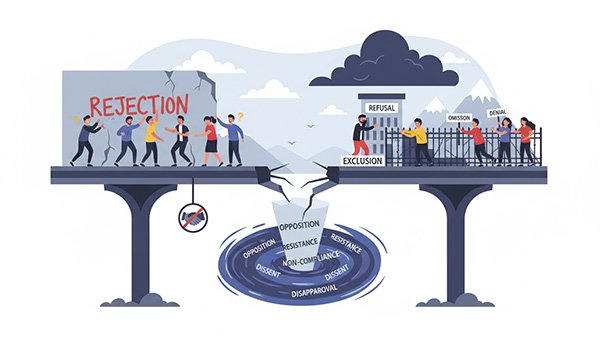
The word “accepted” generally means to receive willingly, to approve, or to believe something to be true. It implies agreement, inclusion, and validation.
For anyone seeking to expand their vocabulary, exploring antonyms for acceptance can be particularly useful. Recognizing these words in everyday communication, literature, or formal writing ensures that you convey rejection or disagreement clearly and accurately.
Understanding its antonyms requires a nuanced approach, as the opposite of “accepted” can vary depending on the context.
When discussing the opposite of accepted, it is important to recognize that the acceptance opposite word depends on context. Words like “rejected,” “refused,” or “denied” serve as the opposite of accepted in most formal situations. Understanding these distinctions helps learners select the correct term when expressing disagreement, exclusion, or disapproval.
Antonyms of “accepted” convey meanings related to rejection, disapproval, disagreement, or exclusion.
Classification: The antonyms of “accepted” can be classified into several categories based on the degree and nature of opposition. These include words indicating outright rejection, polite refusal, strong disapproval, and subtle forms of non-acceptance. The specific antonym used depends on the context and the intended meaning.
Function: Antonyms of “accepted” function to express disagreement, disapproval, or exclusion. Choosing the correct acceptance opposite word can depend on tone, formality, and the situation. For instance, in casual conversation, “turned down” may work best, whereas in formal writing, “repudiated” or “nullified” might be more appropriate. Understanding these subtle differences allows precise and effective communication.
They allow speakers and writers to convey negative responses or to indicate a lack of agreement or approval. These words are essential for expressing a full range of opinions and perspectives.
Contexts: The antonyms of “accepted” are used in various contexts, including formal and informal settings. They appear in academic writing, business communication, legal documents, and everyday conversations. Choosing the appropriate antonym is crucial for conveying the intended meaning accurately and effectively.
Structural Breakdown
The antonyms of “accepted” often share structural similarities with the word “accepted” itself. Many are verbs that can be conjugated in different tenses and used in various grammatical constructions.
Understanding the structural elements of these words can help you use them correctly.
Prefixes: Many antonyms of “accepted” are formed by adding prefixes to base words. For example, “un-” (as in “unaccepted,” although somewhat uncommon), “dis-” (as in “disapproved”), and “re-” (as in “rejected,” “refused”) are common prefixes that create negative or opposite meanings. These prefixes can significantly alter the meaning of the base word.
Suffixes: Suffixes can also play a role in forming antonyms. For instance, the suffix “-ed” is commonly used to form the past participle of verbs, as in “rejected” or “denied.” Understanding how suffixes function can help you recognize and use antonyms correctly.
Root Words: Identifying the root words of antonyms can provide insight into their meanings. For example, the root of “rejected” is “ject,” which means to throw or cast. Understanding this root can help you grasp the idea of something being thrown away or refused.
Types and Categories of Antonyms
The antonyms of “accepted” can be categorized based on the intensity and context of their meaning. Here are some key categories:
Rejected
“Rejected” implies a forceful or decisive refusal. It suggests that something has been turned down or discarded, often after consideration.
It carries a stronger connotation than simply “not accepted.”
Refused
“Refused” indicates a direct and explicit denial. It suggests a conscious decision not to accept something that has been offered or proposed.
It’s a more active and intentional form of non-acceptance.
Denied
“Denied” signifies a refusal to grant or allow something. It often implies that someone has been refused access, permission, or a request.
It can also mean to disavow or contradict a statement.
Opposed
“Opposed” means to be against something or someone. It suggests a conflict or disagreement with a particular idea, plan, or person.
It can imply active resistance or simply a difference of opinion.
Unwelcome
“Unwelcome” indicates that someone or something is not wanted or appreciated. It suggests a lack of hospitality or acceptance.
It can be used to describe a person, a situation, or an idea.
Disapproved
“Disapproved” means to have an unfavorable opinion of something. It suggests a lack of approval or endorsement.
It can be used to describe actions, behaviors, or ideas.
Declined
“Declined” implies a polite or formal refusal. It suggests that someone has chosen not to accept an offer or invitation.
It’s a more courteous form of refusal.
Vetoed
“Vetoed” means to reject or prohibit something, especially by someone in authority. It suggests a formal and authoritative rejection.
It’s often used in political or legal contexts.
Repudiated
“Repudiated” means to reject or disown something, often with strong disapproval. It suggests a complete rejection of something previously accepted or associated with.
It carries a strong connotation of disapproval.
Spurned
“Spurned” means to reject with disdain or contempt. It suggests a scornful or contemptuous refusal.
It implies a strong negative emotion or judgment.
Nullified
“Nullified” means to make legally void or ineffective. It suggests that something has been rendered invalid or without legal force.
It’s often used in legal or contractual contexts.
Examples of Antonyms in Sentences
Understanding how these antonyms are used in sentences is crucial for mastering their usage. The following tables provide examples of each antonym in various contexts.
Table 1: Examples of “Rejected” in Sentences
The following table provides 30 examples of “rejected” used in sentences. These examples demonstrate the versatility of the word and how it can be used in different contexts.
| Sentence |
|---|
| The company rejected his application due to lack of experience. |
| Her proposal was rejected by the committee. |
| The team rejected the new strategy as ineffective. |
| He felt rejected when she turned down his invitation. |
| The manuscript was rejected by several publishers before finding a home. |
| The new law was rejected by the voters in the referendum. |
| The patient’s body rejected the transplanted organ. |
| The idea was rejected out of hand without any consideration. |
| She felt rejected by her family after revealing her truth. |
| The flawed product was rejected during quality control. |
| His attempts to reconcile were rejected time and again. |
| The software update was rejected due to numerous bugs. |
| The offer was rejected as being far too low. |
| The town rejected the proposal to build a new shopping mall. |
| The evidence was rejected by the judge due to its unreliability. |
| The concept of a free market was rejected by the central planners. |
| The child felt rejected when his parents favored his sibling. |
| The community rejected the construction of a nuclear power plant. |
| The painting was rejected from the prestigious art exhibition. |
| His plea for forgiveness was rejected by his former friend. |
| The scientist’s controversial theory was rejected by the scientific community. |
| The funding request was rejected due to budget constraints. |
| The student’s appeal was rejected by the university administration. |
| The politician’s divisive rhetoric was rejected by the moderate voters. |
| The company’s merger proposal was rejected by the antitrust regulators. |
| The athlete’s request for a wildcard entry was rejected by the tournament organizers. |
| The applicant’s lack of relevant skills led to him being rejected. |
| The new design was rejected after several rounds of user testing. |
| His advances were rejected, leaving him feeling dejected. |
| The peace talks were rejected, leading to renewed conflict. |
Table 2: Examples of “Refused” in Sentences
The following table provides 30 examples of “refused” used in sentences. These examples highlight the active and intentional nature of refusal.
| Sentence |
|---|
| She refused to answer the question. |
| He refused to accept the bribe. |
| The witness refused to testify in court. |
| They refused to compromise on their principles. |
| The suspect refused to cooperate with the police. |
| The child refused to eat his vegetables. |
| The protesters refused to disperse despite police orders. |
| The doctor refused to perform the surgery due to ethical concerns. |
| The company refused to disclose its financial information. |
| The government refused to negotiate with the terrorists. |
| He refused to take responsibility for his actions. |
| The athlete refused to use performance-enhancing drugs. |
| The artist refused to sell his painting to a private collector. |
| The journalist refused to reveal her sources. |
| The employee refused to work overtime without compensation. |
| The landlord refused to make repairs to the apartment. |
| The librarian refused to lend the rare book to the researcher. |
| The musician refused to play his music at the political rally. |
| The chef refused to use artificial ingredients in his dishes. |
| The teacher refused to grade the student’s late assignment. |
| The judge refused to grant the defendant bail. |
| The president refused to sign the controversial bill. |
| The CEO refused to comment on the rumors. |
| The diplomat refused to engage in secret negotiations. |
| The activist refused to be silenced by the authorities. |
| The whistleblower refused to remain silent about the corruption. |
| The negotiator refused to give in to the unreasonable demands. |
| The scientist refused to compromise the integrity of his research. |
| The lawyer refused to defend the client due to a conflict of interest. |
| The artist refused to conform to the mainstream art market. |
Table 3: Examples of “Denied” in Sentences
The following table provides 30 examples of “denied” used in sentences. These examples illustrate how “denied” often involves withholding access or permission.
| Sentence |
|---|
| He was denied access to the building. |
| She was denied the promotion she deserved. |
| The prisoner was denied parole. |
| They were denied the right to vote. |
| The request was denied due to lack of funds. |
| The defendant denied the charges against him. |
| The company denied any wrongdoing. |
| The government denied the allegations of corruption. |
| The athlete denied using performance-enhancing drugs. |
| The witness denied seeing anything suspicious. |
| The suspect denied knowing the victim. |
| The politician denied making the controversial statement. |
| The celebrity denied the rumors about her personal life. |
| The organization denied any involvement in the illegal activities. |
| The scientist denied falsifying the research data. |
| The historian denied misrepresenting the historical facts. |
| The journalist denied publishing false information. |
| The author denied plagiarizing the work of another writer. |
| The artist denied copying the style of another painter. |
| The musician denied stealing the melody from another song. |
| The student was denied admission to the university. |
| The refugee was denied asylum in the country. |
| The immigrant was denied a visa to enter the country. |
| The patient was denied the experimental treatment. |
| The employee was denied a raise despite her excellent performance. |
| The tenant was denied the opportunity to renew the lease. |
| The applicant was denied the loan due to a poor credit score. |
| The charity was denied funding by the government. |
| The small business was denied access to capital. |
| The community was denied the right to build a new school. |
Table 4: Examples of other Antonyms in Sentences
The following table provides ten examples of “opposed”, “unwelcome”, “disapproved”, “declined”, “vetoed”, “repudiated”, “spurned”, and “nullified” used in sentences.
| Antonym | Sentence |
|---|---|
| Opposed | Many citizens are opposed to the new tax law. |
| Unwelcome | His comments were unwelcome at the meeting. |
| Disapproved | The teacher disapproved of the student’s behavior. |
| Declined | She declined the invitation to the party. |
| Vetoed | The president vetoed the bill passed by Congress. |
| Repudiated | The politician repudiated his earlier statements. |
| Spurned | She spurned his advances, making him feel humiliated. |
| Nullified | The court nullified the contract due to fraud. |
Usage Rules
Using antonyms of “accepted” correctly requires understanding the nuances of each word and the context in which it is used. Here are some key usage rules to keep in mind:
Context Matters: The choice of antonym depends heavily on the context. “Rejected” implies a forceful refusal, while “declined” suggests a polite refusal. Consider the tone and situation when selecting the appropriate word.
Formal vs. Informal: Some antonyms are more formal than others. “Repudiated” is a formal word, while “turned down” is more informal. Choose words that are appropriate for the level of formality required.
Active vs. Passive: Some antonyms are more active than others. “Refused” implies a conscious decision, while “denied” suggests that something was withheld. Consider whether you want to emphasize the action or the state of being.
Subject-Verb Agreement: Ensure that the verb agrees with the subject in number and tense. For example, “He rejected the offer” (singular) vs. “They rejected the offer” (plural).
Adjective Forms: Many antonyms can be used as adjectives. For example, “a rejected proposal,” “an unwelcome guest,” or “a disapproved action.”
Common Mistakes
Using antonyms incorrectly can lead to miscommunication. Here are some common mistakes to avoid:
Confusing “Refused” and “Denied”: “Refused” means to actively decline, while “denied” means to be refused something. Incorrect: He refused access to the building. Correct: He was denied access to the building.
Using “Rejected” Too Lightly: “Rejected” implies a forceful refusal. Avoid using it when a more polite term like “declined” is more appropriate. Incorrect: She rejected the invitation to the party. Correct: She declined the invitation to the party.
Misusing “Disapproved”: “Disapproved” means to have an unfavorable opinion. It should be used when expressing a lack of approval. Incorrect: The law was disapproved by Congress (unless it failed to pass). Correct: Many citizens disapproved of the new law.
Incorrect Tense: Ensure that the verb tense is correct. Incorrect: He refuse the offer. Correct: He refused the offer.
Practice Exercises
Test your understanding of antonyms with these practice exercises. Choose the best antonym for “accepted” in each sentence.
Exercise 1: Fill in the Blanks
Choose the most appropriate antonym of “accepted” from the list below to fill in the blanks in the following sentences. Antonyms provided are: rejected, refused, denied, opposed, unwelcome.
- The company __________ his job application due to his lack of experience.
- She __________ to comment on the allegations.
- He was __________ entry into the country because of his criminal record.
- Many people are __________ to the proposed changes to the healthcare system.
- His presence at the meeting was __________ by the board members.
Answer Key:
- rejected
- refused
- denied
- opposed
- unwelcome
Exercise 2: Multiple Choice
Select the best antonym of “accepted” for each sentence.
- The proposal was __________.
- approved
- rejected
- endorsed
- She __________ to sign the contract.
- agreed
- refused
- consented
- They were __________ permission to enter the restricted area.
- granted
- denied
- allowed
- The community is __________ to the construction of the new factory.
- supportive
- opposed
- favorable
- His behavior was __________ by his parents.
- approved
- disapproved
- supported
- The offer was __________.
- accepted
- declined
- embraced
- The bill was __________ by the governor.
- signed
- vetoed
- passed
- The treaty was __________ by the government.
- ratified
- repudiated
- endorsed
- His love was __________.
- cherished
- spurned
- embraced
- The agreement was __________.
- validated
- nullified
- enforced
Answer Key:
- b
- b
- b
- b
- b
- b
- b
- b
- b
- b
Exercise 3: Sentence Completion
Complete each sentence with an appropriate antonym of “accepted.”
- The jury __________ the evidence presented by the defense.
- He __________ to participate in the study due to personal reasons.
- They were __________ the opportunity to appeal the decision.
- The local residents are strongly __________ to the construction of the wind farm.
- Her presence at the event was considered __________.
- The school administration __________ the student’s request for an extension.
- The president __________ the controversial legislation.
- The company __________ all responsibility for the accident.
- His romantic advances were __________ with disdain.
- The contract was __________ due to a legal technicality.
Answer Key:
- rejected
- refused
- denied
- opposed
- unwelcome
- disapproved
- vetoed
- repudiated
- spurned
- nullified
Advanced Topics
For advanced learners, exploring more complex aspects of antonyms can further enhance their understanding and usage. This includes delving into the nuances of connotation, register, and idiomatic expressions.
Connotation: Consider the emotional associations of different antonyms. Some words may carry negative connotations, while others are more neutral. For example, “spurned” carries a stronger negative connotation than “rejected.”
Register: Be aware of the register, or level of formality, of different antonyms. Some words are more appropriate for formal writing, while others are better suited for informal conversation. “Repudiated” is more formal than “turned down.”
Idiomatic Expressions: Many idiomatic expressions use antonyms of “accepted.” For example, “turn down an offer,” “give the cold shoulder,” or “get the thumbs down.” Understanding these expressions can enrich your vocabulary and improve your fluency.
Subtle Nuances: The choice of antonym can subtly alter the meaning of a sentence. For example, “He refused to help” implies a deliberate decision, while “He was unable to help” suggests a lack of capacity. Pay attention to these subtle nuances to convey your intended meaning accurately.
FAQ
Here are some frequently asked questions about antonyms of “accepted”:
What is the difference between “rejected” and “refused”?
“Rejected” implies a forceful or decisive refusal, often after consideration. “Refused” indicates a direct and explicit denial. “Rejected” often applies to applications, proposals, or ideas, while “refused” applies to requests, offers, or demands.
When should I use “declined” instead of “refused”?
“Declined” implies a polite or formal refusal. Use “declined” when you want to convey a sense of courtesy or respect. “Refused” is more direct and can sometimes sound impolite.
What does “vetoed” mean?
“Vetoed” means to reject or prohibit something, especially by someone in authority. It’s often used in political or legal contexts, such as when a president vetoes a bill passed by Congress.
What is the difference between “disapproved” and “opposed”?
“Disapproved” means to have an unfavorable opinion of something. “Opposed” means to be against something or someone. “Disapproved” is a milder form of disagreement than “opposed.”
How can I improve my vocabulary of antonyms?
Read widely, use a dictionary and thesaurus, and practice using new words in sentences. Pay attention to the context in which words are used and try to identify synonyms and antonyms.
Is “unaccepted” a valid word?
While grammatically correct, “unaccepted” is not commonly used. It is better to use more common antonyms like “rejected,” “refused,” or “denied,” depending on the context.
How do connotations affect the choice of antonyms?
Connotations are the emotional associations of words. Some antonyms may carry negative connotations, while others are more neutral. Consider the emotional impact you want to create when choosing an antonym.
Are there any situations where “accepted” has no clear antonym?
In some contexts, finding a direct antonym for “accepted” can be challenging. For example, when “accepted” means “believed to be true,” the antonym might be “doubted” or “questioned,” depending on the degree of uncertainty.
Conclusion
Mastering the antonyms of “accepted” is essential for effective communication. By understanding the nuances of words like “rejected,” “refused,” “denied,” “opposed,” and others, you can express a full range of opinions and perspectives with precision.
Remember to consider the context, formality, and connotation of each word to choose the most appropriate antonym for your intended meaning. Keep practicing, and your vocabulary will continue to grow!
This comprehensive guide has provided you with a thorough understanding of the antonyms of “accepted.” By studying the definitions, examples, usage rules, and practice exercises, you can confidently use these words in your writing and speaking. Remember to pay attention to context and choose the antonym that best conveys your intended meaning.
With continued practice, you’ll be able to express yourself more effectively and accurately.