
The phrase “kindly be informed” is a common construction in formal communication, often used to convey information or make a request in a polite manner. While seemingly straightforward, its usage can be nuanced and sometimes perceived as overly formal or even passive-aggressive.
Understanding the proper context, grammatical structure, and alternative phrasing is crucial for effective and professional communication. This article aims to provide a comprehensive guide to “kindly be informed,” exploring its definition, structure, usage rules, common mistakes, and offering practical exercises to help you master its application.
Whether you are a student, a professional, or simply someone looking to refine their English language skills, this guide will equip you with the knowledge to use this phrase effectively and appropriately.
Table of Contents
- Introduction
- Definition of “Kindly Be Informed”
- Structural Breakdown
- Usage Contexts
- Examples of “Kindly Be Informed”
- Usage Rules
- Common Mistakes
- Alternative Phrases
- Practice Exercises
- Advanced Topics
- Frequently Asked Questions
- Conclusion
Definition of “Kindly Be Informed”
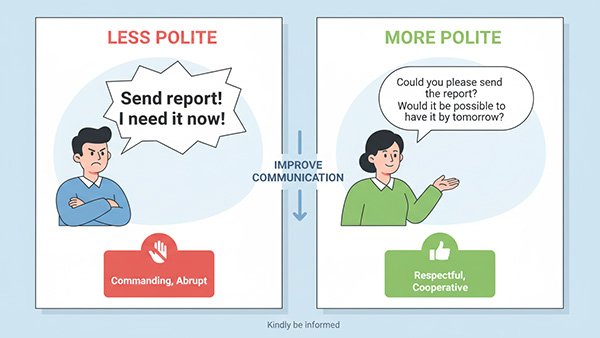
“Kindly be informed” is a formal phrase used to introduce information that the speaker or writer wants the recipient to know. It functions as a polite directive, indicating that the information is important and should be noted.
The word “kindly” serves as an adverb modifying the verb phrase “be informed,” softening the tone and adding a layer of courtesy. The phrase is typically used in written communication, such as emails, letters, and official notices, but can occasionally appear in formal spoken contexts.
The phrase falls under the broader category of **polite requests** and **formal announcements**. It’s important to recognize that “kindly be informed” doesn’t solicit a response or action directly, but rather serves as a notification.
Understanding its function is crucial to using it appropriately and avoiding misinterpretations.
When readers search for the kindly be informed meaning, they are usually looking for a clear, concise explanation of what the phrase communicates in real-world usage. In simple terms, it signals that the recipient should take note of important information being presented in a formal and courteous way. Rather than requesting action, the phrase functions primarily as a notification, emphasizing awareness over response.
Understanding the kindly be informed meaning also helps prevent misuse. Because it carries a formal and passive tone, it is best suited to official announcements, professional correspondence, or written notices where clarity and politeness are prioritized over conversational warmth.
Structural Breakdown
The phrase “kindly be informed” follows a specific grammatical structure:
* **Kindly:** Adverb modifying the verb phrase, indicating politeness.
* **Be:** Auxiliary verb (a form of “to be”), functioning as a linking verb.
* **Informed:** Past participle of the verb “to inform,” acting as an adjective describing the state of the recipient.
The structure is a passive construction, where the recipient is the subject but doesn’t perform the action of informing; rather, they are the recipient of the information. This passive voice contributes to the formal and somewhat detached tone of the phrase.
The typical sentence structure is:
**Kindly be informed that + [statement/information]**
For example: “Kindly be informed that the meeting has been rescheduled.”
Usage Contexts
The phrase “kindly be informed” is most appropriate in formal and professional settings. Here are some specific contexts where it is commonly used:
* **Official Announcements:** Disseminating important information to a large group of people (e.g., company-wide emails, public notices).
* **Formal Correspondence:** Letters or emails to superiors, clients, or individuals with whom a formal relationship is maintained.
* **Legal Documents:** Conveying information in contracts, agreements, or legal notices.
* **Academic Writing:** Presenting information in research papers or reports.
However, it’s important to exercise caution when using this phrase in informal or personal contexts, as it can sound overly stiff or even condescending. In such situations, more casual alternatives are generally preferred.
Examples of “Kindly Be Informed”
Below are examples of “kindly be informed” used in various contexts. These examples illustrate how the phrase is integrated into complete sentences and the types of information it typically introduces.
Formal Contexts
In formal settings, “kindly be informed” maintains a professional and respectful tone, suitable for official announcements, legal notifications, and formal correspondence.
The following table provides examples of the phrase in formal contexts:
| Example | Context |
|---|---|
| Kindly be informed that the contract has been approved by the legal department. | Legal Notification |
| Kindly be informed that your application for the scholarship has been received and is under review. | Official Announcement |
| Kindly be informed that the new regulations will take effect on January 1, 2024. | Government Notice |
| Kindly be informed that the board of directors has elected a new chairman. | Corporate Communication |
| Kindly be informed that the annual general meeting will be held on July 15th at 10:00 AM. | Shareholder Communication |
| Kindly be informed that the deadline for submitting proposals has been extended to March 31st. | Grant Application Announcement |
| Kindly be informed that the university will be closed for the holiday break from December 20th to January 5th. | University Announcement |
| Kindly be informed that all visitors are required to register at the front desk upon arrival. | Building Security Notice |
| Kindly be informed that the results of the audit will be released next week. | Financial Reporting |
| Kindly be informed that the terms and conditions of the agreement have been updated. | Legal Agreement Update |
| Kindly be informed that the new policy regarding remote work has been implemented. | Company Policy Announcement |
| Kindly be informed that the training session scheduled for tomorrow has been postponed. | Training Program Update |
| Kindly be informed that the system maintenance will occur this weekend. | IT Department Announcement |
| Kindly be informed that the building will undergo renovations starting next month. | Facilities Management Notice |
| Kindly be informed that the parking lot will be closed for repairs on Sunday. | Parking Facility Notice |
| Kindly be informed that the museum will be offering free admission on Tuesdays. | Museum Announcement |
| Kindly be informed that the library will be extending its hours during finals week. | Library Announcement |
| Kindly be informed that the concert has been sold out. | Event Announcement |
| Kindly be informed that the theater will be performing a new play next season. | Theater Announcement |
| Kindly be informed that the gallery will be hosting a new exhibit next month. | Art Gallery Announcement |
| Kindly be informed that the conference has been rescheduled for next year. | Conference Announcement |
| Kindly be informed that the workshop is now full. | Workshop Announcement |
| Kindly be informed that the seminar will be held in the main auditorium. | Seminar Announcement |
| Kindly be informed that the lecture will be given by a guest speaker. | Lecture Announcement |
Professional Contexts
In a professional setting, “kindly be informed” is frequently used in emails, memos, and reports to communicate important updates, decisions, or instructions to colleagues, clients, or supervisors.
The following table illustrates the use of “kindly be informed” in professional scenarios:
| Example | Context |
|---|---|
| Kindly be informed that the project proposal has been submitted to the client. | Project Update |
| Kindly be informed that the sales figures for Q3 have exceeded expectations. | Performance Report |
| Kindly be informed that the new marketing campaign will launch next week. | Marketing Announcement |
| Kindly be informed that your performance review is scheduled for next Friday. | Human Resources Communication |
| Kindly be informed that the budget for the upcoming fiscal year has been approved. | Financial Update |
| Kindly be informed that the system upgrade will require a brief downtime on Saturday. | IT Announcement |
| Kindly be informed that the new employee orientation will be held on Monday morning. | Onboarding Announcement |
| Kindly be informed that the team meeting has been moved to a different conference room. | Internal Communication |
| Kindly be informed that the project deadline has been extended by two weeks. | Project Management Update |
| Kindly be informed that the company picnic will be held on June 10th. | Company Event Announcement |
| Kindly be informed that the new CRM system has been implemented. | Systems Update |
| Kindly be informed that the annual training program will start next month. | Professional Development Announcement |
| Kindly be informed that the company will be adopting a new dress code policy. | Policy Announcement |
| Kindly be informed that the office will be closed for the upcoming public holiday. | Office Closure Notice |
| Kindly be informed that the company has achieved ISO 9001 certification. | Achievement Announcement |
| Kindly be informed that the department has reached its sales target for the quarter. | Sales Performance Report |
| Kindly be informed that the customer satisfaction survey results are now available. | Customer Feedback Announcement |
| Kindly be informed that the new pricing structure will take effect on July 1st. | Pricing Update |
| Kindly be informed that the company has partnered with a new supplier. | Partnership Announcement |
| Kindly be informed that the employee referral program has been updated. | HR Program Update |
| Kindly be informed that the company’s annual report is now available for download. | Financial Reporting |
| Kindly be informed that the company has been recognized for its sustainability efforts. | Corporate Social Responsibility Announcement |
General Contexts
Although less common, “kindly be informed” can appear in general contexts where a degree of formality is desired, such as notices in public spaces or announcements to a community group. However, consider if a simpler phrasing is more appropriate.
The following table provides examples of “kindly be informed” in general scenarios:
| Example | Context |
|---|---|
| Kindly be informed that the park will be closed for maintenance on Tuesday. | Public Notice |
| Kindly be informed that the community center will be hosting a fundraising event next Saturday. | Community Announcement |
| Kindly be informed that the road will be closed for construction from Monday to Friday. | Traffic Advisory |
| Kindly be informed that the water supply will be interrupted for several hours tomorrow. | Utility Notice |
| Kindly be informed that the train schedule has been modified due to track repairs. | Transportation Announcement |
| Kindly be informed that the bus route will be diverted because of a parade. | Transportation Announcement |
| Kindly be informed that the library will be hosting a book reading event next week. | Library Announcement |
| Kindly be informed that the museum will be offering guided tours on weekends. | Museum Announcement |
| Kindly be informed that the community garden is looking for volunteers. | Community Announcement |
| Kindly be informed that the local school will be holding a parent-teacher conference. | School Announcement |
| Kindly be informed that the local hospital is organizing a blood donation drive. | Hospital Announcement |
| Kindly be informed that the city council will be holding a public hearing next Tuesday. | City Council Announcement |
| Kindly be informed that the town hall will be hosting a town meeting next week. | Town Hall Announcement |
| Kindly be informed that the post office will be closed on the national holiday. | Post Office Announcement |
| Kindly be informed that the recycling center will be accepting electronic waste next month. | Recycling Center Announcement |
| Kindly be informed that the animal shelter is offering reduced adoption fees this week. | Animal Shelter Announcement |
| Kindly be informed that the local art gallery will be showcasing local artists. | Art Gallery Announcement |
| Kindly be informed that the senior center is offering free computer classes. | Senior Center Announcement |
| Kindly be informed that the job fair will be held at the community center next Saturday. | Job Fair Announcement |
| Kindly be informed that the farmers market will be open every Sunday. | Farmers Market Announcement |
Usage Rules
To use “kindly be informed” correctly, consider the following rules:
* **Formality:** Use in formal or professional contexts only.
* **Passive Voice:** Understand that the phrase is in the passive voice.
* **Clarity:** Ensure the information following the phrase is clear and concise.
* **Context:** Be mindful of the audience and the overall tone of the communication.
* **Alternatives:** Consider if a simpler, more direct phrase would be more appropriate.
While the phrase is generally followed by “that,” it can sometimes be omitted, though this is less common in formal writing. For example: “Kindly be informed the deadline has been extended” (less formal) vs.
“Kindly be informed that the deadline has been extended” (more formal).
Common Mistakes
Here are some common mistakes to avoid when using “kindly be informed”:
| Incorrect | Correct | Explanation |
|---|---|---|
| Kindly be informed to submit your report by Friday. | Kindly be informed that you should submit your report by Friday. | The phrase should introduce a statement, not a direct instruction. |
| Kindly be informed, submit your report by Friday. | Kindly be informed that you should submit your report by Friday. | The phrase requires “that” to introduce the following clause, or a rephrasing to avoid the construction altogether. |
| Kindly be informed about my vacation. | Kindly be informed that I will be on vacation. | The phrase introduces a statement or piece of information, not a general topic. |
| Kindly be informed, I am resigning. | Kindly be informed that I am resigning. | Missing “that” makes the sentence grammatically incorrect. |
| Kindly be informed of the new rules. | Kindly be informed that there are new rules. | Needs a full clause after “that.” |
Alternative Phrases
Depending on the context, several alternative phrases can be used instead of “kindly be informed”:
* **Please note that…** (More direct and slightly less formal)
* **For your information…** (Neutral and informative)
* **We would like to inform you that…** (Formal and polite)
* **You are hereby notified that…** (Very formal, often used in legal contexts)
* **Please be advised that…** (Formal and cautionary)
* **Just to let you know…** (Informal, use with caution)
* **Important: …** (To highlight important information)
* **Note:** (Simple and direct)
The choice of phrase depends on the desired level of formality and the specific message being conveyed.
A less common but occasionally encountered variation is the phrase please be kindly informed. This construction combines two politeness markers—“please” and “kindly”—which can make the sentence sound excessively formal or redundant. While it is not grammatically incorrect, many style guides recommend avoiding this phrasing in favor of simpler alternatives.
In most professional contexts, using either “please be informed” or “kindly be informed” alone is clearer and more natural. Choosing one politeness marker helps maintain a professional tone without sounding outdated or overly ceremonial.
Practice Exercises
These exercises will help you practice using “kindly be informed” correctly.
Exercise 1: Identifying Correct Usage
Identify whether the following sentences use “kindly be informed” correctly. If incorrect, explain why.
| Question | Correct/Incorrect | Explanation (if incorrect) |
|---|---|---|
| Kindly be informed to attend the meeting. | ||
| Kindly be informed that the project is complete. | ||
| Kindly be informed about the changes. | ||
| Kindly be informed that the office will be closed. | ||
| Kindly be informed, the deadline is tomorrow. | ||
| Kindly be informed that your payment is due. | ||
| Kindly be informed of the update. | ||
| Kindly be informed that the system is down. | ||
| Kindly be informed, please review the document. | ||
| Kindly be informed that the event has been canceled. |
Answer Key:
| Question | Correct/Incorrect | Explanation (if incorrect) |
|---|---|---|
| Kindly be informed to attend the meeting. | Incorrect | Should be “Kindly be informed that you are required to attend the meeting.” |
| Kindly be informed that the project is complete. | Correct | |
| Kindly be informed about the changes. | Incorrect | Should be “Kindly be informed that there have been changes.” |
| Kindly be informed that the office will be closed. | Correct | |
| Kindly be informed, the deadline is tomorrow. | Incorrect | Should be “Kindly be informed that the deadline is tomorrow.” |
| Kindly be informed that your payment is due. | Correct | |
| Kindly be informed of the update. | Incorrect | Should be “Kindly be informed that there is an update.” |
| Kindly be informed that the system is down. | Correct | |
| Kindly be informed, please review the document. | Incorrect | Should be “Kindly be informed that you should review the document” or rephrased. |
| Kindly be informed that the event has been canceled. | Correct |
Exercise 2: Rewriting Sentences
Rewrite the following sentences using “kindly be informed” correctly.
- Please note: the meeting time has changed.
- I want to let you know that I will be out of the office next week.
- The new policy is now in effect.
- The deadline for registration is Friday.
- The system will be undergoing maintenance this weekend.
- Your application has been approved.
- We have received your request.
- The event has been postponed.
- There will be a price increase next month.
- The building will be closed for renovations.
Answer Key:
- Kindly be informed that the meeting time has changed.
- Kindly be informed that I will be out of the office next week.
- Kindly be informed that the new policy is now in effect.
- Kindly be informed that the deadline for registration is Friday.
- Kindly be informed that the system will be undergoing maintenance this weekend.
- Kindly be informed that your application has been approved.
- Kindly be informed that we have received your request.
- Kindly be informed that the event has been postponed.
- Kindly be informed that there will be a price increase next month.
- Kindly be informed that the building will be closed for renovations.
Exercise 3: Filling in the Blanks
Fill in the blanks with appropriate information following “kindly be informed that…”
- Kindly be informed that ______________________________.
- Kindly be informed that ______________________________.
- Kindly be informed that ______________________________.
- Kindly be informed that ______________________________.
- Kindly be informed that ______________________________.
- Kindly be informed that ______________________________.
- Kindly be informed that ______________________________.
- Kindly be informed that ______________________________.
- Kindly be informed that ______________________________.
- Kindly be informed that ______________________________.
Sample Answer Key: (Multiple answers possible)
- Kindly be informed that the report is due next Friday.
- Kindly be informed that the office will be closed on Monday for the holiday.
- Kindly be informed that the new software has been installed.
- Kindly be informed that your appointment has been confirmed.
- Kindly be informed that the meeting has been rescheduled to 2 PM.
- Kindly be informed that the presentation slides are now available online.
- Kindly be informed that the network will be undergoing maintenance tonight.
- Kindly be informed that your account has been activated.
- Kindly be informed that your request has been processed.
- Kindly be informed that the updated guidelines are now available.
Advanced Topics
For advanced learners, it’s important to understand the subtle nuances of “kindly be informed,” including its potential for misinterpretation. While intended to be polite, it can sometimes come across as passive-aggressive, especially if used in situations where direct communication is more appropriate.
For example, if someone consistently fails to meet deadlines, using “Kindly be informed that the deadline was yesterday” might be perceived as sarcastic or condescending. In such cases, a more direct approach, such as “Please ensure that you meet deadlines in the future,” might be more effective.
Furthermore, understanding the historical context of the phrase can provide additional insight. “Kindly be informed” has its roots in formal Victorian-era communication, where elaborate expressions of politeness were common.
While still used today, it’s important to be aware of its potential to sound outdated or overly formal in certain contexts.
Frequently Asked Questions
Is “kindly be informed” always appropriate?
No, it is not. It is best suited for formal and professional contexts. In informal settings, it can sound overly stiff or condescending. Consider your audience and the overall tone of your communication when deciding whether to use this phrase.
What are some alternatives to “kindly be informed”?
Alternatives include “Please note that…”, “For your information…”, “We would like to inform you that…”, “Please be advised that…”, and “Note:”. The best alternative depends on the desired level of formality and the specific message you want to convey.
Can I use “kindly be informed” in spoken communication?
While it is primarily used in written communication, it can be used in formal spoken contexts, such as presentations or official announcements. However, be mindful of your tone and delivery to avoid sounding overly formal or unnatural.
Is it grammatically correct to omit “that” after “kindly be informed”?
While omitting “that” is sometimes done, it is generally considered less formal and grammatically preferable to include it, especially in formal writing.
How can I avoid sounding passive-aggressive when using “kindly be informed”?
Ensure that your tone is neutral and that you are not using the phrase to indirectly criticize or reprimand someone. If you need to address a problem or concern, consider using a more direct and constructive approach.
What is the difference between “kindly be informed” and “please be informed”?
The two phrases are largely interchangeable, both conveying a polite request for the recipient to take note of the information provided. “Kindly” adds a slightly more formal and traditional tone compared to “please.”
Is “kindly be informed” considered outdated?
While it has its roots in older forms of formal communication, “kindly be informed” is still used today, particularly in professional and official settings. However, it’s important to be aware of its potential to sound overly formal or stiff and to consider whether a more modern phrasing would be more appropriate.
What is the correct punctuation to use after “kindly be informed”?
The correct punctuation is to follow “kindly be informed” with the word “that” and then the information you wish to convey. A comma is not typically used directly after the phrase unless it is followed by an interjection or a separate clause.
Conclusion
“Kindly be informed” is a useful phrase for conveying information politely in formal and professional settings. Understanding its grammatical structure, appropriate usage contexts, and potential pitfalls is crucial for effective communication.
By mastering the rules and practicing with examples, you can confidently use this phrase to communicate clearly and respectfully. Remember to consider your audience and the overall tone of your message to ensure that “kindly be informed” enhances rather than detracts from your communication.
As a final tip, always proofread your writing carefully to ensure that you have used the phrase correctly and that the information you are conveying is clear and concise. With practice and attention to detail, you can effectively incorporate “kindly be informed” into your formal communication repertoire.