Understanding antonyms, words with opposite meanings, is crucial for enhancing vocabulary and improving communication skills. This article focuses on the antonyms of “adept,” a word that signifies skill and proficiency.
Exploring words that convey a lack of skill or competence helps to refine our understanding of nuance and precision in language. This guide is designed to benefit English language learners, writers, and anyone seeking to expand their linguistic repertoire.
By delving into the various antonyms of “adept,” we can appreciate the richness of the English language and improve our ability to express ourselves accurately. Whether you are a student preparing for exams or a professional aiming to enhance your communication skills, this comprehensive guide will provide you with the knowledge and practice you need.
Table of Contents
- Introduction
- Definition of Adept
- Structural Breakdown of “Adept”
- Antonyms of Adept
- Examples of Antonyms in Use
- Usage Rules
- Common Mistakes
- Practice Exercises
- Advanced Topics
- FAQ
- Conclusion
Definition of Adept
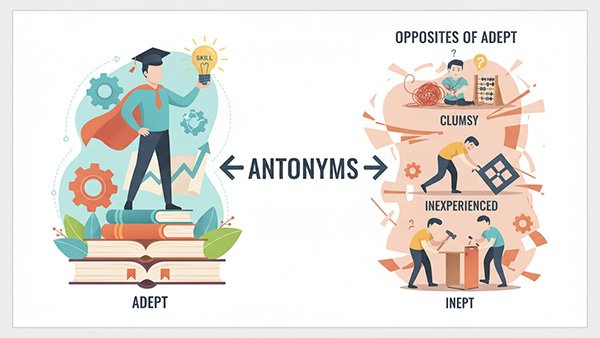
Adept is an adjective that describes someone who is very skilled or proficient at something. It implies a high level of competence and expertise, often acquired through practice or experience. An adept individual performs tasks with ease, precision, and efficiency. The word “adept” can be used to describe skills in various domains, from physical activities to intellectual pursuits.
The term often conveys a sense of natural talent combined with dedicated practice. Someone described as “adept” is not merely competent, but rather excels in their area of expertise.
The term suggests mastery and a refined ability to perform tasks effectively.
For example, an adept surgeon performs complex operations with precision, or an adept musician plays intricate pieces flawlessly. The word highlights a notable level of skill and expertise.
Structural Breakdown of “Adept”
The word “adept” comes from the Latin word adeptus, which is the past participle of adipisci, meaning “to obtain” or “to attain.” This etymological origin underscores the idea that being adept involves achieving a certain level of skill or mastery. The word has a relatively straightforward structure and is primarily used as an adjective.
Structurally, “adept” doesn’t have many variations. It’s not commonly used as a verb or noun.
Its primary function is to modify nouns, describing the skill level of a person or their ability to perform a specific task. Understanding its origin helps appreciate its connotations of attainment and achievement.
The word is typically used in formal or semi-formal contexts. While not overly technical, it conveys a sense of sophistication and is often used in written communication or professional settings.
Antonyms of Adept
The antonyms of “adept” encompass a range of words that describe a lack of skill, proficiency, or competence. These words vary in intensity and specific connotations, offering a nuanced way to express different degrees of inadequacy.
For those looking for a comprehensive adept antonym list, it includes: inept, clumsy, unskilled, incompetent, awkward, maladroit, bungling, and greenhorn. Each word represents a slightly different nuance, so the choice depends on context. Having a ready list makes it easier to select precise words in writing, speaking, or professional assessments.
Understanding these antonyms is essential for precise communication.
Many learners often ask, “What is the antonym of adept?” or “Which word is an antonym of adept?” The simplest way to answer is that antonyms vary depending on context. Words like inept, unskilled, and incompetent are commonly recognized as opposite of adept.
Using these terms accurately depends on whether you are describing physical skill, intellectual ability, or professional competence. For example, an inept musician lacks the proficiency an adept performer displays, while an unskilled worker may simply need more experience. Understanding the definition of adept also helps in selecting the correct antonym in any sentence.
Inept
Inept suggests a general lack of skill or competence. It implies an inability to perform tasks effectively, often due to clumsiness or lack of training. An inept person may struggle with even simple tasks, and their efforts may often result in mistakes or failures.
Clumsy
Clumsy refers to a lack of physical coordination or grace. It suggests awkwardness in movement and a tendency to drop things or bump into objects. A clumsy person may have difficulty with tasks requiring fine motor skills or physical dexterity. The term is often associated with physical actions rather than intellectual abilities.
Unskilled
Unskilled simply means lacking the necessary skills or training for a particular task. It does not necessarily imply incompetence or clumsiness, but rather a lack of experience or education in a specific area. An unskilled worker, for example, may be perfectly capable of learning new skills but currently lacks the qualifications for a particular job.
Incompetent
Incompetent denotes a lack of the necessary abilities or qualifications to perform a task adequately. It suggests a more severe deficiency than “unskilled,” implying that the person is not only lacking training but also incapable of performing the task even with instruction. Incompetence can have serious consequences, especially in professional settings.
Awkward
Awkward describes a lack of grace or social skills. It can refer to physical movements or social interactions that are uncomfortable or embarrassing. An awkward person may feel out of place in social situations or struggle to communicate effectively. The term often implies a lack of confidence or social awareness.
Maladroit
Maladroit is a more formal and less common synonym for clumsy or inept. It suggests a lack of skill or dexterity, particularly in handling objects or situations. A maladroit person may make mistakes due to carelessness or lack of attention to detail. The term often implies a lack of finesse or elegance.
Bungling
Bungling refers to performing a task clumsily or incompetently, often resulting in mistakes or failures. It suggests a lack of care or attention to detail, leading to unsatisfactory results. A bungling attempt may be characterized by errors, inefficiencies, and a general lack of professionalism.
Greenhorn
Greenhorn is an informal term for someone who is new to a particular activity or profession and lacks experience. It suggests naiveté and a lack of knowledge about the intricacies of the field. A greenhorn may make mistakes due to inexperience, but they are typically eager to learn and improve.
Examples of Antonyms in Use
Understanding the nuances of each antonym requires seeing them in context. The following tables provide examples of how each antonym is used in sentences, highlighting their specific connotations and applications.
Inept Examples
The following table provides examples of how the antonym “inept” can be used in sentences.
| Sentence | Explanation |
|---|---|
| The inept mechanic couldn’t fix the car, making the problem worse. | Highlights a lack of skill in a professional context. |
| His inept attempts at cooking resulted in a burnt dinner. | Shows a lack of competence in a common household task. |
| She was an inept dancer, always tripping over her own feet. | Describes a lack of coordination and grace in a physical activity. |
| The inept manager failed to motivate his team, leading to low morale. | Demonstrates a lack of leadership skills. |
| His inept handling of the situation caused further complications. | Indicates a lack of skill in dealing with a difficult problem. |
| The inept student struggled to grasp the basic concepts of the course. | Shows a lack of understanding and ability to learn. |
| The inept programmer created a buggy software that crashed frequently. | Highlights a lack of skill in a technical field. |
| His inept social skills made it difficult for him to make friends. | Describes a lack of competence in social interactions. |
| The inept surgeon made a critical error during the operation. | Shows a severe lack of skill with potentially dangerous consequences. |
| Her inept navigation skills led them to get lost in the forest. | Indicates a lack of ability to find their way. |
| The inept handyman made a mess of the simple repair job. | Highlights a lack of skill in basic home maintenance. |
| His inept financial decisions led to bankruptcy. | Demonstrates a lack of competence in managing money. |
| The inept writer struggled to create a coherent narrative. | Shows a lack of skill in writing. |
| Her inept attempts at gardening resulted in a barren landscape. | Indicates a lack of skill in horticulture. |
| The inept politician failed to gain the support of the voters. | Highlights a lack of skill in political maneuvering. |
| His inept communication skills hindered his career advancement. | Describes a lack of competence in conveying information. |
| The inept athlete was unable to compete at the professional level. | Shows a lack of skill in sports. |
| Her inept management of the project led to its failure. | Indicates a lack of competence in overseeing a task. |
| The inept lawyer lost the case due to his poor preparation. | Highlights a lack of skill in legal representation. |
| His inept driving skills resulted in a car accident. | Demonstrates a lack of competence behind the wheel. |
| The inept teacher struggled to control the classroom. | Shows a lack of skill in managing students. |
| Her inept attempts at public speaking made her nervous and uncomfortable. | Indicates a lack of skill in addressing an audience. |
| The inept administrator created more problems than solutions. | Highlights a lack of skill in managing operations. |
| His inept negotiation skills resulted in an unfavorable deal. | Describes a lack of competence in bargaining. |
Clumsy Examples
The following table provides examples of how the antonym “clumsy” can be used in sentences.
| Sentence | Explanation |
|---|---|
| The clumsy waiter spilled the soup all over the customer. | Highlights a lack of physical coordination in a service role. |
| He was so clumsy that he tripped over the rug and fell. | Shows a lack of physical grace. |
| Her clumsy fingers struggled to thread the needle. | Describes a lack of dexterity in a fine motor skill. |
| The clumsy dancer accidentally stepped on his partner’s foot. | Indicates a lack of coordination in a dance performance. |
| His clumsy attempt to catch the ball resulted in a broken vase. | Demonstrates a lack of physical skill and coordination. |
| She was a clumsy skater, frequently falling on the ice. | Shows a lack of balance and control while skating. |
| The clumsy child knocked over the tower of blocks. | Highlights a lack of coordination in a young person. |
| His clumsy movements made it difficult for him to navigate the crowded room. | Describes a lack of physical grace in a social setting. |
| The clumsy athlete struggled to perform the gymnastic routine. | Shows a lack of coordination and precision in gymnastics. |
| Her clumsy handling of the delicate vase caused it to shatter. | Indicates a lack of care and coordination in handling fragile objects. |
| The clumsy construction worker dropped the hammer on his foot. | Highlights a lack of physical awareness in a work environment. |
| His clumsy efforts to assemble the furniture resulted in a wobbly table. | Demonstrates a lack of skill in assembling objects. |
| The clumsy typist made numerous errors in the document. | Shows a lack of dexterity while typing. |
| Her clumsy attempts to wrap the present resulted in crumpled paper. | Indicates a lack of finesse in gift wrapping. |
| The clumsy baker dropped the cake on the floor. | Highlights a lack of coordination in the kitchen. |
| His clumsy interactions with others often led to misunderstandings. | Describes a lack of social grace. |
| The clumsy driver bumped into several parked cars. | Shows a lack of control while driving. |
| Her clumsy dance moves were more comical than graceful. | Indicates a lack of elegance in dancing. |
| The clumsy surgeon accidentally nicked an artery during the procedure. | Highlights a dangerous lack of precision in surgery. |
| His clumsy jokes often fell flat. | Describes a lack of social awareness and comedic timing. |
| The clumsy climber struggled to maintain his grip on the rock face. | Shows a lack of physical skill in climbing. |
| Her clumsy attempts to comfort her friend made the situation worse. | Indicates a lack of empathy and social skill. |
| The clumsy chef burned the sauce and overcooked the pasta. | Highlights a lack of culinary skill. |
| His clumsy gestures made him look nervous and uncomfortable. | Describes a lack of confidence in body language. |
Unskilled Examples
The following table provides examples of how the antonym “unskilled” can be used in sentences.
| Sentence | Explanation |
|---|---|
| The unskilled worker was assigned to simple tasks that required minimal training. | Highlights a lack of specific job-related skills. |
| He was an unskilled laborer, but he was willing to learn. | Shows a lack of experience but a willingness to improve. |
| The company hired unskilled workers and provided them with on-the-job training. | Indicates a focus on developing new skills in employees. |
| She was an unskilled artist, but she had a passion for painting. | Describes a lack of technical skill but a strong interest in art. |
| His unskilled attempts at carpentry resulted in a crooked bookshelf. | Demonstrates a lack of training in woodworking. |
| The unskilled player struggled to keep up with the professional athletes. | Shows a lack of experience and training in sports. |
| She started as an unskilled assistant and worked her way up to a managerial position. | Highlights a progression from a lack of skills to a position of expertise. |
| The unskilled volunteer was eager to help but lacked the necessary expertise. | Describes a lack of knowledge in a volunteer context. |
| His unskilled performance on the guitar was painful to listen to. | Shows a lack of musical training and skill. |
| The unskilled programmer struggled to write complex code. | Indicates a lack of expertise in software development. |
| She was an unskilled negotiator, often giving away too much in deals. | Highlights a lack of skill in bargaining and diplomacy. |
| His unskilled writing made it difficult for readers to understand his message. | Demonstrates a lack of proficiency in written communication. |
| The unskilled chef relied heavily on recipes and lacked creativity in the kitchen. | Shows a lack of culinary expertise. |
| Her unskilled attempts at public speaking made her nervous and uncomfortable. | Indicates a lack of experience in addressing an audience. |
| The unskilled driver had difficulty navigating the busy city streets. | Highlights a lack of experience behind the wheel. |
| His unskilled social skills made it difficult for him to make friends. | Describes a lack of competence in social interactions due to inexperience. |
| The unskilled technician was unable to diagnose the problem with the machine. | Shows a lack of technical knowledge and expertise. |
| Her unskilled management of the project resulted in delays and cost overruns. | Indicates a lack of experience in overseeing a task. |
| The unskilled lawyer struggled to present a convincing argument in court. | Highlights a lack of legal training and expertise. |
| His unskilled leadership led to low morale among the team members. | Demonstrates a lack of leadership skills. |
| The unskilled teacher had difficulty engaging the students in learning. | Shows a lack of experience in teaching methods. |
| Her unskilled attempts at gardening resulted in a patch of weeds. | Indicates a lack of horticultural knowledge. |
| The unskilled politician failed to connect with the voters. | Highlights a lack of political acumen. |
| His unskilled handling of the crisis made the situation worse. | Describes a lack of experience in dealing with emergencies. |
Incompetent Examples
The following table provides examples of how the antonym “incompetent” can be used in sentences.
| Sentence | Explanation |
|---|---|
| The incompetent manager was fired for consistently making poor decisions. | Highlights a lack of ability to perform managerial duties. |
| He was deemed incompetent to stand trial due to his mental state. | Shows a lack of mental capacity to understand legal proceedings. |
| The incompetent surgeon made a critical error that cost the patient’s life. | Indicates a severe lack of skill in a professional context with dire consequences. |
| She was an incompetent driver and should never have been behind the wheel. | Describes a lack of ability to operate a vehicle safely. |
| His incompetent leadership led the company to bankruptcy. | Demonstrates a lack of ability to lead and manage effectively. |
| The incompetent teacher was unable to control the classroom or teach the material effectively. | Shows a lack of ability to manage students and deliver instruction. |
| He was an incompetent accountant and made numerous errors in the financial statements. | Indicates a lack of ability to perform accounting tasks accurately. |
| The incompetent detective failed to solve the case and was removed from the investigation. | Describes a lack of ability to investigate and solve crimes. |
| She was an incompetent lawyer and lost every case she handled. | Shows a lack of ability to represent clients effectively in court. |
| His incompetent management of the project resulted in significant delays and cost overruns. | Demonstrates a lack of ability to oversee and manage a project successfully. |
| The incompetent politician was unable to gain the trust of the voters. | Indicates a lack of ability to connect with and represent the interests of the electorate. |
| The incompetent software developer created a program full of bugs and vulnerabilities. | Highlights a dangerous lack of skill with potentially dangerous consequences. |
| Her incompetent decision-making put the entire team at risk. | Describes a lack of ability to make sound judgments in a professional setting. |
| The incompetent administrator was unable to handle the day-to-day tasks of the office. | Shows a lack of ability to perform administrative duties effectively. |
| His incompetent performance on the job led to his termination. | Indicates a lack of ability to meet job requirements. |
| The incompetent pilot crashed the plane due to his negligence. | Highlights a lack of skill with potentially dangerous consequences. |
| She was an incompetent nurse and made several mistakes in administering medication. | Shows a lack of ability to provide proper medical care. |
| His incompetent handling of the crisis made the situation much worse. | Demonstrates a lack of ability to manage and resolve crises effectively. |
| The incompetent builder constructed a house that was structurally unsound. | Indicates a lack of ability to build safely and effectively. |
| Her incompetent communication skills hindered her ability to work with others. | Describes a lack of ability to communicate effectively in a professional setting. |
| The incompetent chef ruined the meal with his poor cooking techniques. | Shows a lack of ability to prepare food properly. |
| His incompetent financial management led to the company’s downfall. | Demonstrates a lack of ability to manage finances effectively. |
| The incompetent repairman made the problem worse than it was before. | Indicates a lack of ability to fix things properly. |
| Her incompetent attempts to comfort her friend only upset her more. | Describes a lack of ability to provide emotional support effectively. |
Awkward Examples
| Sentence | Explanation |
|---|---|
| The awkward silence made the meeting uncomfortable. | Describes a social situation lacking in ease and flow. |
| He felt awkward trying to dance with someone he didn’t know. | Highlights a lack of social grace in a dancing context. |
| She gave an awkward smile when she realized she had forgotten his name. | Indicates discomfort and social unease. |
| The awkward teenager blushed and stammered when asked a question. | Shows a lack of confidence and social ease in adolescence. |
| His awkward attempt to compliment her only made things worse. | Demonstrates a lack of social skill in communication. |
| The awkward moment when they realized they were wearing the same outfit was unforgettable. | Describes a socially uncomfortable coincidence. |
| She tried to make small talk, but the conversation remained awkward and stilted. | Indicates a lack of ease in social interaction. |
| His awkward posture and movements made him seem out of place. | Describes a lack of physical grace and confidence. |
| The awkward silence after his joke fell flat was deafening. | Highlights a social misstep and its uncomfortable aftermath. |
| She felt awkward accepting the award in front of so many people. | Indicates discomfort in a public speaking situation. |
| His awkward attempt to apologize only made the situation more tense. | Demonstrates a lack of skill in conflict resolution. |
| The awkward dance moves were more amusing than graceful. | Describes a lack of coordination and elegance in dancing. |
| She tried to navigate the crowded room, but her awkward movements made it difficult. | Indicates a lack of physical grace in a social setting. |
| His awkward attempts to flirt were met with polite disinterest. | Describes a lack of social skill in romantic interactions. |
| The awkward pause in the conversation made her want to disappear. | Highlights the discomfort of silence in a social setting. |
| She felt awkward interrupting the serious discussion. | Indicates social unease in a formal setting. |
| His awkward jokes often offended people without him realizing it. | Describes a lack of social awareness and comedic timing. |
| The awkward hug felt forced and unnatural. | Indicates discomfort in physical affection. |
| She tried to blend in, but her awkward demeanor made her stand out. | Describes a lack of social ease and confidence. |
Maladroit Examples
| Sentence | Explanation |
|---|---|
| His maladroit handling of the negotiations led to a disastrous outcome. | Highlights a lack of skill in diplomatic situations. |
| She made a maladroit attempt to smooth things over, but only made matters worse. | Indicates a lack of finesse in conflict resolution. |
| The maladroit waiter spilled wine on the guest’s dress. | Demonstrates a lack of physical grace in a service role. |
| His maladroit social skills made him an outcast at parties. | Describes a lack of social competence. |
| The maladroit surgeon accidentally nicked an artery during the procedure. | Highlights a dangerous lack of precision in surgery. |
| Her maladroit handling of the company’s finances led to its downfall. | Indicates a lack of skill in financial management. |
| His maladroit attempts to comfort her only upset her more. | Describes a lack of empathy and social skill. |
| The maladroit politician made a series of gaffes during the campaign. | Highlights a lack of political acumen. |
| Her maladroit dance moves caused her to trip and fall on stage. | Demonstrates a lack of coordination in a performance. |
| His maladroit comments offended several guests at the dinner party. | Indicates a lack of social awareness and sensitivity. |
| The maladroit technician damaged the equipment while trying to repair it. | Shows a lack of skill in technical maintenance. |
| Her maladroit speech was filled with errors and awkward pauses. | Describes a lack of skill in public speaking. |
| His maladroit attempt to flirt was met with polite rejection. | Indicates a lack of social skill in romantic interactions. |
| The maladroit chef ruined the sauce with too much salt. | Highlights a lack of culinary skill. |
Bungling Examples
| Sentence | Explanation |
|---|---|
| The bungling detective consistently missed crucial clues in the case. | Highlights a lack of competence in investigative work. |
| His bungling attempts to fix the plumbing only made the leak worse. | Indicates a lack of skill in home repairs. |
| The bungling contractor built a house that was structurally unsound. | Demonstrates a lack of skill in construction. |
| Her bungling management of the project led to significant delays and cost overruns. | Describes a lack of skill in overseeing a task. |
| The bungling lawyer lost the case due to his poor preparation and presentation. | Highlights a lack of skill in legal representation. |
| His bungling attempts to impress the boss only made him look foolish. | Indicates a lack of social skill in a professional setting. |
| The bungling chef burned the meal and served it to the customers anyway. | Demonstrates a lack of skill and care in cooking. |
| Her bungling attempts to comfort her friend only upset her more. | Describes a lack of empathy and social skill. |
| The bungling politician made a series of embarrassing gaffes during the debate. | Highlights a lack of political acumen and communication skills. |
Greenhorn Examples
| Sentence | Explanation |
|---|---|
| As a greenhorn in the industry, he had a lot to learn about the business. | Highlights a lack of experience in a professional field. |
| The greenhorn reporter made several mistakes in his first article. | Indicates a lack of experience in journalism. |
| She was a greenhorn on the stock market and made some risky investments. | Describes a lack of experience in financial trading. |
| The greenhorn sailor struggled to tie the knots correctly. | Highlights a lack of experience in sailing. |
| As a greenhorn, he was eager to learn from the experienced professionals. | Indicates a willingness to learn despite a lack of experience. |
| The greenhorn programmer made several errors in his code. | Demonstrates a lack of experience in software development. |
| She was a greenhorn in the kitchen and had to follow the recipe exactly. | Describes a lack of experience in cooking. |
| The greenhorn volunteer was paired with a seasoned mentor. | Highlights the need for guidance due to inexperience. |
Usage Rules
When using antonyms of “adept,” it’s essential to consider the context and the specific nuance you want to convey. Each antonym has a slightly different meaning and is appropriate in different situations.
For instance, “inept” is a general term for a lack of skill, while “clumsy” specifically refers to a lack of physical coordination. “Unskilled” simply means lacking training, while “incompetent” suggests a more severe deficiency.
It is important to choose the antonym that most accurately reflects the degree and nature of the skill deficiency you are describing. Using the wrong antonym can lead to miscommunication or a lack of clarity.
Also, be mindful of the tone and formality of your language. Some antonyms, like “maladroit” and “bungling,” are more formal and less commonly used than others, such as “inept” and “clumsy.” Select the antonym that is appropriate for the audience and the purpose of your communication.
Common Mistakes
One common mistake is using “inept” and “incompetent” interchangeably. While both words describe a lack of skill, “incompetent” implies a more severe deficiency.
It suggests that the person is not only lacking skill but also incapable of performing the task even with instruction.
Another common mistake is using “clumsy” to describe intellectual abilities. “Clumsy” specifically refers to a lack of physical coordination and should not be used to describe a lack of mental skill.
For example, it is incorrect to say “He was a clumsy thinker.” Instead, you could say “He was an inept thinker.”
Finally, avoid using “unskilled” when you mean “incompetent.” “Unskilled” simply means lacking training or experience, while “incompetent” suggests a more fundamental lack of ability. The following table highlights some common mistakes and their corrections.
| Incorrect | Correct | Explanation |
|---|---|---|
| He was an incompetent dancer, always tripping. | He was a clumsy dancer, always tripping. | “Clumsy” is more appropriate for physical coordination. |
| She was unskilled at breathing. | She was inept at managing her time. | “Unskilled” is generally for a lack of training, not basic functions; inept is suitable for lack of skill. |
| The inept surgeon accidentally nicked an artery. | The incompetent surgeon accidentally nicked an artery. | “Incompetent” highlights a more severe deficiency. |
Practice Exercises
Test your understanding of the antonyms of “adept” with the following exercises. Choose the best antonym to complete each sentence.
Exercise 1
Choose the best antonym for “adept” in
the following sentence:
Despite years of practice, he remained an ______ musician.
- Adept
- Inept
- Skillful
- Proficient
Answer: 2. Inept
Exercise 2
Choose the best antonym for “adept” in the following sentence:
The ______ waiter spilled the tray of drinks.
- Clumsy
- Skilled
- Efficient
- Expert
Answer: 1. Clumsy
Exercise 3
Choose the best antonym for “adept” in the following sentence:
As an ______ programmer, she made numerous errors in the code.
- Adept
- Unskilled
- Masterful
- Proficient
Answer: 2. Unskilled
Exercise 4
Choose the best antonym for “adept” in the following sentence:
The ______ manager was unable to lead the team effectively.
- Adept
- Competent
- Incompetent
- Skilled
Answer: 3. Incompetent
Exercise 5
Choose the best antonym for “adept” in the following sentence:
He felt ______ during the formal dinner, unsure of the proper etiquette.
- Awkward
- Graceful
- Elegant
- Sophisticated
Answer: 1. Awkward
Exercise 6
Choose the best antonym for “adept” in the following sentence:
Her ______ handling of the delicate situation made it worse.
- Maladroit
- Skillful
- Proficient
- Expert
Answer: 1. Maladroit
Exercise 7
Choose the best antonym for “adept” in the following sentence:
The ______ repairman made a mess of the simple task.
- Bungling
- Skilled
- Efficient
- Expert
Answer: 1. Bungling
Exercise 8
Choose the best antonym for “adept” in the following sentence:
As a ______, he made several beginner’s mistakes.
- Greenhorn
- Expert
- Master
- Professional
Answer: 1. Greenhorn
Advanced Topics
Exploring the antonyms of “adept” can also lead to a deeper understanding of related concepts such as the Dunning-Kruger effect, which describes the cognitive bias where people with low ability at a task overestimate their ability. Conversely, it also describes the tendency of experts to underestimate their relative competence and falsely assume that tasks easy for them are also easy for others.
Additionally, understanding the antonyms of “adept” is valuable in fields such as human resources and performance management. Accurately assessing and describing an individual’s skill level is crucial for effective training, development, and career planning.
Using precise language to identify areas for improvement can lead to more targeted and effective interventions.
Another advanced application involves using the antonyms of “adept” in creative writing and rhetoric. These words can be used to create compelling characters, add depth to narratives, and construct persuasive arguments.
The careful selection of antonyms can significantly impact the tone, style, and effectiveness of written and spoken communication.
FAQ
Q1: What is the main difference between “inept” and “incompetent”?
A: While both terms describe a lack of skill, “incompetent” implies a more severe deficiency than “inept.” “Incompetent” suggests that the person is not only lacking skill but also incapable of performing the task adequately, even with instruction.
Q2: Can “clumsy” be used to describe a lack of intellectual skill?
A: No, “clumsy” specifically refers to a lack of physical coordination or grace. It should not be used to describe a lack of mental skill or intellectual ability.
Q3: Is “unskilled” a harsh or negative term?
A: “Unskilled” is a relatively neutral term that simply means lacking the necessary skills or training for a particular task. It does not necessarily imply incompetence or clumsiness, but rather a lack of experience or education in a specific area.
Q4: When is it appropriate to use “maladroit” instead of “clumsy”?
A: “Maladroit” is a more formal and less common synonym for clumsy or inept. It is appropriate to use “maladroit” in formal or semi-formal contexts where you want to convey a sense of sophistication or precision.
Q5: What does “greenhorn” mean?
A: “Greenhorn” is an informal term for someone who is new to a particular activity or profession and lacks experience. It suggests naiveté and a lack of knowledge about the intricacies of the field.
Conclusion
Mastering the antonyms of “adept” enhances your ability to communicate effectively and precisely. Understanding the nuances of words like “inept,” “clumsy,” “unskilled,” “incompetent,” “awkward,” “maladroit,” “bungling,” and “greenhorn” allows you to describe varying degrees of skill deficiency with accuracy.
By studying examples, usage rules, and common mistakes, you can avoid miscommunication and improve your overall language proficiency.
Whether you are writing, speaking, or simply trying to understand others, a strong grasp of antonyms is invaluable. Continue to practice and explore the rich vocabulary of the English language to further refine your communication skills and express yourself with confidence and clarity.