Picking a truck bed tent for camping usually comes down to three things: whether it fits your pickup’s bed, how well it keeps rain out, and how quickly you can set it up. Generic “best of” lists miss the stuff that actually causes problems, like a tent that doesn’t sit right, seams that let water in during real storms, or a design that traps too much condensation.
In other words: the title may promise “spacious” and “waterproof,” but you still need the interior layout, waterproofing, and anchoring to match how you camp.
Here’s how to match the right truck bed tent to the kind of trip you’re planning, without getting stuck in the usual spec-sheet fog. Instead of ranking by headline numbers, this review format focuses on fit for 5.5-6+ ft truck beds, weather protection details (like sealed seams and coatings), and practical setup factors you’ll notice on day one. You’ll also see which options are better for compact trucks versus bigger beds, and where convenience costs you extra space or included features.
List of Truck Bed Tents For Camping
This review evaluates truck bed tents through the lens of real camping scenarios. It explains which tents excel for weekend trips, which handle storms, and which fit specific truck models. The focus is on practical tradeoffs, like awning size versus setup time, so readers can choose based on their priorities, not just price or ratings.
Product-by-product explanation
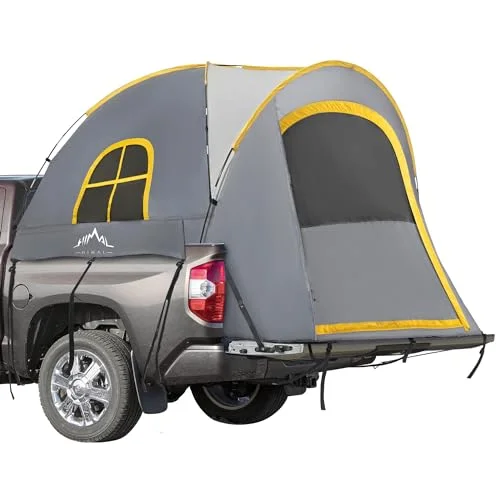
This GoHimal tent is a straightforward pick for 5.5-6 ft truck beds. It uses durable 210D polyester with a PU2000 coating, aiming to resist rain and keep the interior cleaner and drier. The double-layer setup includes a large entrance door and two windows for ventilation, and fiberglass poles help hold the structure steady. It’s built for two adults and keeps things simple, no built-in awning or extra storage features called out.
Best for: Campers who want a durable, no-frills truck bed tent for occasional trips.
Not ideal for: Anyone who wants extra shade, quicker setup tricks, or broader compatibility beyond the 5.5-6 ft range.
Decision cue: I’d shortlist this if durability and ventilation matter most, and you’re okay with a simpler setup.
Check Amazon
This model puts an emphasis on privacy and convenience for road trips. It includes a connection tunnel so you can route power cables and even run air conditioning from your truck into the tent. The PU3000 waterproof coating plus a sealed/bottom waterproof approach helps keep rain out, and the design includes three ventilated windows for airflow. It’s meant for 5.5-6 ft beds and is compatible with popular trucks like F150, Ram, Silverado, Tundra, and more. A color-coded pole system is also mentioned for easier setup.
Best for: People who want to run devices (and potentially AC) from their truck while sleeping inside the tent.
Not ideal for: Buyers who specifically need an awning, or who have a bed outside the 5.5-6 ft compatibility window.
Decision cue: Choose this if you want the “truck-connected” feature set without leaving comfort behind.
Check Amazon
The blue GoHimal version is the same style and feature set as the gray option: durable 210D polyester with PU2000 coating, a double-layer design, and ventilation through the large entrance plus two windows. It’s designed specifically for 5.5-6 ft truck beds, with fiberglass poles supporting the structure. It’s positioned for comfortable two-person camping, but it doesn’t highlight an awning or more storage add-ons.
Best for: Buyers who want the same GoHimal design in a different color.
Not ideal for: Anyone who needs extra shade or a wider bed-length range.
Decision cue: Pick this if you like the GoHimal approach and simply prefer blue over gray.
Check Amazon
JOYTUTUS offers a double-layer setup designed for 5.5-5.8 ft beds, with a rainfly for extra weather coverage. The tent uses 210D polyester oxford with PU2000 waterproof coating, and it includes a waterproof layer at the bottom to help prevent rain from sneaking in. Ventilation is handled through three windows, and the inner shading approach is described to help with daylight comfort and bug control. Setup is designed to be simple with included instructions, but the listing also notes that poles can break if assembled incorrectly.
Best for: Campers who want added rain protection plus strong ventilation for compact trucks.
Not ideal for: Anyone who needs an awning or compatibility with larger bed ranges than 5.5-5.8 ft.
Decision cue: I’d shortlist this if you specifically want the rainfly and you’re fitting a 5.5-5.8 ft truck bed.
Check Amazon
This pickup truck tent stands out for the built-in awning shade. That means you get a shaded area for lounging outside the main tent, not just sleeping space. It’s designed for 5.5-6.3 ft truck beds and uses PU5000-coated 210D oxford fabric with an additional waterproof bottom layer, aiming for full rainproof protection. Inside, you get a generous interior space for two, plus dual zippers, ventilation, and internal storage pouches. The tradeoff is a larger overall footprint because of the awning.
Best for: Campers who want shade for meals or downtime outside the tent, not just a dry sleeping area.
Not ideal for: Buyers with tight parking/campsite space, or those who want the most minimalist setup possible.
Decision cue: Choose this if an awning is part of your camping routine and you’re comfortable with the extra space it takes.
Check Amazon
Napier Backroadz is positioned as a more premium option for weather protection and convenience. The design includes a full rainfly, reinforced taped seams, and storm flaps in windows, plus a secure fit to your truck using 9 adjustable straps. It also uses a color-coded pole system for set-up that’s claimed to take under 10 minutes. The overall approach is geared toward reducing the “rain and wind worry” factor while still keeping the process approachable.
Best for: People who prioritize weather resistance and a quick, intuitive setup.
Not ideal for: Buyers with compact trucks where compatibility may be tighter, or those who prefer an awning-style setup.
Decision cue: I’d shortlist this if you want a reliable, weather-resistant build without a long assembly routine.
Check Amazon
This GoHimal option is aimed at 6.5 ft truck beds, offering more interior depth than the 5.5-6 ft models. It uses the same general durable material approach (210D polyester with a double-layer design and ventilation), but with a deeper, roomier interior. The listing also mentions included organization items like a net bag and storage pouch. Like the other GoHimal options in this set, it doesn’t focus on an awning, so the comfort comes primarily from interior space.
Best for: Buyers with larger trucks who want extra headroom and a roomier feel.
Not ideal for: Campers who need built-in shade from an awning, or those with compact bed sizes that don’t match the 6.5 ft compatibility.
Decision cue: Shortlist this if you have a 6.5 ft bed and want more space for two adults.
Check Amazon
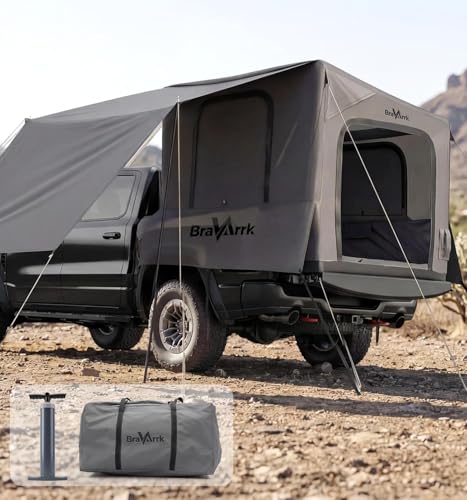
BravArrk is an inflatable truck bed tent designed for quick setup, using a manual pump rather than pole assembly. It fits a wider bed range (5.5-8 ft), and it includes a detachable awning for shade. The design also references a PU3000 coating and an integrated floor to help prevent water infiltration. The practical tradeoff is that inflatable beams can need occasional top-ups, especially in cold conditions.
Best for: People who want the fastest setup for spontaneous trips.
Not ideal for: Buyers who prefer traditional pole tents, or those expecting consistently extreme weather where inflatables may be less ideal.
Decision cue: Choose this if speed matters most and you’re comfortable managing inflation support as needed.
Check Amazon
Umbrauto’s listing is for a truck bed air mattress, not a full standalone tent. It’s designed for 5.5-5.8 ft truck beds and includes an electric pump, aiming to fit snugly in compact setups. The plush top surface and durable PVC construction are meant to improve comfort, and internal straps support up to 600 lbs. It’s a good fit if you already have a tent and want a more comfortable sleeping surface.
Best for: Buyers who want comfort and convenience from an air mattress for their truck bed camping setup (not a new tent).
Not ideal for: Anyone looking for a complete tent solution or who needs compatibility with larger bed sizes.
Decision cue: Go with this if you already plan to camp with a tent and want a better sleep surface.
Check Amazon
This tent is designed for compact trucks with 5-5.2 ft beds (like Toyota Tacoma or Ford Ranger). It includes an awning for shade and uses PU5000-coated polyester for waterproofing. The interior is set up for convenience with storage pouches and dual zippers, but the overall design prioritizes a smaller footprint, so it’s expected to offer less headroom than models for bigger beds.
Best for: Truck owners with smaller beds who want an awning and stronger waterproofing for rain-prone trips.
Not ideal for: Anyone with larger trucks or those who need maximum space inside.
Decision cue: Shortlist this if your bed is 5-5.2 ft and shade + weather protection are your priorities.
Check Amazon
Reader questions answered
Which truck bed tent is easiest to set up?
Setup speed depends on the design style. Inflatable tents like the BravArrk (Product 7) are quick because there’s no pole assembly, just inflate with a manual pump. Traditional pole tents like the Napier Backroadz (Product 5) tend to take longer because you’re assembling and securing the frame. Color-coded poles make pole tents easier, while inflatable tents replace all that with airflow and pressure management.
Which tent offers the best weather protection?
Weather protection is really about materials, coatings, and how the tent is constructed. Coatings like PU3000/PU5000 and sealed seam approaches generally resist rain better. Full rainflies, storm flaps, and reinforced seams help with wind too. Inflatable designs like the BravArrk reference integrated floors to help prevent water infiltration, which can matter when you’re sitting on wet surfaces.
Which tent fits my truck model?
Compatibility depends on bed-length. This lineup spans compact beds (5-5.2 ft) up through larger options (6.5 ft and beyond). Compact trucks like the Toyota Tacoma or Ford Ranger should target 5-5.2 ft tents (Product 9). Many of the other picks are aimed at 5.5-6.3 ft beds for models like F150 or Silverado. The BravArrk (Product 7) is described as offering the widest compatibility window (5.5-8 ft).
Which tent provides the most space for two people?
Space and comfort aren’t just about “sleeping two”, they’re about interior dimensions, headroom, and whether you get an extra shaded/lounging area. The 6.5 ft tent (Product 6) is built for more depth, which usually translates to a roomier feel. Awnings on Products 4 and 9 add usable outdoor coverage for meals and downtime. Inflatable tents like the BravArrk can maximize interior space by removing poles from the equation.
Which tent is best for hot weather?
Ventilation is a big deal in hot or humid weather. Multiple windows, mesh layers, and double-layer designs generally improve airflow while still keeping bugs out. The JOYTUTUS (Product 3) and GoHimal tents (Products 0, 2, 6) use windows/doors designed for airflow. Awnings (Products 4 and 9) can also help by providing shade that reduces heat gain outside the tent.
What the comparison teaches
Inflatable tents trade durability for speed.
Inflatable tents like the BravArrk (Product 7) set up quickly, but they may need occasional top-ups, especially in cold weather. Traditional pole tents take longer but can feel steadier in harsher conditions, so choose inflation for convenience, not for extreme-weather expectations.
Awnings add space but increase setup time.
Awnings (Products 4, 9) give you shade for lounging, but they add complexity and take up more campsite space. If you camp in tight spots or want a clean, minimal setup, it’s worth skipping the awning.
Compact tents fit smaller trucks but limit headroom.
Tents for 5-5.2 ft beds (Product 9) work well for compact trucks, but headroom can be tighter than larger-bed models. If you’re on the shorter end, I’d verify interior dimensions so you don’t end up cramped, and watch for overhang/anchoring issues on larger trucks.
Before you buy
- Check your truck bed length and compare it to the tent’s compatibility range.
- Verify whether the tent includes a rainfly or awning if you want shade or extra weather protection.
- Look for PU3000 or PU5000 waterproof coatings if you expect rain-prone trips.
- Check for reinforced seams and storm flaps/extra weather features if wind is part of your camping reality.
- Scan recent reviews for mentions of leaks, pole durability, or setup frustrations.
- See whether there are storage pouches or organization features if you like keeping gear controlled.
- Verify warranty/return language for defects and parts (including poles) so you know what happens if something breaks.
Final takeaway
The right truck bed tent depends on your bed size, how you camp, and what you’re willing to trade off. If you want quick setup, the BravArrk inflatable tent (Product 7) is built for speed. If weather resistance is your top priority, the Napier Backroadz (Product 5) is designed for rainfly coverage and wind protection. Compact truck owners should focus on smaller-bed options like Product 9, while campers who want more interior room should look at the GoHimal 6.5 ft model (Product 6) or awning-equipped tents (Products 4, 9). Since no single tent fits every trip, match the features to your specific bed length and camping style.
FAQ
Do truck bed tents work with truck bed liners?
Most truck bed tents can work with bed liners, but it depends on how your liner is made. Drop-in liners may interfere with tent straps or anchoring points, while spray-on liners are usually easier to work around. I’d check the tent’s instructions or contact the manufacturer to confirm compatibility with your specific liner type.
Can I use a truck bed tent in winter?
Yes, truck bed tents can be used in winter, but insulation is limited. Plan on using a thick sleeping pad or air mattress to reduce cold transfer from the truck bed, and avoid inflatable tents in freezing conditions since the beams may lose pressure. If wind resistance matters, pole tents with a full rainfly tend to handle it better.
How do I secure a truck bed tent in windy conditions?
Secure your tent using all included straps and stakes. If the design lacks storm flaps, add extra guy lines where possible. Park in a sheltered area when you can (behind trees or a windbreak). Inflatable tents like the BravArrk (Product 7) may require extra attention to maintain stability in strong wind.
Are truck bed tents comfortable for tall people?
Comfort for taller campers depends on the tent’s height and the bed length it’s built for. Tents meant for 6.5 ft beds (Product 6) typically offer more headroom and depth. Measure your truck bed and compare it to the tent’s stated interior dimensions. Some models like the Napier Backroadz (Product 5) are designed to maximize headroom through the layout.
Can I run power or air conditioning into a truck bed tent?
Some tents, like Product 1, include a connection tunnel that can route power cables or air conditioning lines into the tent. That can be a big convenience for keeping devices running or cooling the space. If that matters to you, verify the tunnel design before buying.