
Thanksgiving is a special time for gratitude, family, and delicious food. While “Happy Thanksgiving” is the standard greeting, there are many other ways to express your good wishes and sentiments during this holiday.
Understanding these alternatives can enrich your conversations and allow you to convey your feelings more precisely. This article explores a variety of Thanksgiving greetings, from formal to informal, and offers examples to help you use them effectively.
This guide is perfect for anyone looking to expand their vocabulary and communicate more thoughtfully during the Thanksgiving season. It is also beneficial for English language learners who want to improve their conversational skills and cultural understanding.
By exploring diverse Thanksgiving greetings, you’ll enhance your ability to connect with others and express your appreciation in meaningful ways. Let’s dive into the world of Thanksgiving expressions and discover the perfect words to share with your loved ones.
Table of Contents
- Introduction
- Defining Thanksgiving Greetings
- Structural Breakdown of Greetings
- Types of Thanksgiving Greetings
- Examples of Thanksgiving Greetings
- Usage Rules for Thanksgiving Greetings
- Common Mistakes in Thanksgiving Greetings
- Practice Exercises
- Advanced Topics: Nuances in Thanksgiving Greetings
- Frequently Asked Questions
- Conclusion
Defining Thanksgiving Greetings
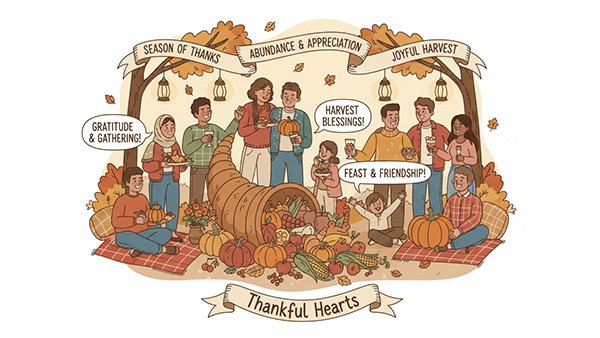
Thanksgiving greetings are expressions used to convey well wishes, gratitude, and holiday cheer during the Thanksgiving season. These greetings can range from simple phrases like “Happy Thanksgiving” to more elaborate expressions of thankfulness and appreciation.
They serve as a way to connect with family, friends, and colleagues, and to acknowledge the spirit of the holiday.
Thanksgiving greetings fall under the broader category of holiday greetings, which are communicative acts designed to celebrate specific occasions. They often involve expressions of joy, goodwill, and shared values. The specific language used in Thanksgiving greetings reflects the cultural values associated with the holiday, such as gratitude, family, and abundance.
The function of a Thanksgiving greeting is multifaceted. Primarily, it expresses goodwill and acknowledges the holiday. It can also strengthen social bonds, convey personal sentiments, and initiate or continue conversations. The context in which a greeting is used—whether in person, in writing, or online—can influence the formality and tone of the message.
Structural Breakdown of Greetings
Thanksgiving greetings, like other greetings in English, typically follow a basic structure. They often include an introductory phrase, a statement of goodwill, and sometimes a personal touch.
Understanding this structure can help you craft your own unique and meaningful greetings.
Here’s a breakdown of the common structural elements:
- Opening Phrase: This usually sets the tone and acknowledges the holiday. Examples include “Happy Thanksgiving,” “Wishing you a joyful Thanksgiving,” or “Hope you have a wonderful Thanksgiving.”
- Statement of Goodwill: This expresses your positive wishes for the recipient. Examples include “I hope you have a day filled with joy and gratitude,” “May your Thanksgiving be blessed with family and friends,” or “Wishing you a Thanksgiving filled with delicious food and happy memories.”
- Personal Touch (Optional): This can be a specific detail about your relationship with the recipient or a personalized message. Examples include “Thinking of you and your family this Thanksgiving,” “So grateful to have you in my life,” or “Looking forward to seeing you at the dinner table.”
- Closing: A closing phrase can add a final touch of warmth. Examples include “Warmly,” “With love,” or “Best wishes.”
The structure can be varied depending on the formality and context. For example, a formal greeting might include a more elaborate opening phrase and a more formal closing, while an informal greeting might be shorter and more casual.
Types of Thanksgiving Greetings
Thanksgiving greetings can be categorized based on their level of formality, emotional tone, and specific focus. Understanding these categories can help you choose the most appropriate greeting for different situations and recipients.
Formal Thanksgiving Greetings
Formal greetings are suitable for professional relationships, acquaintances, or situations where a degree of respect and distance is maintained. These greetings often use more elaborate language and avoid casual expressions.
Key characteristics of formal greetings include:
- Use of respectful language
- Avoidance of slang or colloquialisms
- Emphasis on gratitude and well wishes
- Suitable for written communication (e.g., cards, emails)
Informal Thanksgiving Greetings
Informal greetings are appropriate for close friends, family members, and colleagues with whom you have a relaxed relationship. These greetings often use casual language and express personal sentiments.
Key characteristics of informal greetings include:
- Use of casual language and colloquialisms
- Expression of personal feelings and inside jokes
- Suitable for verbal communication (e.g., phone calls, in-person conversations)
Exploring Alternatives to “Happy Thanksgiving”
While “Happy Thanksgiving” is the most common greeting, it isn’t the only way to express your gratitude and well wishes during the holiday. Some people wonder, “Can you say ‘Happy Holidays’ for Thanksgiving?” or if “Happy Thanksgiving” is the only correct expression. Alternatives can be particularly useful when addressing colleagues, acquaintances, or individuals who may not celebrate the holiday traditionally.
Consider non-offensive ways to convey your message, such as “Wishing you a joyful Thanksgiving season” or “May your day be filled with gratitude and warmth.” These phrases maintain politeness and inclusivity, while offering a more formal way to mention Thanksgiving, perfect for professional emails or cards.
Informally, you might use “Enjoy your Thanksgiving festivities” or “Hope you have a wonderful Thanksgiving with loved ones.” Understanding how to greet “Happy Thanksgiving” in alternative ways ensures that your wishes are respectful, appropriate, and heartfelt, no matter the context.
Heartfelt Thanksgiving Greetings
Heartfelt greetings focus on expressing genuine gratitude and appreciation. These greetings are ideal for conveying deep emotions and strengthening personal connections.
Key characteristics of heartfelt greetings include:
- Emphasis on personal feelings and emotions
- Expression of gratitude for specific qualities or actions
- Use of sincere and authentic language
Humorous Thanksgiving Greetings
Humorous greetings use humor to lighten the mood and bring a smile to the recipient’s face. These greetings are best suited for close friends and family members who appreciate a lighthearted approach.
Key characteristics of humorous greetings include:
- Use of jokes, puns, or witty remarks
- Lighthearted and playful tone
- Consideration of the recipient’s sense of humor
Religious Thanksgiving Greetings
Religious greetings incorporate religious themes and express gratitude to God for blessings received. These greetings are appropriate for individuals who share your religious beliefs.
Key characteristics of religious greetings include:
- Reference to God or religious figures
- Expression of gratitude for divine blessings
- Inclusion of religious themes and scriptures
Examples of Thanksgiving Greetings
Here are some examples of Thanksgiving greetings, organized by category. These examples can serve as inspiration for crafting your own personalized messages.
Formal Greetings Examples
The following table provides several examples of formal Thanksgiving greetings. These are suitable for professional contexts or when addressing someone with whom you have a more distant relationship.
| Greeting | Context |
|---|---|
| “Wishing you a very Happy Thanksgiving and a prosperous year ahead.” | Business associate or client |
| “May your Thanksgiving be filled with peace, joy, and gratitude.” | Formal card or email |
| “I extend my warmest wishes for a delightful Thanksgiving celebration.” | Business associate or client |
| “Please accept my best wishes for a joyous Thanksgiving holiday.” | Formal card or email |
| “May the spirit of Thanksgiving bring you closer to your loved ones.” | Formal card or email |
| “Wishing you and your family a blessed and bountiful Thanksgiving.” | Formal card or email |
| “I hope you have a wonderful Thanksgiving filled with cherished moments.” | Business associate or client |
| “May this Thanksgiving be a time of reflection, gratitude, and joy for you.” | Formal card or email |
| “Wishing you a serene and thankful Thanksgiving Day.” | Business associate or client |
| “I wish you a Thanksgiving that is as special as you are.” | Formal card or email |
| “May your Thanksgiving be as meaningful and rewarding as possible.” | Business associate or client |
| “I hope your Thanksgiving is a time to recharge and enjoy the company of loved ones.” | Formal card or email |
| “My warmest wishes for a Happy Thanksgiving filled with great memories.” | Business associate or client |
| “Wishing you a Thanksgiving brimming with happiness and good fortune.” | Formal card or email |
| “I am wishing you and your family a very special and memorable Thanksgiving.” | Business associate or client |
| “May your Thanksgiving be filled with delicious food and delightful conversation.” | Formal card or email |
| “Wishing you a Thanksgiving that brings you closer to those you love.” | Business associate or client |
| “I extend my sincere gratitude and best wishes for a Happy Thanksgiving.” | Formal card or email |
| “May your Thanksgiving be a time of gratitude and celebration.” | Business associate or client |
| “Wishing you a Thanksgiving filled with the warmth of family and friends.” | Formal card or email |
| “I hope you have a Thanksgiving that is truly unforgettable.” | Business associate or client |
| “May your Thanksgiving be a time of reflection, gratitude, and joy for you.” | Formal card or email |
| “Wishing you a serene and thankful Thanksgiving Day.” | Business associate or client |
| “I wish you a Thanksgiving that is as special as you are.” | Formal card or email |
| “May your Thanksgiving be as meaningful and rewarding as possible.” | Business associate or client |
When sending Thanksgiving greetings in a professional or formal context, it’s important to choose phrasing that is both respectful and inclusive. Instead of simply saying “Happy Thanksgiving,” you can use a formal way to mention the holiday, such as “Wishing you a peaceful and joyful Thanksgiving season.”
Similarly, for sensitive audiences, a non-offensive way to say Happy Thanksgiving might be “May your day be filled with warmth and gratitude,” which avoids assumptions about the recipient’s traditions or celebrations.
Informal Greetings Examples
The following table showcases informal Thanksgiving greetings, perfect for friends and family. These greetings are more relaxed and personal.
| Greeting | Context |
|---|---|
| “Happy Thanksgiving! Hope you have a great day with lots of food and fun!” | Text message to a friend |
| “Have a wonderful Thanksgiving! Can’t wait to see you at dinner.” | Family member |
| “Happy Turkey Day! Hope you’re ready to eat!” | Close friend |
| “Wishing you a Thanksgiving filled with good food and even better company!” | Family member |
| “Hope you have a fantastic Thanksgiving! Enjoy the feast!” | Close friend |
| “Happy Thanksgiving! Eat lots of pie for me!” | Friend who can’t attend |
| “Have a Happy Thanksgiving! Looking forward to seeing you later.” | Family member |
| “Hope you have a relaxing and delicious Thanksgiving!” | Close friend |
| “Happy Thanksgiving! Get ready for some serious food coma!” | Friend with a sense of humor |
| “Wishing you a Thanksgiving full of laughter and good times!” | Family member |
| “Happy Thanksgiving! Don’t forget to save room for dessert!” | Close friend |
| “Have a Happy Thanksgiving! Thinking of you and sending lots of love.” | Family member who lives far away |
| “Hope you have a wonderful Thanksgiving! Enjoy every moment!” | Close friend |
| “Happy Thanksgiving! Let’s make some memories!” | Family member |
| “Wishing you a Thanksgiving that’s as awesome as you are!” | Close friend |
| “Happy Thanksgiving! Time to get stuffed!” | Friend with a sense of humor |
| “Have a great Thanksgiving! See you at the table!” | Family member |
| “Hope your Thanksgiving is filled with joy and gratitude!” | Close friend |
| “Happy Thanksgiving! Enjoy the day with your loved ones!” | Family member |
| “Wishing you a Thanksgiving that’s full of delicious surprises!” | Close friend |
| “Happy Thanksgiving! Time to indulge!” | Friend with a sense of humor |
| “Hope you have a fantastic Thanksgiving! Sending you warm wishes.” | Family member |
| “Happy Thanksgiving! May your day be blessed with happiness.” | Close friend |
| “Have a wonderful Thanksgiving! Thinking of you always.” | Family member who lives far away |
| “Wishing you a Thanksgiving that’s as special as you are!” | Close friend |
Heartfelt Greetings Examples
The following table offers heartfelt Thanksgiving greetings, designed to express deep appreciation and gratitude. These are ideal for those you cherish most.
| Greeting | Context |
|---|---|
| “This Thanksgiving, I’m especially grateful for your friendship and support.” | Close friend who has been supportive |
| “I’m so thankful to have you in my life. Happy Thanksgiving!” | Family member or significant other |
| “Wishing you a Thanksgiving filled with the warmth of love and the joy of togetherness. I’m truly grateful for you.” | Family member |
| “This Thanksgiving, I want to express my sincere gratitude for all you do. Happy Thanksgiving!” | Parent or mentor |
| “I’m deeply thankful for your presence in my life. Wishing you a heartfelt Thanksgiving.” | Close friend |
| “This Thanksgiving, I’m reminded of how fortunate I am to have you. Happy Thanksgiving with love.” | Significant other |
| “Wishing you a Thanksgiving filled with blessings and the comfort of loved ones. I’m so grateful for you.” | Family member |
| “This Thanksgiving, I’m sending you my heartfelt gratitude for your kindness and generosity.” | Friend who has helped you |
| “I’m incredibly thankful for your unwavering support. Happy Thanksgiving with all my love.” | Family member |
| “Wishing you a Thanksgiving filled with peace, love, and joy. I’m so grateful to have you in my life.” | Close friend |
| “This Thanksgiving, I want to express my deepest appreciation for your guidance and wisdom.” | Mentor or teacher |
| “I’m so thankful for the memories we’ve shared. Happy Thanksgiving, with love and gratitude.” | Family member |
| “Wishing you a Thanksgiving filled with happiness and the warmth of family. I’m truly blessed to have you.” | Family member |
| “This Thanksgiving, I’m sending you my heartfelt thanks for being such a wonderful friend.” | Close friend |
| “I’m incredibly grateful for your love and support. Happy Thanksgiving with all my heart.” | Significant other |
| “This Thanksgiving, I’m especially grateful for your friendship and support.” | Close friend who has been supportive |
| “I’m so thankful to have you in my life. Happy Thanksgiving!” | Family member or significant other |
| “Wishing you a Thanksgiving filled with the warmth of love and the joy of togetherness. I’m truly grateful for you.” | Family member |
| “This Thanksgiving, I want to express my sincere gratitude for all you do. Happy Thanksgiving!” | Parent or mentor |
| “I’m deeply thankful for your presence in my life. Wishing you a heartfelt Thanksgiving.” | Close friend |
| “This Thanksgiving, I’m reminded of how fortunate I am to have you. Happy Thanksgiving with love.” | Significant other |
| “Wishing you a Thanksgiving filled with blessings and the comfort of loved ones. I’m so grateful for you.” | Family member |
| “This Thanksgiving, I’m sending you my heartfelt gratitude for your kindness and generosity.” | Friend who has helped you |
| “I’m incredibly thankful for your unwavering support. Happy Thanksgiving with all my love.” | Family member |
Humorous Greetings Examples
The following table provides examples of humorous Thanksgiving greetings. Use these with people who appreciate a good laugh.
| Greeting | Context |
|---|---|
| “Happy Thanksgiving! May your stretchy pants be ready for action.” | Close friend |
| “Wishing you a Happy Thanksgiving! Hope you survive the family drama.” | Family member with a similar sense of humor |
| “Happy Turkey Day! May your tryptophan coma be gentle.” | Friend with a sense of humor |
| “Wishing you a Thanksgiving filled with delicious food and minimal political arguments!” | Family member |
| “Happy Thanksgiving! May your gravy boat always be full.” | Close friend |
| “Have a Happy Thanksgiving! Remember to wear your eating pants.” | Friend with a sense of humor |
| “Happy Thanksgiving! Hope you don’t get into too many food fights.” | Family member |
| “Wishing you a Thanksgiving filled with laughter and only mild indigestion!” | Close friend |
| “Happy Turkey Day! May your pie be plentiful and your relatives be polite.” | Friend with a sense of humor |
| “Wishing you a Thanksgiving where the only thing that gets stuffed is the turkey!” | Family member |
| “Happy Thanksgiving! May your day be free of awkward family moments.” | Close friend |
| “Have a Happy Thanksgiving! Don’t forget to loosen your belt a notch or two.” | Friend with a sense of humor |
| “Happy Thanksgiving! May your mashed potatoes be lumpy and your cranberry sauce be jellied.” | Family member (in a joking way) |
| “Wishing you a Thanksgiving where the only thing you have to worry about is which dessert to choose!” | Close friend |
| “Happy Turkey Day! May your leftovers last for days.” | Friend with a sense of humor |
| “Wishing you a Thanksgiving filled with good food, good company, and minimal cooking!” | Family member (especially if they’re cooking) |
| “Happy Thanksgiving! May your stretchy pants be ready for action.” | Close friend |
| “Wishing you a Happy Thanksgiving! Hope you survive the family drama.” | Family member with a similar sense of humor |
| “Happy Turkey Day! May your tryptophan coma be gentle.” | Friend with a sense of humor |
| “Wishing you a Thanksgiving filled with delicious food and minimal political arguments!” | Family member |
| “Happy Thanksgiving! May your gravy boat always be full.” | Close friend |
| “Have a Happy Thanksgiving! Remember to wear your eating pants.” | Friend with a sense of humor |
| “Happy Thanksgiving! Hope you don’t get into too many food fights.” | Family member |
| “Wishing you a Thanksgiving filled with laughter and only mild indigestion!” | Close friend |
| “Happy Turkey Day! May your pie be plentiful and your relatives be polite.” | Friend with a sense of humor |
Religious Greetings Examples
The following table provides religious Thanksgiving greetings, suitable for those who share your faith.
| Greeting | Context |
|---|---|
| “Wishing you a blessed Thanksgiving, filled with God’s love and grace.” | Fellow church member |
| “May God bless you and your family this Thanksgiving season.” | Religious friend |
| “Happy Thanksgiving! Giving thanks to God for all His blessings.” | Fellow church member |
| “Wishing you a Thanksgiving filled with gratitude for God’s abundant gifts.” | Religious friend |
| “May your Thanksgiving be a time of reflection on God’s goodness and mercy.” | Fellow church member |
| “Happy Thanksgiving! Praying that God’s peace fills your heart and home.” | Religious friend |
| “Wishing you a blessed Thanksgiving, surrounded by family and God’s love.” | Fellow church member |
| “May God’s presence be felt in your Thanksgiving celebration.” | Religious friend |
| “Happy Thanksgiving! Thankful for God’s blessings and the gift of family.” | Fellow church member |
| “Wishing you a Thanksgiving filled with faith, hope, and love in Christ.” | Religious friend |
| “May your Thanksgiving be a time of gratitude for all that God has provided.” | Fellow church member |
| “Happy Thanksgiving! Trusting in God’s provision and care.” | Religious friend |
| “Wishing you a blessed Thanksgiving, filled with the joy of the Lord.” | Fellow church member |
| “May God’s blessings be abundant in your life this Thanksgiving season.” | Religious friend |
| “Happy Thanksgiving! Giving thanks to God for His faithfulness and love.” | Fellow church member |
| “Wishing you a Thanksgiving filled with the peace that surpasses all understanding.” | Religious friend |
| “May your Thanksgiving be a time of reflection on God’s grace and mercy.” | Fellow church member |
| “Happy Thanksgiving! Praying that God’s love surrounds you and your family.” | Religious friend |
| “Wishing you a blessed Thanksgiving, filled with the hope that comes from Christ.” | Fellow church member |
| “May God’s presence be felt in your Thanksgiving celebration and always.” | Religious friend |
| “Wishing you a blessed Thanksgiving, filled with God’s love and grace.” | Fellow church member |
| “May God bless you and your family this Thanksgiving season.” | Religious friend |
| “Happy Thanksgiving! Giving thanks to God for all His blessings.” | Fellow church member |
| “Wishing you a Thanksgiving filled with gratitude for God’s abundant gifts.” | Religious friend |
| “May your Thanksgiving be a time of reflection on God’s goodness and mercy.” | Fellow church member |
Usage Rules for Thanksgiving Greetings
Using Thanksgiving greetings appropriately involves considering the context, your relationship with the recipient, and the tone you wish to convey. Here are some general rules to follow:
- Formality: Choose a greeting that matches the formality of the situation. Use formal greetings for professional contacts and informal greetings for close friends and family.
- Personalization: Add a personal touch to your greeting to make it more meaningful. Mention something specific about your relationship with the recipient or a shared memory.
- Sincerity: Ensure that your greeting reflects your genuine feelings. Avoid using clichés or insincere language.
- Respect: Be mindful of the recipient’s beliefs and values. Avoid using religious or political greetings if you are unsure of their views.
- Timing: Send your greetings in a timely manner. It’s best to send them a few days before or on Thanksgiving Day itself.
Exceptions and Special Cases:
- If you are unsure of the recipient’s preferences, it’s best to err on the side of formality and respect.
- If you are sending a greeting to someone who is going through a difficult time, offer words of support and encouragement in addition to your Thanksgiving wishes.
- If you are sending a greeting to someone from a different cultural background, be mindful of cultural differences and avoid making assumptions about their beliefs or traditions.
Common Mistakes in Thanksgiving Greetings
Even native English speakers sometimes make mistakes when crafting Thanksgiving greetings. Here are some common errors to avoid:
| Incorrect | Correct | Explanation |
|---|---|---|
| “Happy Thanks Giving!” | “Happy Thanksgiving!” | “Thanksgiving” is one word, not two. |
| “Hope you have a good turkey day!” (to someone you don’t know well) | “Happy Thanksgiving!” | “Turkey Day” is too informal for some situations. |
| “Wishing you a thankful day!” | “Wishing you a Happy Thanksgiving!” | While “thankful” is related, the standard greeting uses “Thanksgiving.” |
| “Happy Thanksgiving, I hope you get lots of presents!” | “Happy Thanksgiving, I hope you have a wonderful time with your family!” | Thanksgiving is about gratitude and family, not presents. |
| Sending a generic mass email without any personal touch. | Personalizing each message to the recipient. | Personalization makes the greeting more meaningful. |
| Using overly formal language with close friends and family. | Using casual and affectionate language with close friends and family. | Match your tone to your relationship with the recipient. |
| Sending religious greetings to someone whose religious beliefs are unknown. | Avoiding religious greetings unless you know the recipient’s beliefs. | Be respectful of others’ beliefs. |
| Forgetting to proofread your message for typos and grammatical errors. | Always proofreading your message before sending it. | Errors can detract from the message. |
| “Happy thanksgiving day to you.” | “Happy Thanksgiving Day to you.” | Capitalize ‘Thanksgiving’. |
| “I hope you have a good thanksgiving.” | “I hope you have a good Thanksgiving.” | Capitalize ‘Thanksgiving’. |
Practice Exercises
Test your understanding of Thanksgiving greetings with these practice exercises.
Exercise 1: Choose the most appropriate greeting for each situation.
| Situation | Greeting Options | Answer |
|---|---|---|
| Sending a card to your boss. | a) “Happy Turkey Day!” b) “Wishing you a very Happy Thanksgiving.” c) “Hope you have a great feast!” | b) “Wishing you a very Happy Thanksgiving.” |
| Texting a close friend. | a) “May your Thanksgiving be filled with joy and gratitude.” b) “Happy Thanksgiving! Hope you have a blast!” c) “I extend my warmest wishes for a delightful Thanksgiving.” | b) “Happy Thanksgiving! Hope you have a blast!” |
| Writing an email to a client. | a) “Happy Thanksgiving! Eat lots of pie!” b) “Wishing you and your family a blessed and bountiful Thanksgiving.” c) “Hope you survive the family drama!” | b) “Wishing you and your family a blessed and bountiful Thanksgiving.” |
| Speaking to your grandmother. | a) “Happy Turkey Day, Grandma!” b) “Wishing you a Thanksgiving filled with love and happiness.” c) “Hope you don’t get too stuffed!” | b) “Wishing you a Thanksgiving filled with love and happiness.” |
| Sending a message to a religious friend. | a) “Happy Thanksgiving! Hope you have a great day!” b) “Wishing you a blessed Thanksgiving, filled with God’s love and grace.” c) “Happy Thanksgiving! Time to get stuffed!” | b) “Wishing you a blessed Thanksgiving, filled with God’s love and grace.” |
| Sending a card to your boss. | a) “Happy Turkey Day!” b) “Wishing you a very Happy Thanksgiving.” c) “Hope you have a great feast!” | b) “Wishing you a very Happy Thanksgiving.” |
| Texting a close friend. | a) “May your Thanksgiving be filled with joy and gratitude.” b) “Happy Thanksgiving! Hope you have a blast!” c) “I extend my warmest wishes for a delightful Thanksgiving.” | b) “Happy Thanksgiving! Hope you have a blast!” |
| Writing an email to a client. | a) “Happy Thanksgiving! Eat lots of pie!” b) “Wishing you and your family a blessed and bountiful Thanksgiving.” c) “Hope you survive the family drama!” | b) “Wishing you and your family a blessed and bountiful Thanksgiving.” |
| Speaking to your grandmother. | a) “Happy Turkey Day, Grandma!” b) “Wishing you a Thanksgiving filled with love and happiness.” c) “Hope you don’t get too stuffed!” | b) “Wishing you a Thanksgiving filled with love and happiness.” |
| Sending a message to a religious friend. | a) “Happy Thanksgiving! Hope you have a great day!” b) “Wishing you a blessed Thanksgiving, filled with God’s love and grace.” c) “Happy Thanksgiving! Time to get stuffed!” | b) “Wishing you a blessed Thanksgiving, filled with God’s love and grace.” |
Exercise 2: Rewrite the following greetings to make them more appropriate for the given context.
| Original Greeting | Context | Revised Greeting | |
|---|---|---|---|
| “Happy Turkey Day, dude!” | Sending a card to your professor. | “Wishing you a very Happy Thanksgiving, Professor [Last Name].” | |
| “May your Thanksgiving be filled with minimal political arguments!” | Sending a heartfelt message to a grieving friend. | “Thinking of you this Thanksgiving. Sending you love and support.” | |
| “Wishing you a blessed Thanksgiving, filled with God’s love and grace!” | Sending a text to a friend who is an atheist. | “Wishing you a Thanksgiving filled with joy and happiness!” | |
| “Happy Turkey Day, dude!” | Sending a card to your professor. | “Wishing you a very Happy Thanksgiving, Professor [Last Name].” | |
| “May your Thanksgiving be filled with minimal political arguments!” | Sending a heartfelt message to a grieving friend. | “Thinking of you this Thanksgiving. Sending you love and support.” | |
| “Wishing you a blessed Thanksgiving, filled with God’s love and grace!” | Sending a text to a friend who is an atheist. | “Wishing you a Thanksgiving filled with joy and happiness!” | |
| “Happy Turkey Day, dude!” | Sending a card to your professor. | “Wishing you a very | “Wishing you a very Happy Thanksgiving, Professor [Last Name].” |
Advanced Topics: Nuances in Thanksgiving Greetings
Beyond the basic types of greetings, there are subtle nuances that can make your Thanksgiving messages even more impactful. These nuances involve understanding the emotional context, cultural sensitivities, and individual preferences of the recipients.
- Emotional Context: Tailor your greeting to the recipient’s current emotional state. If they are going through a difficult time, offer words of support and empathy in addition to your Thanksgiving wishes. For example, “Thinking of you this Thanksgiving and sending you strength and comfort.”
- Cultural Sensitivities: Be aware of cultural differences in how Thanksgiving is celebrated or perceived. Some cultures may not celebrate Thanksgiving at all, while others may have different traditions associated with the holiday. Avoid making assumptions about the recipient’s cultural background and be respectful of their beliefs.
- Individual Preferences: Consider the recipient’s personality and preferences when choosing a greeting. Some people may appreciate a humorous greeting, while others may prefer a more heartfelt or formal message. Pay attention to their past communication styles and adapt your greeting accordingly.
- Non-Verbal Cues: If delivering a greeting in person, pay attention to non-verbal cues such as body language and facial expressions. These cues can help you gauge the recipient’s reaction to your greeting and adjust your tone accordingly.
- Medium of Communication: The medium you use to send your greeting can also influence its impact. A handwritten card can convey a more personal and heartfelt message than a text message or email. Choose the medium that is most appropriate for your relationship with the recipient and the message you wish to convey.
Frequently Asked Questions
Is it appropriate to say “Happy Thanksgiving” to someone who doesn’t celebrate the holiday?
It’s generally polite to acknowledge the holiday, but be mindful. A simple “I hope you have a good day” can be a respectful alternative.
What’s the best way to express gratitude in a Thanksgiving greeting?
Be specific and sincere. Mention specific qualities or actions you appreciate.
For instance, “I’m so grateful for your constant support and encouragement.”
How can I make my Thanksgiving greeting stand out?
Add a personal touch. Share a memory, inside joke, or express a unique sentiment that reflects your relationship with the recipient.
Is it okay to send a humorous Thanksgiving greeting to my boss?
It depends on your relationship. If you have a relaxed and friendly rapport, a lighthearted greeting might be acceptable.
Otherwise, stick to a formal message.
What should I do if I accidentally send an inappropriate Thanksgiving greeting?
Apologize sincerely and explain your intentions. Acknowledge your mistake and express your regret for any offense caused.
Conclusion
Mastering the art of Thanksgiving greetings involves understanding the nuances of language, context, and personal relationships. By exploring a variety of greeting types, following usage rules, and avoiding common mistakes, you can craft messages that are both meaningful and impactful.
Whether you choose a formal, informal, heartfelt, humorous, or religious greeting, the key is to express your genuine gratitude and appreciation for the people in your life. This Thanksgiving, take the time to craft thoughtful greetings that will strengthen your connections and spread holiday cheer.