Ice cream, a universally loved treat, offers a delightful opportunity to expand our vocabulary and descriptive skills. Whether you’re writing a menu, crafting a poem, or simply sharing your culinary experience, knowing the right words to describe ice cream can elevate your communication.
When selecting the best words to describe ice cream, think about how each word captures the sensory experience. Consider how to describe ice cream not only in terms of flavor but also texture, appearance, and temperature. Using the right describing words for ice cream can make your writing more vivid, whether you’re composing a menu, a review, or a creative story. Words that describe ice cream effectively allow your readers to almost taste, feel, and see it through your description.
This article explores the various adjectives and phrases used to capture the essence of this frozen delight, enhancing your ability to articulate its textures, flavors, and overall appeal. From the creamy smoothness to the tangy zest, we’ll delve into the nuances of describing ice cream in a way that tantalizes the senses.
This guide is designed for English language learners of all levels, food enthusiasts, writers, and anyone who wants to enhance their descriptive vocabulary. By understanding and utilizing these words effectively, you’ll be able to paint a vivid picture of your ice cream experience, making your descriptions more engaging and memorable.
Improve your English skills and indulge your sweet tooth simultaneously!
Table of Contents
- Introduction
- Defining Descriptive Words for Ice Cream
- Structural Breakdown of Descriptive Phrases
- Types and Categories of Descriptive Words
- Examples of Descriptive Words in Sentences
- Usage Rules for Describing Ice Cream
- Common Mistakes When Describing Ice Cream
- Practice Exercises
- Advanced Topics: Figurative Language
- Frequently Asked Questions
- Conclusion
Defining Descriptive Words for Ice Cream
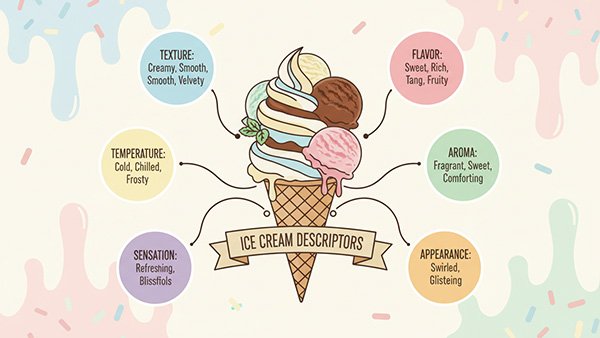
Descriptive words, also known as adjectives, are words that modify or describe nouns. In the context of ice cream, these words help us convey the specific qualities of the frozen treat, such as its texture, flavor, temperature, and appearance.
They are crucial for creating a vivid and appealing image in the reader’s mind.
These adjectives can be categorized based on the aspect of the ice cream they describe. For example, words like creamy, smooth, and icy describe texture. Words like sweet, tangy, and bitter describe flavor. Other categories include temperature (cold, freezing) and appearance (colorful, swirled). The function of these words is to provide specific details that make the description more informative and engaging.
Context plays a significant role in choosing the right descriptive words. Describing ice cream in a formal menu requires different language than describing it in a casual conversation with friends.
The target audience and the purpose of the description should always be considered.
Structural Breakdown of Descriptive Phrases
Descriptive phrases for ice cream typically consist of an adjective followed by the noun “ice cream” or a related noun phrase. For example, “creamy ice cream,” “rich flavor,” or “smooth texture.” These phrases can be expanded by adding adverbs to modify the adjectives, such as “incredibly creamy ice cream” or “intensely rich flavor.”
Another common structure involves using prepositional phrases to provide additional details. For instance, “ice cream with a hint of vanilla” or “ice cream topped with chocolate sauce.” These phrases add depth and specificity to the description.
Complex sentences can be used to combine multiple descriptive phrases and create a more detailed and nuanced description. For example, “The ice cream, with its creamy texture and intensely rich chocolate flavor, was the perfect ending to the meal.” Understanding these structural elements allows you to craft more sophisticated and engaging descriptions.
Adjectives for Young Learners
For children or early learners, simple and clear adjectives are best for describing ice cream. Words like sweet, cold, creamy, colorful, and yummy are easy to understand and convey basic sensory experiences. Using very good words to describe icecream in a kindergarten setting encourages vocabulary development while keeping it fun and engaging.
You can create simple exercises such as matching flavors to words or drawing their favorite ice cream and labeling it with descriptive adjectives. These activities help young learners connect words with sensory experiences and build their descriptive language skills from an early age.
In addition to adjectives, verbs can enrich your descriptions of ice cream. Words like melt, scoop, swirl, drizzle, or crunch convey action and movement, making your sentences more dynamic. Choosing the right verbs to describe ice cream can help your audience experience the ice cream as if they were enjoying it themselves, complementing the sensory adjectives you use.
Types and Categories of Descriptive Words
Describing Texture
Texture is a critical aspect of the ice cream experience. The way it feels in your mouth significantly impacts your overall enjoyment.
Here are some words to describe the texture of ice cream:
- Creamy: Smooth and rich in texture.
- Smooth: Free from lumps or grains.
- Icy: Containing ice crystals, often less desirable.
- Chunky: Containing pieces of ingredients like fruit or nuts.
- Melting: Soft and liquidizing.
- Frozen: Hard and solid.
- Velvety: Extremely smooth and luxurious.
- Fluffy: Light and airy.
- Dense: Compact and heavy.
- Grainy: Having a slightly rough or gritty texture.
Describing Flavor
Flavor is arguably the most important aspect of ice cream. The range of flavors is vast, and accurately describing them is essential for conveying the taste experience.
Here are some words to describe the flavor of ice cream:
- Sweet: Containing sugar or having a sugary taste.
- Tangy: Having a sharp, acidic taste.
- Rich: Full and satisfying in flavor.
- Delicate: Subtle and refined in flavor.
- Intense: Strong and powerful in flavor.
- Fruity: Having the flavor of fruit.
- Chocolatey: Having the flavor of chocolate.
- Vanilla: Having the flavor of vanilla.
- Nutty: Having the flavor of nuts.
- Minty: Having the flavor of mint.
- Caramel-like: Resembling the flavor of caramel.
- Earthy: Having a flavor reminiscent of soil or nature (e.g., some pistachio ice creams).
- Spicy: Containing spices that create a warm or pungent flavor.
- Buttery: Rich in butter flavor.
- Citrusy: Having a lemon or orange flavor.
Describing Temperature
The temperature of ice cream is a crucial factor in its overall appeal. It contributes to the sensory experience and can affect the perceived texture and flavor.
Here are some words to describe the temperature of ice cream:
- Cold: Having a low temperature.
- Freezing: Extremely cold.
- Chilled: Pleasantly cold.
- Refreshing: Providing a cooling and invigorating sensation.
- Icy-cold: Intensely cold, with a hint of ice.
Describing Appearance
The visual appeal of ice cream can be just as important as its taste and texture. Describing its appearance can entice potential consumers and enhance the overall experience.
Here are some words to describe the appearance of ice cream:
- Colorful: Having many bright colors.
- Swirled: Having a pattern of mixed colors.
- Layered: Consisting of multiple layers.
- Topped: Having ingredients on top.
- Decorated: Adorned with toppings or designs.
- Vibrant: Bright and striking in color.
- Pale: Light in color.
- Richly-colored: Deep and intense in color.
- Appetizing: Visually appealing and inviting.
- Elegant: Stylish and refined in appearance.
Describing Overall Experience
Sometimes, you want to capture the entire experience of eating ice cream, not just individual aspects. Here are some words to describe the overall experience:
- Delicious: Highly enjoyable to eat.
- Satisfying: Providing a sense of fulfillment.
- Indulgent: Luxurious and pleasurable.
- Refreshing: Providing a cooling and invigorating sensation.
- Heavenly: Extremely delightful.
- Exquisite: Extremely beautiful and delicate.
- Amazing: Causing great surprise or wonder.
- Wonderful: Inspiring delight, pleasure, or admiration.
- Superb: Of the highest quality; magnificent.
- Unforgettable: Impossible to forget; memorable.
Examples of Descriptive Words in Sentences
The following tables provide examples of how to use descriptive words in sentences to describe ice cream effectively. Each table focuses on a different category of descriptive words, allowing you to see how they can be applied in various contexts.
Examples Describing Texture
This table provides examples of sentences using adjectives to describe the texture of ice cream.
| Sentence |
|---|
| The ice cream was incredibly creamy and melted smoothly in my mouth. |
| This brand of ice cream is known for its smooth and velvety texture. |
| Unfortunately, the homemade ice cream was a bit icy, indicating it wasn’t churned properly. |
| The rocky road ice cream was pleasantly chunky with marshmallows and nuts. |
| The ice cream was melting rapidly in the summer heat. |
| The frozen treat was a welcome relief on the hot day. |
| The gelato had a velvety texture that was simply divine. |
| The mousse-like ice cream was surprisingly fluffy and light. |
| The gelato was surprisingly dense, packing a lot of flavor into each bite. |
| The poorly made ice cream had a slightly grainy texture. |
| The artisan ice cream had a uniquely silky texture due to the slow churning process. |
| The French vanilla ice cream was prized for its buttery texture. |
| The texture of the ice cream was firm, holding its shape well in the cone. |
| The gelato was soft and easy to scoop, a sign of its freshness. |
| The ice cream had a chewy texture from the mix-ins like cookie dough. |
| The frozen custard was rich and dense, different from regular ice cream. |
| The sorbet had a crystalline texture, almost like shaved ice. |
| The ice cream was light and airy, perfect for a summer day. |
| The texture was course due to the added sea salt. |
| The ice cream was sticky, requiring a spoon for every bite. |
| The ice cream was thick, a delight for those who love creamy treats. |
| This ice cream is known for its elastic texture, due to the special process. |
| The ice cream’s texture was brittle, crumbling easily when scooped. |
| The new flavor had a yielding texture, giving way easily to the spoon. |
| The ice cream was gooey, tempting with its soft and stretchy consistency. |
Examples Describing Flavor
This table provides examples of sentences using adjectives to describe the flavor of ice cream.
| Sentence |
|---|
| The chocolate ice cream had a wonderfully sweet and decadent flavor. |
| The lemon sorbet was refreshingly tangy, perfect for a hot day. |
| The coffee ice cream had a rich and intense flavor that I loved. |
| The vanilla ice cream had a delicate flavor that complemented the fruit tart. |
| The peppermint ice cream had an intense minty flavor. |
| The strawberry ice cream had a delightfully fruity taste. |
| The double fudge brownie ice cream was intensely chocolatey. |
| The simple vanilla ice cream was a blank canvas for toppings. |
| The pistachio ice cream had a subtly nutty flavor. |
| The minty ice cream was cool and refreshing. |
| The butter pecan ice cream had a delicious caramel-like undertone. |
| The pistachio ice cream had an earthy note that made it unique. |
| The ginger ice cream had a pleasantly spicy kick. |
| The butter pecan ice cream had a distinctly buttery flavor. |
| The lemon ice cream had a citrusy aroma that was invigorating. |
| The salted caramel ice cream had a perfectly balanced sweet and salty taste. |
| The black sesame ice cream offered a complex flavor profile that was intriguing. |
| The lavender honey ice cream had a floral aroma and taste. |
| The dark chocolate ice cream had a slightly bitter edge. |
| The maple walnut ice cream had a woody and warm flavor. |
| The green tea ice cream had a subtly grassy flavor. |
| The mango sorbet had a tropical taste that transported me to the islands. |
| The rum raisin ice cream had a boozy flavor. |
| The peanut butter ice cream had a savory hint. |
| The coffee ice cream had a robust flavor that woke me up. |
Examples Describing Appearance
This table provides examples of sentences using adjectives to describe the appearance of ice cream.
| Sentence |
|---|
| The neapolitan ice cream was beautifully colorful, with layers of pink, brown, and white. |
| The soft serve ice cream was expertly swirled into a perfect cone. |
| The parfait was layered with ice cream, fruit, and whipped cream. |
| The sundae was generously topped with hot fudge and sprinkles. |
| The birthday cake ice cream was elaborately decorated with edible glitter and candies. |
| The strawberry ice cream had a vibrant pink hue. |
| The vanilla ice cream had a pale, creamy color. |
| The chocolate ice cream had a richly-colored dark brown appearance. |
| The presentation of the ice cream was so appetizing that I couldn’t resist ordering it. |
| The dessert was an elegant scoop of white peach ice cream. |
| The ice cream had a glossy sheen, indicating its high quality. |
| The sprinkle-covered ice cream looked festive and fun. |
| The chocolate swirl ice cream had a marbled look. |
| The cone was overflowing with ice cream, creating a tempting sight. |
| The ice cream was scattered with nuts, adding visual appeal. |
| The sundae was crowned with a cherry on top. |
| The ice cream had a smooth surface, free of any imperfections. |
| The soft serve was towering high, defying gravity. |
| The ice cream was studded with chocolate chips. |
| The ice cream was streaked with caramel sauce. |
Usage Rules for Describing Ice Cream
When describing ice cream, it’s important to use adjectives and phrases that accurately convey the intended meaning. Here are some usage rules to keep in mind:
- Be specific: Use precise adjectives that capture the nuances of the ice cream’s texture, flavor, and appearance. Avoid vague terms like “good” or “nice.”
- Use sensory language: Engage the reader’s senses by using words that evoke taste, touch, sight, and even smell.
- Consider your audience: Tailor your language to suit your audience. A formal menu will require different language than a casual conversation.
- Avoid clichés: Try to avoid overused phrases like “creamy goodness.” Instead, strive for originality and creativity.
- Use a variety of words: Don’t rely on the same adjectives repeatedly. Expand your vocabulary to create more engaging descriptions.
- Maintain consistency: Ensure that your descriptions are consistent with the actual qualities of the ice cream.
- Use adverbs effectively: Use adverbs to intensify or modify adjectives, such as “incredibly creamy” or “intensely rich.”
Common Mistakes When Describing Ice Cream
Even experienced writers can make mistakes when describing ice cream. Here are some common errors to avoid:
| Incorrect | Correct | Explanation |
|---|---|---|
| The ice cream was good. | The ice cream was deliciously creamy and rich. | “Good” is too vague. Be specific with your adjectives. |
| The ice cream had a flavor. | The ice cream had a distinct vanilla flavor. | “Flavor” is redundant. Specify the flavor. |
| The ice cream was very creamy creamy. | The ice cream was very creamy. | Avoid repeating adjectives. Use adverbs to intensify. |
| The ice cream was cold, but it was also melting. | The ice cream was initially firm and cold, but it began melting quickly. | Resolve contradictions by explaining the sequence of events. |
| The ice cream tasted of sweet. | The ice cream tasted sweet. | “Of” is unnecessary after “tasted.” |
| The ice cream was flavored by chocolate. | The ice cream was chocolate-flavored. | Use the correct adjective form. |
| The ice cream was nice. | The ice cream was delightful and refreshing. | “Nice” is too general; use more descriptive words. |
| The ice cream was texturey. | The ice cream had a rich texture. | “Texturey” is not a standard word; use “texture” as a noun with an adjective. |
Practice Exercises
Test your knowledge of descriptive words for ice cream with these practice exercises. Choose the best adjective or phrase to complete each sentence.
Exercise 1: Fill in the Blanks
Choose the appropriate adjective from the list to complete each sentence. (creamy, tangy, intense, colorful, refreshing)
| Question | Answer |
|---|---|
| 1. The lemon sorbet was incredibly __________. | 1. tangy |
| 2. The chocolate ice cream had an _________ chocolate flavor. | 2. intense |
| 3. The neapolitan ice cream was __________, with layers of different colors. | 3. colorful |
| 4. On a hot day, nothing is better than a _________ ice cream. | 4. refreshing |
| 5. The gelato had a __________ texture that melted in my mouth. | 5. creamy |
| 6. The berry sorbet was a _________ treat on a warm day. | 6. refreshing |
| 7. The strawberry shortcake ice cream was extremely _________, with pieces of shortcake and berries. | 7. colorful |
| 8. The coffee flavored gelato had an _________ aroma that filled the room. | 8. intense |
| 9. The Greek yogurt based frozen treat was pleasantly _________. | 9. tangy |
| 10. The French vanilla ice cream had a particularly __________ texture due to the high cream content. | 10. creamy |
Exercise 2: Sentence Rewriting
Rewrite each sentence using more descriptive language.
| Original Sentence | Rewritten Sentence |
|---|---|
| 1. The ice cream was good. | 1. The ice cream was delightfully rich and smooth, with a hint of vanilla. |
| 2. The ice cream had a flavor. | 2. The ice cream had a pronounced strawberry flavor with a subtle tartness. |
| 3. The ice cream looked nice. | 3. The ice cream looked elegant, topped with a delicate chocolate swirl. |
| 4. The ice cream was cold. | 4. The ice cream was refreshingly cold, providing a welcome chill. |
| 5. The ice cream had stuff in it. | 5. The ice cream was studded with chunks of rich dark chocolate and crunchy pecans. |
| 6. The ice cream was okay. | 6. The ice cream was surprisingly flavorful and creamy. |
| 7. It was ice cream. | 7. It was a scoop of velvety pistachio ice cream. |
| 8. The ice cream came in a cone. | 8. The ice cream was served in a crispy, freshly-made waffle cone. |
| 9. The ice cream was on top of a brownie. | 9. The ice cream sat atop a warm, fudgy brownie. |
| 10. The ice cream was sweet. | 10. The ice cream was intensely sweet, almost like honey. |
Exercise 3: Identifying Adjectives
Identify all the adjectives used to describe ice cream in the following paragraph:
The creamy and smooth vanilla ice cream was topped with sweet and juicy strawberries. The cold and refreshing treat was the perfect ending to a delicious meal. The ice cream had a delicate flavor that complemented the fruit perfectly.
Answer: creamy, smooth, sweet, juicy, cold, refreshing, delicious, delicate
Advanced Topics: Figurative Language
For advanced learners, using figurative language can elevate your descriptions of ice cream to a new level. Similes, metaphors, and personification can create vivid and memorable images in the reader’s mind.
- Simile: A comparison using “like” or “as.” Example: “The ice cream was as smooth as silk.”
- Metaphor: A direct comparison without using “like” or “as.” Example: “The ice cream was a velvet dream.”
- Personification: Giving human qualities to inanimate objects. Example: “The ice cream whispered promises of sweetness.”
Using these techniques can make your descriptions more creative and engaging. However, it’s important to use them sparingly and appropriately to avoid sounding overly dramatic or cliché.
Frequently Asked Questions
What is the difference between “creamy” and “smooth” when describing ice cream?
While both words describe texture, “creamy” implies a richness and density, often associated with a high fat content. “Smooth” simply means free from lumps or grains, regardless of richness.
You can have a smooth ice cream that isn’t very creamy, and vice versa, though they often go together.
How can I avoid using clichés when describing ice cream?
Focus on specific details and sensory experiences. Instead of saying “creamy goodness,” describe the exact texture and flavor notes that make the ice cream unique.
Use original and creative language that reflects your personal experience.
Is it okay to use subjective terms when describing ice cream?
Yes, subjective terms are perfectly acceptable, as taste is inherently subjective. However, balance subjective opinions with objective descriptions of texture, flavor components, and appearance to provide a well-rounded picture.
How important is it to describe the temperature of ice cream?
Describing the temperature is quite important as it significantly impacts the sensory experience. Words like “icy,” “cold,” or “refreshing” can convey how the ice cream feels in your mouth and contribute to the overall impression.
Can I use negative adjectives to describe ice cream?
Yes, you can use negative adjectives if they accurately reflect your experience. For example, if the ice cream is too icy or grainy, it’s perfectly acceptable to say so.
Honest descriptions are valuable, especially in reviews.
How do I describe a flavor that is hard to define?
Use comparisons and analogies. For example, you could say “The flavor was reminiscent of toasted almonds with a hint of maple syrup.” Breaking down the flavor into its components can make it easier to describe.
What are some words to describe ice cream that is not sweet?
You can use words like “tangy,” “tart,” “bitter,” “savory,” “earthy,” or “subtle” to describe ice cream that is not predominantly sweet. The specific word will depend on the actual flavor profile.
How can I make my descriptions of ice cream more engaging?
Use vivid language, sensory details, and figurative language to create a compelling image in the reader’s mind. Engage their senses and emotions to make your descriptions more memorable and impactful.
Conclusion
Mastering descriptive words for ice cream is a valuable skill for anyone looking to enhance their English vocabulary and communication abilities. By understanding the different categories of descriptive words and how to use them effectively, you can create vivid and engaging descriptions that tantalize the senses and capture the essence of this beloved treat.
From the creamy texture to the tangy flavor, the possibilities are endless.
Remember to be specific, use sensory language, and consider your audience when crafting your descriptions. Practice using a variety of adjectives and phrases to expand your vocabulary and avoid clichés.
With a little effort and creativity, you can transform your descriptions of ice cream into works of art. So go ahead, indulge your sweet tooth and your descriptive skills!