
The English language is full of nuances, and sometimes even the smallest difference in spelling can completely change the meaning or correctness of a word. One common point of confusion is whether to use “arctic” or “artic.” While they sound similar, only one is the correct spelling for referring to the polar region.
Understanding the proper usage of “arctic” is crucial for clear and accurate communication, whether you’re writing an academic paper, a travel blog, or simply engaging in everyday conversation. This article will provide a comprehensive guide to the correct spelling and usage of “arctic,” helping you avoid common mistakes and confidently use the word in various contexts.
This guide is designed for English language learners of all levels as well as native speakers seeking to brush up on their grammar skills.
Table of Contents
- Introduction
- Definition of Arctic
- Structural Breakdown of “Arctic”
- Usage Rules for “Arctic”
- Examples of “Arctic” in Sentences
- Common Mistakes with “Arctic”
- Practice Exercises
- Advanced Topics: Arctic vs. Antarctic
- Frequently Asked Questions
- Conclusion
Definition of Arctic
Recommended Products


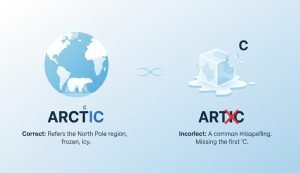
The word arctic refers to the region around the North Pole. It encompasses the Arctic Ocean and parts of several countries, including Canada, Russia, Greenland, the United States (Alaska), Norway, Sweden, and Finland. The arctic is characterized by extremely cold temperatures, ice, and unique wildlife adapted to these harsh conditions. As an adjective, “arctic” describes anything related to or characteristic of this region. As a noun, it refers to the Arctic region itself.
The term “arctic” can be used in various contexts, including geography, climate science, biology, and even in figurative language to describe something extremely cold or barren. Understanding the specific context is essential for interpreting the meaning accurately.
Classification
The word “arctic” can function as both an adjective and a noun.
- Adjective: Describing something related to the Arctic region. Example: arctic winds, arctic animals, arctic research.
- Noun: Referring to the Arctic region itself. Example: The Arctic is warming at twice the global average.
Function
As an adjective, “arctic” modifies nouns to provide more specific information about them. As a noun, “arctic” serves as the subject or object of a sentence, referring to the geographical area.
Contexts
The word “arctic” is encountered in various fields and situations:
- Geography: Discussing the physical characteristics of the Arctic region, such as its landforms, bodies of water, and climate.
- Climate Science: Analyzing the effects of climate change on the Arctic, including melting ice, rising temperatures, and changes in sea levels.
- Biology: Studying the unique flora and fauna of the Arctic, and how they adapt to the extreme conditions.
- Politics: Examining issues related to resource management, territorial claims, and indigenous rights in the Arctic region.
- Figurative Language: Used metaphorically to describe something extremely cold, barren, or isolated.
Structural Breakdown of “Arctic”
The word “arctic” is derived from the Greek word arktikos, meaning “near the bear,” referring to the constellations Ursa Major (Great Bear) and Ursa Minor (Little Bear), which are located in the northern sky. This etymological connection highlights the historical understanding of the Arctic as the region beneath these constellations.
The word consists of the following elements:
- Root: arktos (Greek for “bear”)
- Suffix: -ikos (Greek suffix meaning “related to”)
The spelling “arctic” with a “c” is the standard and correct form. There is no common or accepted variation of the word spelled “artic.”
Usage Rules for “Arctic”
The usage of “arctic” is relatively straightforward. It should be used with a capital “A” when referring to the Arctic region as a proper noun.
When used as an adjective, it is generally lowercase, unless it begins a sentence.
Capitalization
- Proper Noun: Always capitalize “Arctic” when referring to the Arctic region. Example: The Arctic is experiencing rapid environmental changes.
- Adjective: Generally lowercase “arctic” when used as an adjective. Example: arctic foxes are well-adapted to the cold.
- Beginning of Sentence: Capitalize “Arctic” or “arctic” when it is the first word of a sentence. Example: Arctic exploration has a long and fascinating history.
Adjective Placement
As an adjective, “arctic” typically precedes the noun it modifies.
- Correct: arctic winds, arctic ice, arctic climate
- Incorrect: winds arctic, ice arctic, climate arctic
Common Collocations
Certain words frequently appear together with “arctic.” These common collocations can help you use the word more naturally and accurately.
- arctic region
- arctic climate
- arctic animals
- arctic ice
- arctic exploration
- arctic research
- arctic ecosystem
- arctic tundra
- arctic circle
- arctic waters
Examples of “Arctic” in Sentences
Here are several examples illustrating the correct usage of “arctic” as both an adjective and a noun, categorized for clarity.
Adjective Examples
The following table provides examples of “arctic” used as an adjective, modifying nouns to describe things related to the Arctic region. Notice how the adjective precedes the noun in each case.
| Sentence | Explanation |
|---|---|
| The arctic climate is characterized by long, cold winters and short, cool summers. | “Arctic” modifies “climate,” describing the type of climate. |
| Arctic foxes have thick fur to protect them from the extreme cold. | “Arctic” modifies “foxes,” specifying the type of foxes. |
| Scientists are conducting arctic research to study the effects of climate change. | “Arctic” modifies “research,” indicating the type of research being conducted. |
| The arctic landscape is dominated by ice and snow. | “Arctic” modifies “landscape,” describing the type of landscape. |
| Arctic explorers faced many challenges during their expeditions. | “Arctic” modifies “explorers,” specifying the type of explorers. |
| The arctic ecosystem is fragile and vulnerable to human impact. | “Arctic” modifies “ecosystem,” describing the type of ecosystem. |
| The arctic tundra is a vast, treeless plain. | “Arctic” modifies “tundra,” specifying the type of tundra. |
| Arctic winds can be fierce and unforgiving. | “Arctic” modifies “winds,” describing the type of winds. |
| The arctic circle marks the boundary of the Arctic region. | “Arctic” modifies “circle,” specifying the type of circle. |
| Many indigenous communities live in the arctic regions. | “Arctic” modifies “regions,” specifying the type of regions. |
| The arctic waters are home to a variety of marine life. | “Arctic” modifies “waters,” describing the type of waters. |
| Arctic oil and gas reserves are a source of international interest. | “Arctic” modifies “oil and gas reserves,” specifying the type of reserves. |
| The arctic tern migrates from pole to pole each year. | “Arctic” modifies “tern,” specifying the type of tern. |
| Arctic char is a popular fish in the region. | “Arctic” modifies “char,” specifying the type of char. |
| The arctic summer is short but intense. | “Arctic” modifies “summer,” describing the type of summer. |
| Arctic nights can be long and dark. | “Arctic” modifies “nights,” describing the type of nights. |
| The arctic environment is changing rapidly. | “Arctic” modifies “environment,” describing the type of environment. |
| Arctic communities are adapting to climate change. | “Arctic” modifies “communities,” specifying the type of communities. |
| The arctic sky is often filled with the aurora borealis. | “Arctic” modifies “sky,” describing the type of sky. |
| Arctic tourism is becoming increasingly popular. | “Arctic” modifies “tourism,” specifying the type of tourism. |
| The arctic snow reflects the sunlight intensely. | “Arctic” modifies “snow,” describing the type of snow. |
| Arctic icebergs are a hazard to navigation. | “Arctic” modifies “icebergs,” specifying the type of icebergs. |
| The arctic permafrost is thawing, releasing greenhouse gases. | “Arctic” modifies “permafrost,” specifying the type of permafrost. |
| Arctic shipping routes are opening up due to melting ice. | “Arctic” modifies “shipping routes,” specifying the type of shipping routes. |
Noun Examples
The following table illustrates the use of “Arctic” as a noun, referring to the Arctic region itself. Note the capitalization of “Arctic” in these examples.
| Sentence | Explanation |
|---|---|
| The Arctic is warming at twice the global average. | “Arctic” is the subject of the sentence, referring to the geographic region. |
| Climate change is having a significant impact on the Arctic. | “Arctic” is the object of the preposition “on,” referring to the geographic region. |
| Exploration of the Arctic has a long and fascinating history. | “Arctic” is the object of the preposition “of,” referring to the geographic region. |
| Many indigenous communities live in the Arctic. | “Arctic” is the object of the preposition “in,” referring to the geographic region. |
| The future of the Arctic is a topic of great concern. | “Arctic” is the object of the preposition “of,” referring to the geographic region. |
| Scientists are studying the effects of pollution on the Arctic. | “Arctic” is the object of the preposition “on,” referring to the geographic region. |
| The melting ice in the Arctic is contributing to rising sea levels. | “Arctic” is the object of the preposition “in,” referring to the geographic region. |
| Protecting the Arctic is crucial for the health of the planet. | “Arctic” is the object of the verb “protecting,” referring to the geographic region. |
| The Arctic is home to a variety of unique species. | “Arctic” is the subject of the sentence, referring to the geographic region. |
| The geopolitical importance of the Arctic is increasing. | “Arctic” is the object of the preposition “of,” referring to the geographic region. |
| Tourism in the Arctic is growing rapidly. | “Arctic” is the object of the preposition “in,” referring to the geographic region. |
| The natural resources of the Arctic are attracting international attention. | “Arctic” is the object of the preposition “of,” referring to the geographic region. |
| The indigenous cultures of the Arctic are rich and diverse. | “Arctic” is the object of the preposition “of,” referring to the geographic region. |
| The landscape of the Arctic is breathtakingly beautiful. | “Arctic” is the object of the preposition “of,” referring to the geographic region. |
| The challenges facing the Arctic are complex and multifaceted. | “Arctic” is the object of the preposition “facing,” referring to the geographic region. |
| The research being conducted in the Arctic is essential for understanding climate change. | “Arctic” is the object of the preposition “in,” referring to the geographic region. |
| The future of the planet depends on the health of the Arctic. | “Arctic” is the object of the preposition “of,” referring to the geographic region. |
| The beauty of the Arctic is unparalleled. | “Arctic” is the object of the preposition “of,” referring to the geographic region. |
| We must work together to protect the Arctic for future generations. | “Arctic” is the object of the verb “protect,” referring to the geographic region. |
| The mysteries of the Arctic continue to fascinate scientists and explorers. | “Arctic” is the object of the preposition “of,” referring to the geographic region. |
| The impact of human activity on the Arctic is a growing concern. | “Arctic” is the object of the preposition “on,” referring to the geographic region. |
| The delicate balance of the ecosystem in the Arctic is at risk. | “Arctic” is the object of the preposition “in,” referring to the geographic region. |
| The study of the Arctic is crucial for understanding global climate patterns. | “Arctic” is the object of the preposition “of,” referring to the geographic region. |
| The preservation of the Arctic is a shared responsibility. | “Arctic” is the object of the preposition “of,” referring to the geographic region. |
Figurative Examples
The word “arctic” can also be used figuratively to describe something extremely cold or emotionally distant. Here are a few examples:
| Sentence | Explanation |
|---|---|
| She gave him an arctic stare that sent shivers down his spine. | “Arctic” describes the coldness of the stare. |
| The room felt arctic without any heating. | “Arctic” describes the extreme cold of the room. |
| His arctic demeanor made it difficult to connect with him. | “Arctic” describes the emotionally cold demeanor. |
| The abandoned house had an arctic chill that permeated every corner. | “Arctic” describes the pervasive coldness of the house. |
| The relationship turned arctic after the argument. | “Arctic” describes the coldness of the relationship. |
Common Mistakes with “Arctic”
The most common mistake is spelling “arctic” as “artic.” The correct spelling is always with a “c.”
Many people wonder, “How do you spell arctic?” The correct form always includes the letter “c” after the “r.” Using “artic” is a common mistake, but remembering the Greek root arktikos can help avoid this error. Similarly, if you’re unsure whether to write “artic” or “arctic,” always opt for the spelling with a “c” to ensure accuracy.
Here are some examples of common mistakes and their corrections:
| Incorrect | Correct | Explanation |
|---|---|---|
| The artic region is experiencing rapid changes. | The arctic region is experiencing rapid changes. | “Arctic” is misspelled as “artic.” |
| Artic winds blew fiercely across the tundra. | Arctic winds blew fiercely across the tundra. | “Arctic” is misspelled as “artic.” |
| She felt an artic chill in the air. | She felt an arctic chill in the air. | “Arctic” is misspelled as “artic.” |
Practice Exercises
Test your understanding of “arctic” with these practice exercises. Fill in the blanks with the correct form of the word.
Exercise 1: Fill in the Blanks
| Question | Answer |
|---|---|
| 1. The ______ region is known for its polar bears. | Arctic |
| 2. ______ winds can be extremely cold. | Arctic |
| 3. Scientists are studying the effects of climate change on the ______. | Arctic |
| 4. The ______ tundra is a treeless plain. | Arctic |
| 5. ______ exploration has a rich history. | Arctic |
| 6. Many indigenous communities live in the ______ regions. | Arctic |
| 7. The ______ ecosystem is very fragile. | Arctic |
| 8. He gave me an ______ stare. | arctic |
| 9. The ______ circle marks the boundary of the Arctic region. | Arctic |
| 10. The melting of ice in the ______ is a major concern. | Arctic |
Exercise 2: Correct the Mistakes
Identify and correct the errors in the following sentences.
| Question | Answer |
|---|---|
| 1. The artic climate is harsh. | The arctic climate is harsh. |
| 2. Artic foxes are well-adapted to the cold. | Arctic foxes are well-adapted to the cold. |
| 3. The future of the Artic is uncertain. | The future of the Arctic is uncertain. |
| 4. She felt an artic breeze. | She felt an arctic breeze. |
| 5. The artic region is warming up. | The arctic region is warming up. |
| 6. Artic exploration is dangerous. | Arctic exploration is dangerous. |
| 7. The animals in the artic are unique. | The animals in the Arctic are unique. |
| 8. Ice covers the artic. | Ice covers the Arctic. |
| 9. A cold artic wind blew. | A cold arctic wind blew. |
| 10. The artic tern migrates far. | The arctic tern migrates far. |
Advanced Topics: Arctic vs. Antarctic
It’s important to distinguish between the Arctic and the Antarctic. While both are polar regions, they have distinct characteristics.
- Arctic: The region around the North Pole, consisting of the Arctic Ocean and parts of several countries.
- Antarctic: The region around the South Pole, a continent surrounded by the Southern Ocean.
The Arctic is primarily ocean surrounded by land, while the Antarctic is primarily land surrounded by ocean. This fundamental difference affects their climates, ecosystems, and the presence of human populations.
The Arctic is generally warmer than the Antarctic, and it has a larger indigenous population. The Antarctic, on the other hand, is almost entirely covered by ice and has no permanent human residents, except for scientists and support staff at research stations.
Frequently Asked Questions
Why is it important to spell “arctic” correctly?
Correct spelling is essential for clear and effective communication. Using the wrong spelling can lead to confusion and undermine the credibility of your writing. In academic and professional contexts, accurate spelling demonstrates attention to detail and respect for the English language.
How can I remember the correct spelling of “arctic”?
One helpful mnemonic is to associate the “c” in “arctic” with “cold,” as the Arctic is a very cold region. Another approach is to remember the word’s Greek origin, arktikos, which contains the “c.”
Is it ever correct to use “artic”?
No, “artic” is not a correct spelling of the word referring to the polar region. It’s a common misspelling, but it should always be corrected to “arctic.”
When should I capitalize “Arctic”?
Capitalize “Arctic” when referring to the Arctic region as a proper noun. If you’re asking, “Is Arctic capitalized?” the answer depends on context. Always capitalize “Arctic” when referring to the proper noun—the region itself. Use lowercase “arctic” when it functions as an adjective, unless it begins a sentence.
When used as an adjective, it is generally lowercase, unless it begins a sentence.
What are some other words related to “arctic”?
Some related words include: polar, tundra, ice floe, permafrost, and aurora borealis. These words are often used in discussions about the Arctic region.
What are the main environmental concerns in the Arctic?
The main environmental concerns include: climate change, melting ice, rising sea levels, pollution, and the impact of human activity on the fragile ecosystem. These issues are interconnected and pose significant challenges to the Arctic region.
How is climate change affecting the Arctic?
Climate change is causing the Arctic to warm at twice the global average rate. This is leading to the melting of ice, thawing of permafrost, and changes in the distribution of plant and animal species. These changes have far-reaching consequences for the Arctic and the rest of the world.
What is the difference between the Arctic and Antarctic?
The Arctic is the region around the North Pole, consisting of the Arctic Ocean and parts of several countries. The Antarctic is the region around the South Pole, a continent surrounded by the Southern Ocean. The Arctic is primarily ocean surrounded by land, while the Antarctic is primarily land surrounded by ocean.
Conclusion
Understanding the correct spelling and usage of “arctic” is a fundamental aspect of English grammar. By remembering that “arctic” (with a “c”) is the correct form, and by understanding its function as both an adjective and a noun, you can avoid common mistakes and communicate more effectively.
Always capitalize “Arctic” when referring to the region itself and use lowercase when it acts as an adjective. With the knowledge and practice provided in this guide, you can confidently use “arctic” in your writing and speech, contributing to clearer and more accurate communication about this important region of the world.
Continue to practice and pay attention to the contexts in which “arctic” is used to solidify your understanding.