Understanding and using verbs related to daily routines is crucial for effective communication in English. These verbs allow us to describe our daily lives, habits, and schedules, making them essential for both beginners and advanced learners.
This article provides a comprehensive overview of daily routine verbs, including their definitions, usage, examples, and practice exercises. Whether you’re a student, a teacher, or simply looking to improve your English skills, this guide will help you master the vocabulary needed to confidently discuss your daily activities.
Table of Contents
- Introduction
- Definition of Daily Routine Verbs
- Structural Breakdown of Daily Routine Sentences
- Types and Categories of Daily Routine Verbs
- Examples of Daily Routine Verbs
- Usage Rules for Daily Routine Verbs
- Common Mistakes with Daily Routine Verbs
- Practice Exercises
- Advanced Topics: Idioms and Phrasal Verbs
- Frequently Asked Questions
- Conclusion
Definition of Daily Routine Verbs
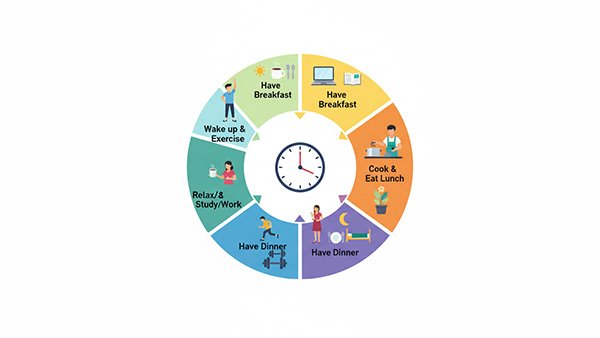
Daily routine verbs are action words that describe the activities we typically perform on a regular basis. These verbs are fundamental to discussing our daily lives, habits, and schedules.
They cover a wide range of actions, from waking up in the morning to going to bed at night. Understanding and using these verbs correctly is essential for clear and effective communication in English.
These verbs are often used in the simple present tense to describe habitual actions. They help express what we do regularly, making them crucial for everyday conversations.
For example, instead of saying “I eat breakfast every day,” you can simply say “I eat breakfast.” The simple present tense implies the routine nature of the action.
Daily routine verbs can be classified into several categories based on the time of day they typically occur or the type of activity they describe. These categories include morning routines, work or school routines, leisure activities, and evening routines.
For learners who prefer structured references, a daily routine verbs list PDF can be an invaluable tool. Such lists typically include the verbs categorized by time of day or activity type, allowing for easy study and review. Downloading a daily routine verbs list PDF ensures you have a handy resource for practice exercises and quick reference whenever needed.
By understanding these categories, learners can better organize and express their daily schedules.
Structural Breakdown of Daily Routine Sentences
The basic structure of sentences using daily routine verbs in the simple present tense follows a straightforward pattern: Subject + Verb (base form or -s/-es for third-person singular). This structure is easy to learn and apply, making it accessible for beginners.
However, it’s important to remember the subject-verb agreement rules to avoid common errors.
For example, “I wake up at 7 am” follows the structure of Subject (I) + Verb (wake up). In contrast, “He wakes up at 7 am” follows Subject (He) + Verb (wakes up).
The addition of “-s” to the verb in the third-person singular is a crucial aspect of English grammar.
To form negative sentences, we typically use “do not” or “does not” before the verb. For example, “I do not wake up at 6 am” or “She does not eat meat.” Contractions like “don’t” and “doesn’t” are commonly used in informal speech and writing.
Questions are formed by inverting the subject and auxiliary verb (do/does). For example, “Do you wake up early?” or “Does she work on Sundays?”
Types and Categories of Daily Routine Verbs
Morning Routine Verbs
These verbs describe actions performed in the morning, from waking up to preparing for the day.
- Wake up
- Get up
- Make the bed
- Brush teeth
- Wash face
- Take a shower
- Get dressed
- Eat breakfast
- Drink coffee/tea
- Go to work/school
Work/School Routine Verbs
These verbs describe activities carried out during work or school hours.
- Attend classes/meetings
- Work on projects
- Answer emails
- Make phone calls
- Have lunch
- Teach students
- Study subjects
- Write reports
- Collaborate with colleagues
- Give presentations
Leisure Routine Verbs
These verbs describe activities done for relaxation and enjoyment.
- Read a book
- Watch TV
- Listen to music
- Go for a walk
- Exercise
- Play sports
- Meet friends
- Cook dinner
- Surf the internet
- Play video games
Evening Routine Verbs
These verbs describe actions performed in the evening before going to bed.
- Eat dinner
- Relax
- Watch a movie
- Read a book
- Brush teeth
- Wash face
- Get ready for bed
- Set an alarm
- Go to bed
- Fall asleep
Examples of Daily Routine Verbs
The following tables provide extensive examples of daily routine verbs used in sentences. Each table focuses on a specific category of routines and offers a variety of examples to illustrate how these verbs are used in context.
If you are looking to reinforce your learning, exploring daily routine verbs with examples in English is highly effective. Seeing these verbs used in context helps you understand proper tense, subject-verb agreement, and sentence structure. Example-based learning bridges the gap between memorizing verbs and using them fluently in daily conversations.
Morning Routine Examples
This table includes examples of verbs commonly used to describe morning activities. Each example demonstrates the use of the simple present tense to express habitual actions.
| Sentence | Explanation |
|---|---|
| I wake up at 6:00 AM every day. | Describes the time of waking up as a daily habit. |
| She gets up immediately after waking up. | Indicates the action of getting out of bed. |
| He makes the bed before leaving the room. | Describes the action of tidying up the bed. |
| We brush our teeth after breakfast. | Indicates the action of cleaning teeth. |
| They wash their faces with cold water. | Describes the action of washing the face. |
| I take a shower every morning. | Indicates the action of showering. |
| She gets dressed before eating breakfast. | Describes the action of putting on clothes. |
| He eats breakfast at 7:00 AM. | Indicates the action of eating breakfast. |
| We drink coffee to stay awake. | Describes the action of drinking coffee. |
| They go to work by bus. | Indicates the action of commuting to work. |
| I check my emails as soon as I wake up. | Describes a habitual action of checking emails. |
| She prepares a smoothie for breakfast. | Indicates the action of preparing a morning drink. |
| He listens to the news while getting ready. | Describes listening to the news as part of his routine. |
| We pack our lunches before leaving home. | Indicates the action of preparing lunch for the day. |
| They water the plants every morning. | Describes a habitual action of watering plants. |
| I meditate for 15 minutes to start the day. | Indicates the action of meditating. |
| She feeds her pet before going to work. | Describes the action of feeding a pet. |
| He reads the newspaper while having coffee. | Indicates the action of reading the newspaper. |
| We exercise for 30 minutes to stay healthy. | Describes the action of exercising. |
| They plan their day every morning. | Indicates the action of planning the day. |
| I set my alarm for 5:30 AM. | Describes the action of setting an alarm. |
| She chooses her outfit the night before. | Indicates the action of planning what to wear. |
| He straightens his desk before starting work. | Describes the action of tidying up the workspace. |
| We leave the house by 7:30 AM. | Indicates the action of leaving for the day. |
| They drive to work in separate cars. | Describes the action of driving to work. |
Work/School Routine Examples
This table provides examples of verbs used to describe activities typically performed during work or school hours. These examples illustrate different aspects of a professional or academic routine.
| Sentence | Explanation |
|---|---|
| I attend meetings every Monday. | Describes attending meetings as a regular part of the work week. |
| She works on projects with her team. | Indicates the action of collaborating on projects. |
| He answers emails throughout the day. | Describes the action of responding to emails. |
| We make phone calls to clients. | Indicates the action of contacting clients by phone. |
| They have lunch at the cafeteria. | Describes the action of eating lunch at the cafeteria. |
| I teach students English grammar. | Indicates the action of teaching a specific subject. |
| She studies subjects like math and science. | Describes the action of studying academic subjects. |
| He writes reports for his manager. | Indicates the action of writing professional reports. |
| We collaborate with colleagues on various tasks. | Describes the action of working together with colleagues. |
| They give presentations at conferences. | Indicates the action of presenting information at conferences. |
| I check my schedule for upcoming appointments. | Describes a habitual action of reviewing the schedule. |
| She organizes her desk to stay productive. | Indicates the action of organizing the workspace. |
| He reads articles related to his field. | Describes reading professional articles. |
| We discuss ideas in team meetings. | Indicates discussing ideas with team members. |
| They plan strategies for the next quarter. | Describes planning business strategies. |
| I analyze data to improve performance. | Indicates the action of analyzing data. |
| She researches new trends in the industry. | Describes researching industry trends. |
| He designs graphics for marketing campaigns. | Indicates designing marketing materials. |
| We develop software applications for clients. | Describes developing software applications. |
| They manage projects and deadlines. | Indicates managing projects and meeting deadlines. |
| I attend workshops to improve my skills. | Describes attending workshops for skill development. |
| She participates in online forums. | Indicates participating in online discussions. |
| He reviews documents before submission. | Describes reviewing documents for accuracy. |
| We mentor junior colleagues. | Indicates mentoring new employees. |
| They evaluate student performance. | Describes evaluating student work. |
Leisure Routine Examples
This table includes examples of verbs used to describe leisure activities performed for relaxation and enjoyment. These examples showcase how people spend their free time.
| Sentence | Explanation |
|---|---|
| I read a book before bed. | Describes reading as a relaxing activity before sleep. |
| She watches TV in the evening. | Indicates watching television as a leisure activity. |
| He listens to music while cooking. | Describes listening to music while performing another activity. |
| We go for a walk in the park. | Indicates going for a walk as a form of exercise and relaxation. |
| They exercise at the gym three times a week. | Describes exercising regularly to stay fit. |
| I play sports with my friends on weekends. | Indicates playing sports as a social and recreational activity. |
| She meets friends for coffee. | Describes meeting friends as a social activity. |
| He cooks dinner for his family. | Indicates cooking as a domestic activity. |
| We surf the internet for information and entertainment. | Describes using the internet for various purposes. |
| They play video games in their free time. | Indicates playing video games as a leisure activity. |
| I paint landscapes as a hobby. | Describes painting as a creative leisure pursuit. |
| She gardens in her backyard. | Indicates gardening as a relaxing outdoor activity. |
| He writes poetry in his journal. | Describes writing poetry as a creative outlet. |
| We visit museums on weekends. | Indicates visiting museums for cultural enrichment. |
| They attend concerts of their favorite bands. | Describes attending concerts for entertainment. |
| I practice yoga to relax my mind and body. | Indicates practicing yoga for relaxation. |
| She volunteers at a local charity. | Describes volunteering as a way to give back to the community. |
| He learns new languages online. | Indicates learning languages as a hobby. |
| We explore new hiking trails. | Describes exploring nature through hiking. |
| They dance at social gatherings. | Indicates dancing as a social activity. |
| I bake cookies for my family. | Describes baking as a domestic and enjoyable activity. |
| She knits scarves and hats during winter. | Indicates knitting as a creative and seasonal activity. |
| He collects stamps as a hobby. | Describes collecting stamps as a pastime. |
| We play board games with our family. | Indicates playing board games as a family activity. |
| They watch movies at the cinema. | Describes watching movies as a form of entertainment. |
Evening Routine Examples
This table provides examples of verbs used to describe activities typically performed in the evening before going to bed. These examples illustrate how people wind down and prepare for sleep.
| Sentence | Explanation |
|---|---|
| I eat dinner at 7:00 PM. | Describes the action of having dinner. |
| She relaxes after a long day at work. | Indicates relaxing as a way to unwind. |
| He watches a movie before bed. | Describes watching a movie as a pre-sleep activity. |
| We read a book to relax. | Indicates reading as a calming activity. |
| They brush their teeth before sleeping. | Describes brushing teeth as part of the bedtime routine. |
| I wash my face to remove makeup. | Indicates washing the face as part of skincare. |
| She gets ready for bed. | Describes preparing for sleep. |
| He sets an alarm for the next morning. | Indicates setting an alarm to wake up on time. |
| We go to bed around 10:00 PM. | Describes going to bed at a specific time. |
| They fall asleep quickly. | Indicates the action of falling asleep. |
| I check my phone one last time. | Describes a common habit before sleeping. |
| She prepares a cup of herbal tea. | Indicates preparing a relaxing beverage. |
| He reflects on the day’s events. | Describes reflecting on the day. |
| We dim the lights to create a relaxing atmosphere. | Indicates adjusting the lighting for sleep. |
| They listen to calming music. | Describes listening to music for relaxation. |
| I write in my gratitude journal. | Indicates writing as a reflective activity. |
| She stretches to relax her muscles. | Describes stretching as a way to relieve tension. |
| He meditates to calm his mind. | Indicates meditating before sleep. |
| We talk about our day with each other. | Describes sharing experiences with a partner. |
| They plan for the next day. | Indicates planning and preparing for the following day. |
| I lock all the doors before going to bed. | Describes securing the house for the night. |
| She turns off all the lights. | Indicates switching off the lights before sleeping. |
| He reads news articles before bed. | Describes reading news as a pre-sleep activity. |
| We prepare our clothes for the next day. | Indicates preparing outfits in advance. |
| They check the weather forecast. | Describes checking the weather for the next day. |
Usage Rules for Daily Routine Verbs
When using daily routine verbs, it’s essential to follow the rules of the simple present tense. This tense is used to describe habitual actions, general truths, and fixed arrangements.
The basic rules include:
- For subjects I, you, we, they, use the base form of the verb (e.g., I eat, you eat, we eat, they eat).
- For subjects he, she, it, add “-s” or “-es” to the base form of the verb (e.g., he eats, she eats, it eats).
To form negative sentences, use “do not” or “does not” before the verb. Contractions “don’t” and “doesn’t” are commonly used in informal contexts.
For example:
- I do not (don’t) eat meat.
- She does not (doesn’t) wake up early.
To form questions, invert the subject and auxiliary verb (do/does). For example:
- Do you eat breakfast?
- Does she work on Sundays?
Adverbs of frequency, such as always, usually, often, sometimes, rarely, never, are often used with daily routine verbs to indicate how often an action is performed. These adverbs typically come before the main verb but after the auxiliary verb (do/does). For example:
- I always wake up at 7 am.
- She usually eats breakfast at home.
- He sometimes goes to the gym.
Past Forms of Daily Routine Verbs
Understanding the past form of daily routine verbs is essential for describing activities that occurred previously. Just as daily routine verbs are used in the simple present to express habitual actions, their past forms allow you to recount events that already happened. For regular verbs, simply add “-ed” to the base form, such as “walk” becoming “walked” or “cook” becoming “cooked.”
Irregular verbs, however, have unique past forms, like “go” becoming “went” and “eat” becoming “ate.” Practicing these past forms helps you narrate your day-to-day experiences from yesterday or last week accurately. Using both present and past forms interchangeably enhances your storytelling skills and improves your overall fluency. It is beneficial to keep a reference list of common daily routine verbs with their past forms for easy review and repeated practice.
Common Mistakes with Daily Routine Verbs
One of the most common mistakes is forgetting to add “-s” or “-es” to the verb in the third-person singular (he, she, it). For example:
| Incorrect | Correct | Explanation |
|---|---|---|
| She eat breakfast. | She eats breakfast. | The verb “eat” needs an “-s” because the subject is “she.” |
| He wake up early. | He wakes up early. | The verb “wake up” needs an “-s” because the subject is “he.” |
Another common mistake is using the wrong auxiliary verb when forming questions or negative sentences. For example:
| Incorrect | Correct | Explanation |
|---|---|---|
| Do she eat breakfast? | Does she eat breakfast? | The auxiliary verb “does” is used with the subject “she.” |
| I doesn’t like coffee. | I don’t like coffee. | The auxiliary verb “don’t” is used with the subject “I.” |
Using the present continuous tense instead of the simple present tense to describe habitual actions is also a common error. For example:
| Incorrect | Correct | Explanation |
|---|---|---|
| I am eating breakfast every day. | I eat breakfast every day. | The simple present tense is used to describe habitual actions. |
| She is waking up early every morning. | She wakes up early every morning. | The simple present tense is used to describe habitual actions. |
Practice Exercises
Exercise 1: Fill in the Blanks
Fill in the blanks with the correct form of the verb in parentheses.
| Question | Answer |
|---|---|
| I _______ (wake up) at 7:00 AM every day. | I wake up at 7:00 AM every day. |
| She _______ (eat) breakfast at 8:00 AM. | She eats breakfast at 8:00 AM. |
| He _______ (go) to work by bus. | He goes to work by bus. |
| We _______ (study) English every evening. | We study English every evening. |
| They _______ (watch) TV after dinner. | They watch TV after dinner. |
| She _______ (brush) her teeth before bed. | She brushes her teeth before bed. |
| He _______ (drink) coffee in the morning. | He drinks coffee in the morning. |
| I _______ (read) a book before sleeping. | I read a book before sleeping. |
| They _______ (exercise) at the gym. | They exercise at the gym. |
| We _______ (cook) dinner together. | We cook dinner together. |
Exercise 2: Rewrite the Sentences in the Negative Form
Rewrite the following sentences in the negative form.
| Question | Answer |
|---|---|
| I wake up early. | I do not wake up early. |
| She eats meat. | She does not eat meat. |
| He likes coffee. | He does not like coffee. |
| We watch TV. | We do not watch TV. |
| They study math. | They do not study math. |
| She brushes her hair. | She does not brush her hair. |
| He goes to the gym. | He does not go to the gym. |
| I read newspapers. | I do not read newspapers. |
| They cook pasta. | They do not cook pasta. |
| We drink soda. | We do not drink soda. |
Exercise 3: Form Questions
Turn the following sentences into questions.
| Question | Answer |
|---|---|
| You wake up at 7:00 AM. | Do you wake up at 7:00 AM? |
| She eats breakfast. | Does she eat breakfast? |
| He goes to work. | Does he go to work? |
| We study English. | Do we study English? |
| They watch TV. | Do they watch TV? |
| She brushes her teeth. | Does she brush her teeth? |
| He drinks coffee. | Does he drink coffee? |
| I read a book. | Do I read a book? |
| They exercise at the gym. | Do they exercise at the gym? |
| We cook dinner together. | Do we cook dinner together? |
Advanced Topics: Idioms and Phrasal Verbs
Beyond basic daily routine verbs, there are idioms and phrasal verbs that add nuance and color to your descriptions. These expressions often have meanings that are not immediately obvious from the individual words, so they require dedicated study.
For example, “hit the snooze button” means to postpone waking up by pressing the snooze button on an alarm clock.
Phrasal verbs consist of a verb and a preposition or adverb, and they often have a different meaning than the verb alone. For example, “get up” means to rise from bed, which is different from simply “get.” Other common phrasal verbs related to daily routines include “wake up,” “wind down,” and “catch up on.”
Understanding and using these idioms and phrasal verbs can make your English sound more natural and fluent. It’s helpful to learn them in context and practice using them in sentences. For example, “After a long day, I like to wind down by reading a book.”
Frequently Asked Questions
What is the difference between “wake up” and “get up”?
“Wake up” means to stop sleeping, while “get up” means to rise from bed. You can wake up but stay in bed for a while before getting up.
How do I use adverbs of frequency with daily routine verbs?
Adverbs of frequency (e.g., always, usually, often, sometimes, rarely, never) usually come before the main verb but after the auxiliary verb (do/does). For example, “I always wake up at 7 am” or “She doesn’t often eat meat.”
Why do I need to add “-s” or “-es” to the verb in the third-person singular?
Adding “-s” or “-es” to the verb in the third-person singular (he, she, it) is a fundamental rule of the simple present tense in English. It’s necessary for grammatical correctness.
What is the simple present tense used for?
The simple present tense is used to describe habitual actions, general truths, and fixed arrangements. It’s commonly used to talk about daily routines and schedules.
How can I improve my vocabulary of daily routine verbs?
Read English texts, listen to English conversations, and make a list of new verbs you encounter. Practice using these verbs in sentences and try to incorporate them into your daily conversations.
What are some common phrasal verbs related to daily routines?
Common phrasal verbs include “wake up,” “get up,” “wind down,” “catch up on,” and “go to bed.” These expressions often have meanings that are not immediately obvious from the individual words.
How do I form questions with daily routine verbs?
To form questions, invert the subject and auxiliary verb (do/does). For example, “Do you eat breakfast?” or “Does she work on Sundays?”
Is it important to use correct grammar when describing daily routines?
Yes, using correct grammar is essential for clear and effective communication. Incorrect grammar can lead to misunderstandings and make your English sound less professional.
Conclusion
Mastering daily routine verbs is crucial for anyone learning English. These verbs are fundamental to describing our daily lives, habits, and schedules.
By understanding their definitions, usage rules, and common mistakes, you can significantly improve your communication skills. Remember to practice regularly, use the verbs in context, and pay attention to subject-verb agreement.
This guide has provided a comprehensive overview of daily routine verbs, including examples, practice exercises, and advanced topics. By applying what you’ve learned, you’ll be able to confidently discuss your daily activities and understand others when they talk about theirs.
Keep practicing and expanding your vocabulary, and you’ll soon become proficient in using daily routine verbs.
Continue to explore different aspects of English grammar and vocabulary to further enhance your language skills. The key to success is consistent practice and a willingness to learn from your mistakes.
Good luck on your English learning journey!