Nature, in all its splendor, provides endless inspiration for writers and speakers. The ability to accurately and vividly describe natural elements and phenomena is crucial for effective communication, whether in creative writing, scientific reports, or everyday conversation.
This article offers a comprehensive exploration of words used to describe nature, covering various categories, structural elements, usage rules, and common mistakes. It is designed for English language learners of all levels, from beginners seeking basic vocabulary to advanced learners aiming to refine their descriptive skills.
Table of Contents
- Introduction
- Definition: Describing Nature
- Structural Breakdown of Descriptive Language
- Types and Categories of Nature-Related Words
- Examples of Words Describing Nature
- Usage Rules and Guidelines
- Common Mistakes
- Practice Exercises
- Advanced Topics
- Frequently Asked Questions
- Conclusion
Definition: Describing Nature
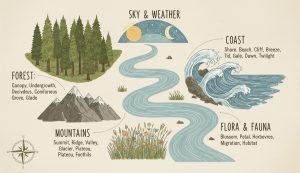
Describing nature involves using language to represent the physical world, its elements, and its processes. For those learning how to describe nature, it is helpful to consider multiple approaches. One effective way is to focus on sensory details, highlighting how elements of the environment look, sound, feel, or even smell. Another way to describe nature is by employing figurative language, such as metaphors or personification, which adds emotional depth and vividness to your writing.
Additionally, structuring your sentences to combine adjectives, verbs, and prepositional phrases can create dynamic and engaging depictions of landscapes, weather, and wildlife. This encompasses a wide range of vocabulary, including nouns, adjectives, verbs, and adverbs, all contributing to a vivid and accurate portrayal of natural environments.
The goal is to evoke sensory experiences and convey specific details about the appearance, sound, smell, and feel of nature.
The function of descriptive language in this context is multifaceted. It can be used to inform, persuade, entertain, or simply to share personal experiences.
In scientific writing, precision and accuracy are paramount. In creative writing, the emphasis is on creating a strong emotional connection with the reader through evocative language.
In everyday conversation, describing nature can enhance communication and foster a deeper appreciation for the environment.
The context in which nature is described also influences the choice of words. A scientific report might use technical terms to classify plant species, while a poem might use metaphorical language to express the beauty of a sunset.
Understanding the audience and purpose of communication is essential for selecting the most appropriate and effective vocabulary.
Structural Breakdown of Descriptive Language
Describing nature effectively relies on a strong understanding of sentence structure and grammatical elements. Adjectives play a crucial role in modifying nouns, providing details about their qualities and characteristics.
For example, instead of saying “a tree,” one might say “a towering oak tree” or “a gnarled, ancient tree.”
Verbs are equally important, as they describe actions and processes. Instead of saying “the wind blew,” one could say “the wind howled” or “the wind whispered through the trees.” The choice of verb can significantly impact the emotional tone and imagery of the description.
Adverbs modify verbs, adjectives, or other adverbs, adding further detail and nuance. For example, “The sun shone brightly” or “The river flowed swiftly.” Adverbs can help to create a more vivid and dynamic picture of nature.
Prepositional phrases also play a key role in describing location and relationships. Phrases like “in the forest,” “by the river,” or “under the stars” provide context and spatial orientation.
Types and Categories of Nature-Related Words
Weather
Weather encompasses the atmospheric conditions at a specific time and place. It includes elements such as temperature, precipitation, wind, and cloud cover.
Describing weather often involves using adjectives to convey the intensity and quality of these elements.
Landscapes and Landforms
Landscapes refer to the overall appearance of an area, including its natural features such as mountains, valleys, plains, and bodies of water. Landforms are specific physical features of the Earth’s surface, such as hills, cliffs, and canyons.
Descriptive language in this category often focuses on shape, size, and texture.
Plants and Vegetation
Plants and vegetation encompass all forms of plant life, from towering trees to tiny wildflowers. Describing plants involves using vocabulary related to their appearance, such as color, shape, size, and texture.
It also includes terms for specific plant parts, such as leaves, stems, flowers, and roots.
Animals and Wildlife
Animals and wildlife include all non-domesticated animals living in their natural habitats. Describing animals involves using vocabulary related to their appearance, behavior, and habitat.
It also includes terms for specific animal characteristics, such as fur, feathers, scales, and claws.
Natural Phenomena
Natural phenomena are observable events that occur in the natural world, such as rainbows, auroras, eclipses, and volcanic eruptions. Describing these phenomena often involves using vivid and evocative language to capture their beauty and power.
Examples of Words Describing Nature
Expanding your vocabulary with specific words that describe nature can transform simple descriptions into rich and immersive narratives. Whether focusing on plants, animals, or weather, choosing words that describe the beauty of nature allows readers to visualize the scene more clearly and feel a stronger emotional connection. Consider keeping a dedicated list of these descriptive words to reference in your writing, ensuring your language remains precise and evocative.
Weather Examples
The following table provides examples of words used to describe various weather conditions. Each example includes a descriptive word or phrase and a sentence illustrating its use.
| Descriptive Word/Phrase | Example Sentence |
|---|---|
| Sunny | The sunny day was perfect for a picnic. |
| Cloudy | The sky was cloudy, with no sign of the sun. |
| Rainy | A rainy afternoon kept everyone indoors. |
| Windy | It was a windy day, and the trees were swaying. |
| Stormy | A stormy night brought heavy rain and thunder. |
| Foggy | The morning was foggy, making it hard to see. |
| Icy | The roads were icy and dangerous. |
| Snowy | A snowy landscape covered the mountains. |
| Humid | The air was humid and sticky. |
| Dry | It was a dry summer, and the crops suffered. |
| Freezing | The temperature was freezing, well below zero. |
| Mild | The weather was mild and pleasant. |
| Overcast | The sky was overcast, with a gray blanket of clouds. |
| Blustery | A blustery wind swept through the town. |
| Drizzly | It was a drizzly morning, with a light rain falling. |
| Scorching | The sun was scorching, making it unbearable to be outside. |
| Balmy | A balmy breeze came in from the sea. |
| Gusty | The wind was gusty, making it hard to walk. |
| Torrential | Torrential rain flooded the streets. |
| Chilly | It was a chilly evening, and we needed sweaters. |
| Crisp | The air was crisp and clean after the rain. |
| Oppressive | The heat was oppressive, making it hard to breathe. |
| Inclement | Inclement weather forced the cancellation of the event. |
| Nippy | It was a nippy morning, perfect for a brisk walk. |
| Sweltering | The day was sweltering, and everyone sought shade. |
Landscape Examples
The following table provides examples of words used to describe landscapes and landforms. Each example includes a descriptive word or phrase and a sentence illustrating its use.
| Descriptive Word/Phrase | Example Sentence |
|---|---|
| Mountainous | The mountainous region was breathtaking. |
| Hilly | The hilly terrain made cycling challenging. |
| Coastal | The coastal town was a popular tourist destination. |
| Desert | The vast desert stretched as far as the eye could see. |
| Forest | A dense forest covered the hillside. |
| Valley | The valley was lush and green. |
| Plain | The flat plain extended to the horizon. |
| Canyon | The deep canyon was carved by the river. |
| Plateau | The high plateau offered stunning views. |
| Swamp | The murky swamp was home to many creatures. |
| Glacial | The glacial landscape was covered in ice. |
| Volcanic | The volcanic island had black sand beaches. |
| Arid | The arid landscape supported only drought-resistant plants. |
| Fertile | The fertile valley was perfect for farming. |
| Barren | The barren wasteland offered no signs of life. |
| Lush | The lush rainforest teemed with biodiversity. |
| Rolling | The rolling hills were covered in wildflowers. |
| Serene | The serene lake reflected the surrounding mountains. |
| Picturesque | The picturesque village was a delight to visit. |
| Dramatic | The dramatic cliffs plunged into the sea. |
| Rugged | The rugged terrain was challenging to navigate. |
| Undulating | The undulating fields of wheat swayed in the breeze. |
| Sprawling | The sprawling metropolis consumed the landscape. |
| Remote | The remote island was accessible only by boat. |
| Tranquil | The tranquil countryside offered a peaceful escape. |
| Majestic | The majestic peaks were capped with snow. |
Plant Examples
The following table provides examples of words used to describe plants and vegetation. Each example includes a descriptive word or phrase and a sentence illustrating its use.
| Descriptive Word/Phrase | Example Sentence |
|---|---|
| Green | The green leaves rustled in the wind. |
| Tall | The tall trees provided shade from the sun. |
| Flowering | The flowering plants attracted bees and butterflies. |
| Blooming | The roses were blooming in the garden. |
| Fragrant | The fragrant flowers filled the air with perfume. |
| Lush | The lush vegetation covered the forest floor. |
| Dense | The dense foliage made it hard to see through the trees. |
| Thorny | The thorny bushes protected the berries from being eaten. |
| Vibrant | The vibrant colors of the autumn leaves were stunning. |
| Wilted | The wilted flowers needed water. |
| Leafy | The leafy branches provided a canopy over the path. |
| Sprawling | The sprawling vines climbed up the wall. |
| Deciduous | Deciduous trees lose their leaves in the fall. |
| Evergreen | Evergreen trees stay green all year round. |
| Towering | The towering redwood trees were awe-inspiring. |
| Delicate | The delicate petals of the orchid were exquisite. |
| Resilient | The resilient plants survived the harsh winter. |
| Indigenous | The indigenous plants were well-adapted to the local climate. |
| Exotic | The exotic flowers were imported from a tropical country. |
| Bountiful | The bountiful harvest provided plenty of food. |
| Creeping | The creeping ivy covered the old stone wall. |
| Sturdy | The sturdy oak tree had stood for centuries. |
| Gnarled | The gnarled branches of the ancient tree told a story. |
| Verdant | The verdant meadows stretched out before us. |
| Barren | The barren landscape showed little sign of vegetation. |
| Lanky | The lanky sunflowers towered over the garden. |
Animal Examples
The following table provides examples of words used to describe animals and wildlife. Each example includes a descriptive word or phrase and a sentence illustrating its use.
| Descriptive Word/Phrase | Example Sentence |
|---|---|
| Wild | The wild horses roamed free across the plains. |
| Graceful | The graceful deer leaped over the fence. |
| Majestic | The majestic eagle soared through the sky. |
| Fierce | The fierce lion protected its territory. |
| Playful | The playful dolphins swam alongside the boat. |
| Nocturnal | Nocturnal animals are active at night. |
| Camouflaged | The camouflaged chameleon blended in with its surroundings. |
| Venomous | The venomous snake was a danger to hikers. |
| Migratory | Migratory birds fly south for the winter. |
| Endangered | Endangered species need protection to survive. |
| Aquatic | Aquatic animals live in the water. |
| Terrestrial | Terrestrial animals live on land. |
| Herbivorous | Herbivorous animals eat plants. |
| Carnivorous | Carnivorous animals eat meat. |
| Omnivorous | Omnivorous animals eat both plants and meat. |
| Agile | The agile monkey swung through the trees. |
| Docile | The docile sheep grazed peacefully in the field. |
| Cunning | The cunning fox outsmarted the farmer. |
| Voracious | The voracious caterpillars devoured the leaves. |
| Resilient | The resilient animals adapted to the changing environment. |
| Stealthy | The stealthy leopard stalked its prey. |
| Vulnerable | The vulnerable chicks needed their mother’s protection. |
| Feral | The feral cats roamed the city streets. |
| Domesticated | Domesticated animals are kept by humans. |
| Lithe | The lithe cheetah sprinted across the savanna. |
| Gregarious | The gregarious elephants traveled in herds. |
Natural Phenomena Examples
The following table provides examples of words used to describe natural phenomena. Each example includes a descriptive word or phrase and a sentence illustrating its use.
| Descriptive Word/Phrase | Example Sentence |
|---|---|
| Brilliant | The brilliant aurora lit up the night sky. |
| Spectacular | The spectacular sunset painted the clouds with vibrant colors. |
| Powerful | The powerful earthquake shook the city. |
| Devastating | The devastating hurricane caused widespread damage. |
| Ethereal | The ethereal mist floated over the lake. |
| Luminous | The luminous moon illuminated the landscape. |
| Mystical | The mystical fog shrouded the ancient forest. |
| Transient | The transient rainbow disappeared as quickly as it appeared. |
| Unpredictable | The weather is often unpredictable in the mountains. |
| Awe-inspiring | The awe-inspiring Grand Canyon left us speechless. |
| Cataclysmic | The cataclysmic volcanic eruption destroyed the island. |
| Celestial | The celestial alignment of the planets was a rare event. |
| Ephemeral | The ephemeral beauty of the cherry blossoms lasted only a few days. |
| Galactic | The galactic dust created a stunning display in the night sky. |
| Infernal | The infernal heat of the lava was unbearable. |
| Iridescent | The iridescent colors of the oil slick shimmered on the water. |
| Prismatic | The prismatic effect of the sunlight through the raindrops created a rainbow. |
| Resplendent | The resplendent sunrise filled the sky with golden light. |
| Sublime | The sublime beauty of the mountain vista was unforgettable. |
| Turbulent | The turbulent storm raged for hours. |
| Volatile | The volatile volcano threatened to erupt again. |
| Wondrous | The wondrous display of the Northern Lights captivated the audience. |
| Zenithal | The zenithal rain poured down from directly overhead. |
| Boreal | The boreal aurora danced across the Arctic sky. |
| Effulgent | The effulgent glow of the full moon bathed the landscape in silver. |
| Ineffable | The ineffable beauty of the starry night defied description. |
Usage Rules and Guidelines
When describing nature, it’s important to use language that is both accurate and evocative. Here are some guidelines to follow:
- Use specific vocabulary: Avoid generic terms like “nice” or “pretty.” Instead, use specific words that convey the unique qualities of the natural element you are describing. For example, instead of saying “a nice flower,” say “a fragrant rose” or “a delicate orchid.”
- Engage the senses: Use language that appeals to the reader’s senses of sight, sound, smell, taste, and touch. Describe the colors, textures, sounds, and smells of the natural world.
- Use figurative language: Metaphors, similes, and personification can add depth and richness to your descriptions. For example, “The sun was like a fiery ball in the sky” or “The wind whispered secrets through the trees.”
- Be precise: Use accurate and descriptive language to paint a clear picture in the reader’s mind. Consider the context and select words that best convey the specific details you want to highlight.
- Vary your sentence structure: Use a mix of short and long sentences to create a more engaging and dynamic reading experience.
Common Mistakes
Here are some common mistakes to avoid when describing nature:
| Incorrect | Correct | Explanation |
|---|---|---|
| The tree was good. | The tree was ancient and gnarled. | Using generic adjectives instead of specific ones. |
| The weather was very nice. | The weather was balmy and mild. | Overusing intensifiers without adding specific details. |
| The bird flew quick. | The bird flew quickly. | Using adjectives instead of adverbs to modify verbs. |
| The mountain is big. | The mountain is towering and majestic. | Lacking descriptive detail; replace with more evocative words. |
| Sun was shining. | The sun was shining brightly. | Missing adverbs to enhance the action. |
| Flower smelled good. | The flower smelled fragrant and sweet. | Not using enough sensory details. |
| The water was blue. | The water was a turquoise blue, sparkling in the sunlight. | Failing to provide nuanced color descriptions and additional context. |
| The animal was scary. | The animal was ferocious, with sharp teeth and piercing eyes. | Using subjective adjectives instead of descriptive ones. |
| The forest is beautiful. | The forest is a tapestry of verdant greens and earthy browns. | Not using imagery or figurative language. |
| The cloud was white. | The cloud was a fluffy, white cumulus drifting lazily across the azure sky. | Missing additional context and detail. |
Practice Exercises
Complete the following sentences using descriptive words related to nature.
| Question | Answer |
|---|---|
| 1. The ________ river flowed through the valley. | 1. The winding river flowed through the valley. |
| 2. The ________ trees provided shade from the hot sun. | 2. The towering trees provided shade from the hot sun. |
| 3. The ________ flowers attracted many bees. | 3. The fragrant flowers attracted many bees. |
| 4. The ________ mountains loomed in the distance. | 4. The majestic mountains loomed in the distance. |
| 5. The ________ sea crashed against the shore. | 5. The turbulent sea crashed against the shore. |
| 6. The ________ forest was home to many creatures. | 6. The dense forest was home to many creatures. |
| 7. The ________ desert stretched as far as the eye could see. | 7. The arid desert stretched as far as the eye could see. |
| 8. The ________ sky was filled with stars. | 8. The dark sky was filled with stars. |
| 9. The ________ wind howled through the trees. | 9. The fierce wind howled through the trees. |
| 10. The ________ rain poured down on the city. | 10. The torrential rain poured down on the city. |
| 11. The _______ meadow was filled with wildflowers. | 11. The verdant meadow was filled with wildflowers. |
| 12. The _______ canyon was carved by years of erosion. | 12. The deep canyon was carved by years of erosion. |
| 13. The _______ landscape offered a sense of tranquility. | 13. The serene landscape offered a sense of tranquility. |
| 14. The _______ animal stalked its prey with caution. | 14. The stealthy animal stalked its prey with caution. |
| 15. The _______ rainbow arced across the sky after the storm. | 15. The vibrant rainbow arced across the sky after the storm. |
Advanced Topics
For advanced learners, consider exploring the use of more sophisticated vocabulary and literary techniques to describe nature. This includes:
- Personification: Giving human qualities to natural elements (e.g., “The river sighed”).
- Symbolism: Using natural elements to represent abstract ideas (e.g., a dove representing peace).
- Imagery: Creating vivid mental images through detailed descriptions.
- Alliteration and Assonance: Using sound devices to enhance the rhythm and musicality of your writing.
- Metonymy: Using a related term to represent something (e.g., “the crown” to represent the monarchy).
Studying the works of famous nature writers, such as Henry David Thoreau, John Muir, and Rachel Carson, can provide valuable insights into the art of describing nature effectively.
Frequently Asked Questions
What is the best way to expand my vocabulary for describing nature?
Read widely, focusing on nature writing, poetry, and scientific articles. Pay attention to the specific words and phrases that authors use to describe natural elements. Keep a vocabulary notebook and record new words along with their definitions and examples. Use flashcards or online tools to review and practice new vocabulary regularly.
How can I make my descriptions of nature more vivid?
Engage all five senses in your descriptions. Describe the colors, textures, sounds, smells, and even tastes associated with the natural environment. Use figurative language, such as metaphors and similes, to create strong mental images. Be specific and avoid generic terms.
What is the difference between an adjective and an adverb when describing nature?
Adjectives modify nouns, providing details about their qualities or characteristics (e.g., “a tall tree”). Adverbs modify verbs, adjectives, or other adverbs, providing information about how, when, where, or to what extent something is done (e.g., “the wind blew fiercely”).
How can I avoid clichés when describing nature?
Be original and avoid overused phrases. Focus on providing unique and specific details. Use your own observations and experiences to inform your descriptions. Consider using less common words and phrases to create a fresh and distinctive voice.
What are some resources for learning more about nature vocabulary?
Online dictionaries and thesauruses can be helpful for finding synonyms and related terms. Field guides and nature encyclopedias provide detailed information about plants, animals, and natural phenomena. Nature documentaries and educational websites can also expand your knowledge and vocabulary.
How important is it to be scientifically accurate when describing nature in creative writing?
While creative writing allows for artistic license, maintaining a degree of scientific accuracy can enhance the credibility and impact of your work. Research the natural elements you are describing and strive to represent them in a realistic and informed way. However, prioritize creating a compelling and engaging narrative.
Can you give me examples of good sentence structures to describe nature?
Sure! Here are a few examples of effective sentence structures:
* Descriptive Opening: “The ancient forest, a tapestry of emerald and amber, whispered secrets to the passing breeze.”
* Sensory Detail Focus: “The air hung thick and heavy, laden with the sweet, almost cloying scent of honeysuckle.”
* Action-Oriented: “Sunlight dappled through the canopy, painting shifting patterns on the forest floor as the wind rustled the leaves.”
* Comparative Metaphor: “The lake, as still as polished glass, mirrored the snow-capped peaks that ringed its shores.”
* Emphasizing Contrast: “Despite the biting wind, the wildflowers stubbornly clung to life, their vibrant colours a defiant splash against the grey rocks.”
What’s the difference between describing a landscape and a specific natural element?
Describing a landscape involves capturing the overall impression of an area, encompassing multiple elements and their relationships to each other. It is broader and more holistic. Describing a specific natural element focuses on the details and characteristics of a single entity, such as a tree, a flower, or a mountain. It is more narrow and detailed.
Conclusion
Describing nature effectively is a valuable skill that can enhance communication and deepen our appreciation for the natural world. By mastering the vocabulary, structural elements, and usage rules discussed in this article, English language learners can confidently and accurately portray the beauty and complexity of nature in their writing and speaking.
Remember to practice regularly, read widely, and engage your senses to develop your descriptive abilities. With dedication and effort, you can become a skilled and evocative describer of nature.
The key takeaways from this comprehensive guide include the importance of using specific vocabulary, engaging the senses, and avoiding common mistakes. By incorporating these principles into your writing and speaking, you can create vivid and compelling descriptions that capture the essence of nature.
Keep exploring, observing, and learning, and you will continue to refine your skills and expand your descriptive repertoire.